Blog · Diagnostics · 5 min read
Laboratory marketing strategies: how labs get more self-booked patients
Self-booked patients pick the lab that makes booking easiest. Six ways to remove the steps between a search and a booked test.
By the Kren Agency team ·
The laboratory marketing strategies that bring more self-booked patients remove every step between a search and a booked test. A patient should be able to find the test, see how to prepare, choose a time or a home visit, and book it without waiting for someone to pick up the phone. Here is how a lab in Lagos or Abuja does that.
Why self-booked patients are worth the work
A patient sent by a doctor often goes where the doctor suggests. A self-booked patient chooses for themselves, usually on a phone, often at night, and often with two or three labs open in other tabs.
They pick the lab that makes booking easiest. Our diagnostic centre marketing post covers all three patient streams. This post stays on the self-booked one.
What stops a patient booking a lab test on their own?
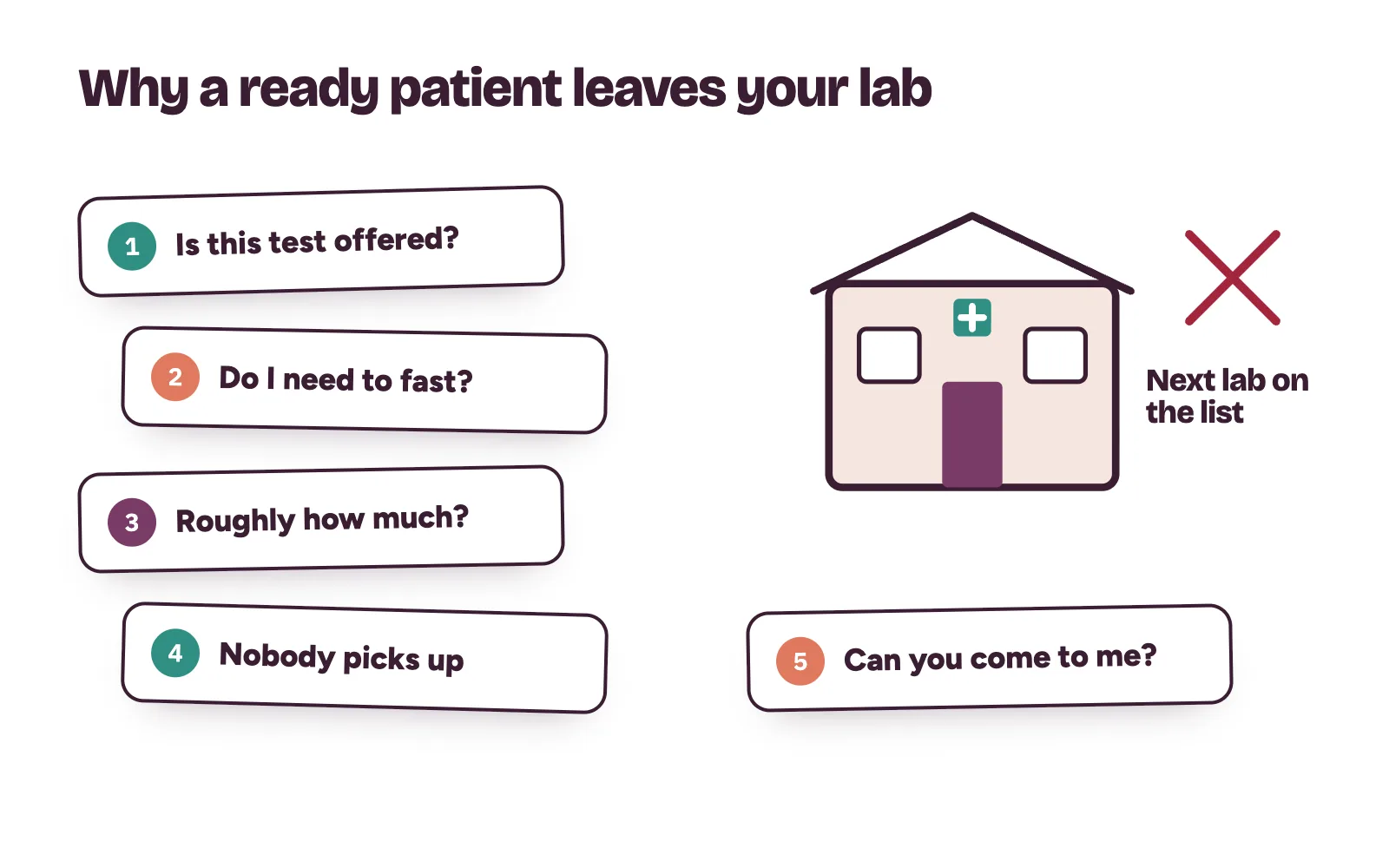
Usually something small. Watch for these:
- They can't tell whether you offer the test they need.
- They don't know if they must fast or bring a doctor's request form.
- They have no idea of the cost, so they put it off.
- The only way to book is a call, and nobody answers after closing time.
- They are too unwell or too busy to come in, and nothing says you can come to them.
Each one sends a ready patient to the next lab on the list.
Six laboratory marketing strategies for self-booked patients
1. Put a booking link on your Google profile
Most self-booked patients meet your lab on Google first. Google lets a business add booking links to its Business Profile, which show on Google Search and Google Maps. Its help page on booking links says you can add up to 10 links per category and set one as the preferred link.
Point that link straight at your booking page. Our post on Google Business Profile for clinics covers the rest of the profile.
2. Make every test page end in a booking
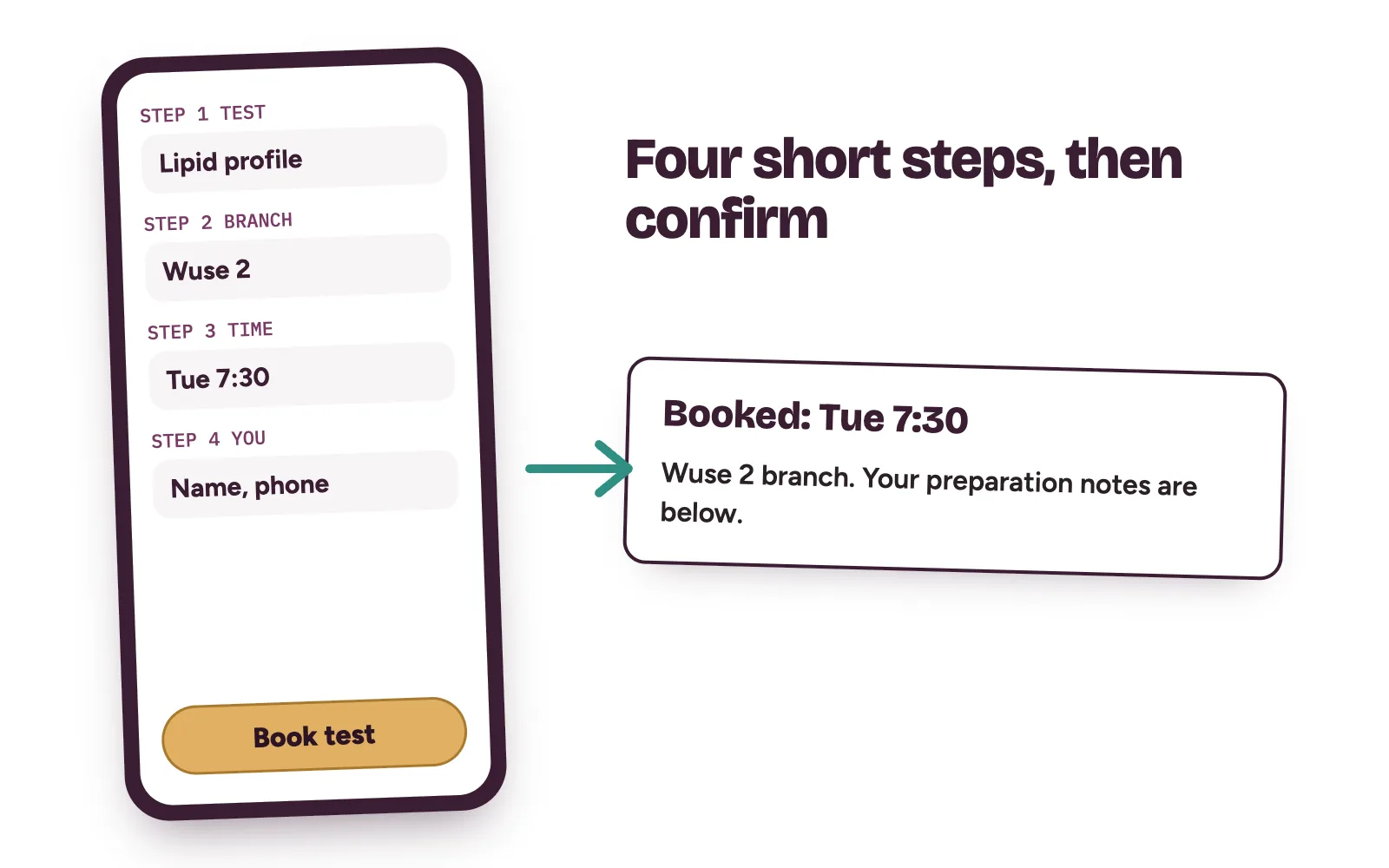
Your test pages already explain the test. The booking step is where most labs lose people. Keep it short:
- Choose the test or package.
- Choose a branch, if you have more than one.
- Choose a time slot or a walk-in window.
- Leave a name and phone number.
- Get a confirmation with the preparation notes straight away.
Ask for nothing else at this stage. Medical history can wait for the visit.
3. Let patients pay ahead, if you choose to
Paying ahead makes a booking feel firm, and some people prefer it. Others will leave if forced. Offer it as an option on packages first, confirm every payment at once, and keep paying at the desk open. Then compare arrival rates for paid and unpaid bookings in your own records.
4. Show home sample collection, if you offer it
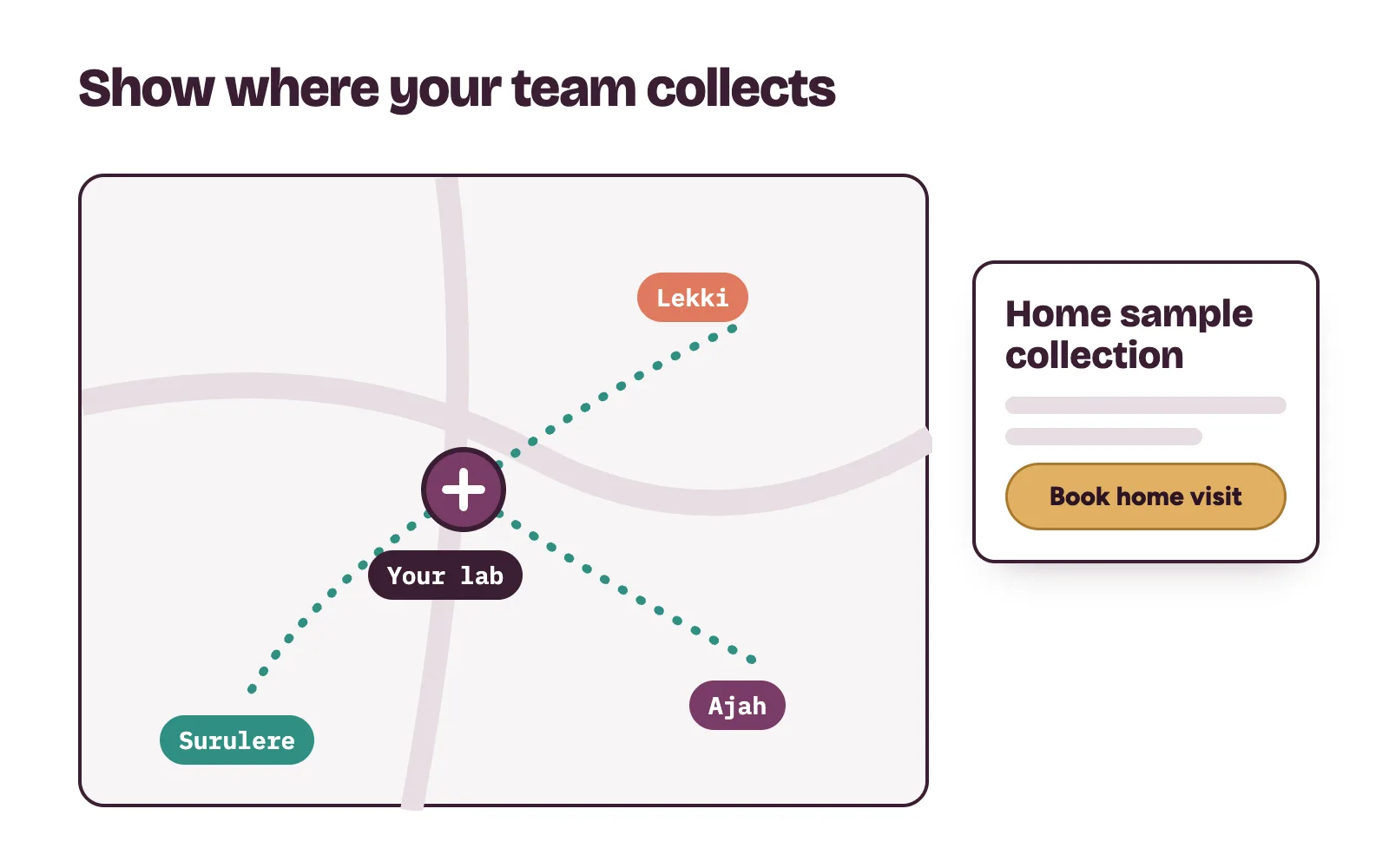
For older patients, busy workers and families, home collection can decide the booking. If your lab offers it, give it its own page and its own booking option.
Your Google profile can show this too. Google calls a business that serves customers at its address and also visits them a hybrid business, and its service area help page says it can show its address and a service area. You can list up to 20 areas, which should not extend beyond about two hours' drive from your base. You can't set the area as a radius.
5. Turn corporate packages into self-booking
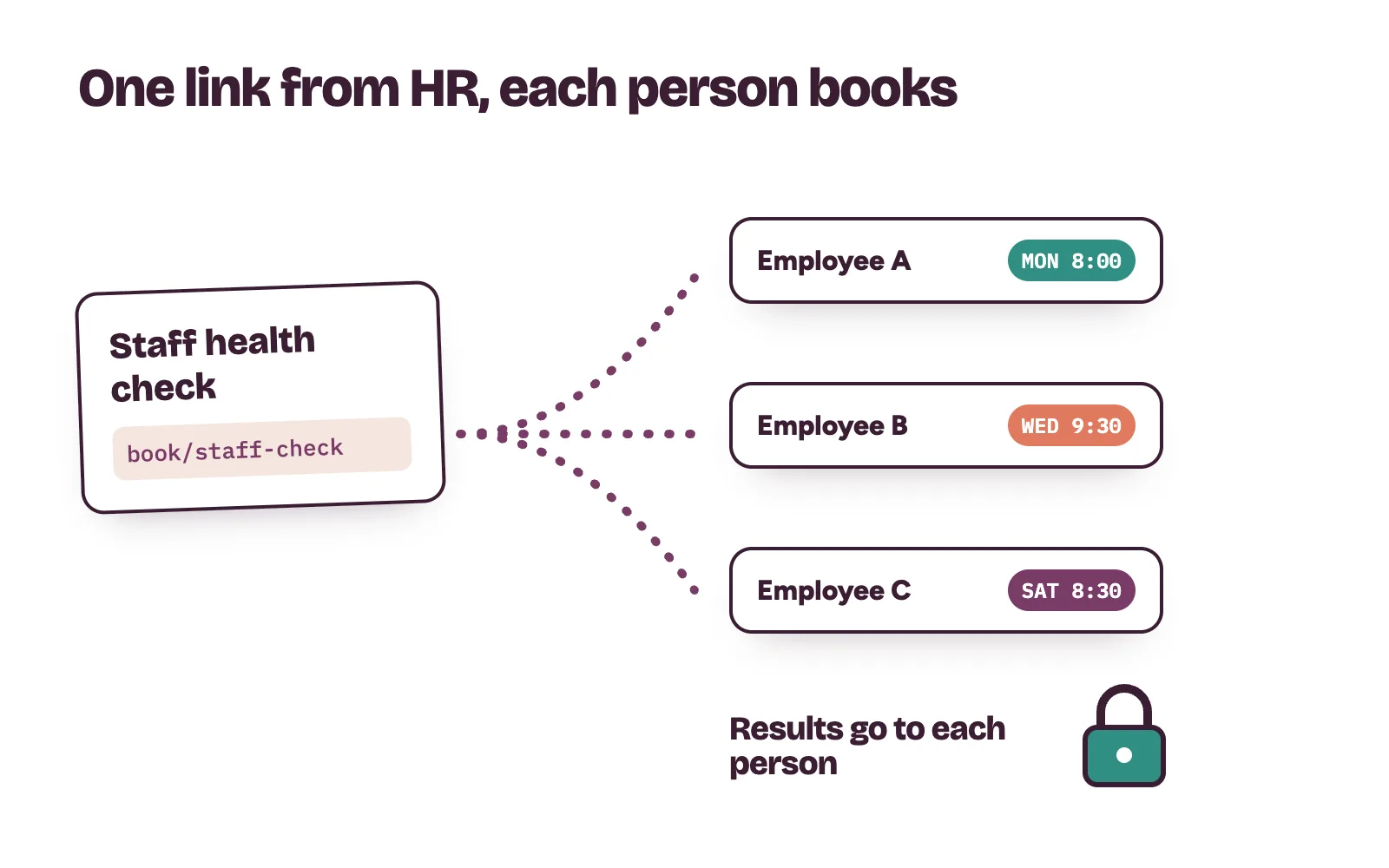
Corporate deals often stall at scheduling. HR sends a list, your front desk calls fifty people, and half never come.
Instead, give the employer one booking link for their package. Each employee picks their own branch and time. Your team sees who has booked and who hasn't, and the employer gets a simple count. Results go to each employee, as you agreed in writing with the employer.
6. Say how results stay private
People booking tests worry about who will see their results. Say plainly on your booking page how results are delivered and that you confirm identity first. Keep test names out of reminders. The diagnostic centre post above covers what the Nigeria Data Protection Act 2023 says about health data.
How do you know self-booking is working?
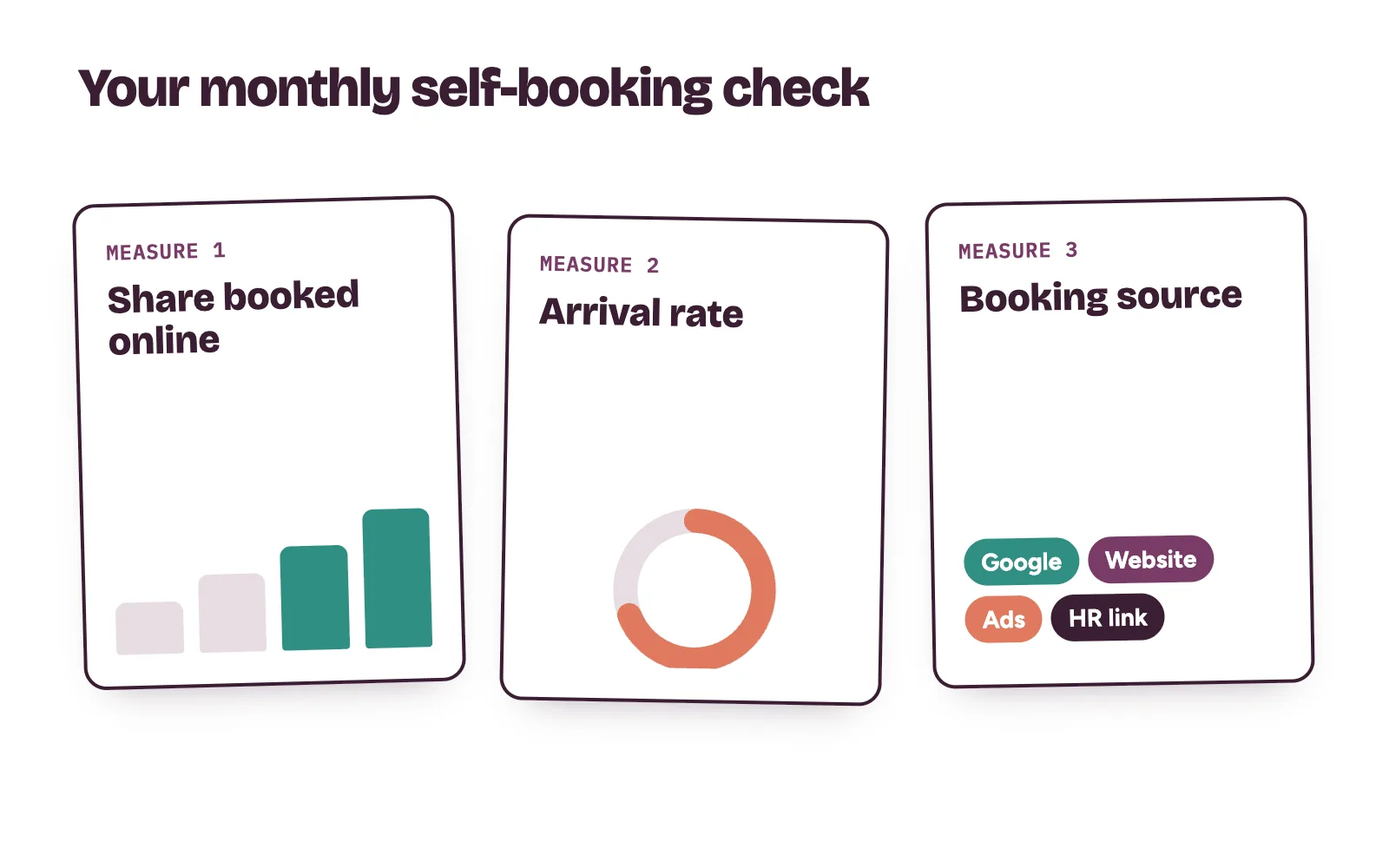
Count it each month. Three numbers are enough to start:
- Share booked online. Online bookings as a share of all bookings.
- Arrival rate. How many online bookings turn up.
- Source. Google profile, website, ads or a corporate link.
If arrival rates are low, look at reminders. Our post on reducing patient no-shows covers that.
How Kren helps labs get more self-booked patients
Kren is a done-for-you team for private clinics and diagnostic labs in Lagos and Abuja. We set up your Google profile booking link, your test and booking pages, the confirmations and preparation reminders, and booking management your team can follow. Your team runs the tests, handles results and confirms each booking.
On a 30-minute strategy call, we look at where your lab loses self-booked patients today and what to fix first.
Show me where my clinic is losing patients →
Questions lab owners ask about self-booked patients
Do we still need someone answering the phone?
Yes. Many patients will still call or walk in, and online bookings bring questions. Self-booking takes routine bookings off the phone so your team can answer the rest properly.
Can a patient book a test without a doctor's request form?
That depends on the test and on your lab's own policy. Say clearly on each test page whether a request form is needed, so nobody arrives and gets turned away.
Should home collection cost more than a visit to the lab?
That is your decision. Whatever you choose, show it before the patient books, so the price is never a surprise at the door.
How soon should a booking be confirmed?
Straight away, with the date, time, branch and preparation notes. A booking with no confirmation feels uncertain, and uncertain patients book elsewhere.