Blog · Websites · 5 min read
Landing pages for clinics that book patients
What a clinic landing page needs, why each treatment gets its own page, how to match it to your ad and how to count the bookings it brings.
By the Kren Agency team ·
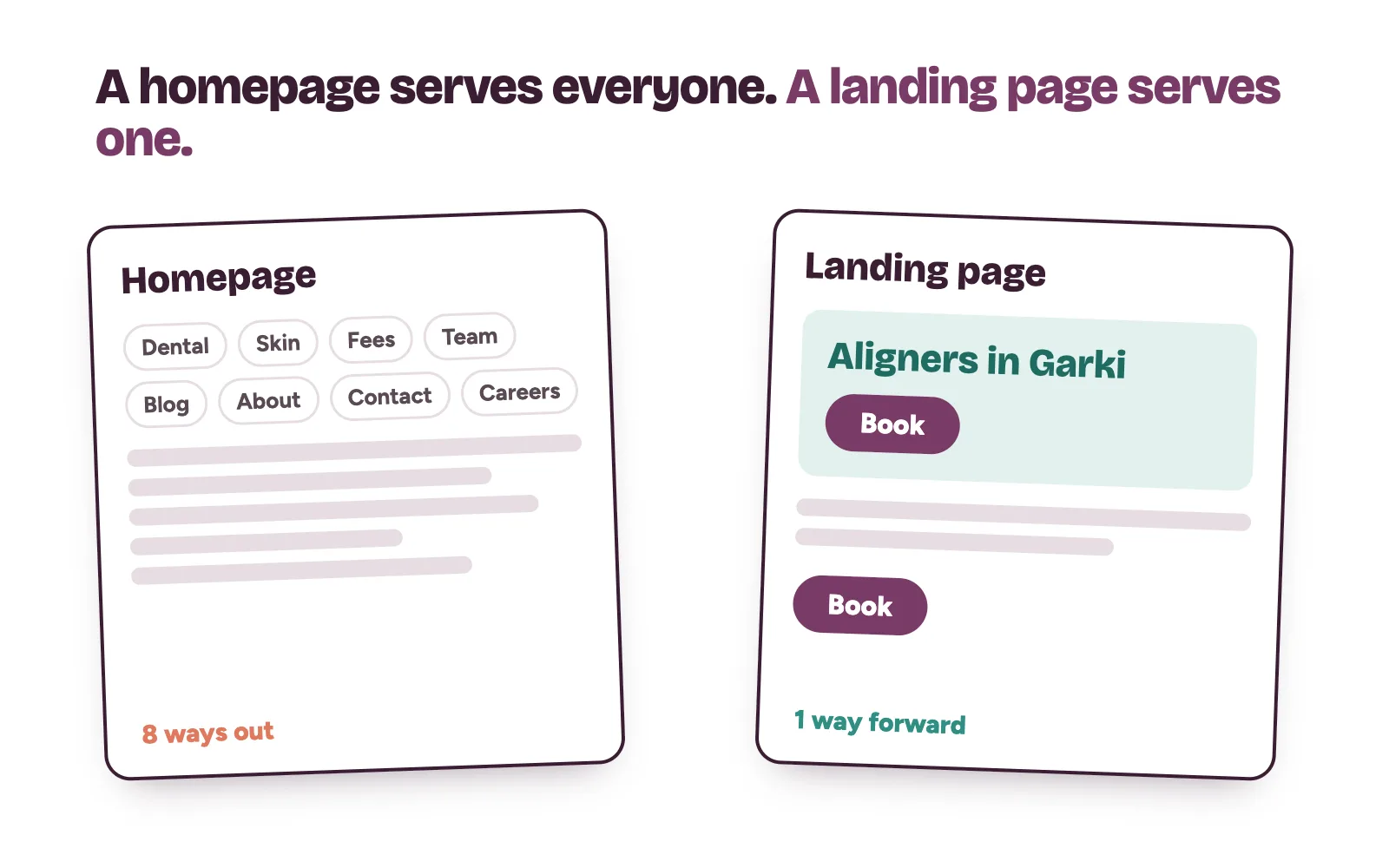
A landing page for a clinic is a single page built for one treatment and one action: booking. It is where a patient lands after tapping your ad or a link, and it should answer who the treatment is for, what happens at the visit, roughly what it costs and how to book, with nothing else pulling them away. Your homepage serves everyone. This page serves one patient with one need.
What is a landing page, and how is it different from a homepage?
Your homepage has a menu, every service, the team and the address. It is a front door for anyone who already knows your name.
A patient who taps an ad for teeth whitening wants to know about teeth whitening. Send them to the homepage and they must hunt for it. Many tap back instead.
A treatment page removes the hunt. One treatment, one message, one booking action. Google's advice to advertisers says it plainly: "Choose a landing page that closely matches your ad and keywords." Google adds that this alignment helps your ad relevance and landing page experience, both parts of the Quality Score it uses to judge ads (Google Ads Help).
Why one treatment per page?
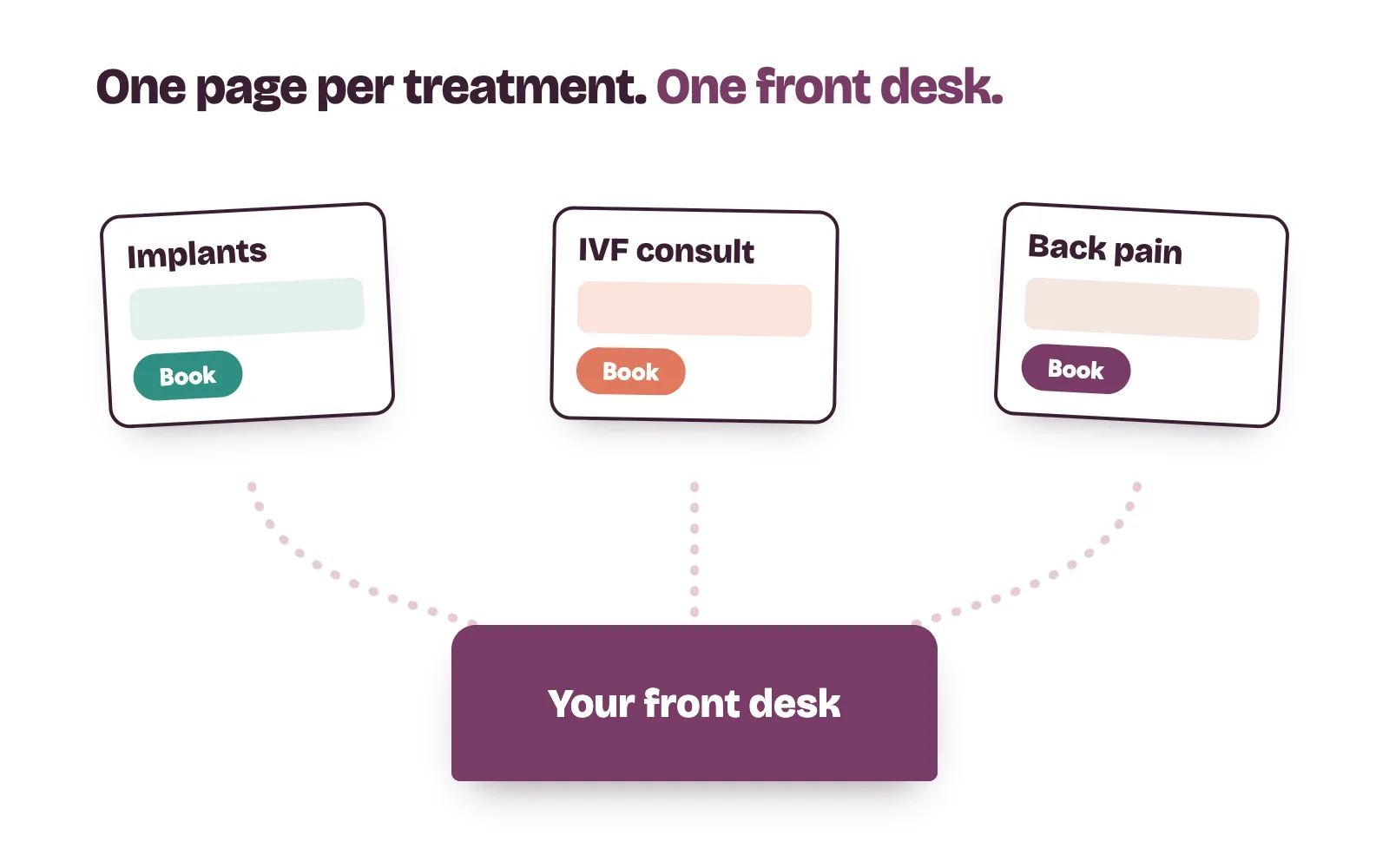
Patients search for a treatment, never for "our services". Someone weighing aligners and someone weighing an implant have different worries and budgets. One page cannot answer both.
Build a page for each treatment you advertise or want more of: IVF consultation for a fertility clinic, back pain for a physiotherapy practice. Start with the two or three that bring the most value.
Our post on website design in Nigeria for clinics covers the full set of pages a clinic site needs.
What should a clinic landing page include?
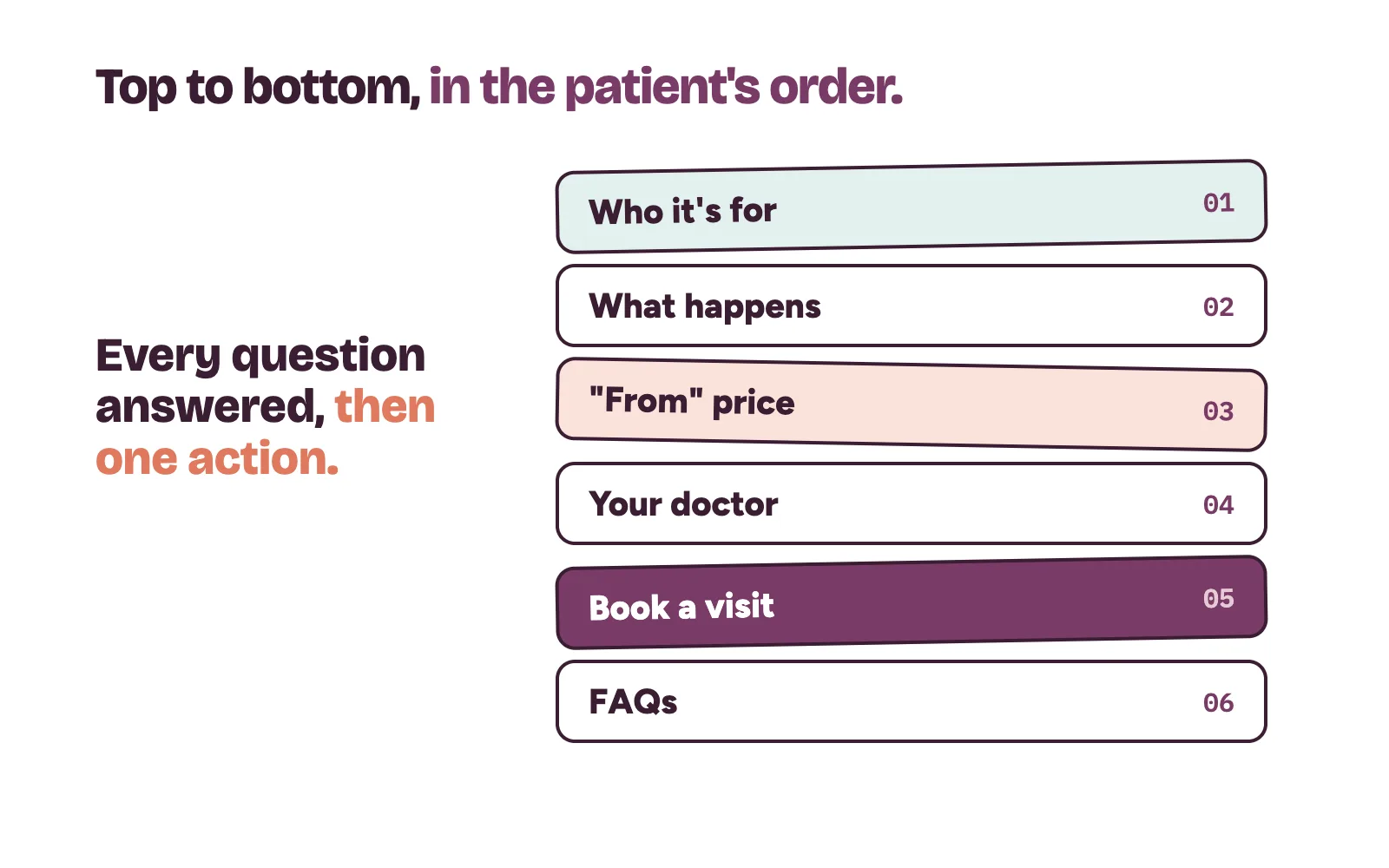
Work from the top down, in the order a patient's questions arrive.
- Who it's for. A headline naming the treatment and the place, in the words patients use. "Teeth whitening in Lekki" beats "Smile transformation".
- What happens. The steps of the first visit, how long it takes and who sees them.
- A price range or "from" price. If you keep prices private, say how pricing works and that the front desk gives a clear figure on the call.
- Trust. The doctor's name and qualifications, your address with landmarks, and real reviews if patients have left them. Google suggests "adding reviews that show real opinions from other customers."
- One booking action. A short form (name, phone, preferred day), a phone number that gets answered and a chat link. The same action repeated down the page.
- FAQs. Recovery time, payment options, what to bring. Each answered in two or three lines.
Leave out the full menu and links to other treatments. Every extra exit is a patient who wanders off.
What must the page never say?
Medical advertising rules apply to these pages as much as to ads. No promised results, no before-and-after photos without the patient's written consent, and no patient details. Never ask for medical history on the booking form. The doctor takes that in the consulting room.
How do you match the page to an ad?
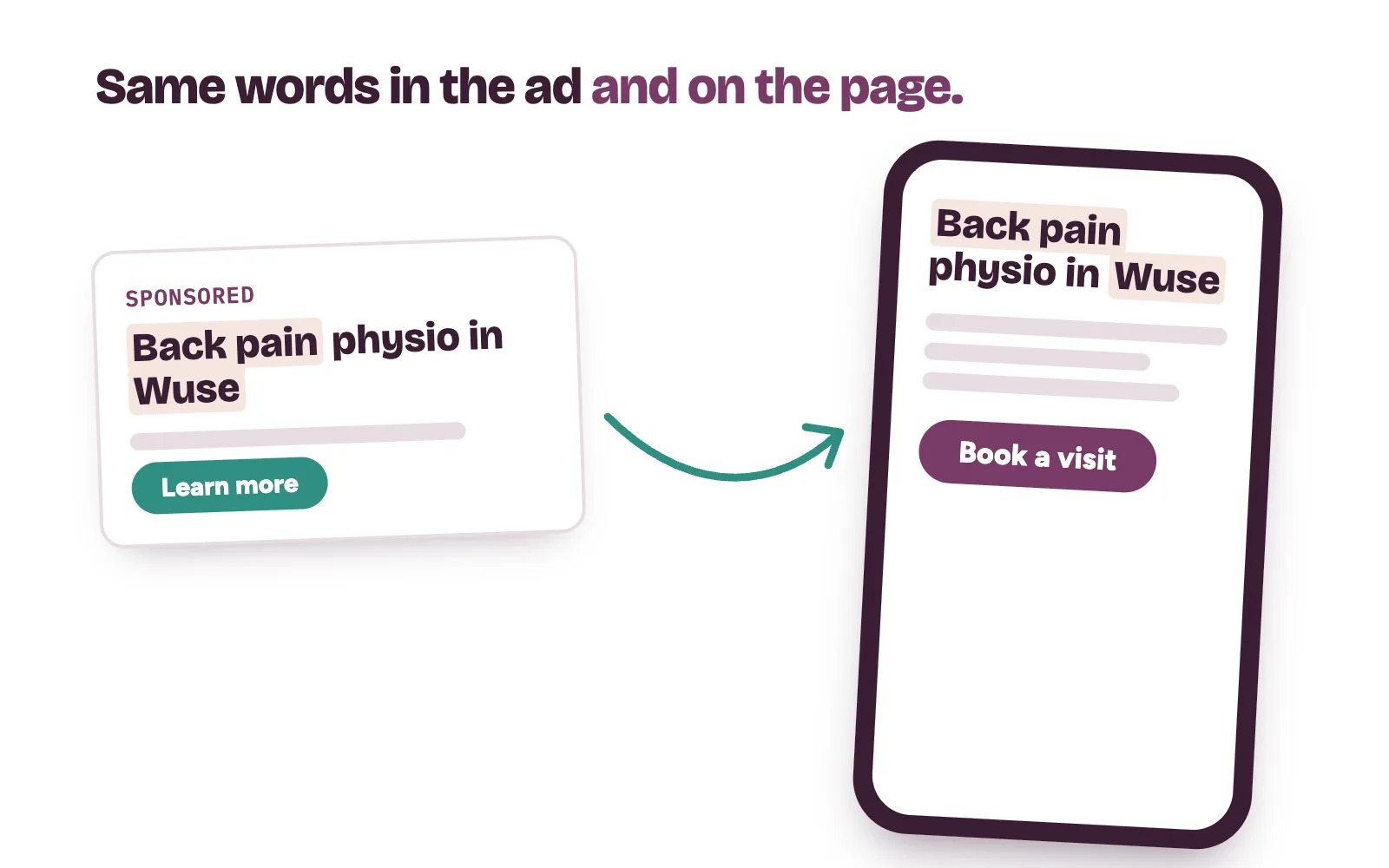
The patient tapped your ad because of what it promised. The page must continue the same conversation. If the ad says "Same-week physiotherapy for back pain in Wuse", the page headline should say the same thing, with the same treatment, place and offer.
Google also advises keeping important information near the top and making it "quick and easy for customers to perform the action you want them to take." Read it on your own phone before an ad goes live.
Running ads on Facebook and Instagram? Each ad set should point to the matching treatment page. Our Meta Ads Manager walkthrough for clinics shows where the website link goes in each ad.
How do you measure whether a page books patients?
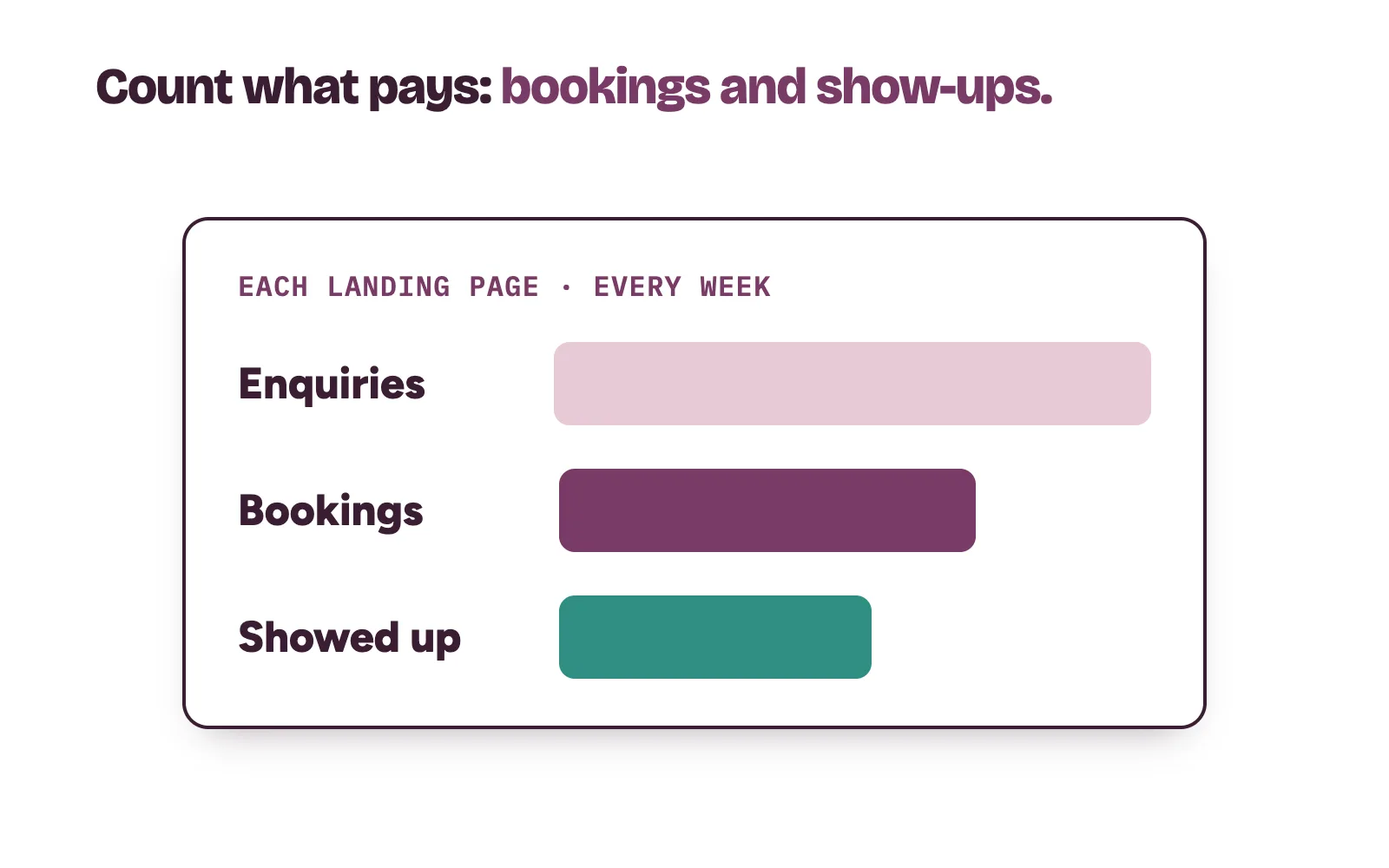
Clicks show the ad is working, not the page. Count three things each week for every page:
- Enquiries. Forms sent, calls and chats that came from the page.
- Bookings. How many of those enquiries became a booked visit.
- Show-ups. How many of the booked patients came in.
Ask every caller "How did you find us?" so each page's enquiries are counted separately. Then divide what you spent by bookings. That cost per booking is the figure that tells you whether to spend more.
If enquiries come in but bookings don't, the problem is usually follow-up speed, not the page. Our post on how to stop losing patients in your DMs fixes that part.
How Kren builds landing pages that book patients
Kren is a done-for-you team for private clinics in Lagos and Abuja. We pick the treatments worth promoting, write each page in your patients' words and within your profession's rules, match it to the ads and track every enquiry to a booking. Enquiries reach your front desk fast, and your own team makes the booking. See how our website conversion work runs.
Not sure where your ad clicks are going to waste? On a 30-minute strategy call, we open your ad and the page it sends patients to, side by side. Show me where my clinic is losing patients →
Questions clinic owners ask about landing pages
Do we need a landing page if we already have a website?
Yes, if you run ads for specific treatments. A homepage makes a patient search for what the ad promised. A page for that treatment picks up where the ad left off and asks for one action.
How many landing pages should a clinic have?
One for each treatment you advertise. Start with the two or three that bring the most value, measure bookings from each, then add more.
Should the page show prices?
A "from" price or a range answers the first question many patients have. If you keep prices private, say how pricing works and that the front desk will give a clear figure. Silence on price sends patients elsewhere.
Can these pages live on our current website?
Yes. It can sit on your own domain with its own address, kept out of the main menu, so everything stays in the clinic's name.