Blog · Websites · 5 min read
Website design company in Nigeria: how to choose one for your clinic
How to test a web designer's past work, the questions to ask before you hire, the red flags, and why the domain and hosting must stay in the clinic's name.
By the Kren Agency team ·
To choose a website design company in Nigeria for your clinic, judge them on one thing: do the sites they built turn visitors into booked patients? Ask to test their past clinic work on a phone, get the domain, hosting and content registered in the clinic's name, and agree in writing what happens after launch. A pretty design with no bookings is an expensive brochure.
Most clinic owners hire on looks and price. The trouble shows up later: a form nobody checks, a domain in the designer's name, a site nobody updates.
What should a website design company in Nigeria do for a clinic?
A clinic site has one job: help a patient who found you decide, then book. The company you hire should talk about that from the first meeting. If the talk stays on colours and animations, you are buying decoration.
A good partner asks you questions first:
- Which treatments bring the most revenue, and which do you want more of?
- Where do patients find you today: Google, Instagram, referrals, walk-ins?
- Who answers enquiries at the front desk, and how fast?
- How will we count the bookings that come from the site?
What the finished site should contain is covered in our post on website design in Nigeria for clinics. Here we focus on picking the people who build it.
How to judge a web designer's past work
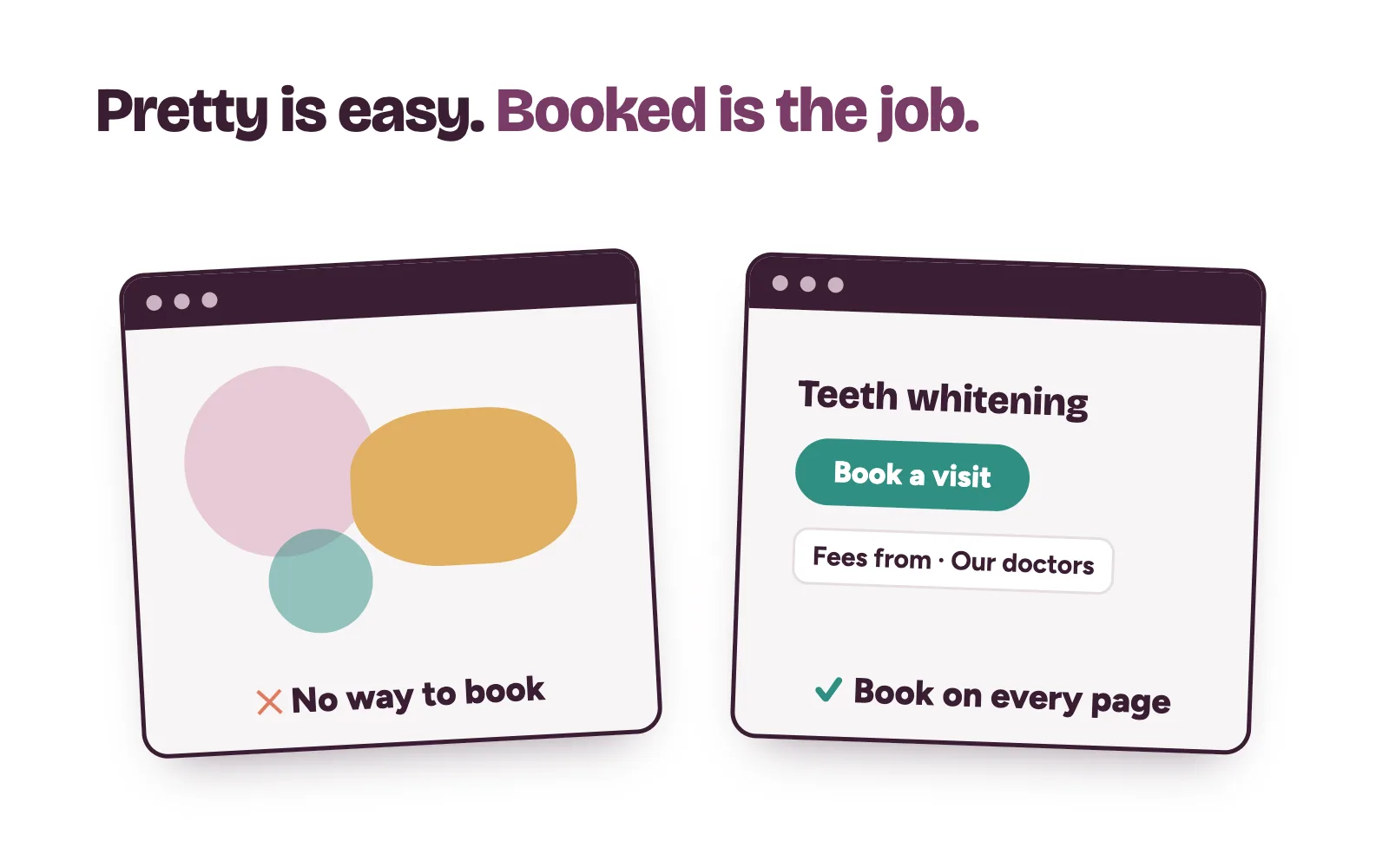
A portfolio of screenshots tells you very little. Ask for links to live sites, ideally for clinics or other appointment businesses, and test them yourself.
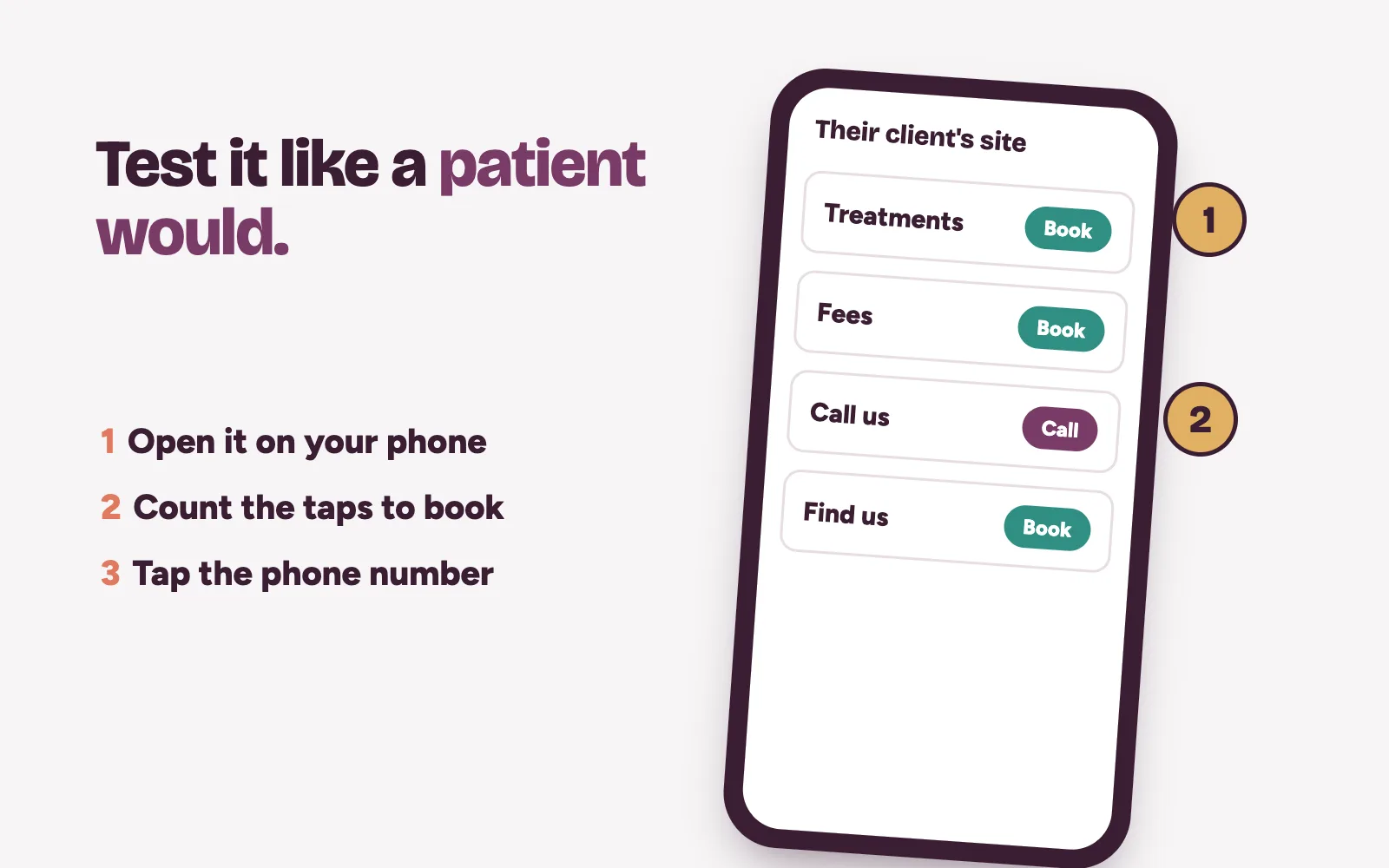
- Open each site on your own phone. If you squint or hunt, patients will too.
- Try to book. Count the taps from the home page to a booking request. Note whether the phone number works when tapped.
- Check it is still current. Old hours, departed doctors or a broken form mean nobody looks after the site after launch.
- Call one of their clients. Ask whether enquiries went up, how fast changes get done and whether they hold their own logins.
Questions to ask before you hire
Put these to every company on your shortlist.
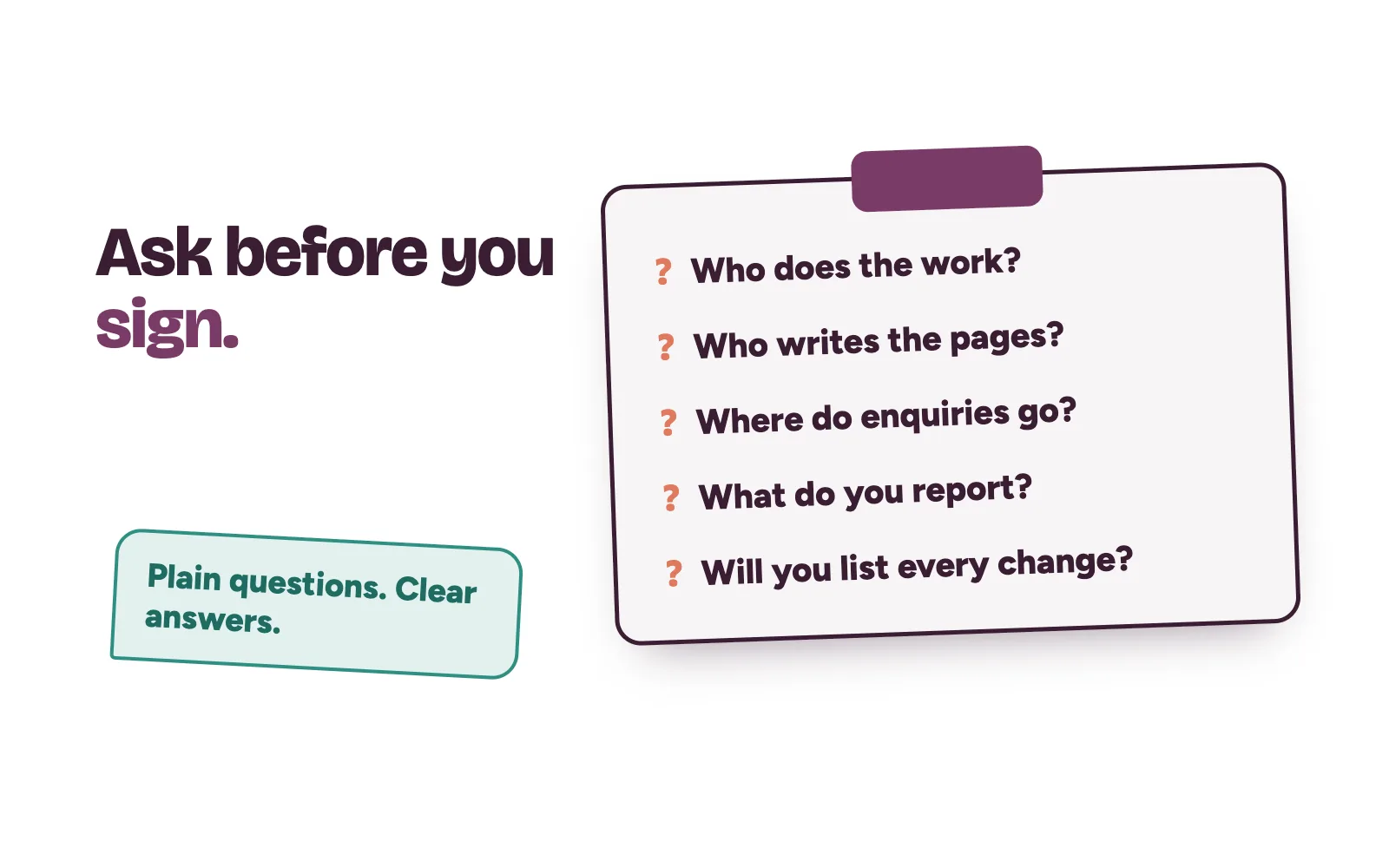
- Who will do the work? The person you meet, a team, or a freelancer they pass it to?
- Who writes the treatment pages? Clinic copy must stay within medical advertising rules: no promised results, no patient details.
- Where does a booking request go? To the front desk phone, an inbox, or both? Who checks it on weekends?
- How will we know which bookings came from the site? Ask what they will report each month.
- Will you list every change you make? You should always know what was done to your site.
- How long have you been doing this, and for whom?
Be careful with search promises. Google's own advice on hiring someone to help with search says no one can promise first place on Google, and if they say their changes will put you there, find someone else.
Who should own the domain, hosting and content?
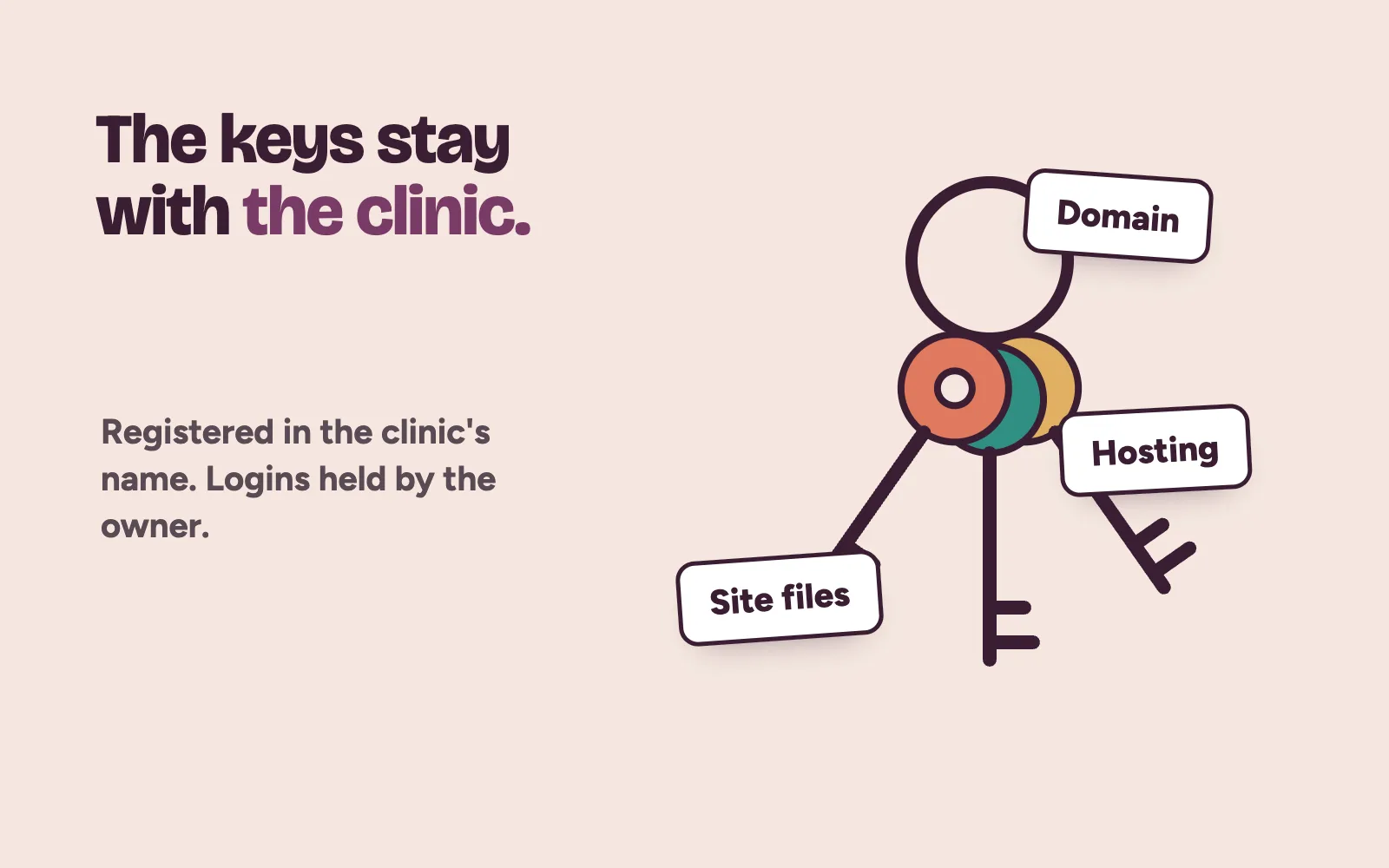
The clinic. Every time. If the designer registers the domain in their own name, you can lose it in a dispute or when they stop answering calls.
Insist on three things in writing:
- Domain registered with the clinic as the owner, and a login the owner or practice manager controls.
- Hosting account in the clinic's name, so the site can move without anyone's permission.
- Content and design files handed over at launch: text, photos you supplied, and a copy of the site.
For .com domains, ICANN's registrant benefits and responsibilities say the registrant must give accurate contact details and keep them current, and is entitled to know who their registrar is. If the contact details are the designer's, the designer is the one the registrar deals with.
Red flags when choosing a web designer
- Promises of top rankings on Google, or "page one in two weeks".
- A refusal to put the domain and hosting in the clinic's name.
- No live sites to test, only screenshots.
- A price with no list of pages, no deadline and nothing about after launch.
- Copy that promises results or shows patient details.
- No plan for where enquiries go or who answers them.
What should the contract cover?
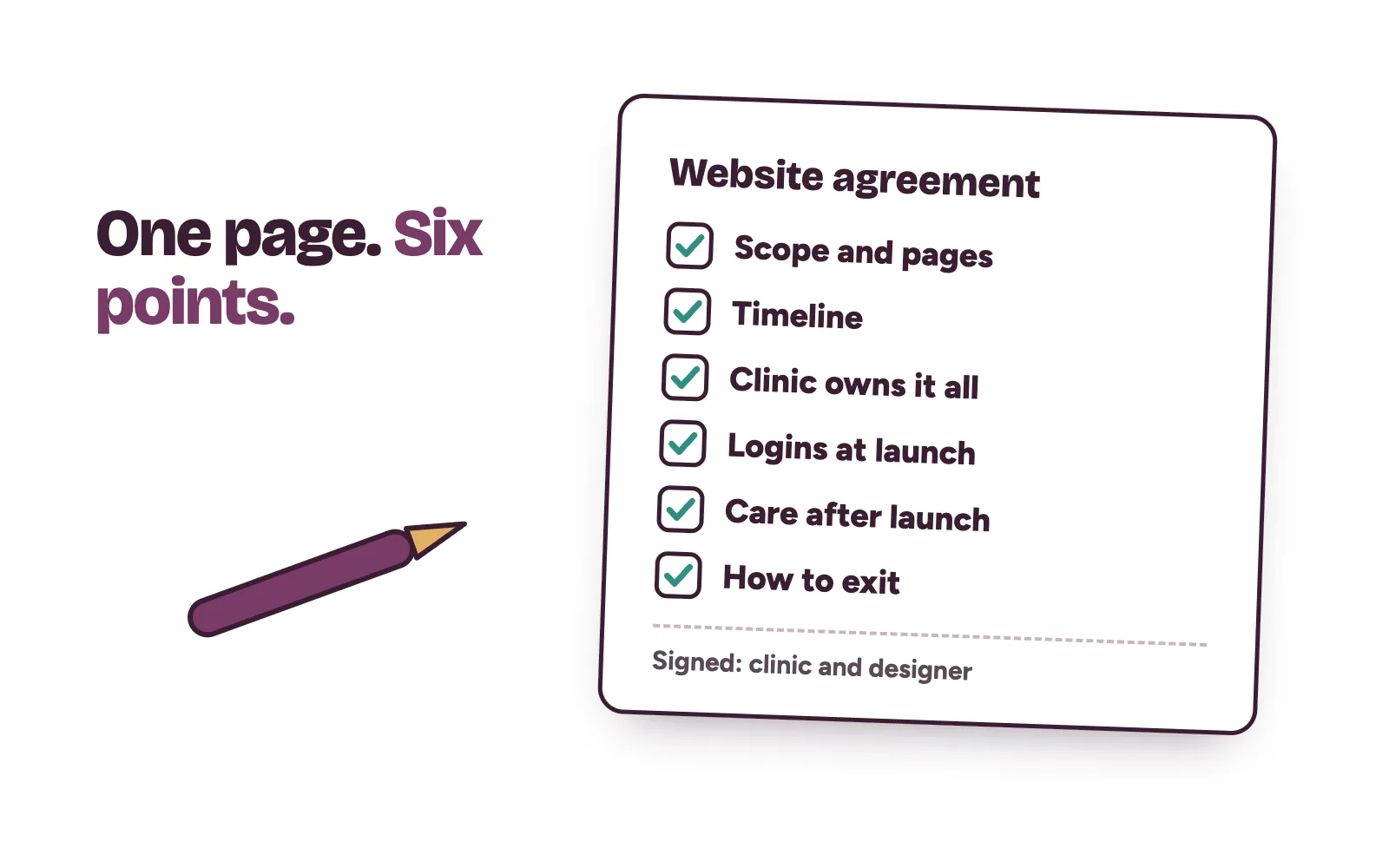
A one-page agreement covering these points saves arguments later.
- Scope: the list of pages, who supplies text and photos, and how many rounds of changes.
- Timeline: dates for the first draft, your feedback and launch.
- Ownership: domain, hosting, content and design files belong to the clinic.
- Handover: all logins delivered at launch.
- After launch: what monthly care covers, how fast updates happen and what they cost.
- Exit: how you leave, and what they hand over when you do.
Where Kren fits
Kren is a done-for-you team for private clinics in Lagos and Abuja. We build clinic websites around the treatments that pay, write copy within your profession's rules and connect every enquiry to your front desk, where your own team makes the booking. Before you talk to any website design company in Nigeria, see what our website conversion work covers and what to budget in our post on clinic website cost in Nigeria.
Not sure your current site is bringing bookings? On a 30-minute strategy call, we open it on a phone with you and follow a patient's path from Google to booking. Show me where my clinic is losing patients →
Questions clinic owners ask about hiring a website designer
Should we hire a freelancer or a company?
Either can work. What matters is who will maintain the site after launch and whether the clinic owns every login.
How do we check who owns our current domain?
Ask your designer for the registrar's name and the account login. If the registrant listed is the designer, ask in writing for the domain to be moved into the clinic's name.
Should a web designer also handle our Google profile?
The site and your Google profile should match on name, address, phone and hours, so someone must own both. Our post on Google Business Profile for clinics covers the set-up.
What should monthly website care include?
Domain renewal, backups, updates to fees, hours and doctors, and a monthly test enquiry to confirm it reaches the front desk. Agree a turnaround time for changes in the contract.