Blog · Enquiries · 6 min read
Bulk SMS in Nigeria: appointment reminders that cut no-shows
Booked patients forget. Here is how to send SMS reminders that bring them in: the NCC rules, the right timing, private wording and how to track your show rate.
By the Kren Agency team ·
Bulk SMS in Nigeria is the simplest way for a clinic to remind every booked patient about their appointment, on any phone, including basic ones. Send one reminder the day before and one on the morning of the visit, keep treatment details out of the message, and follow the Nigerian Communications Commission (NCC) rules on sender ID and Do-Not-Disturb. Your front desk then spends its time on patients who are coming.
Why booked patients don’t turn up
Often the reason is simple. The patient booked a week ago and forgot. Work ran late. Third Mainland Bridge was locked. Nobody reminded them, so the slot sat empty and your doctor waited.
An empty slot costs you twice. You lose the fee, and you lose the patient who would have taken that time. A short text the day before gives the patient a chance to confirm, or to tell you early so you can fill the slot.
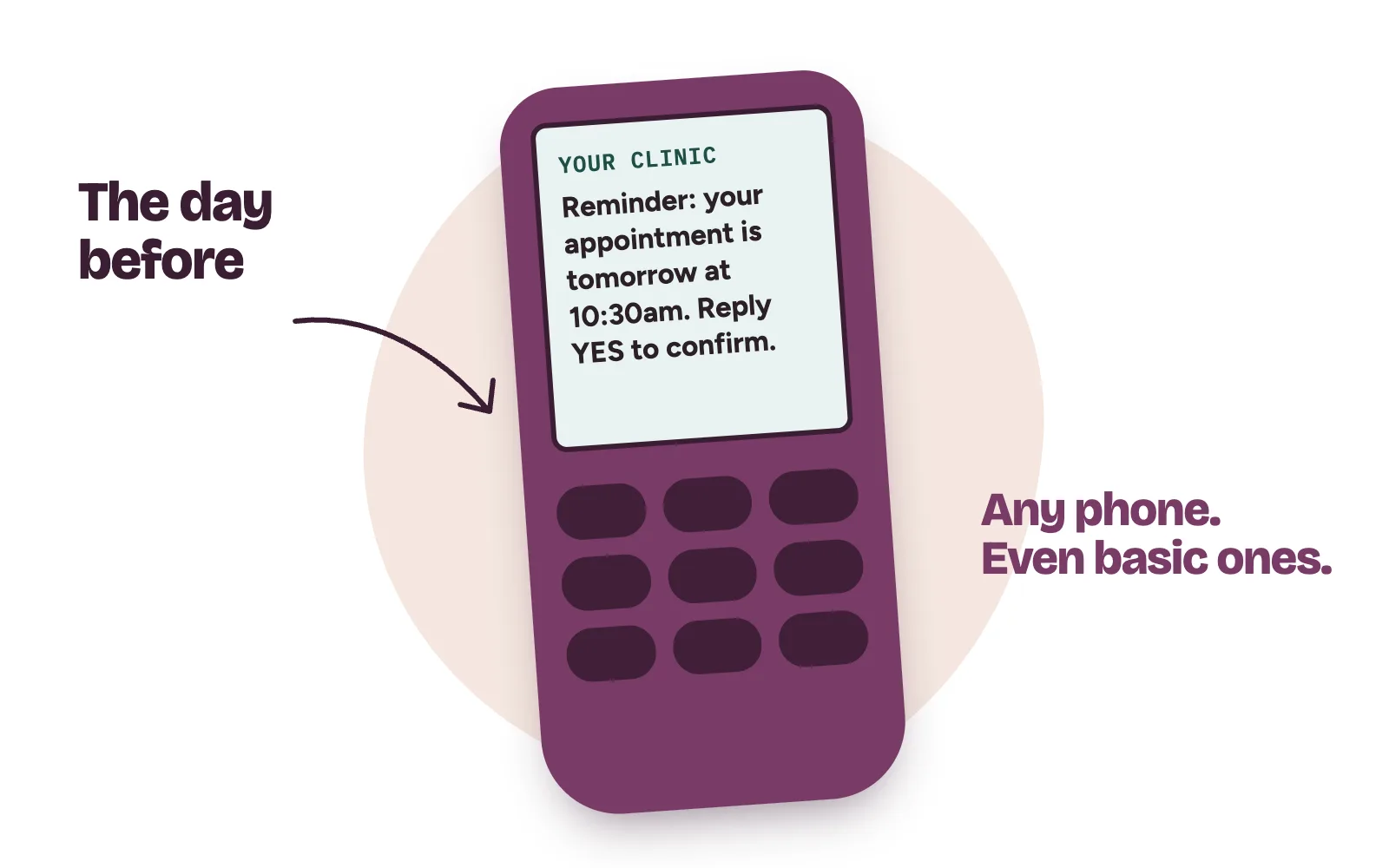
SMS sits beside your other channels. Patients still call, send DMs, fill forms and walk in, so reminders should come from wherever you keep your bookings.
Bulk SMS Nigeria rules: sender ID, consent and DND
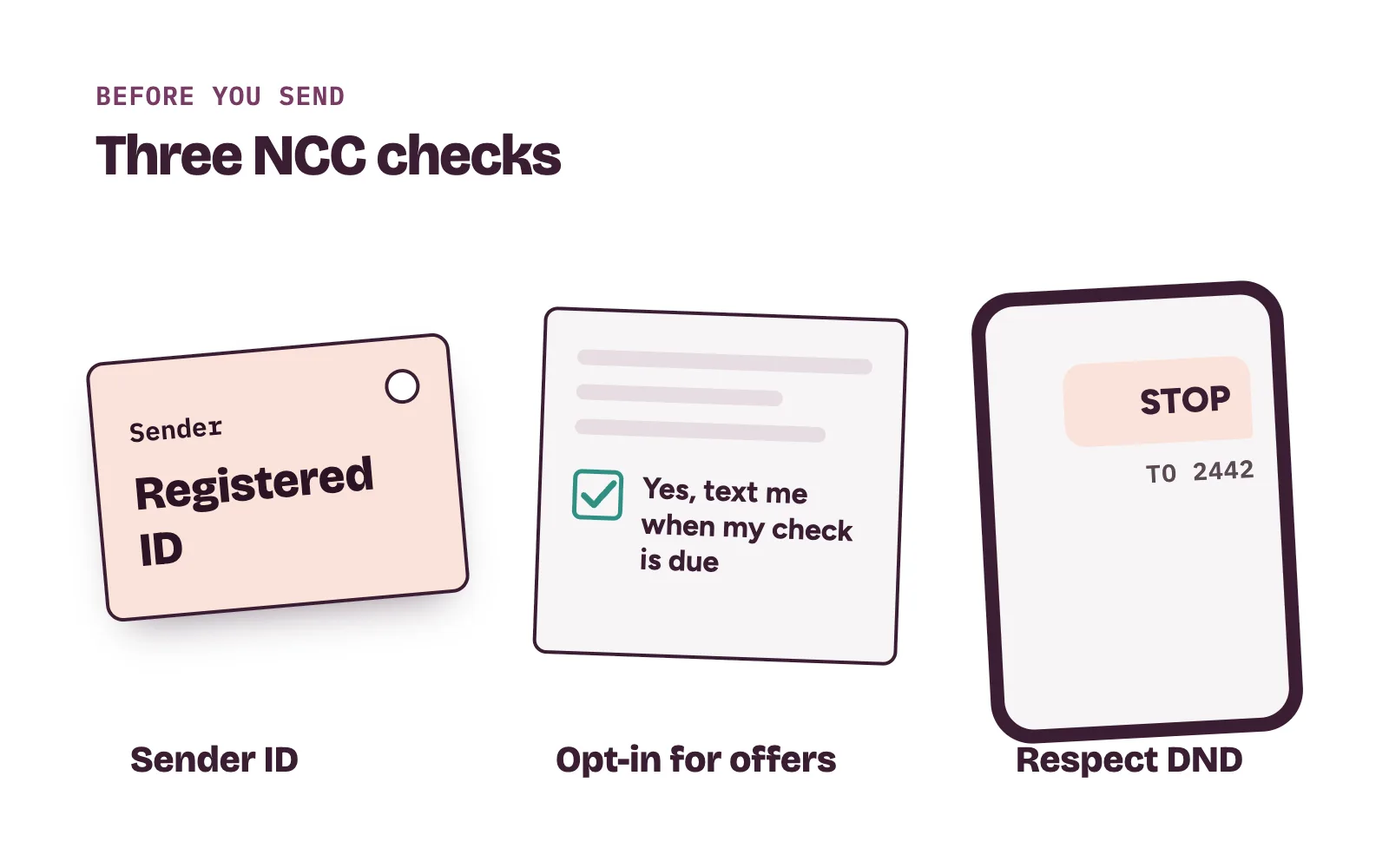
Before you pick a bulk SMS Nigeria provider, know the three points that the NCC’s Value Added Services and Aggregator Framework (amended, March 2018) sets out.
- Every bulk message needs a sender ID. The framework says all bulk SMS must carry the sender’s registered number or short code. A name, like your clinic’s, can go with it. Networks must not deliver bulk SMS without a sender ID.
- Information and marketing are treated differently. Information messages can go to all subscribers, as long as they are not marketing. Marketing messages can only go to people on an opt-in list.
- Do-Not-Disturb must be respected. Operators and aggregators must make sure no adverts reach numbers on the Do-Not-Disturb list.
On the patient side, the NCC’s consumer page on understanding DND explains that texting STOP to 2442 activates full DND, and health is one of the categories a subscriber can choose to keep receiving.
The NCC pages we checked don’t set out how a clinic registers a sender name today, what it costs or how reminders are treated on DND numbers. Check those with your SMS provider before you send.
When should a clinic send appointment reminders?
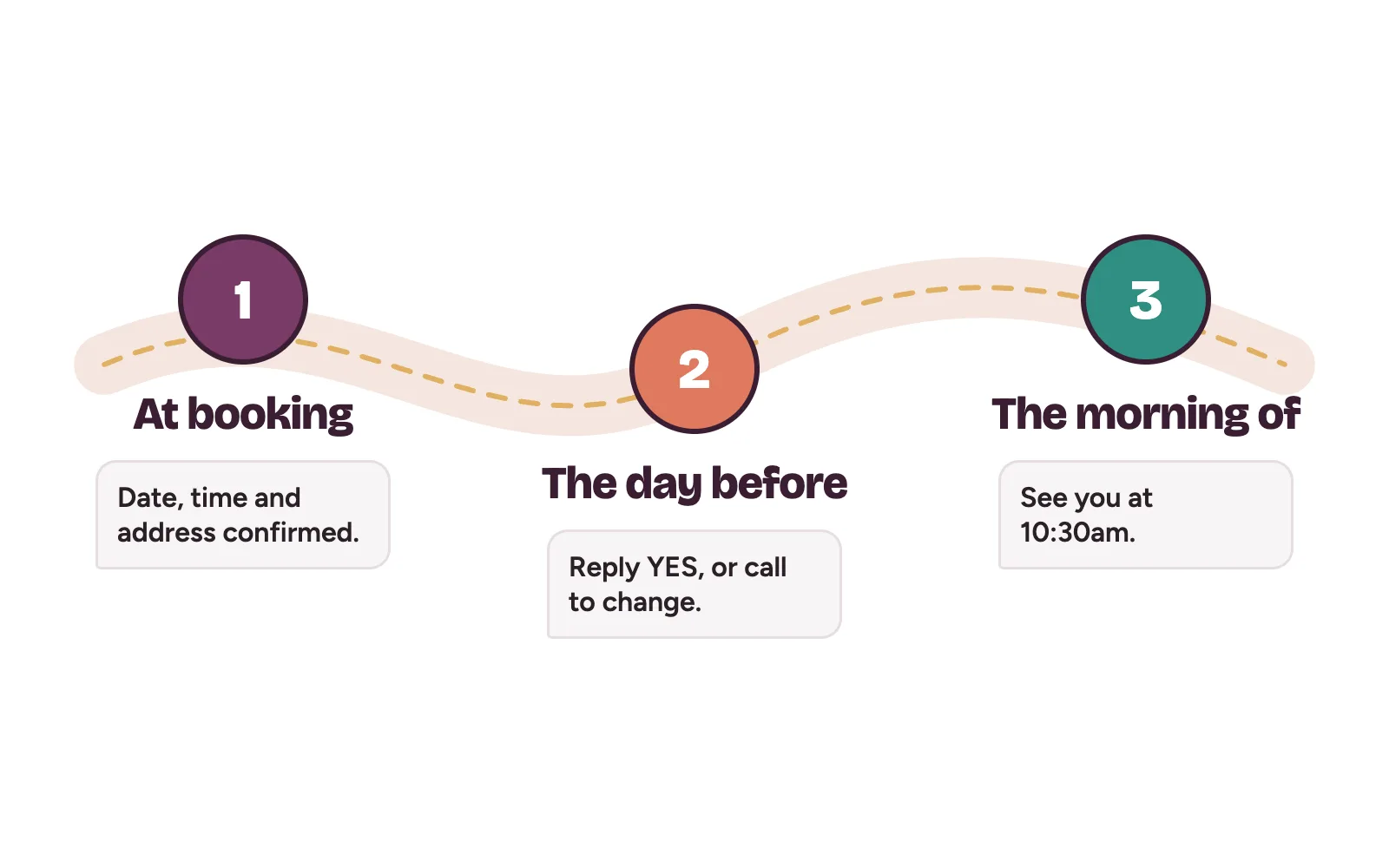
Two reminders are enough for most visits. More starts to feel like pressure.
- At booking. Confirm the date, time and address. Tell the patient they will get a reminder by text.
- The day before, mid-afternoon. Ask them to confirm, or to call if they need a new time. This is the one that saves the slot.
- The morning of the visit. A short note with the time and the clinic’s location. Send it early enough to beat the traffic.
Send during normal waking hours. A 6am or 10pm text about a medical visit feels careless, whatever the content.
Wording that protects patient privacy
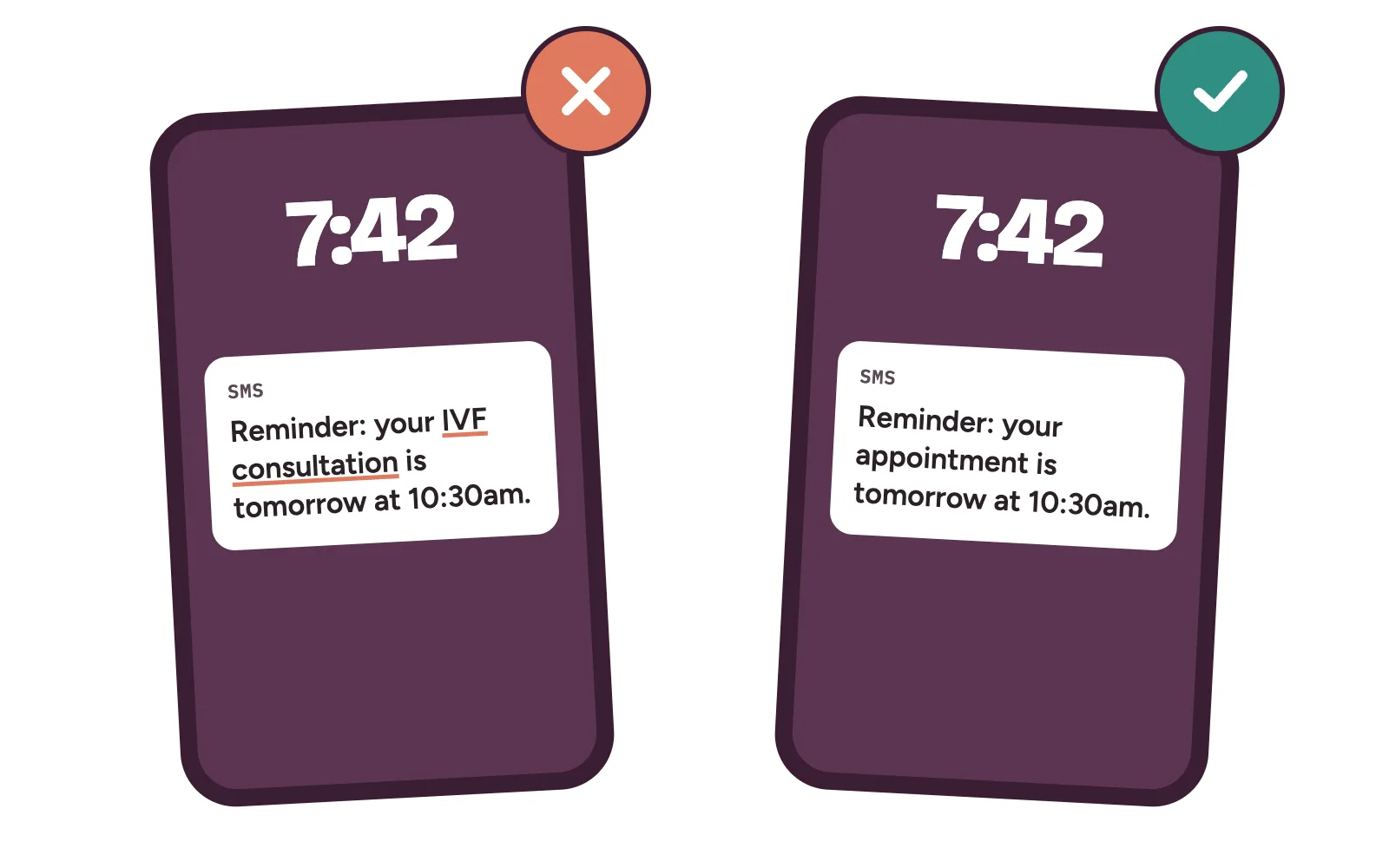
Phones are shared. Messages show on lock screens. A spouse, parent or colleague may read the reminder before the patient does. Write every text as if someone else will see it first.
- No treatment names. Say “your appointment”, never “your IVF consultation” or “your HIV test results”.
- No doctor specialty if it gives the reason away. “Dr Bello” is fine. “Your fertility specialist” is not.
- Check your sender name. If the clinic’s name reveals the treatment, register a neutral short name for reminders.
- One way to reply. Give the clinic’s number so the patient can confirm or move the visit.
A safe reminder reads like this: “Hi [first name], a reminder of your appointment tomorrow, Tue 4 Nov, at 10:30am. Please reply YES to confirm or call [clinic number] to change the time.”
Recall texts are marketing, so ask first
A six-month dental check, a follow-up scan or a physiotherapy review brings patients back. Under the NCC framework, a recall offer counts as marketing, so it should only go to patients who have agreed to receive it.
Ask at registration with a clear tick box: “Can we text you when your next check is due?” Keep a record of who said yes. Include a simple way to stop in every recall message, and honour it straight away.
How to measure your show rate
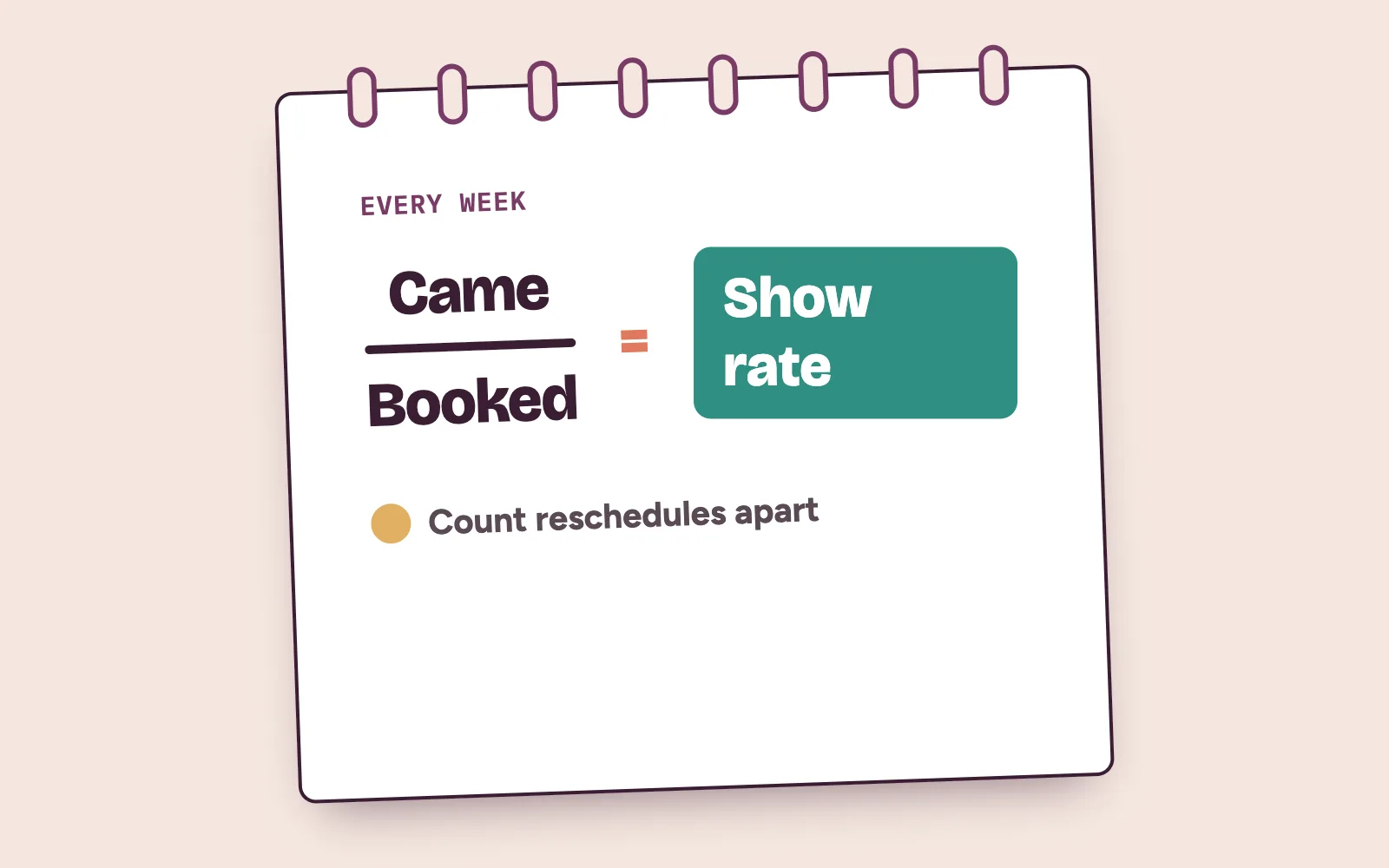
Reminders are only worth the effort if more booked patients turn up. Track it weekly.
- Count the patients booked for the week.
- Count the patients who came.
- Divide the second number by the first. That is your show rate.
- Count reschedules separately. A patient who moved their visit is a saved booking, not a no-show.
- Compare four weeks before reminders with four weeks after.
Where Kren fits
Kren is a done-for-you team for private clinics in Lagos and Abuja. We set up your reminders and recall messages, write private wording for each type of visit, work with your SMS provider on sender ID and opt-in, and track your show rate every week. Your front desk confirms and rebooks the patients who reply.
See how we run bookings and no-shows and patient follow-up. Reminders protect bookings you already have. To win more of them in the first place, read how to stop losing patients in your DMs.
Want to know how many booked patients your clinic loses each week? On a 30-minute strategy call, we look at your bookings and reminders with you. Show me where my clinic is losing patients →
Questions clinic owners ask about SMS reminders
Do appointment reminders need the patient’s consent?
The NCC framework allows information messages to all subscribers as long as they are not marketing. Still tell patients at booking that a reminder will come by text. Recall offers count as marketing, so get a clear yes first.
Will patients on Do-Not-Disturb get our reminders?
The NCC’s DND page doesn’t say how appointment reminders are handled. Ask your SMS provider how they route reminders to DND numbers. For key visits, a phone call from the front desk is a sound backup.
What sender name should a clinic use?
Use a short name patients recognise that doesn’t reveal a treatment. Under the framework, the name travels with your registered number or short code. Your SMS provider handles the registration.
How many reminders should we send?
Two for most visits: the day before and the morning of. Add a confirmation at booking. More than that starts to feel like pressure.