Blog · Enquiries · 5 min read
Why are patients booking and not showing up?
Booked patients who never arrive usually share one of five causes. Here is how to find which one is costing your clinic the most.
By the Kren Agency team ·
Patients not showing up after they book usually comes down to one of five causes: too long a wait between booking and visit, a harder journey than expected, a price they only learned late, a reminder that never landed, or a reschedule that felt harder than skipping. Every clinic has its own mix. Find yours before you change anything.
Our post on how to reduce patient no-shows covers the fixes. This one is about the step before: working out which cause is costing your clinic the most bookings.
Why diagnose before you fix?
Most clinics react to a bad week with one blanket change. More reminders. A stricter policy. A deposit. If the real problem is a two-week wait or a price surprise, none of that helps, and some of it annoys the patients who do come.
A short log tells you where to aim.
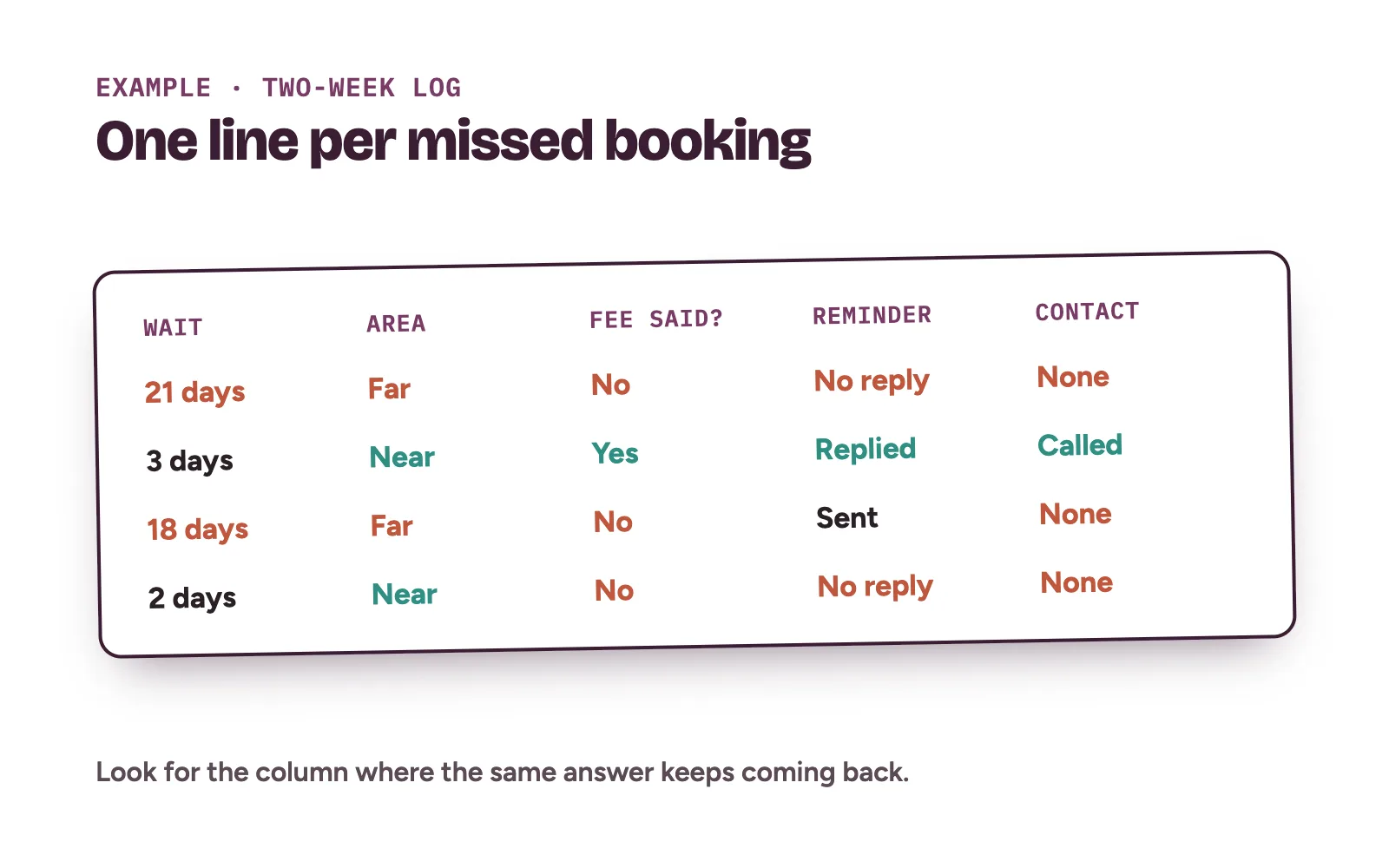
Start with a two-week no-show log
For the next two weeks, your front desk notes five things against every patient who booked and didn't come:
- Days between booking and visit. Count from the day they booked.
- Where they were coming from. The area, and roughly how long the trip takes at that time of day.
- What they were told about cost. Was a fee mentioned before they booked, or not at all?
- The reminder. Was one sent? Did they reply?
- Any contact before the visit. Did they call, message or try to change the time?
Then call each one, kindly, and ask what happened. The answers are often plain and fixable.
1. Is the wait between booking and visit too long?
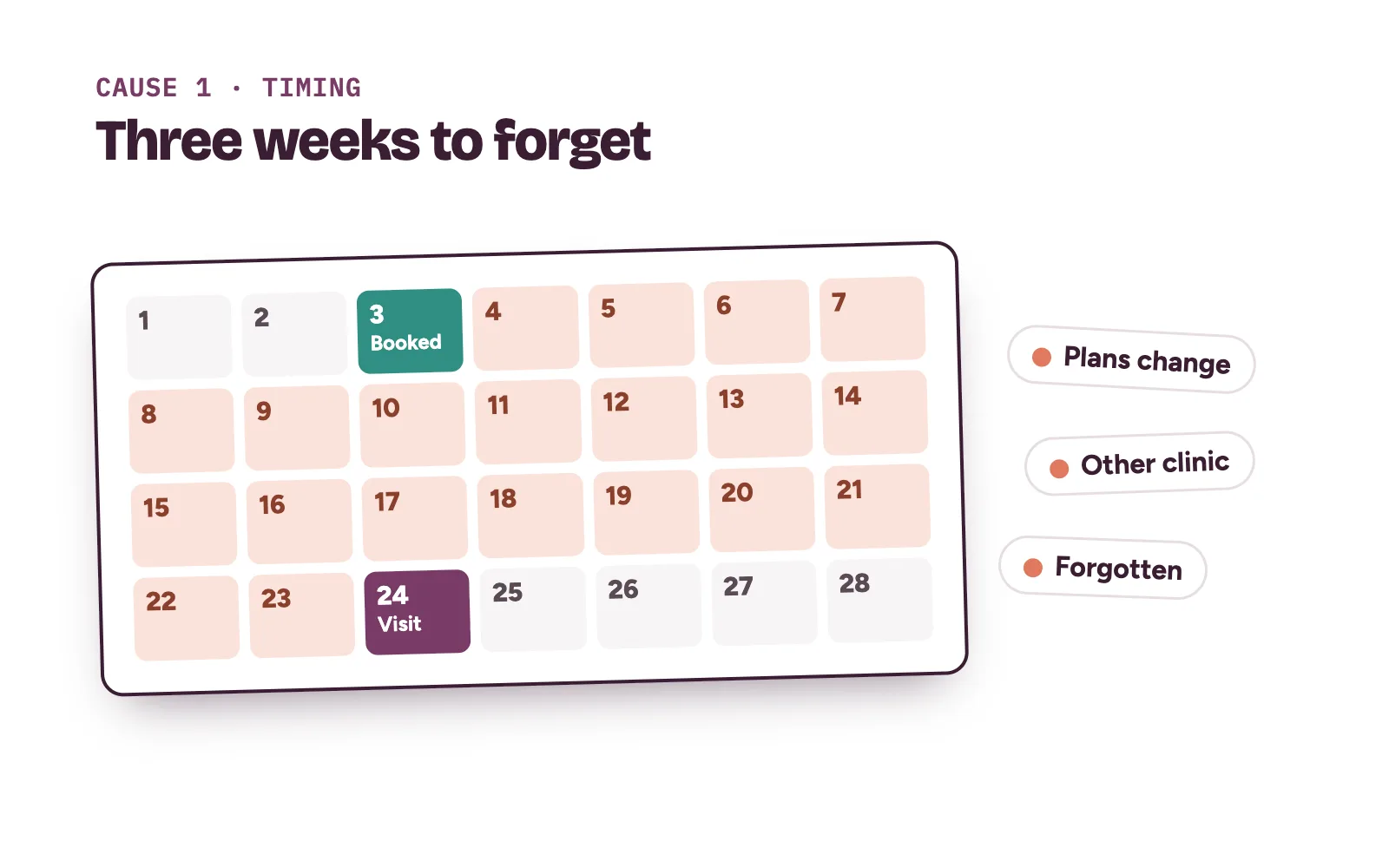
A patient who books today for a visit three weeks away has three weeks to forget, change plans or find another clinic. A 2024 review of hospital non-attendance in Cureus lists forgetfulness among the most common reasons patients gave, and notes that longer waits raise the chance of forgetting.
Look at your log. If the missed bookings cluster at the longest waits, the gap is your problem. Open more near-term slots for first visits, keep a short cancellation list, and stay in touch during the wait.
2. Is the journey harder than they expected?
The same review found transport and distance came up as reasons in several studies, though not in all. In Lagos and Abuja, a 9am slot across town can mean leaving home at dawn.
Check the log for areas and times. If no-shows come from far-off areas or rush-hour slots, offer those patients mid-morning or late-afternoon times. Send the address with a landmark, and say where to park. A patient who isn't sure where you are is easier to lose.
3. Did the price come as a surprise?
Some patients book, then learn the consultation fee from a friend, a reminder or a second call. They don't ring back to say it was more than they planned. They just don't come.
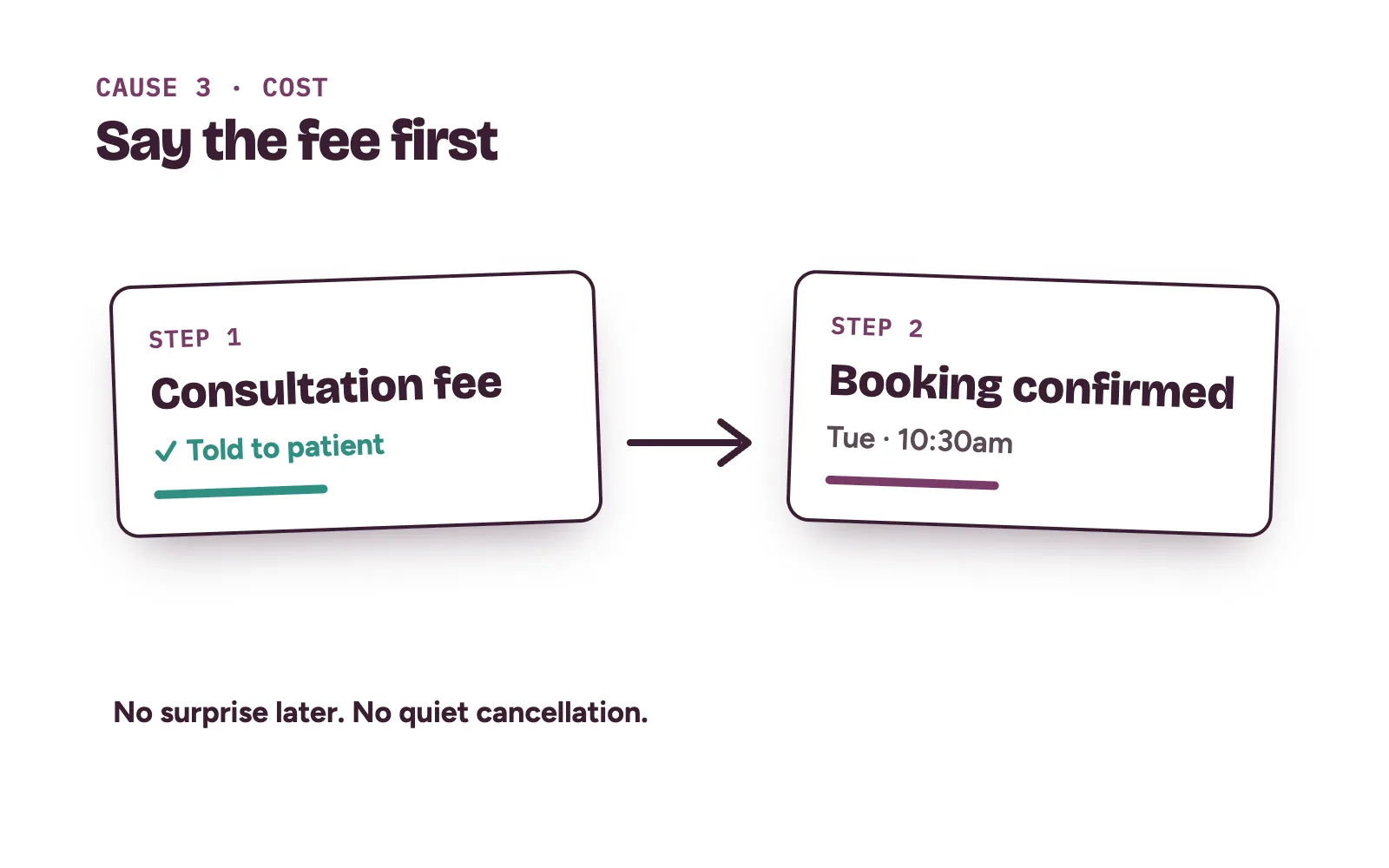
Check what your front desk says about cost before the booking is confirmed. If the honest answer is "nothing," you have found a likely cause. Tell patients the consultation fee, or a clear "from" price, while they are still deciding. Our post on patients who ask the price and never come shows how to handle that question without losing them.
4. Did the reminder actually reach them?
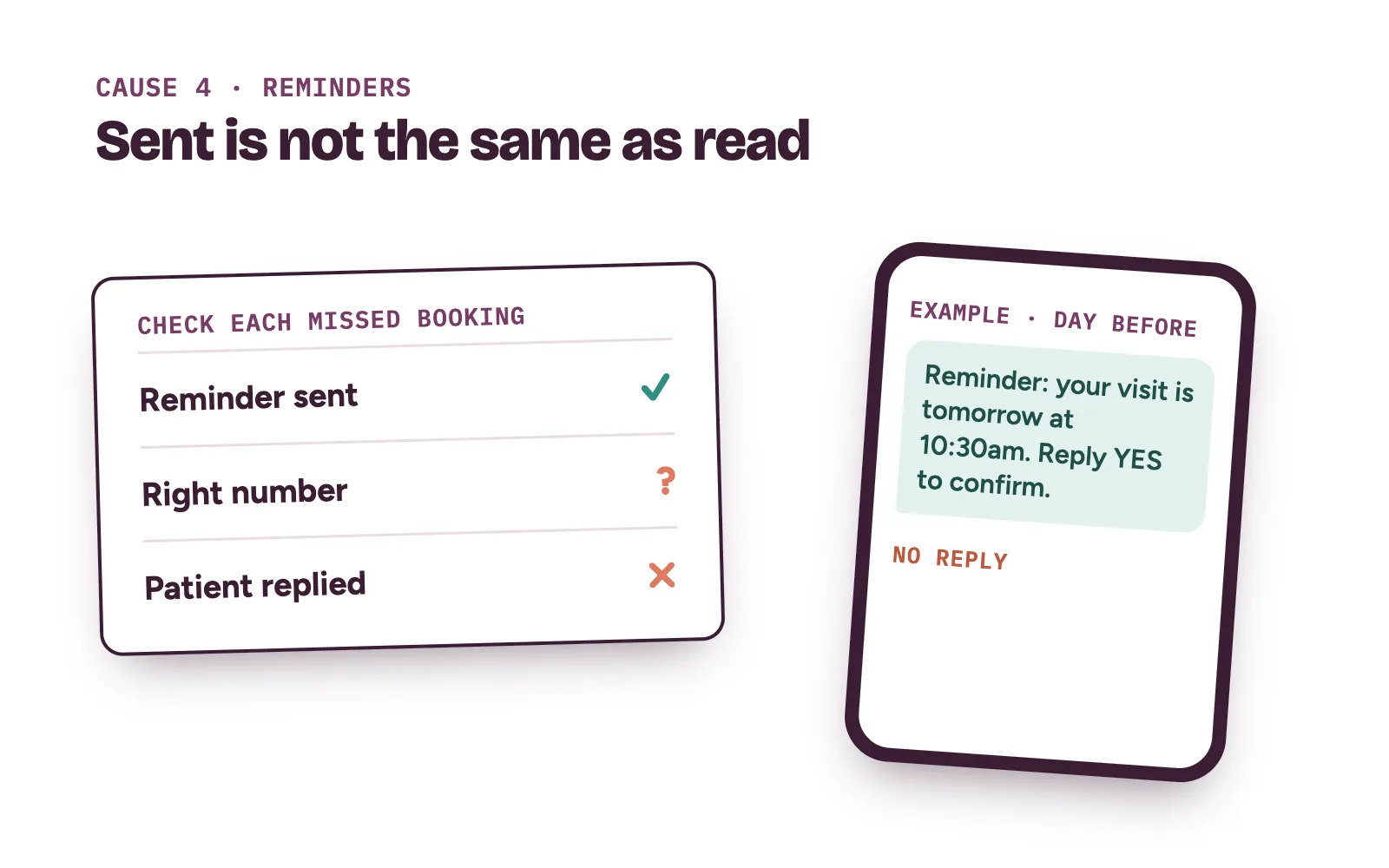
"We send reminders" is not the same as "patients read them." The Cureus review notes that patients often said they were waiting for a reminder or confirmation, and some letters never arrived.
From your log, check three things for each missed booking. Was a reminder sent? Was it sent to the right number? Did the patient reply? A run of unanswered reminders can mean wrong numbers, a sender name patients don't recognise, or messages that land too early to remember. Our post on bulk SMS reminders in Nigeria covers timing and wording.
5. Was skipping easier than rescheduling?
The same review lists trouble cancelling, rescheduling or getting through by phone as reasons patients missed visits. If your line rings out at busy times, a patient who can't come may simply give up.
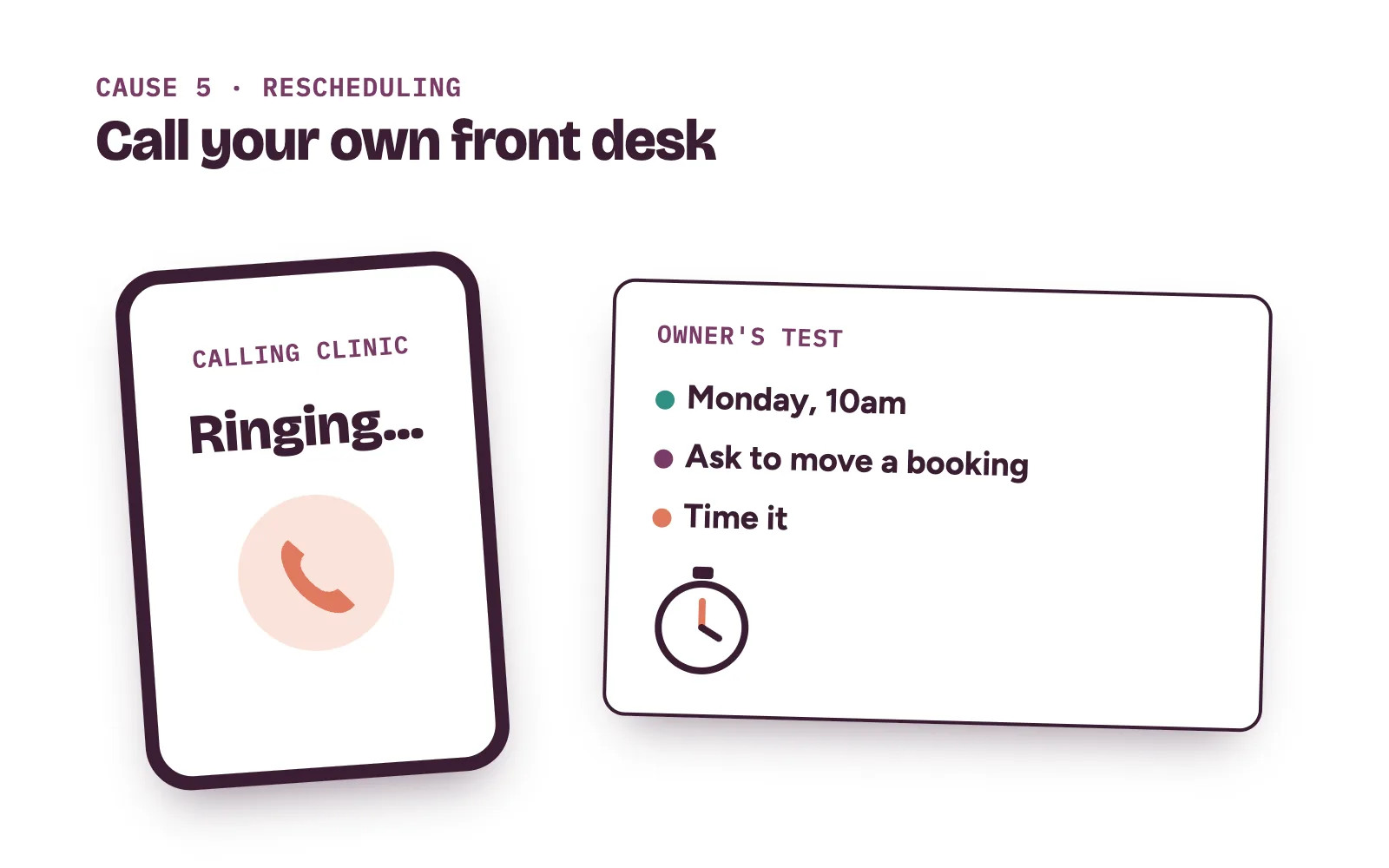
Test it yourself. Call your clinic at 10am on a Monday and try to move a booking. Send a message after hours. Note how long each takes to get a new time. If it is slow or awkward, patients will take the easier route and say nothing.
What does your log tell you?
After two weeks, sort the no-shows by the cause that fits each one. Then fix the biggest group first.
- Long waits. Free up near-term slots and keep in touch during the wait.
- Far areas or rush hour. Offer easier times and clearer directions.
- Cost surprise. Say the fee before the booking is confirmed.
- Unanswered reminders. Check numbers, timing and sender name.
- Hard to reschedule. Give patients one quick way to change the time.
Run the log again a month later to see if the pattern has moved.
How Kren helps clinics find and fix the cause
Kren is a done-for-you growth partner for private clinics in Lagos and Abuja. We help you track why booked patients don't come, then set up the confirmations, reminders and follow-up that match the cause. Your own team does the final follow-up and booking. See our booking operations and leak closure services.
Questions clinic owners ask about patients not showing up
How many no-shows should we log before deciding?
Two weeks of missed bookings is usually enough to see a pattern at a busy clinic. A quieter clinic may need a month. The goal is a rough picture, not a perfect count.
Should we ask patients why they didn't come?
Yes, kindly and briefly, with a new time on offer. Many patients will tell you plainly. Never mention their treatment in a message or voicemail.
Will a deposit fix patients not showing up?
It may reduce some no-shows, but it won't fix a long wait, a hard journey or a reminder that never arrived. Find the cause first, then decide if a deposit still makes sense for your clinic.
Want a second pair of eyes on where your booked patients slip away? Book a 30-minute strategy call and we will go through it with you.