Blog · Enquiries · 5 min read
How our patient follow-up works, from the patient's side
What your patients actually see from our follow-up, from the first enquiry to the recall months later, and what they never receive.
By the Kren Agency team ·
Our patient follow up is a set of short, private messages that reach each patient at five moments: right after they enquire, if they go quiet, after they book, if they miss a visit, and after treatment. We set these up and keep them running for your clinic. Your own team still has the real conversations and confirms every booking.
This post walks through what your patients actually see, step by step, so you can judge it from their side.
What does patient follow up look like to the patient?
To the patient, it should feel like a clinic that pays attention. They hear back fast. They get the details they need, when they need them. Nobody pesters them, and nobody sends anything private where others might read it.
Patients reach clinics by phone, SMS, WhatsApp, email, Instagram and Facebook DMs, website forms and walk-ins. We set up follow-up on the channels your patients already use, so nobody has to switch apps to hear from you.
1. Right after they enquire
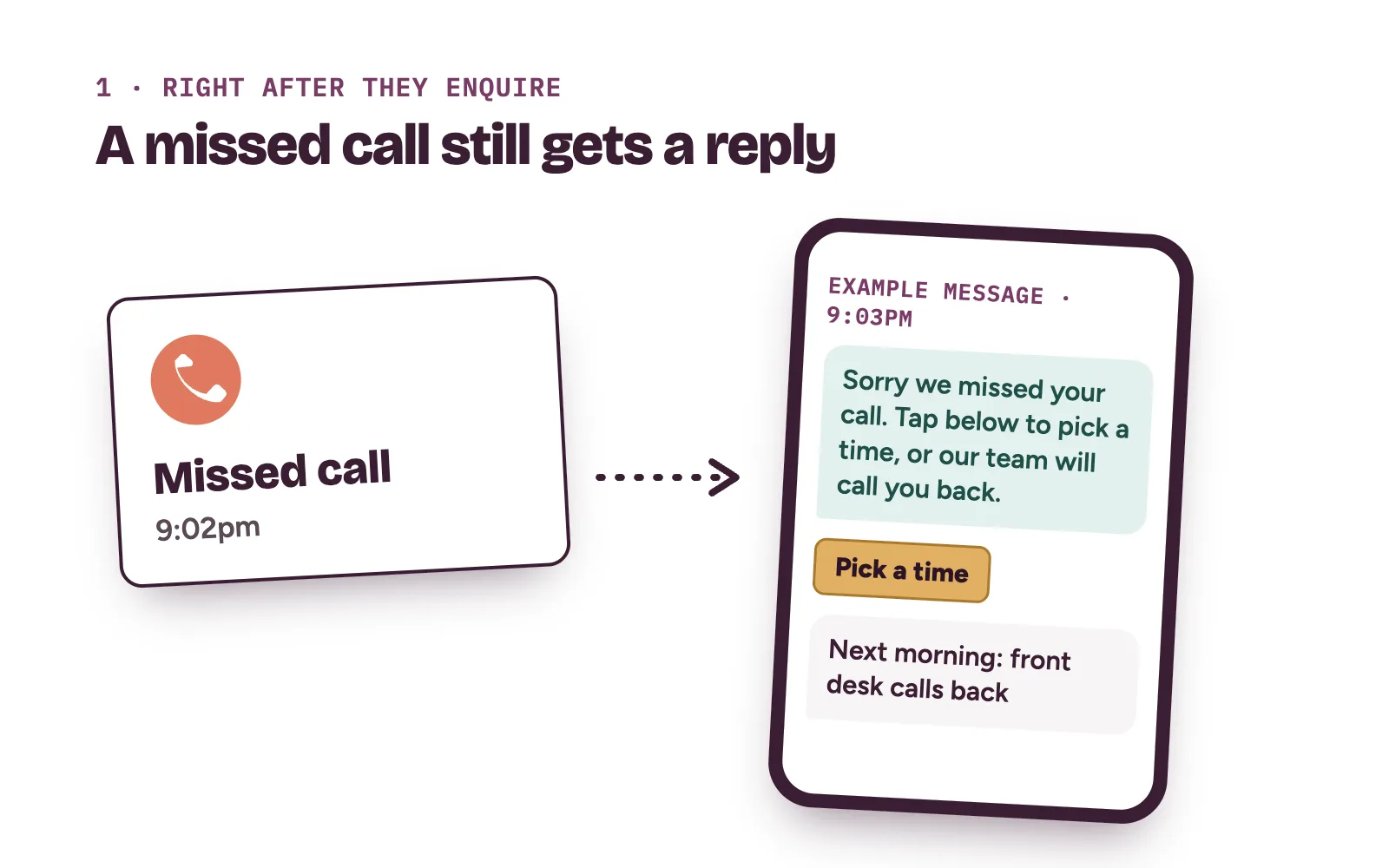
A patient sends a message at 9pm, or calls while your front desk is busy with someone at the counter. Today, that patient may wait until the next morning, or never hear back at all.
With our follow-up, they get a short reply straight away. It tells them the clinic has their message and that a member of your team will be in touch. If they called and nobody picked up, they get a text-back with a link to pick a time and a promise of a call back.
Then your front desk calls or messages them, picking up a patient who already knows the clinic heard them.
2. If they ask and then go quiet
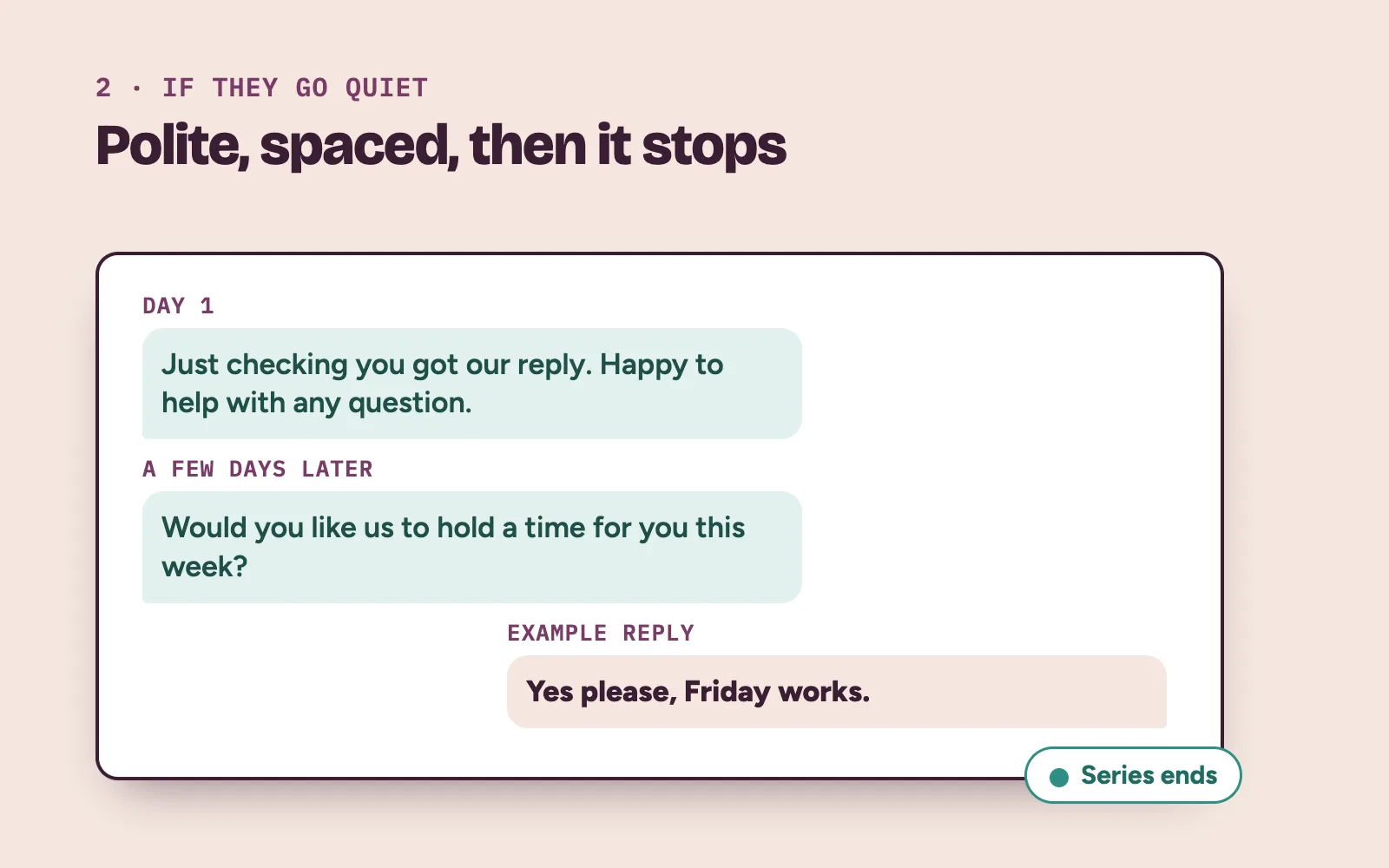
Many patients ask a question, get an answer and say nothing more. They are busy, comparing clinics or not ready yet. Most clinics never ask again.
We set up a short, polite series of follow-ups for these quiet enquiries. Each one is brief, written in your clinic’s voice and spaced out so it never feels like chasing. The series stops as soon as the patient books or says no.
Patients must agree to hear from you, and they can always opt out. WhatsApp’s own Business Messaging Policy says businesses need opt-in permission before sending further messages and must respect every request to stop. We build each step around that consent.
3. After they book
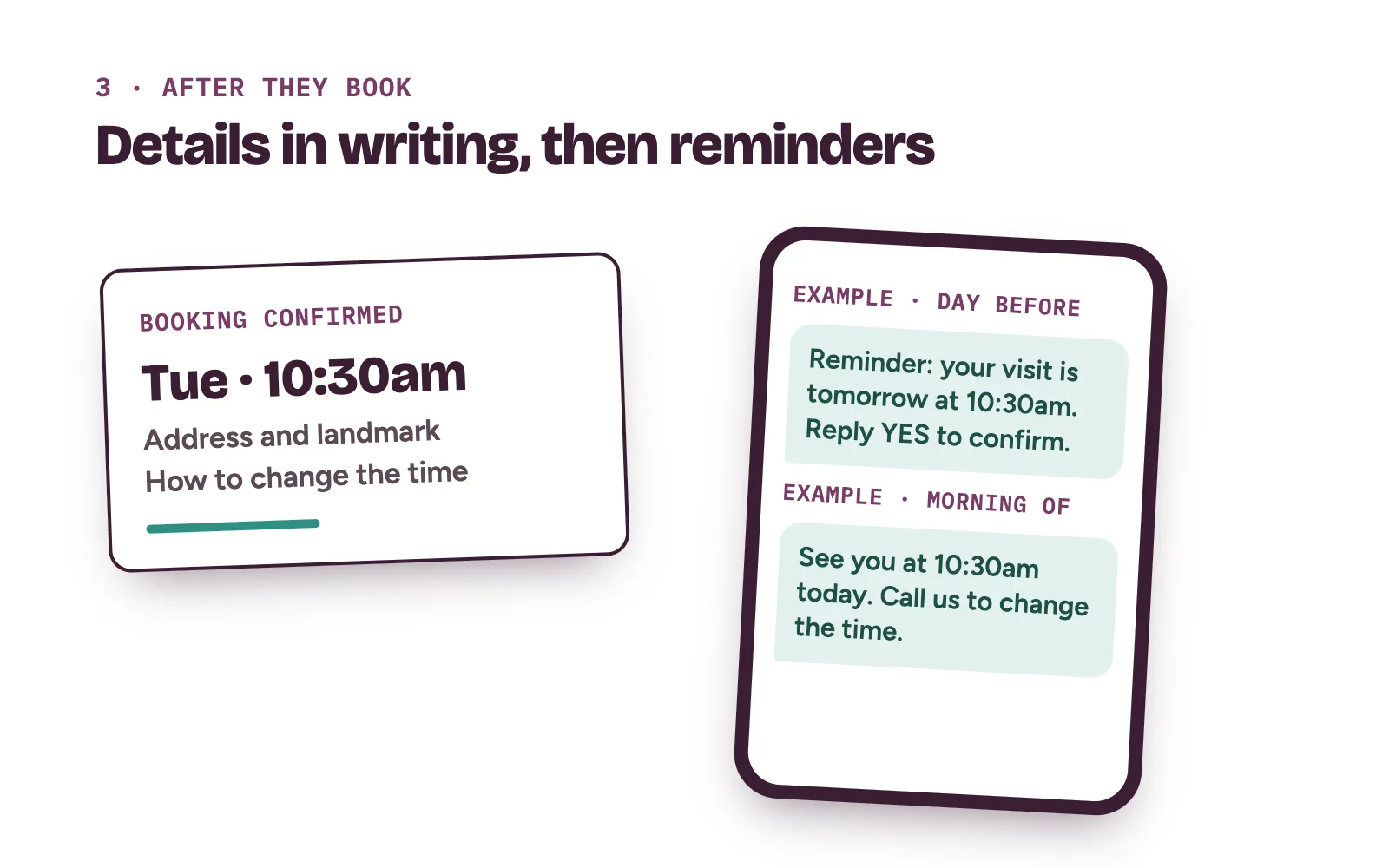
Once your team confirms a booking, the patient receives the details in writing: date, day, time, address and how to change the time. Then a reminder arrives before the visit, and a short note on the day itself.
Each reminder makes rescheduling easy. Patients who cannot come are asked to tell you, so your team can move the visit and offer the slot to someone else. Our post on how to reduce patient no-shows explains why each of these steps matters.
4. If they miss the visit
A patient who misses a visit is often still interested. Something came up.
Later that day, they get a short, kind message saying the clinic missed them and offering to find a new time. There is no blame in it and no detail about why they were coming. Your team follows with a call if the patient replies or if your clinic prefers to call first.
5. After the treatment is finished
The patient has been seen. This is where most clinics stop, and where repeat bookings quietly slip away.
- A thank-you and a review request. Sent after the visit, so happy patients have an easy way to share their experience. Our post on Google reviews for clinics covers how to ask the right way.
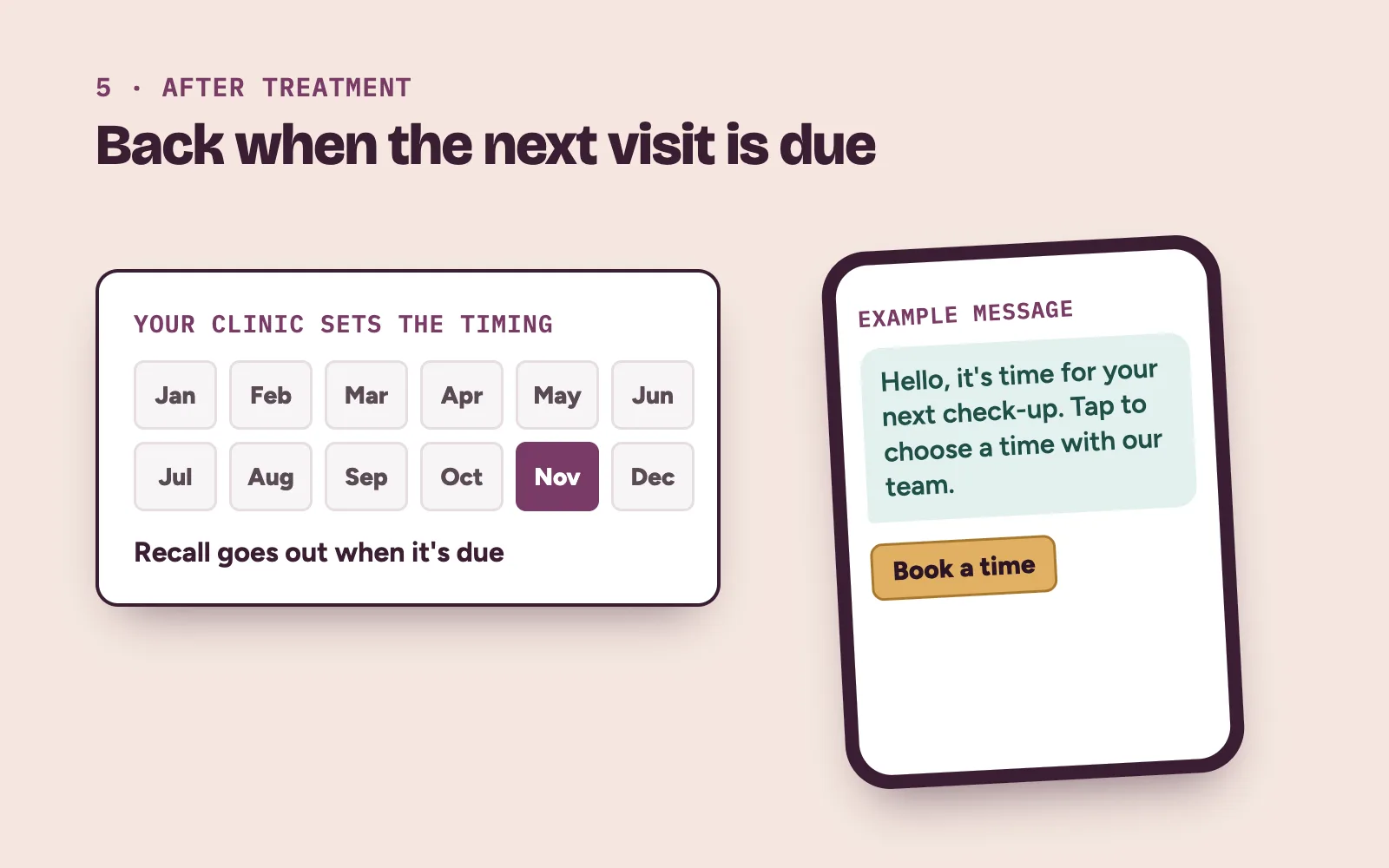
- A recall when they are due. Check-ups, reviews and follow-up visits your clinic recommends, sent at the time your clinic sets.
- A way back in. Every recall points the patient to your team to book, so the conversation stays with your clinic.
What the patient never receives
From the patient’s side, what we leave out matters as much as what we send. Phones are often shared.
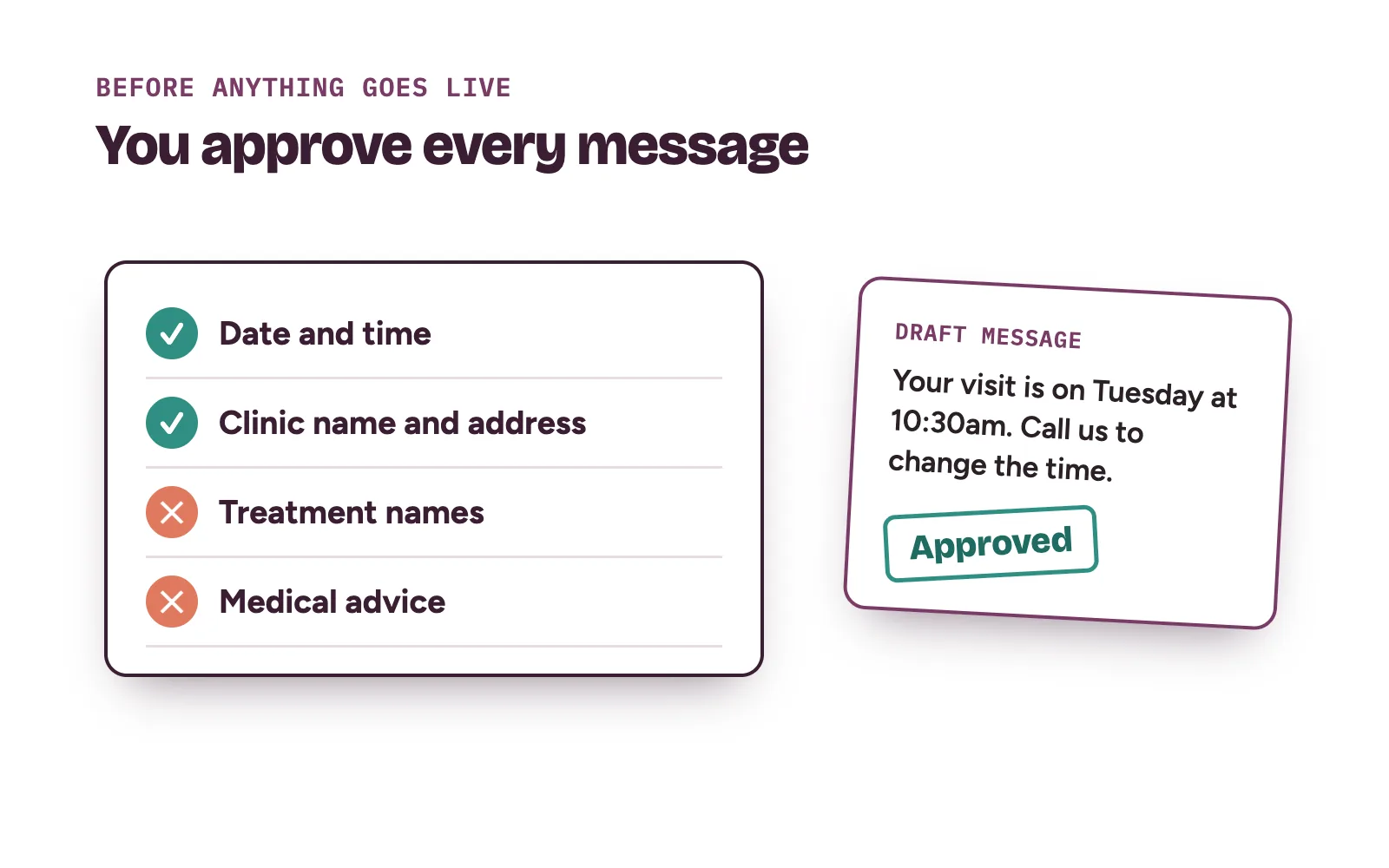
- No treatment names. Messages carry dates, times and the clinic’s name, never the reason for the visit.
- No medical advice. Anything clinical or sensitive goes straight to a person on your team.
- No pretending. Automated messages never claim to be a person.
- Nothing you haven’t approved. You read and sign off every message before it goes live.
Who does what?
We set up the follow-up, write the messages with you, connect them to the channels you use and keep them running. We check each month that nothing has slipped and show you how bookings and attendance are moving.
Your team does the part patients care about most: talking to them, answering their questions and confirming the booking. Patients want to speak to the clinic that will treat them. You can see the full scope on our funnel automation service page, and how it fits your front desk on booking operations.
Questions clinic owners ask about patient follow-up
Will Kren reply to our patients?
No. We set up and maintain the automated messages. Your own team handles every real conversation, the final follow-up and the booking.
Is this only on WhatsApp?
No. WhatsApp is one channel among several. We set up follow-up on the channels your patients already use, including calls, SMS, email and DMs, and use WhatsApp only where it fits within its business messaging rules.
Won’t automated messages feel cold?
They can if they try to do too much. Ours are short, written in your clinic’s voice and have one job: let the patient know you heard them and get them to your team.
Will this stop every missed appointment?
No, and nobody can honestly promise that. People get sick, stuck in traffic or busy. What we can do is make sure every patient is reminded and has an easy way to change the time.
Want to see where patients go quiet at your clinic today? Book a 30-minute strategy call and we will walk through it with you.