Blog · Ads · 5 min read
I spent money on ads and got nothing. What went wrong?
Clinic ads that bring nothing usually break at one step: the wrong objective, the wrong people, a rejected ad, a weak page, slow replies or no tracking. Here is how to find it.
By the Kren Agency team ·
Clinic ads not working usually means the money did reach people and then stopped somewhere between the ad and a booked patient. The usual causes are an ad set up for likes, the wrong audience or area, ads rejected under health rules, clicks sent to a page that doesn't help, slow replies and no tracking. Find the step where it stopped, and fix that before you spend again.
Clinic ads not working? Find where the money stopped
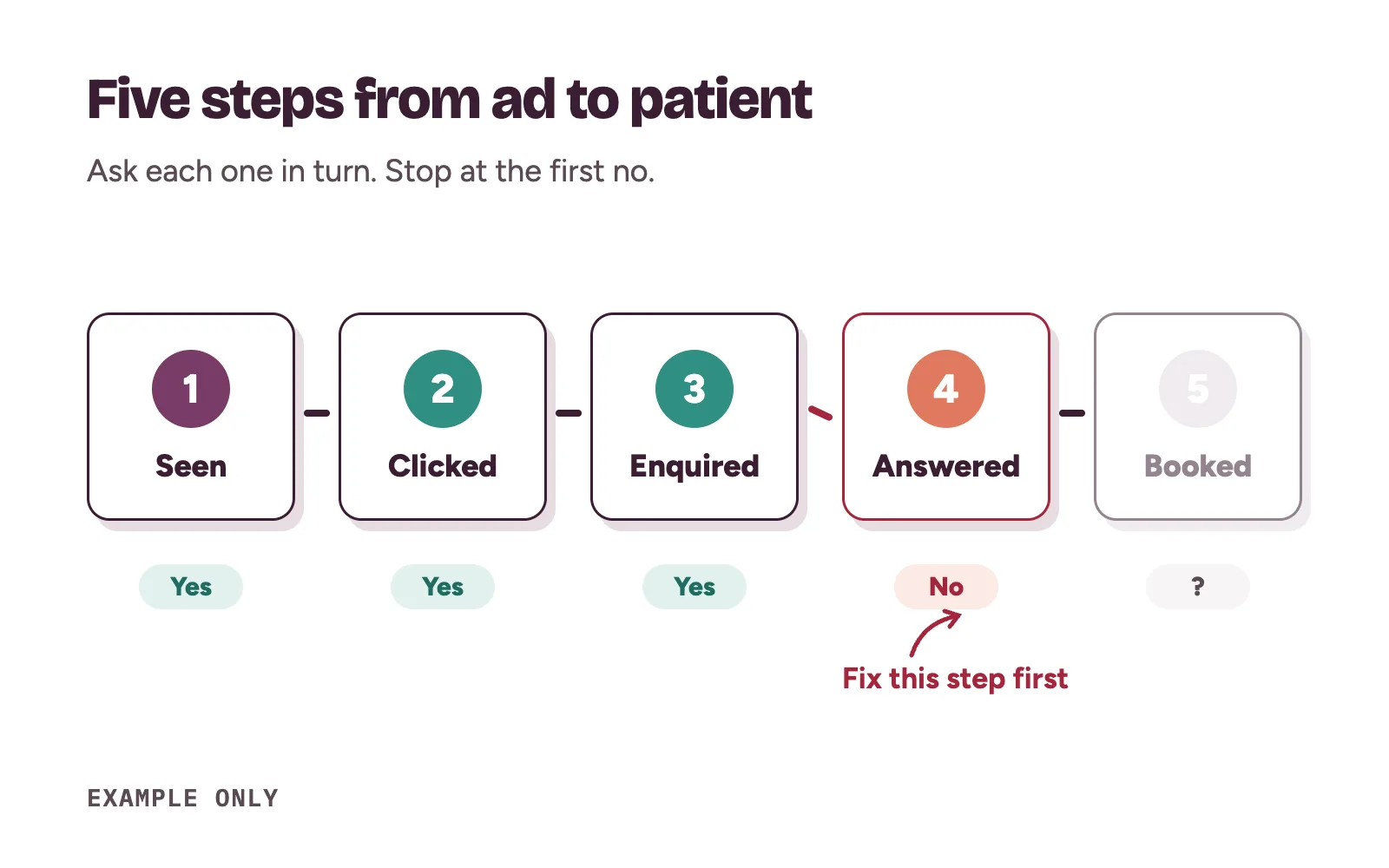
Every ad has to pass five steps before it becomes a patient. People see it. Some click, call or message. Some ask about a treatment. Your team replies. A patient books. Lost money is a break at one of those steps.
Put the ad report next to your enquiry records and ask one question per step:
- Seen: did the ad run, in the areas your patients come from?
- Clicked: did people click, call or message?
- Enquired: did any of them ask about a treatment or a price?
- Answered: how long did each enquiry wait for a reply?
- Booked: did anyone book, and do you know which ad sent them?
The first "no" is where to look. The six causes below follow those steps.
Why did a boosted post bring likes and no patients?
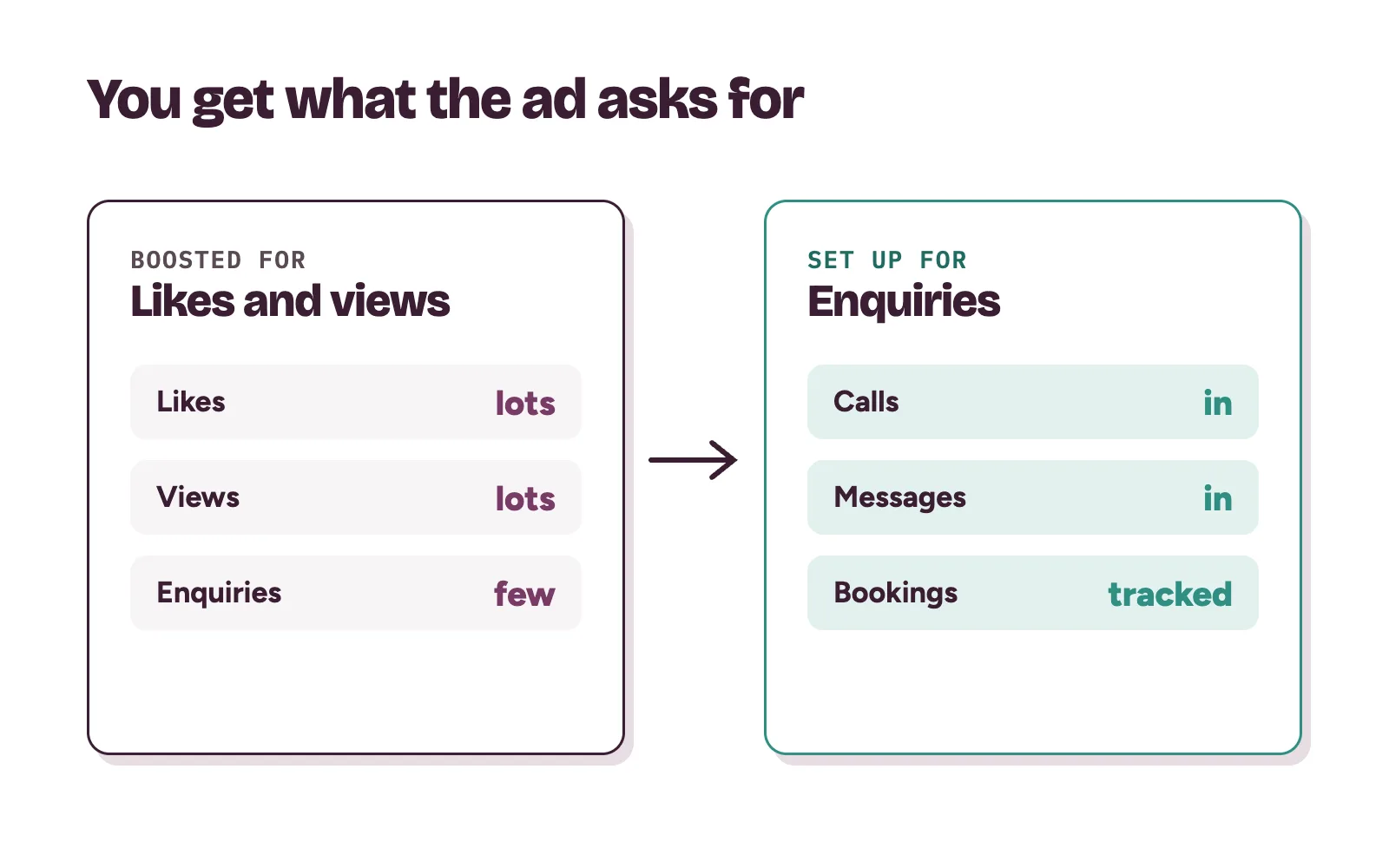
A boost, or a campaign aimed at engagement or reach, goes after likes, comments and views. If that is what you paid for, the ad delivered it. Likes rarely turn into bookings by themselves.
For bookings, the campaign needs to be aimed at enquiries, with a clear place for those enquiries to land. Our post on running Facebook ads for a clinic walks through that set-up for a first campaign.
Did the ad reach the wrong people?
An ad can reach thousands and still miss. The location may cover a whole state when patients come from a few nearby areas. The audience may be too wide. Or one ad tries to sell the whole clinic.
Narrow it. One treatment per campaign. The areas your patients actually travel from. For search ads, the words people type when they are ready to book. Our post on Google Ads for clinics in Nigeria covers keywords and locations there.
Was the ad rejected or limited?
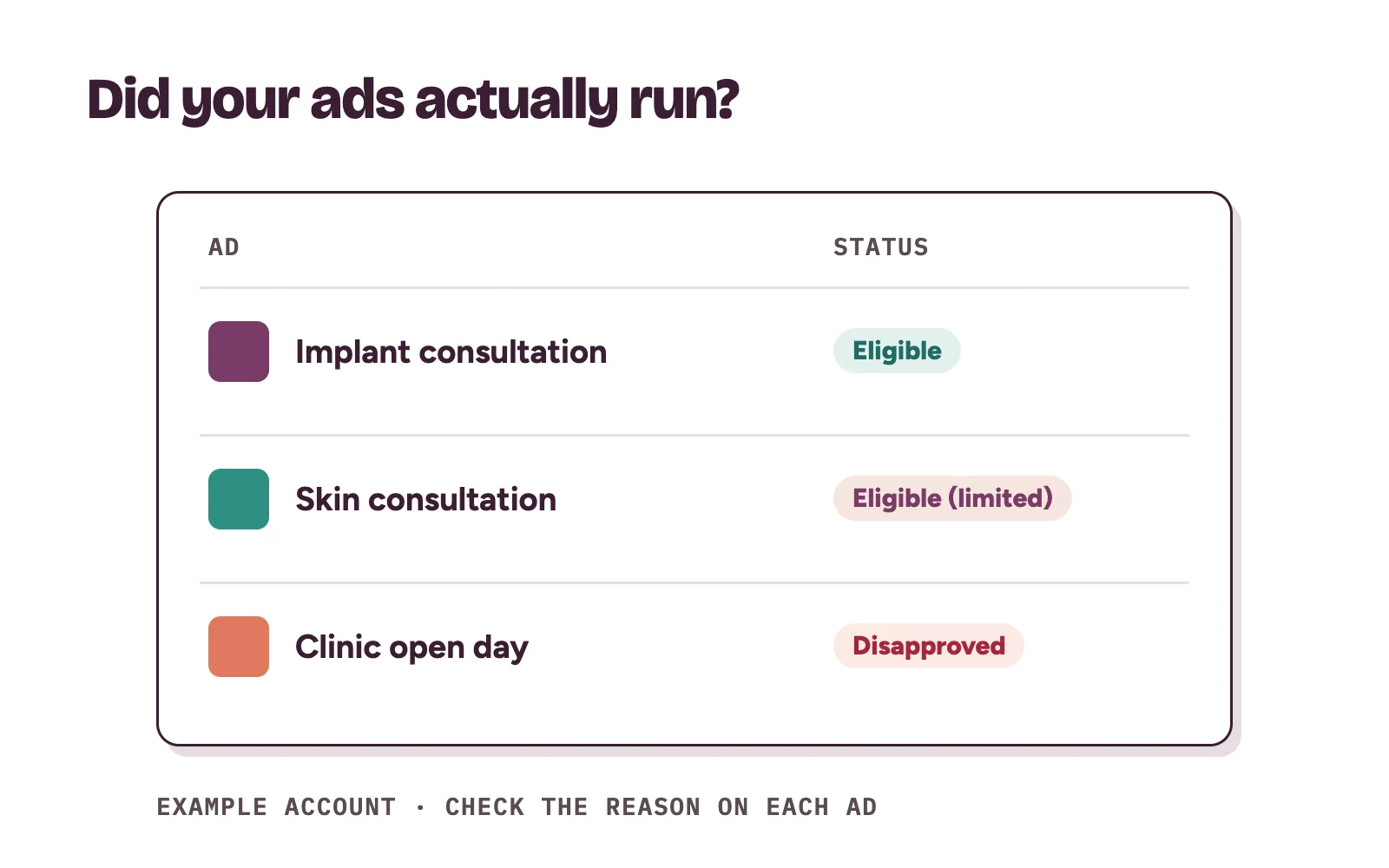
Many owners never check an ad's status and assume it ran. On Google Ads, a disapproved ad won't run until the policy problem is fixed and the ad is reviewed again. An ad marked "Eligible (limited)" can run, but it is restricted in where it can show, according to Google's help page on ad approval statuses.
Meta's Advertising Standards say ads must not assert or imply personal attributes, and that includes physical or mental health and medical conditions. Wording that speaks to the reader as if they have a condition breaks that rule. The same standards require ads for cosmetic procedures, and for health or weight loss products and services, to target people aged 18 or older.
Read the reason given, then rewrite: no promised outcomes, no condition wording, no patient photos without consent.
Where did the click land?
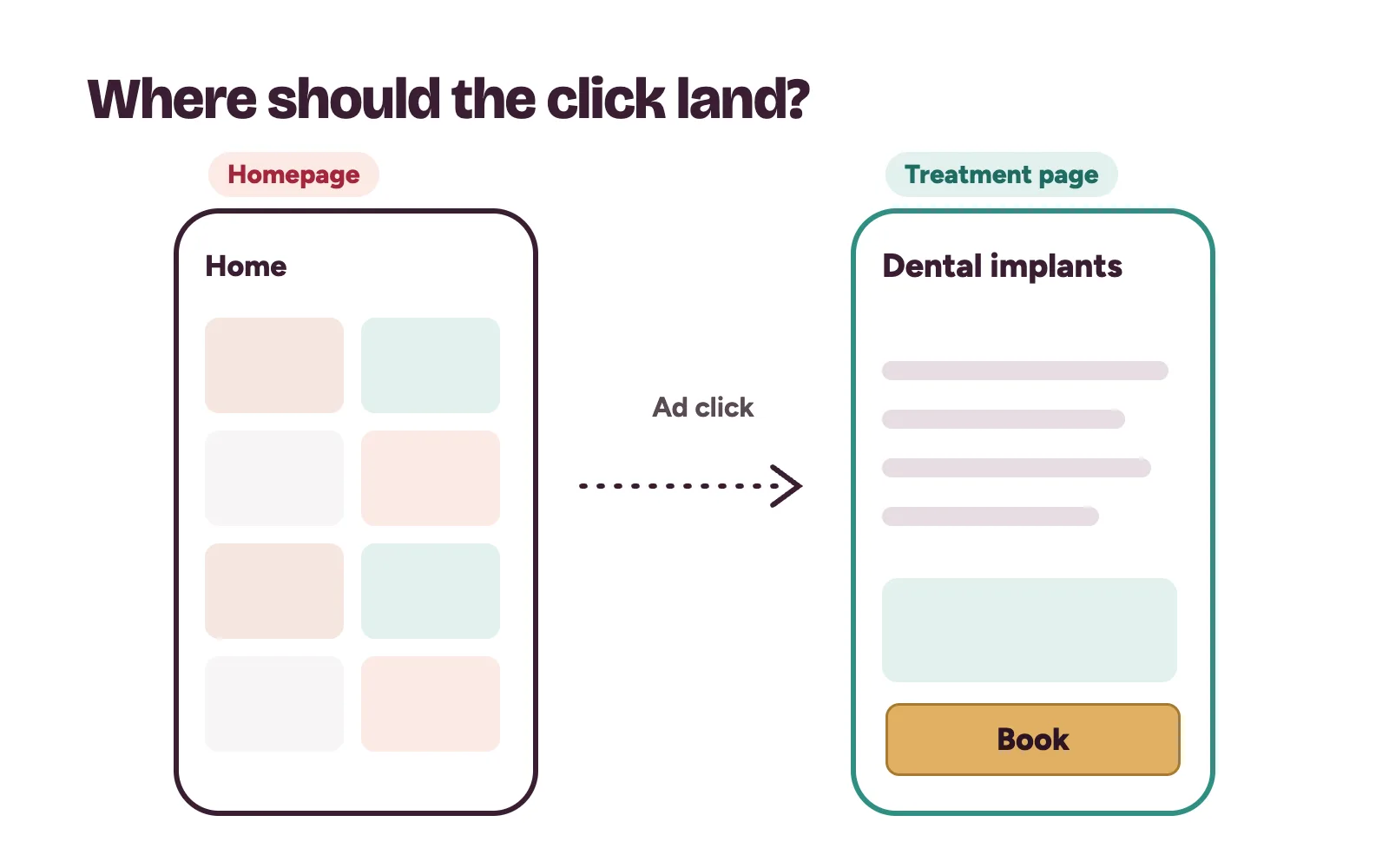
A click that lands on a homepage leaves the person to hunt for the treatment, the price question and the way to book.
Each ad needs a page about the one treatment it promotes: who it suits, what happens at the first visit, how to ask about price and how to book. Our website conversion work builds pages like this for clinics.
Did enquiries wait too long for a reply?
Sometimes the ads worked and the enquiries went quiet. Calls rang out. Messages sat until the next morning.
Check one week of enquiries: when each one arrived, when it got a reply and who replied. If replies take hours, more ad money only buys more missed patients. Fix the answering first. Our leak closure work finds where enquiries go quiet.
Can you tell which ad brought which patient?
If nobody records where each enquiry came from, you can't say whether the ads failed. Some people see an ad, then search the clinic's name or walk in days later.
Ask every new patient how they heard of you. Tag every call, form and message with its source. Mark each one booked or not. Then judge each ad by cost per booking: what it spent, divided by the patients it booked.
What should you change before spending again?
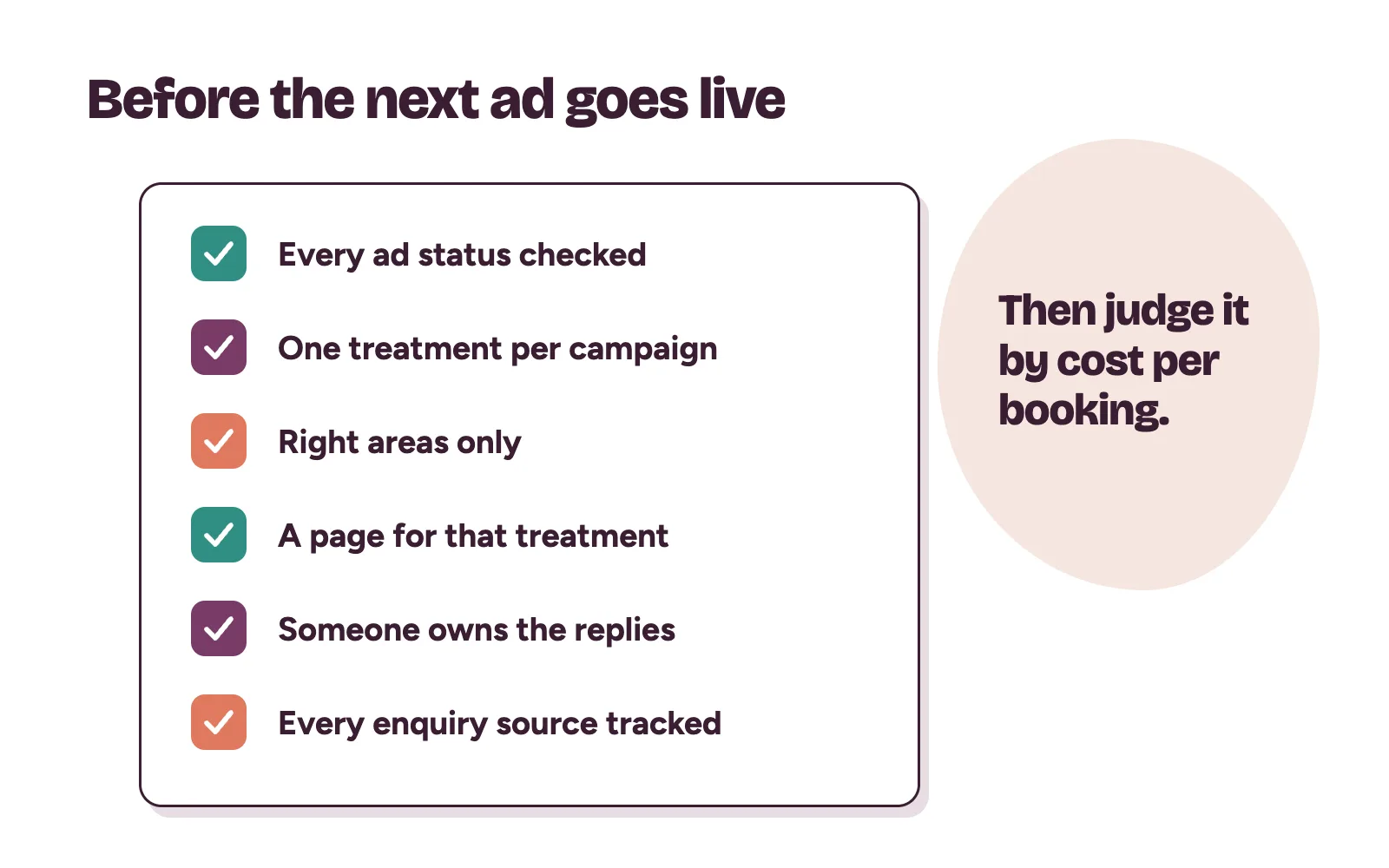
- Check every ad's status and fix anything disapproved or limited.
- Pick one treatment and set the campaign up to get enquiries.
- Narrow the area to where your patients come from.
- Send clicks to a page for that treatment with a clear way to book.
- Agree who answers ad enquiries, and how fast, before the ad goes live.
- Record the source of every enquiry and mark what booked.
- Review after a week by cost per booking, and change one thing at a time.
If you would rather have a team run this, see how we run clinic ads on Meta and Google. We set up and run the ads, pages, tracking and follow-up automations. Your own team does the final follow-up and booking.
Questions clinic owners ask when ads don't work
Should we stop running ads altogether?
Not until you know where it broke. If the break is at the reply or tracking step, stopping ads fixes nothing. Pause the broken ad, fix that step, then test again.
Is the problem the ad or our follow-up?
Look at the enquiries. If people enquired but few booked, check reply speed and how your team handles the price question. If almost nobody enquired, the ad, the audience or the page is the more likely cause.
Why was our clinic ad rejected?
Check the status and the reason shown in the ad account. Under Meta's standards, ads can't imply the reader has a health condition, and promised outcomes are a risk on any channel. Rewrite the ad, then let it be reviewed again.
Will a bigger budget fix ads that aren't working?
Rarely. More budget pushes more people through the same broken step. Fix the step first, then raise spend on the ad that books patients at a cost your clinic can carry.