Blog · Ads · 5 min read
Are Google Ads worth it for my clinic?
Google Ads pay a clinic when four things line up: a searched treatment, a page that converts, fast replies and tracking. Here is how to tell, and how to test.
By the Kren Agency team ·
Are Google Ads worth it for a private clinic? Yes, when four things are in place: a treatment people actively search for, a page that turns visits into enquiries, a team that replies fast, and tracking that shows which clicks became bookings. Miss any one of them and the same budget buys clicks that go nowhere.
This post is for owners and managers in Lagos and Abuja deciding whether to start, restart or stop. It covers when the ads pay, when they don't, and how to test before you commit more money.
When are Google Ads worth it for a clinic?
Google Search ads show when someone types a question into Google.
Someone searching "dental implant clinic Lekki" or "fertility clinic Abuja" has a need and is comparing options today. An ad in front of that search reaches a patient at the moment they decide.
So the first test is simple. Do people search for the treatments you want to fill? Some treatments get steady searches: implants, braces, scans, fertility consultations, physiotherapy after an injury. Others are mostly discovered on Instagram or by word of mouth. For those, search ads have little to show up for.
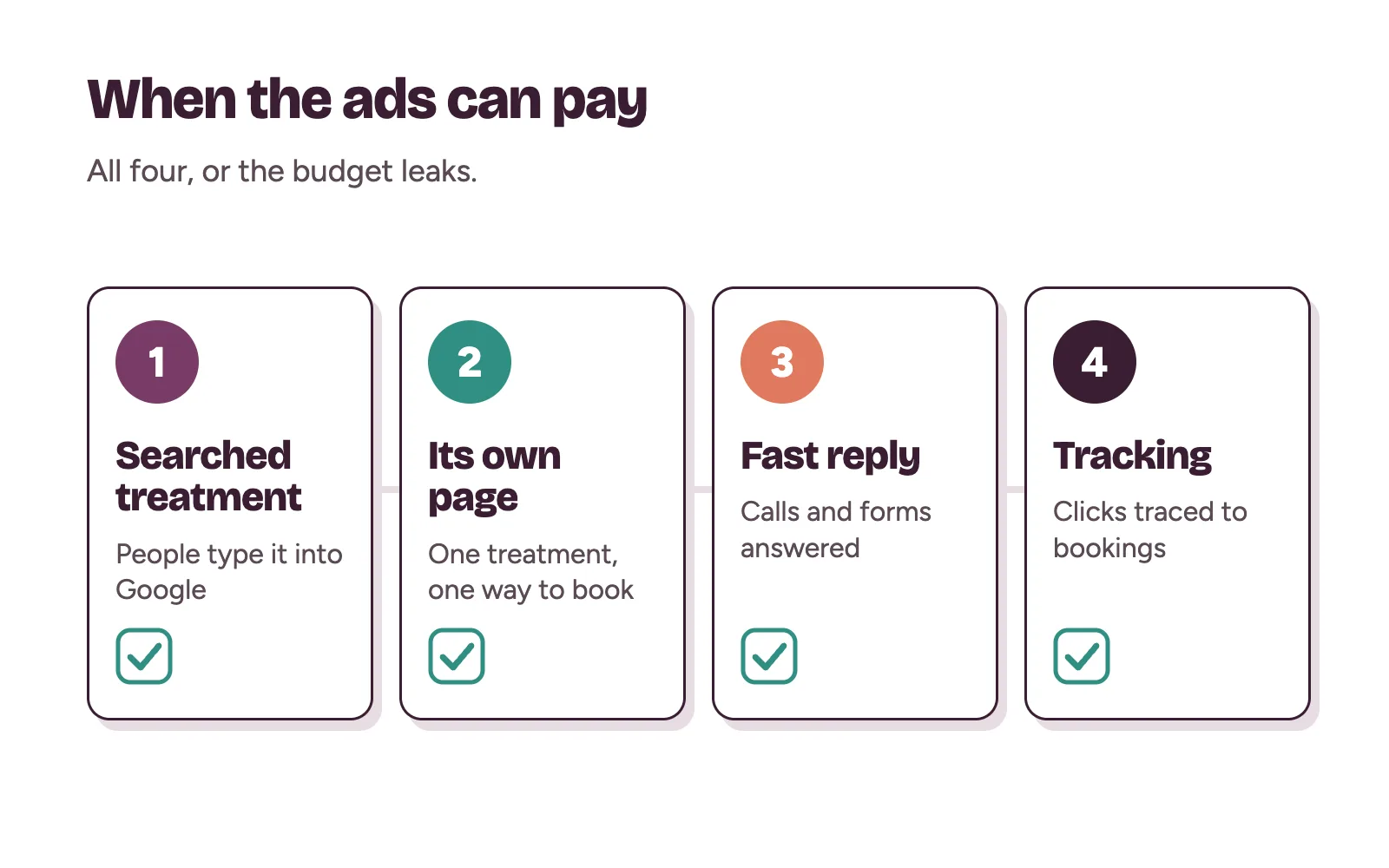
What makes a clinic's Google Ads lose money?
When a clinic says "we tried Google and it didn't work", the cause usually sits in one of four places.
The ads matched the wrong searches
Google's default keyword setting is broad match, which lets ads show on related searches that don't contain your exact words, according to Google's help page on keyword matching. Without negative keywords, a clinic can pay for searches from job seekers, students or people looking for free treatment.
The click landed on the homepage
A person who searched for teeth whitening lands on a page about everything the clinic does. They can't find the treatment, the location or a way to book. They leave. Each treatment you advertise needs its own page with one clear next step.
Nobody replied in time
The ad works, the phone rings, and nobody picks up. Or a form sits unread until the next morning. By then the patient has called the next clinic on the list. Our post on how missed calls at the front desk cost a clinic patients goes deeper on this.
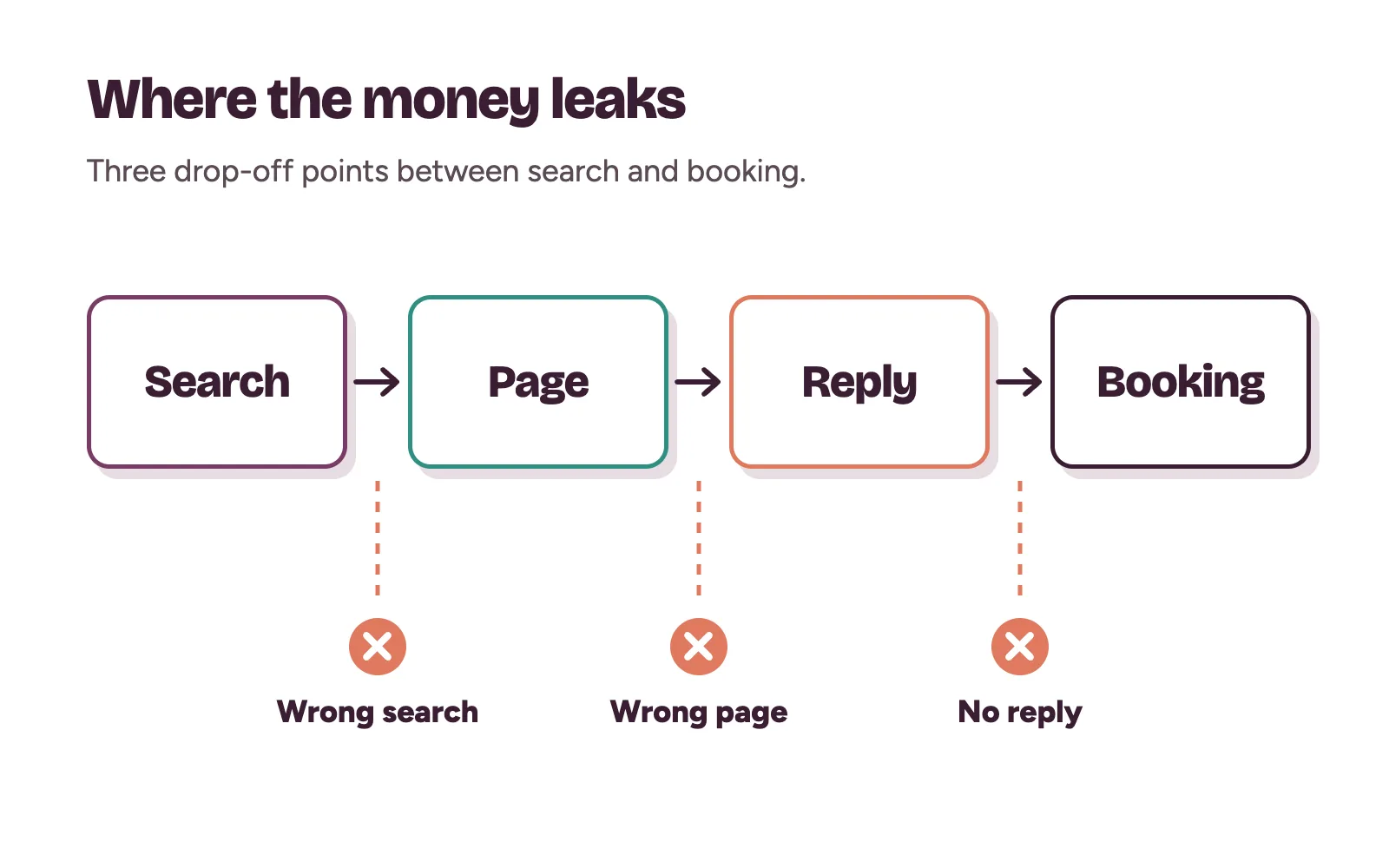
Nobody could tell what worked
Without tracking, every month looks the same: money out, some calls in, no idea which ad brought whom. Google Ads lets you count the actions you choose as valuable, including calls from your ads, calls to the number on your website and form sign-ups, as its help page on conversion measurement explains. If that isn't set up, you are judging the ads by feel.
When are Google Ads a poor fit right now?
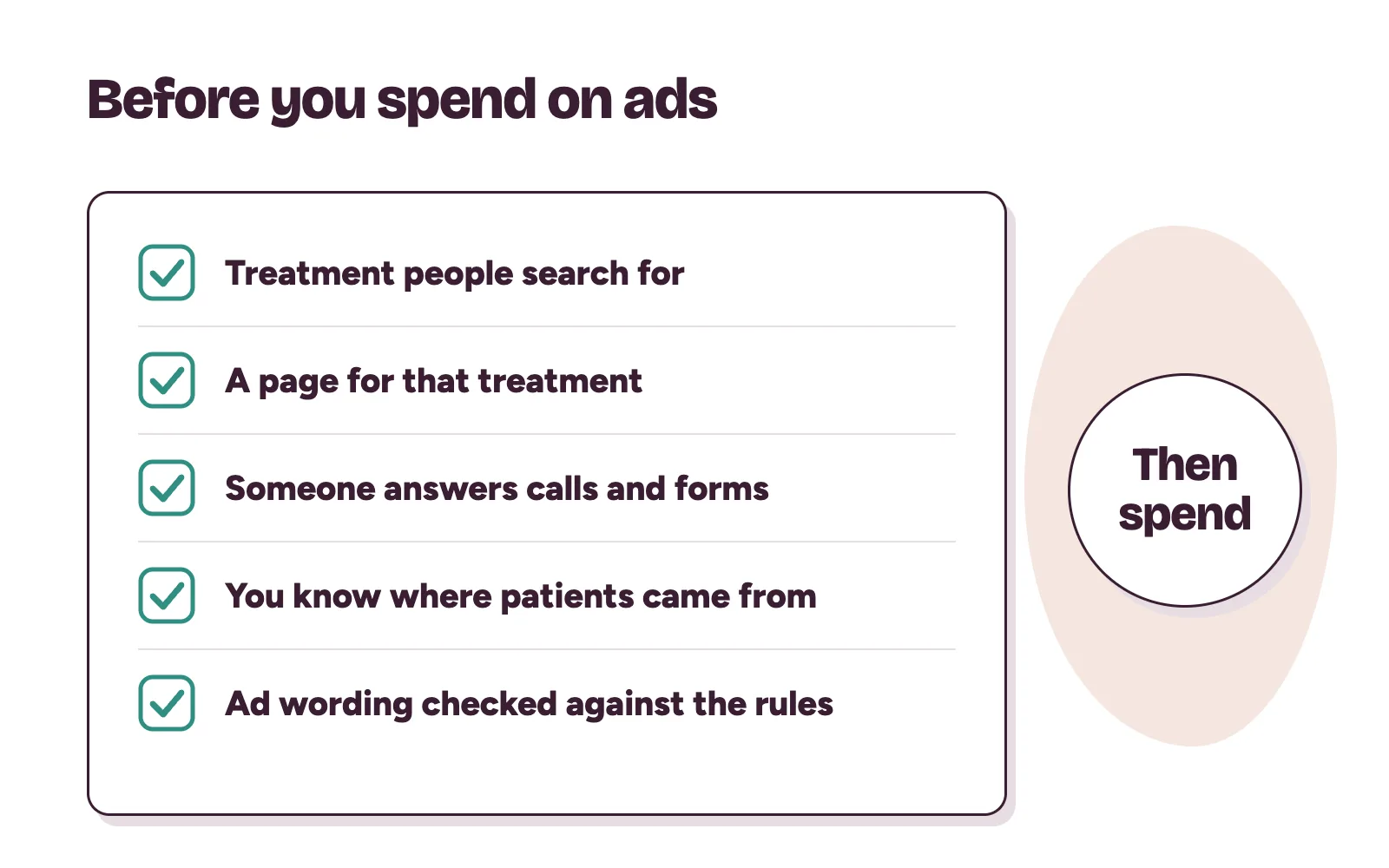
Hold off, or fix the basics first, if any of these is true:
- The treatment you want to promote is rarely searched for in your city.
- You have no page for that treatment, only a homepage or a social profile.
- Calls go unanswered at busy times and nobody checks forms or messages after hours.
- You can't say how many new patients you booked last month or where they came from.
- The treatment falls under Google's restricted healthcare rules and you haven't checked what the ad can say.
Fix these first and your first ad budget teaches you something.
How should a clinic test Google Ads?
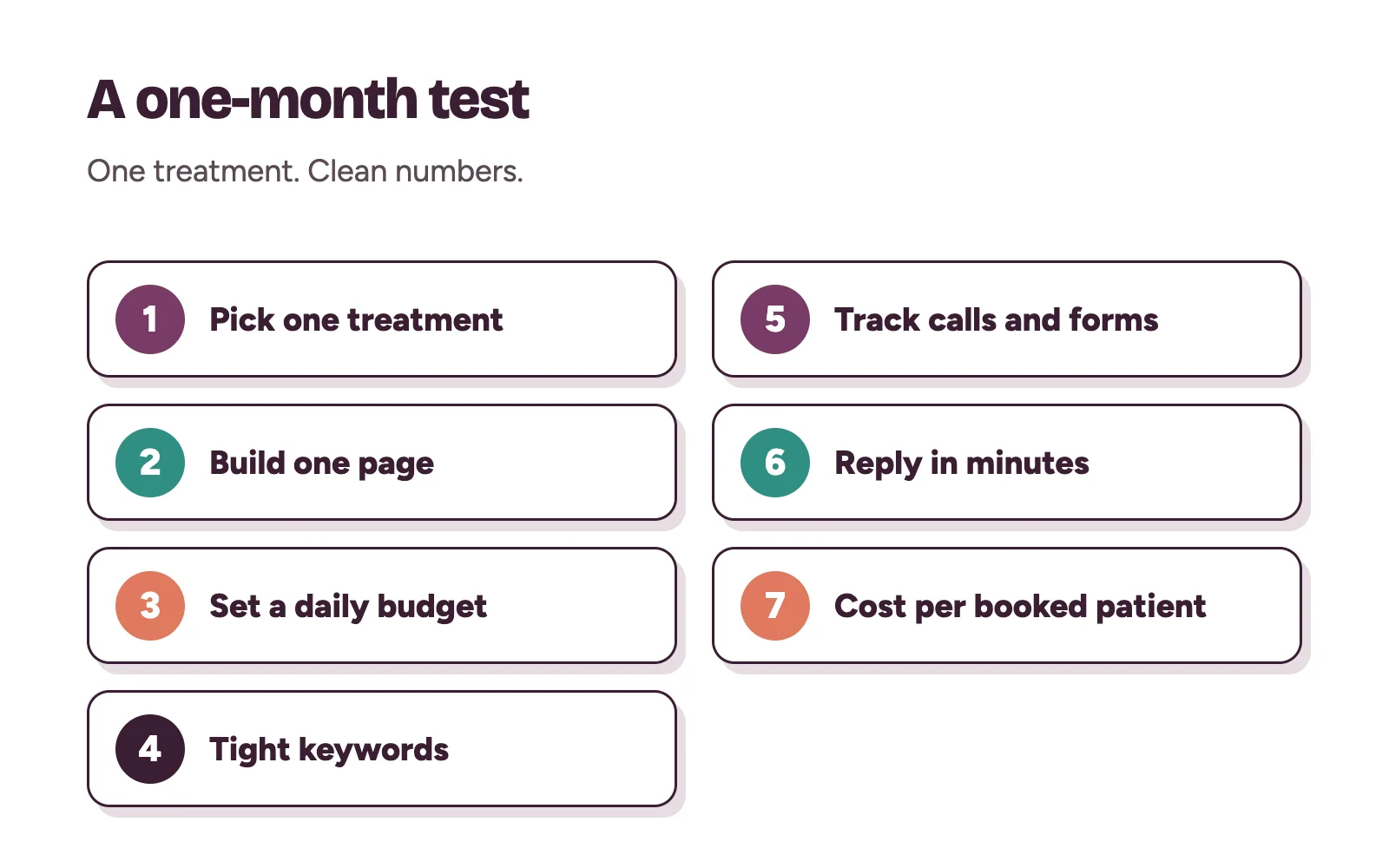
Treat the first month as a test with a clear question: can this treatment bring booked patients at a cost the clinic can carry?
- Pick one treatment. Choose one with steady searches and room in your bookings.
- Build one page for it. What it is, who it suits, where you are, and one way to book.
- Set a daily budget you can afford to lose. Google treats it as an average, so some days run higher. Our post on Google Ads for clinics in Nigeria covers budgets and keywords in more detail.
- Use tight keywords and a negative list. Phrase or exact match on treatment-plus-location searches.
- Track calls and forms as conversions. Ask every new patient how they found you, too.
- Reply within minutes during opening hours. Agree who owns the phone and the inbox.
- Judge by cost per booked patient. Clicks and impressions only tell you the ad was seen.
How do you judge the result?
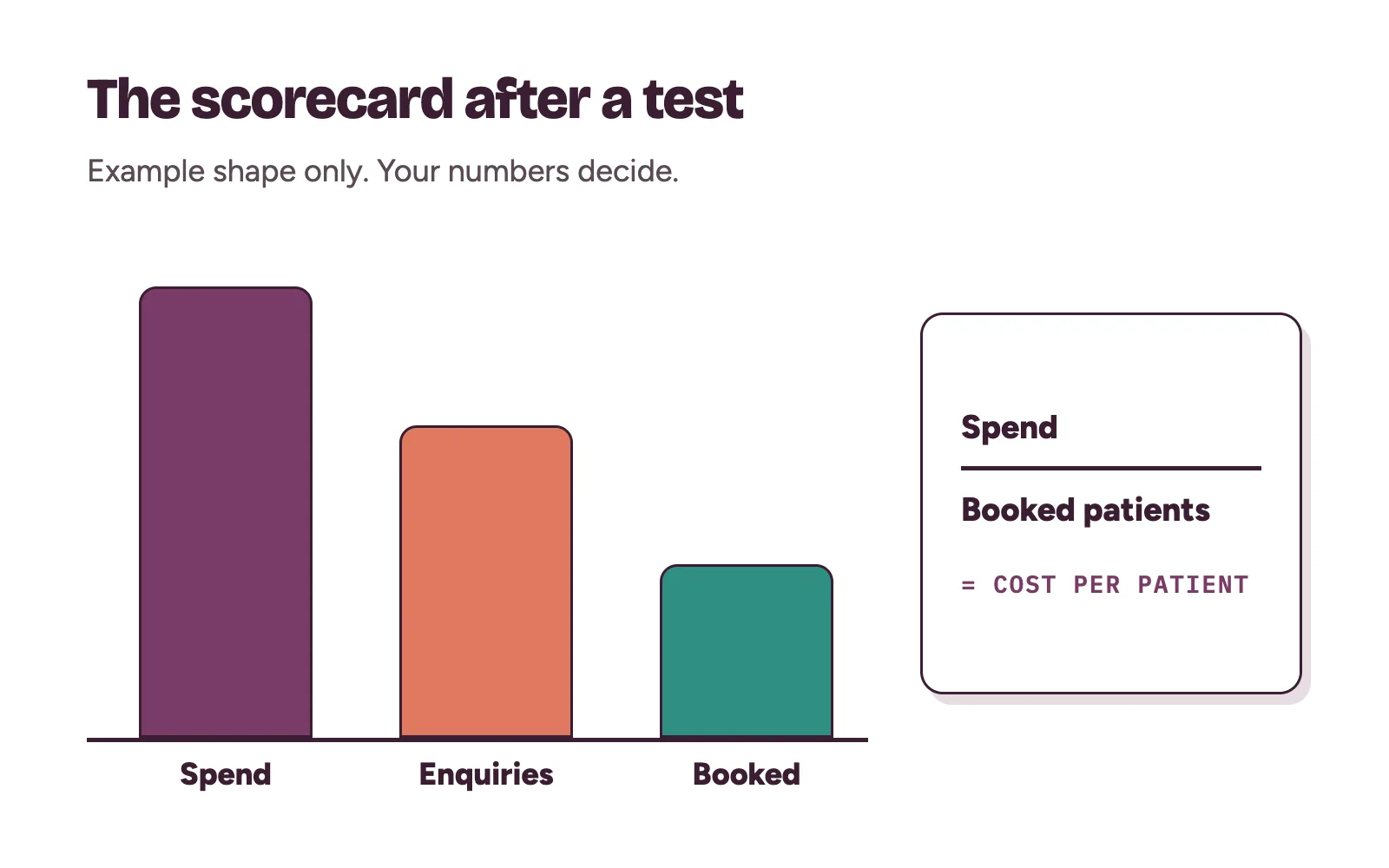
At the end of the test, put three numbers side by side: what you spent, how many enquiries came from the ads, and how many of those booked and showed up.
Divide spend by booked patients. Compare that with what a new patient for that treatment is worth to the clinic over time. If the numbers work, scale slowly. If enquiries came in but few booked, the problem sits in follow-up. If almost nobody enquired, look at the searches and the page.
For a wider view of all your channels, read how to tell which marketing is working for your clinic.
How Kren helps
Kren is a growth partner for private clinics in Lagos and Abuja. Through our lead generation work, we pick the treatments worth advertising, build the pages, set up the ads and tracking, and connect enquiries to quick follow-up. Your own team does the final follow-up and booking. If you've already spent and seen little back, start with what went wrong with your clinic ads.
Questions clinic owners ask about Google Ads
How long before we know if Google Ads are working?
Give a test at least a few weeks of steady running so you have enough enquiries to judge. Look at booked patients, not clicks. Changing everything every few days makes the numbers impossible to read.
Can Google spend more than our daily budget?
On some days, yes. Google's help page on average daily budgets says most campaigns can spend up to two times the daily budget on a given day, while the monthly limit is 30.4 times the daily budget.
Are Google Ads better than Instagram ads for a clinic?
They do different jobs. Google reaches people already searching for a treatment. Instagram reaches people who aren't searching yet. A clinic can use Google for treatments people search for and social ads to build awareness.