Blog · Ads · 5 min read
How our clinic ads work: Meta and Google, start to finish
How we run Meta and Google ads for clinics one treatment at a time: the plan, policy-safe ads, landing pages, tracking and a weekly review by cost per booking.
By the Kren Agency team ·
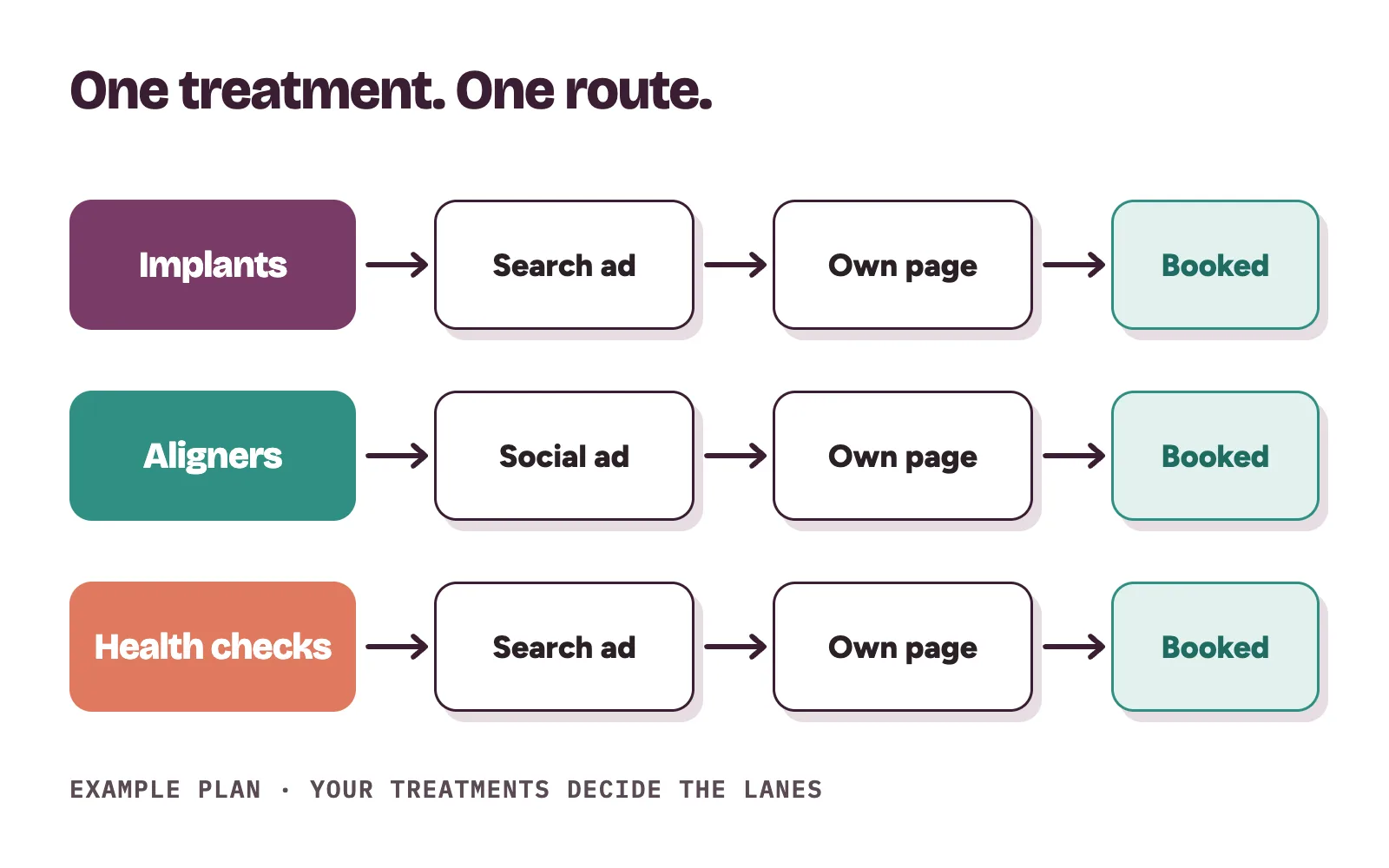
As your clinic ads agency, we run Meta and Google ads one treatment at a time, from the plan to the weekly review. Every ad leads to a page built for that treatment, every call and enquiry is tracked, and every week we judge the ads by one number: what each booked patient cost. Your own team does the final follow-up and booking.
Why do most clinic ads get likes but no bookings?
Most clinic ads fail long before the money runs out. One general ad promotes the whole clinic. It sends people to a homepage. Nobody checks which enquiries came from it. The report shows reach and likes, and the owner still can't say if a single patient booked.
We build the opposite. Each ad has one job, one page and one way to count its result. Before any spend, we also check that your enquiries get answered, because ads into a front desk that misses calls only buy more missed calls. That check is part of our leak closure work.
Step 1: we plan by treatment first
We start on the strategy call with a simple question: which treatments do you want more patients for, and how many can your team handle? A dental clinic may want implant and aligner consultations. A lab may want health check packages booked ahead.
Each treatment then gets its own plan. Who is it for? What do they search or scroll past? What do they need to know before they call? The answers decide the channel:
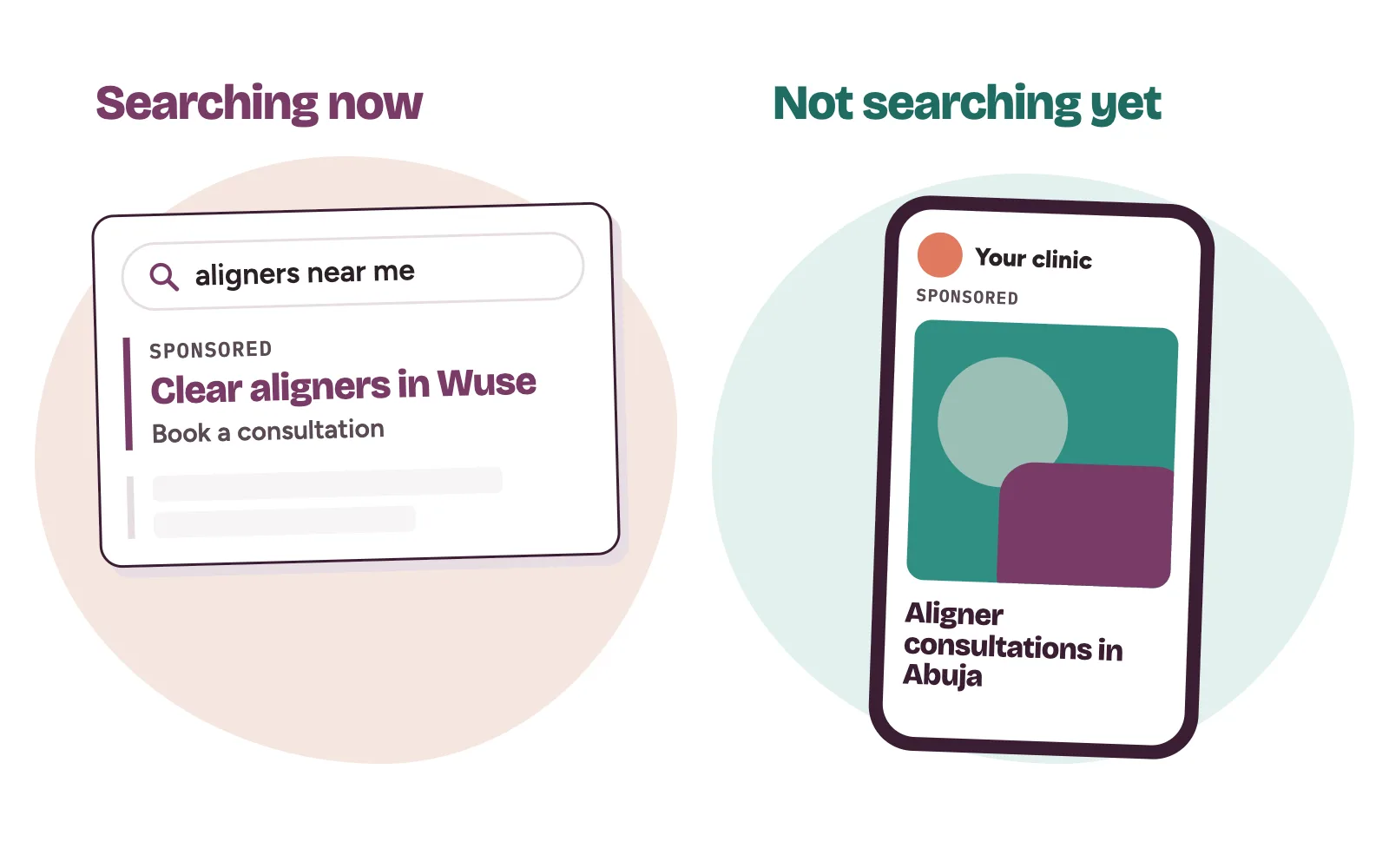
- Google for people already searching for the treatment near them. Our post on Google Ads for clinics in Nigeria covers how search ads work.
- Meta (Facebook and Instagram) for people who aren't searching yet but fit the treatment. See Meta Ads Manager for clinics for the account side.
Many clinics need both. Some need only one. We tell you which, and why.
Step 2: we write ads that stay within the rules
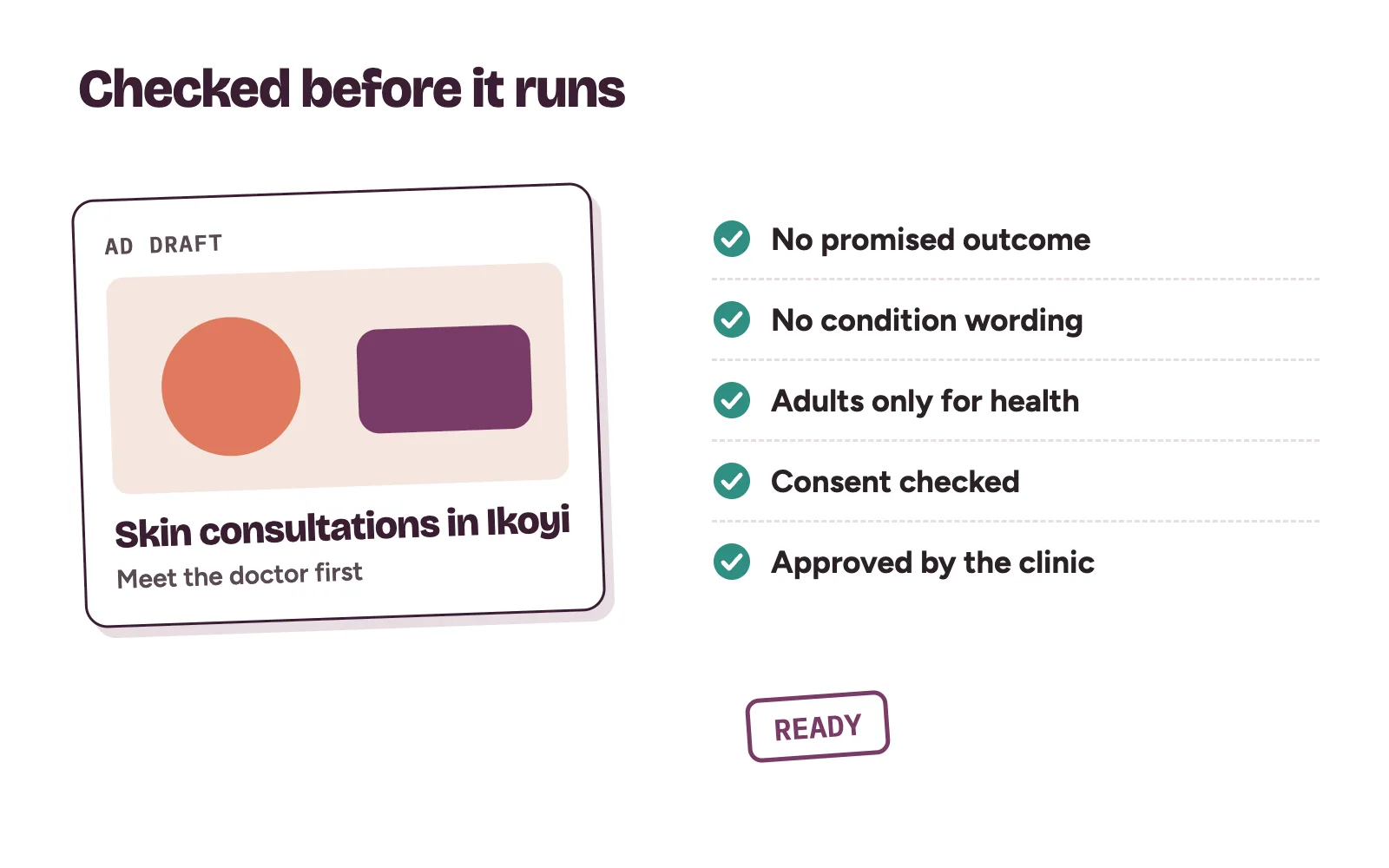
Health ads face stricter rules than most, and a rejected or restricted ad costs you days. We write every ad to pass three checks: your profession's rules, Google's rules and Meta's rules.
Google's Healthcare and medicines policy does not allow the promotion of speculative or experimental medical treatments. Meta's Advertising Standards say ads must not assert or imply personal attributes, and that includes physical or mental health and medical conditions. Meta also requires ads for health products and services to target people aged 18 or older.
In practice, that means:
- No promised outcomes and no exaggerated claims.
- No wording that tells the reader they have a condition.
- No patient photos or details without the consent your rules require.
- You approve every ad before it runs.
Step 3: every ad gets its own landing page
An ad for implants should land on an implants page, not your homepage. The page answers the questions that stop people booking: who does the treatment, what happens at the first visit, how to get a price, and where you are. The way to book sits on every screen: a call button, a form and a message link.
We build these pages so the ad and the page say the same thing. A patient who clicks should feel they arrived at the right place. Our post on landing pages for clinics explains what goes on one.
Step 4: we track calls, forms, DMs and bookings
Clicks don't pay your rent. Booked patients do. So we set up tracking that follows each enquiry back to the ad that brought it.
- Calls from the ad and from the landing page are counted.
- Forms and DMs are tagged with the campaign they came from.
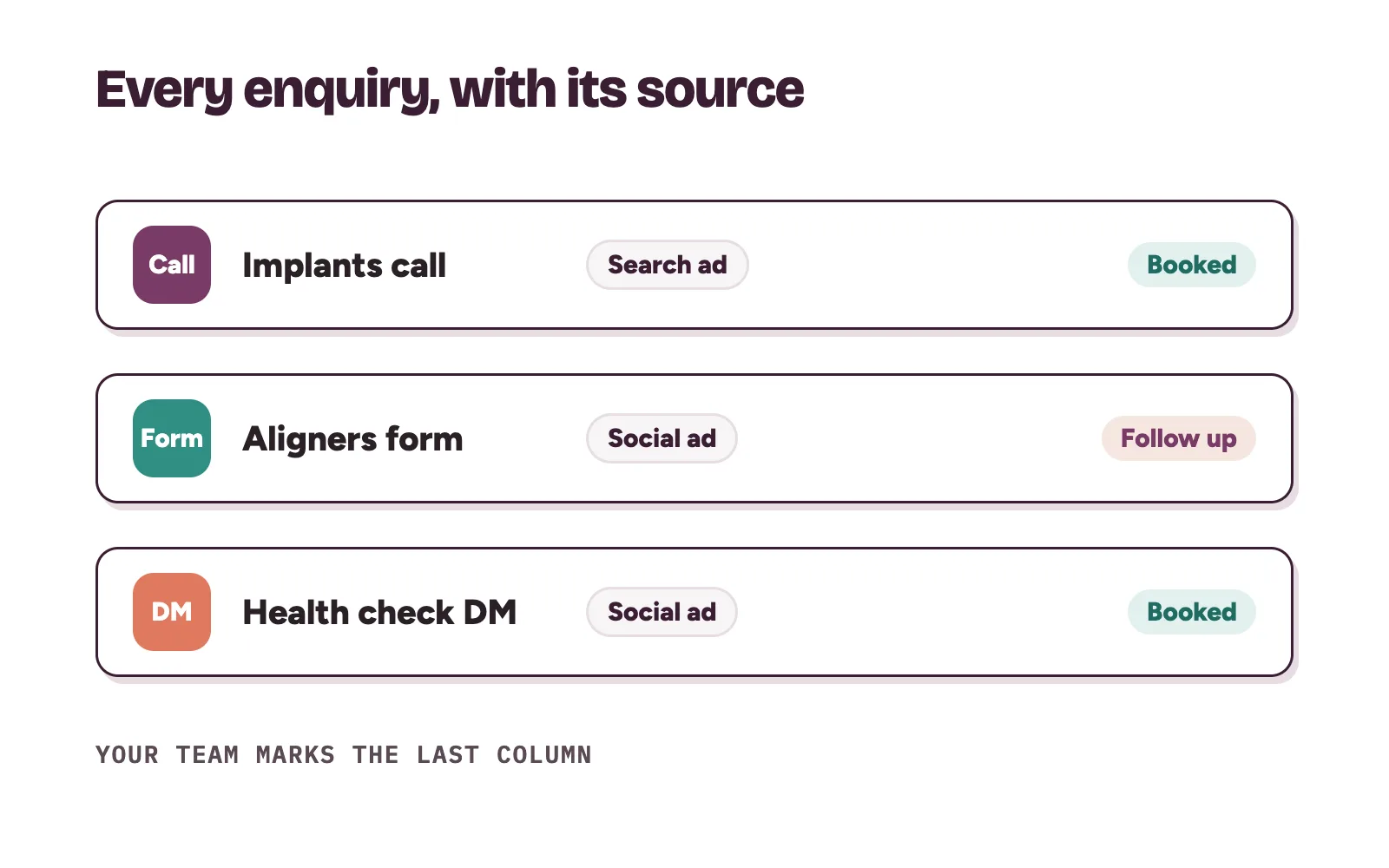
- Every enquiry lands in one list your front desk can see, with its source.
- Your team marks each one as booked, follow-up or not a fit.
That last step matters most. Without it, nobody can say which ad filled your bookings and which one only filled your inbox. We recommend keeping the ad accounts in your clinic's name, so the data stays yours.
Step 5: what a clinic ads agency should review every week
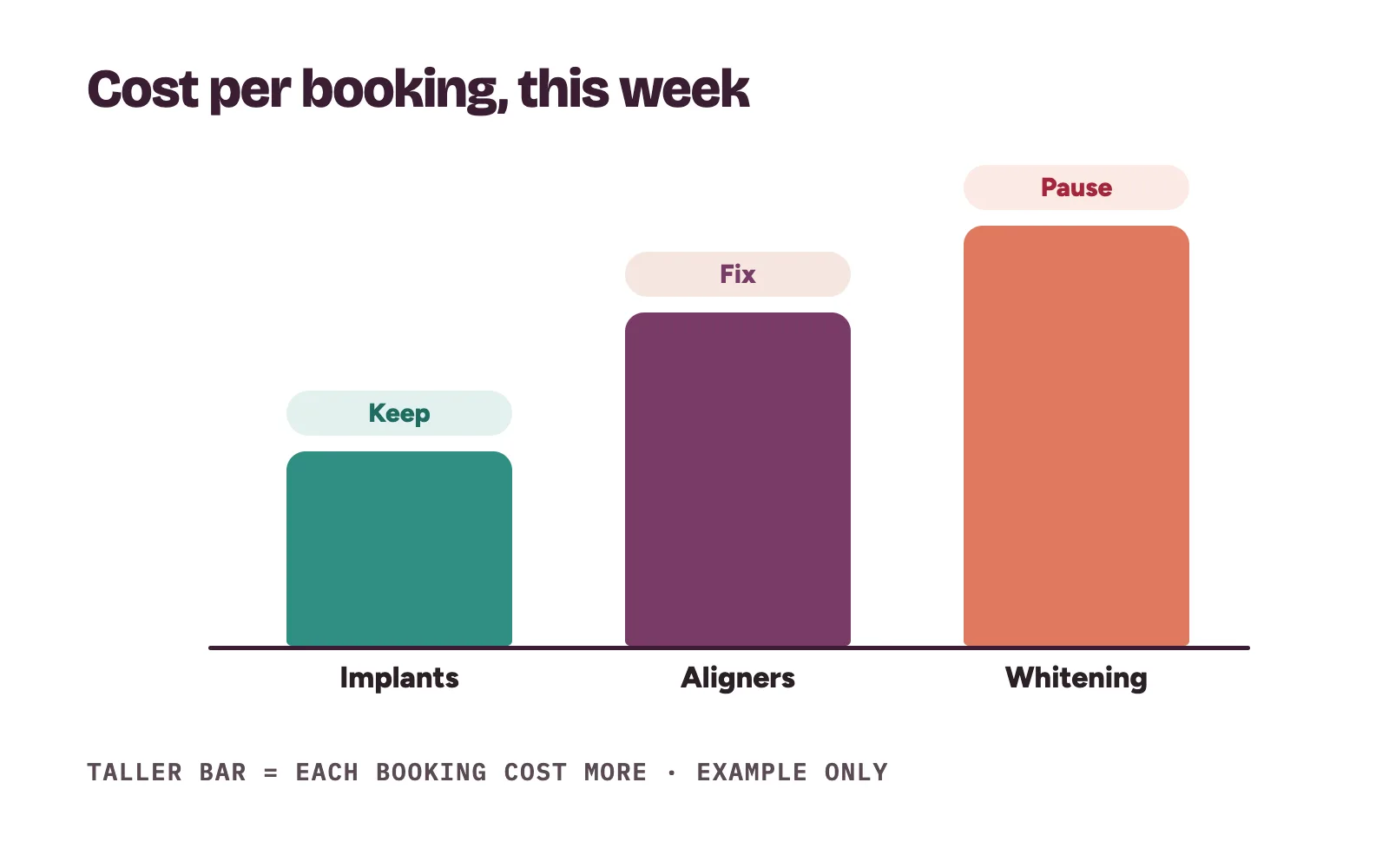
Every week we look at each campaign by cost per booking: what it spent, divided by the patients it booked. Not cost per click, and not likes.
Then we act on it. A campaign that books patients at a cost your margins can carry stays on. One that brings enquiries but few bookings gets a closer look, because the problem may be the ad, the page or the follow-up. One that brings nothing useful gets paused. We test new ads against the ones that work, one change at a time.
You get a short weekly report in plain words: what we spent, what came in, what booked and what we are changing. We can't promise a number of patients, and nobody honest can. What you will always see is where the money went and what it booked. See how this fits our wider lead generation service.
Questions clinic owners ask about our ads work
Do you answer the enquiries the ads bring in?
No. We set up the ads, the pages, the tracking and the follow-up automations. Your own team does the final follow-up and books the patient, because patients want to speak to the clinic that will treat them.
Should we run Google ads or Meta ads?
It depends on the treatment. People who already search for it are easiest to reach on Google. Treatments people don't search for until they see them often suit Meta. We decide treatment by treatment on the strategy call.
Who owns the ad accounts?
We recommend the ad accounts sit in your clinic’s name, so the history, the data and the audiences stay with you. We agree this with you at the start.
What makes a clinic ads agency different from a social media manager?
A clinic ads agency should judge its work by booked patients. Posts and likes don't fill your bookings. We plan by treatment, build the pages, track every enquiry and review by cost per booking each week.