Blog · Equipment · 6 min read
Hospital equipment list for a new clinic in Nigeria
What a new clinic needs in each room, when refurbished makes sense, the seven questions to ask every supplier and how to plan the rooms around patients.
By the Kren Agency team ·
A new clinic needs hospital equipment for seven areas: reception, consulting rooms, a procedure or treatment room, sterilisation, a lab corner, an emergency kit and the front desk. Buy area by area. Check every supplier for warranty, local engineers, spare parts, training and NAFDAC registration. Then lay the rooms out around how patients move.
The lists below are general good practice for a private clinic in Lagos or Abuja. Your specialty, your medical director and your state regulator’s requirements for your facility type come first. Confirm those before you spend a naira.
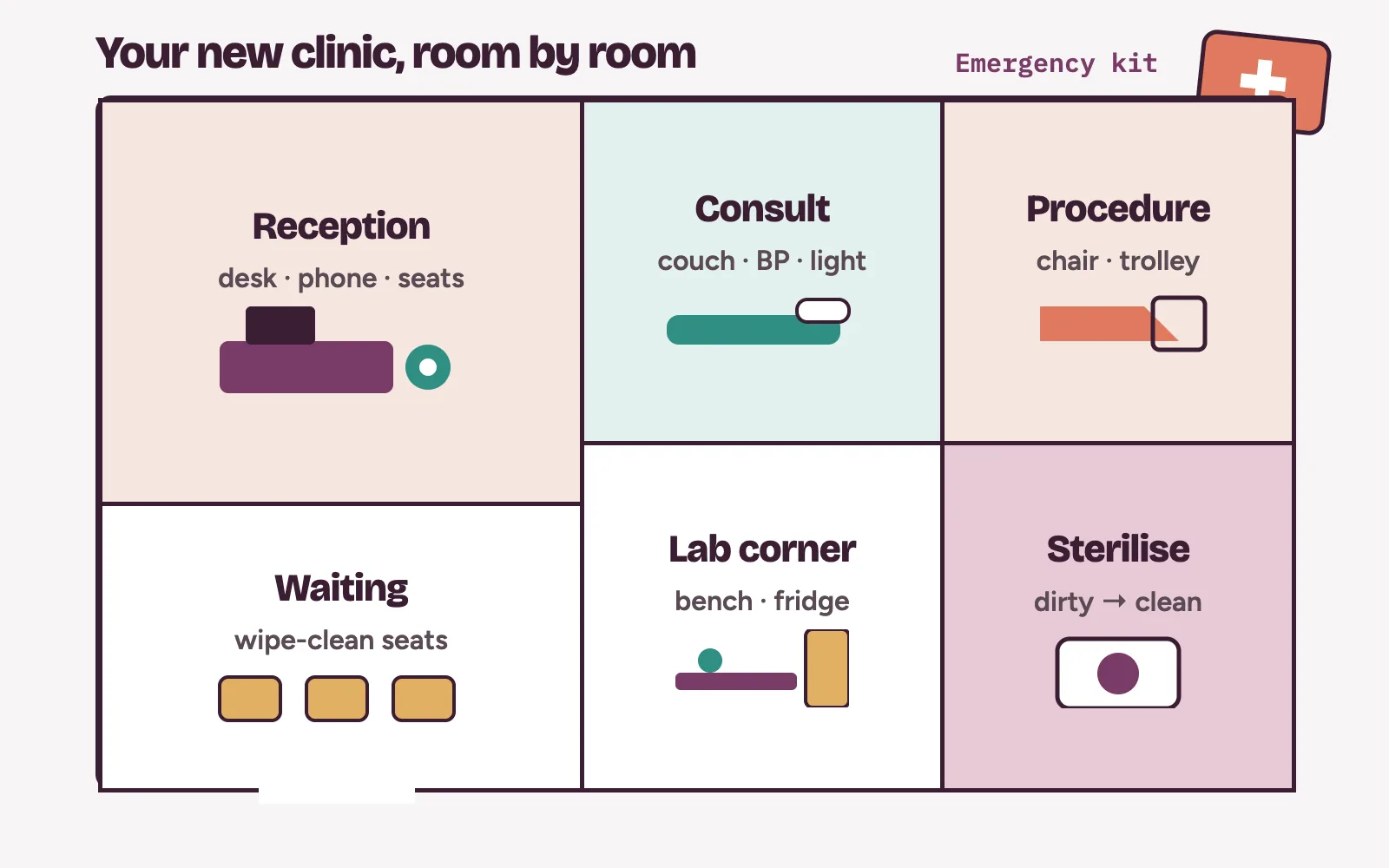
What hospital equipment does a new clinic need, room by room?
Reception and waiting area
- Seating you can wipe down, with space for wheelchairs and buggies
- A front desk with lockable storage for files and payments
- Hand sanitiser points and clear signs to rooms and toilets
- A weighing scale and height measure, if vitals are taken here
Consulting room
- Examination couch with a step, and a privacy screen or curtain
- Desk with chairs for the patient and a companion
- Blood pressure monitor, thermometer and pulse oximeter
- Examination light
- Hand-washing sink, clinical waste bin and sharps container
Procedure or treatment room
- A couch or chair suited to your specialty
- Procedure light and instrument trolley
- Suction, where your procedures call for it
- Colour-coded waste bins and sharps containers
Sterilisation area
- A one-way route from dirty instruments to clean ones
- A dedicated sink for instrument cleaning
- A steriliser sized for your daily instrument load
- Closed storage for sterile packs, and a log for every cycle
Lab corner, if you run tests on site
- A bench you can clean easily, and specimen labels
- A reagent fridge with a daily temperature log
- A centrifuge or microscope, if your tests need them
Emergency kit
- A resuscitation trolley or bag, with airway equipment and oxygen
- A defibrillator and emergency drugs, as your medical director decides
- A named person who checks it on a fixed schedule
Front desk
- A phone line that rings at the desk, and a backup line
- Computer, printer and a reliable internet connection
- Patient records kept securely, with access limited to staff who need them
- Card payment terminal
- Backup power and voltage protection for the desk, the fridge and the steriliser
Should you buy new or refurbished?
Many clinics buy new where a breakdown stops the day or puts safety at risk. That usually means the steriliser, the emergency kit and anything your main procedures depend on.
Refurbished can make sense for furniture, couches, trolleys and some larger items. Buy it only from a supplier who can show:
- What was replaced or repaired, in writing
- The service history of that exact unit
- A warranty, even a short one
- That parts are still available for that model
A cheap unit with no parts and no engineer is the most expensive buy in the building.
How to choose a hospital equipment supplier
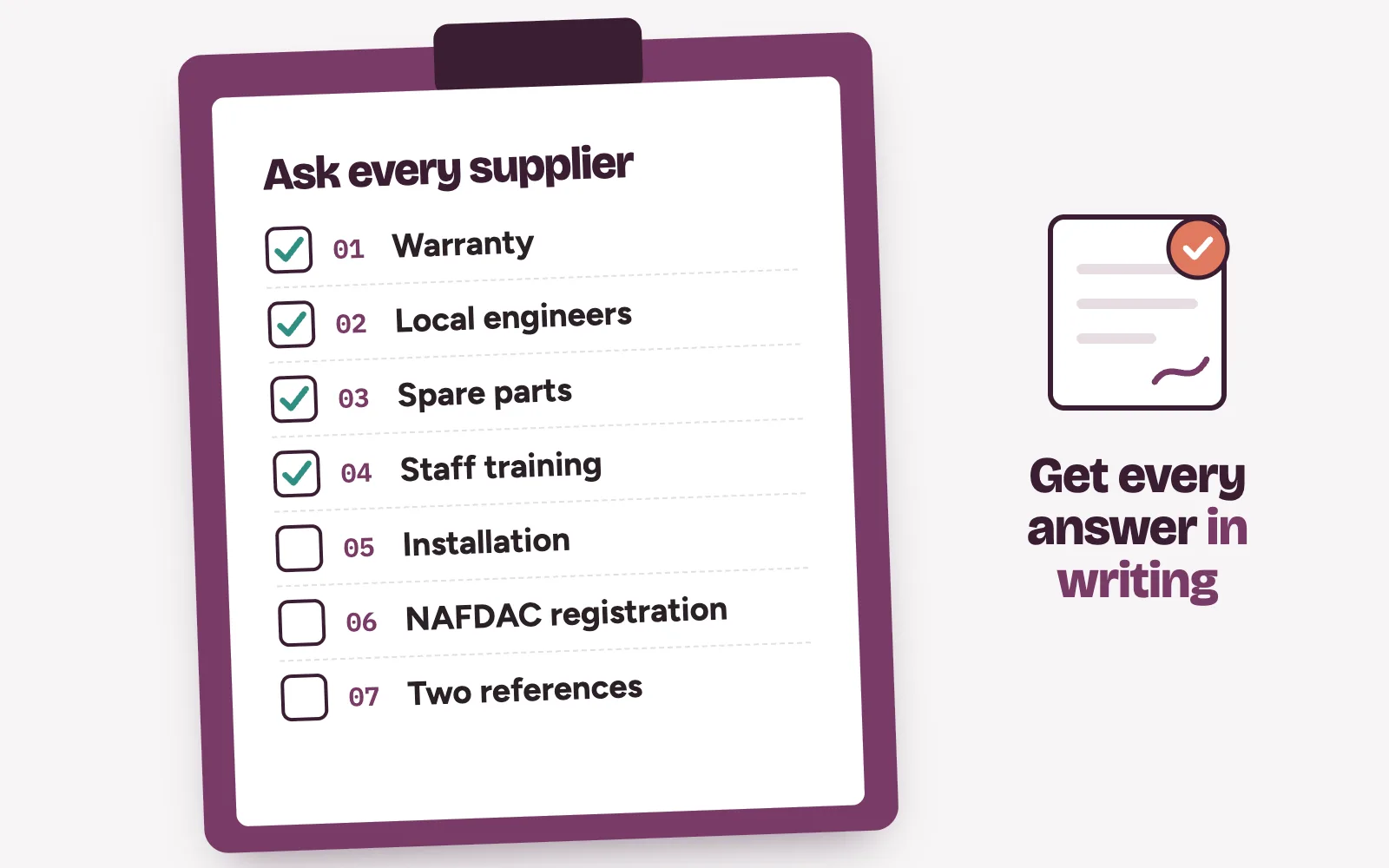
Ask every supplier the same seven questions, and get the answers in writing.
- Warranty. How long, what it covers and what voids it.
- Service engineers. Where they are based, and how fast they come out in Lagos or Abuja.
- Spare parts. Which parts they stock locally, and for how many years.
- Training. Who trains your staff on use, cleaning and daily checks, and when.
- Installation. Who installs, tests and signs the equipment off as working.
- Registration. Proof that the exact product is registered with NAFDAC.
- References. Two clinics they supply that you can call.
On registration: NAFDAC’s Vaccines, Biologics and Medical Devices Registration and Regulatory Affairs Directorate processes applications for all imported and locally manufactured medical devices, including in vitro diagnostics (NAFDAC: Vaccines, Biologics and Medical Devices Directorate). If a supplier can’t show registration for the product you are buying, ask NAFDAC before you pay.
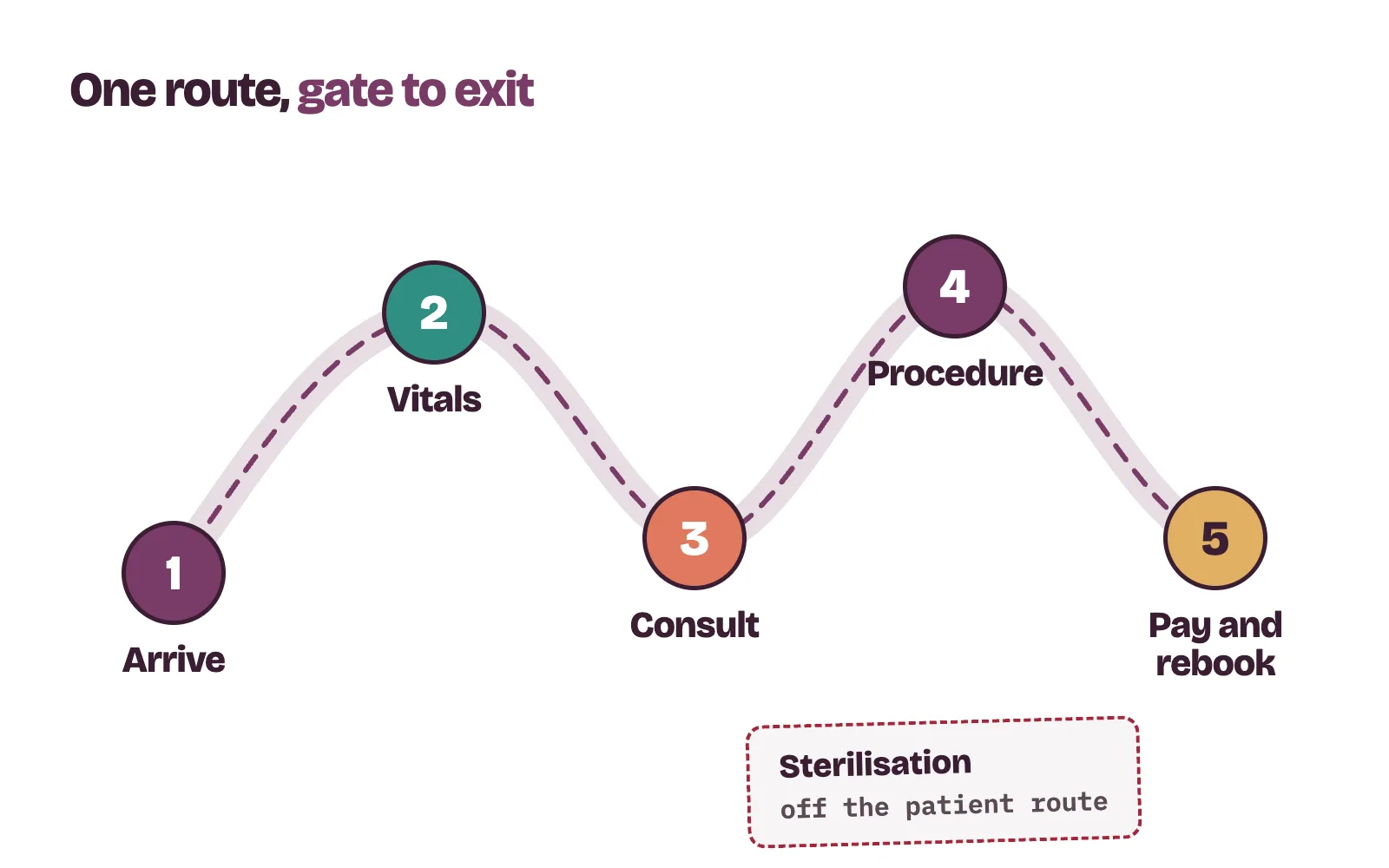
Plan the rooms around patient flow
Equipment in the wrong place slows every visit. Walk the route a patient takes, from the gate to the exit, before anything is installed.
- Arrival. Reception faces the door, so nobody wanders in unseen.
- Vitals. Close to waiting, so nurses don’t walk patients across the clinic.
- Consulting and procedure. Next to each other, away from the waiting crowd.
- Sterilisation. Off the patient route, so used instruments never cross it.
- Payment and next visit. Near the exit, where the next appointment gets booked.
Then count. How many patients can each room see in an hour? The slowest room sets the pace for the whole day.
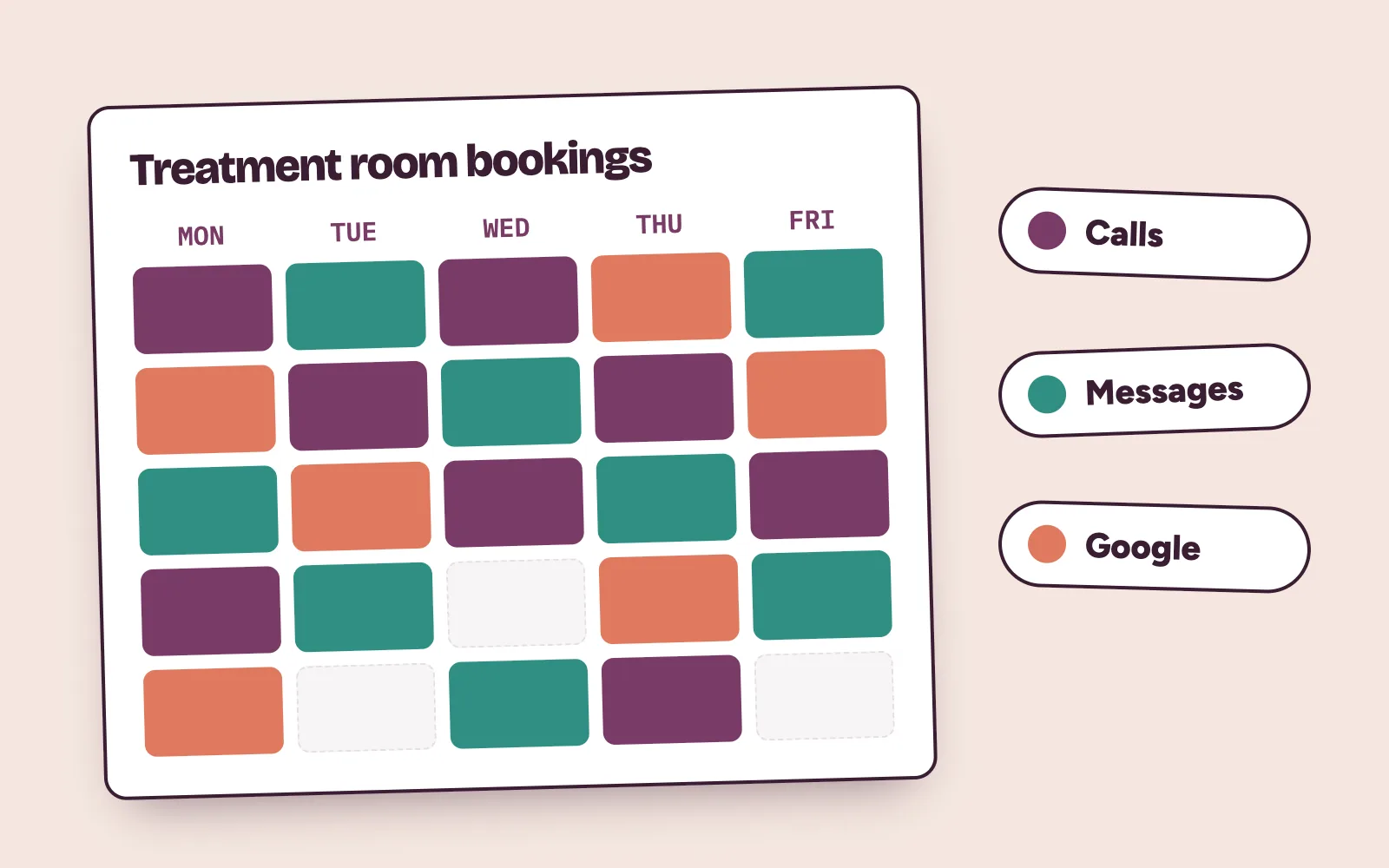
Equipment sets capacity. Bookings fill it.
A procedure room with every item on this list still earns nothing on an empty afternoon. What fills it is the front desk: calls answered, enquiries followed up, appointments confirmed and no-shows chased.
That starts before opening day. Patients need to find you on Google (see setting up your clinic’s Google Business Profile), reach someone fast and book without friction.
Kren is a done-for-you growth partner for private clinics in Lagos and Abuja. We set up how enquiries reach your desk, the reminders and the follow-ups, and we run them with you. Your front desk does the final booking. See our work on bookings and no-shows and on closing the gaps where enquiries go missing, or how we work with clinics.
Opening a new clinic, or adding a room? On a 30-minute strategy call, we look at how patients will find you, reach you and book. Show me where my clinic is losing patients →
Questions clinic owners ask about hospital equipment
Does NAFDAC regulate medical devices in Nigeria?
Yes. NAFDAC’s Vaccines, Biologics and Medical Devices Registration and Regulatory Affairs Directorate processes registration for imported and locally made medical devices, including in vitro diagnostics. Ask your supplier for proof that the exact product is registered.
Is refurbished hospital equipment worth buying?
It can be, for furniture and some larger items. Insist on a written repair record, the unit’s service history, a warranty and proof that parts are still available. Without those, buy new.
What should a new clinic buy first?
Start with what your state regulator requires for your facility type and what your opening services need. Add the rest as services grow, so cash isn’t tied up in rooms nobody uses yet.
How do we keep equipment working?
Give each item a named owner, a service date and a logbook. Book planned maintenance with the supplier’s engineer, and keep the warranty papers where the practice manager can find them.