Blog · Equipment · 5 min read
Microscope price in Nigeria: buying for a new lab
What a microscope costs in Nigeria today, what drives the price, and the service, MLSCN and NAFDAC checks a new lab should make before paying.
By the Kren Agency team ·
The microscope price in Nigeria runs from a few hundred thousand naira to several million, and the gap comes from the optics, the head, the light, and the service behind the machine. For a new lab, the right microscope is the one that reads your planned tests clearly every day and can be repaired locally. Fix those two things first, then compare prices.
This post sits beside our hospital equipment list for a new clinic and our post on registering a medical laboratory with the MLSCN.
What does a microscope cost in Nigeria today?
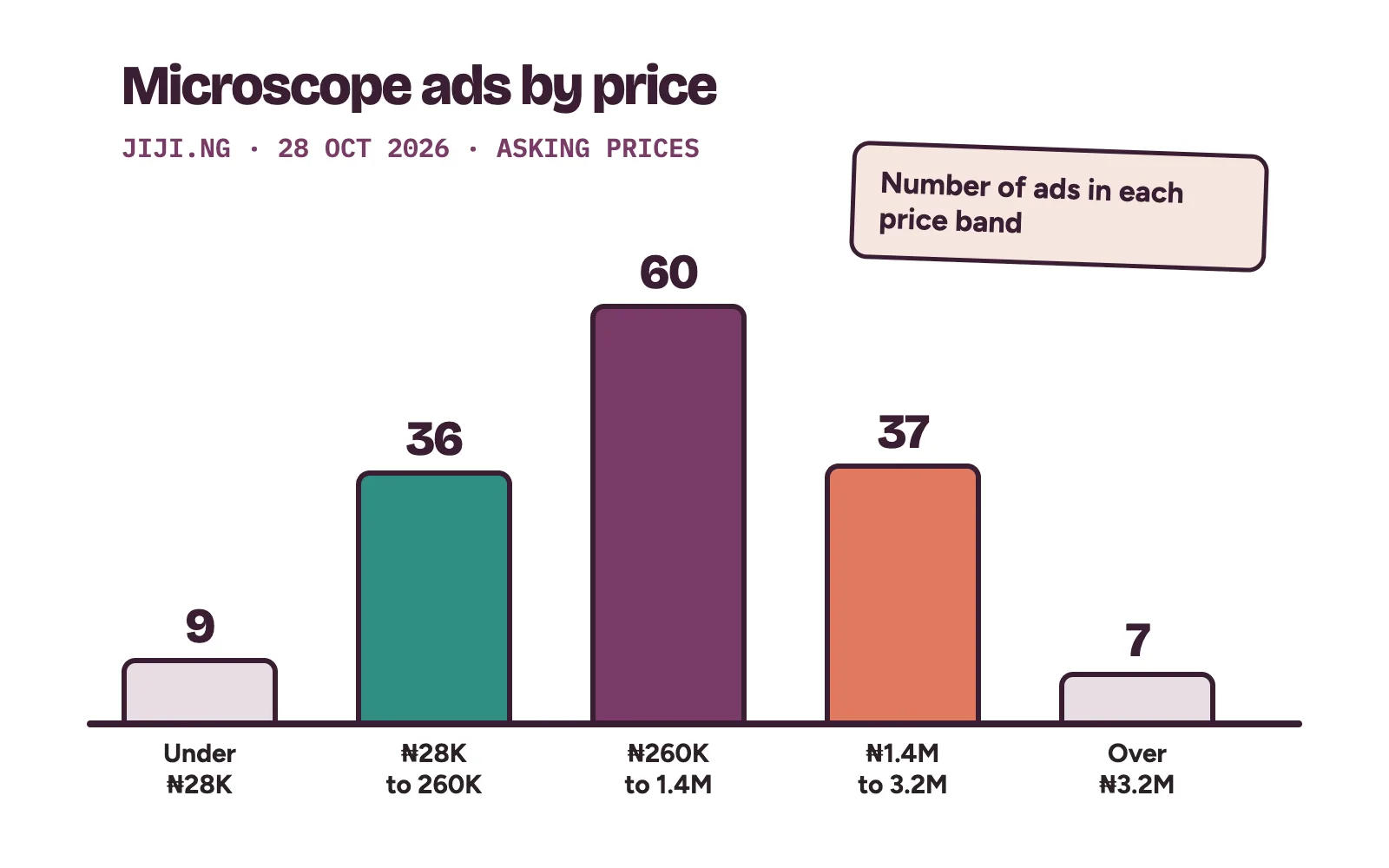
We checked one large Nigerian marketplace so you have a real starting point. On 28 October 2026, Jiji.ng's microscopes category showed 151 ads across Nigeria. Its price filter put 60 of them between ₦260,000 and ₦1.4 million, and 37 between ₦1.4 million and ₦3.2 million. Seven sat above ₦3.2 million.
The same page mixed very different machines. A used binocular unit in Abuja was listed at ₦1,000,000. A stereo microscope in Lagos was listed at ₦550,000.
Treat these as sellers' asking prices on one day, not a price list. They do not include delivery, installation, a service contract or spare bulbs. Ask every supplier for a written quote that names all of those.
Start from your test list, not the price tag
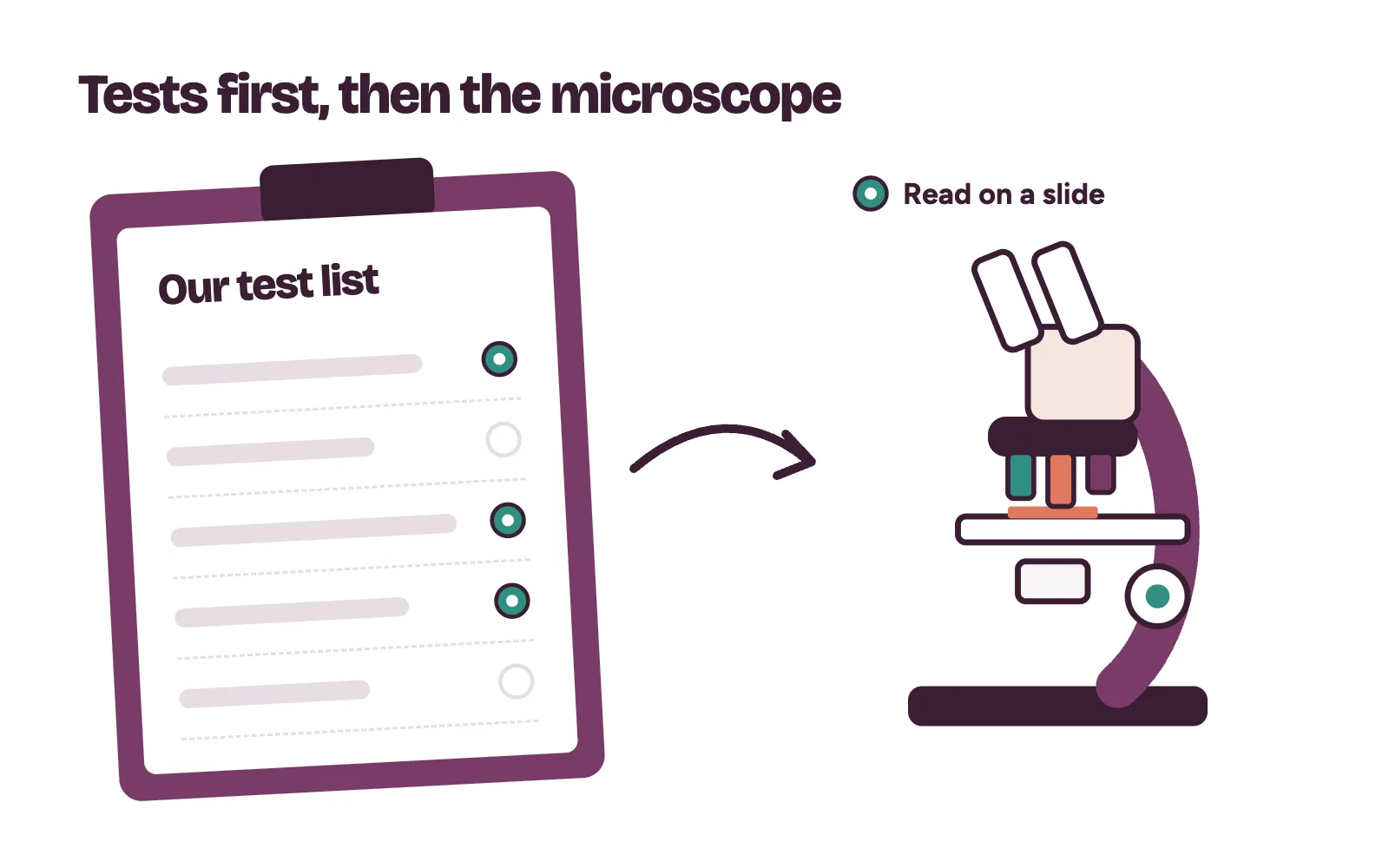
The Medical Laboratory Science Council of Nigeria (MLSCN) asks a new lab for a list of the tests it will run, a standard operating procedure for each test, and a list of equipment that can run at least 50% of those tests. That comes from its guidelines on medical laboratory approval.
So the microscope follows the test list. Sit with your resident Medical Laboratory Scientist and answer four questions:
- Which planned tests are read under a microscope? Write them down by name.
- How many slides a day do you expect in the first year? That decides how much reading comfort is worth paying for.
- Do you need photos or a screen? A camera helps teaching, second opinions and records. It also adds cost.
- Will two people ever read the same slide together? Only then is a multi-viewing head worth paying for.
Optics in plain words: what you are paying for
Most of the price sits in the lenses close to the slide, called objectives. Nikon's MicroscopyU explains the grades clearly. In plain words:
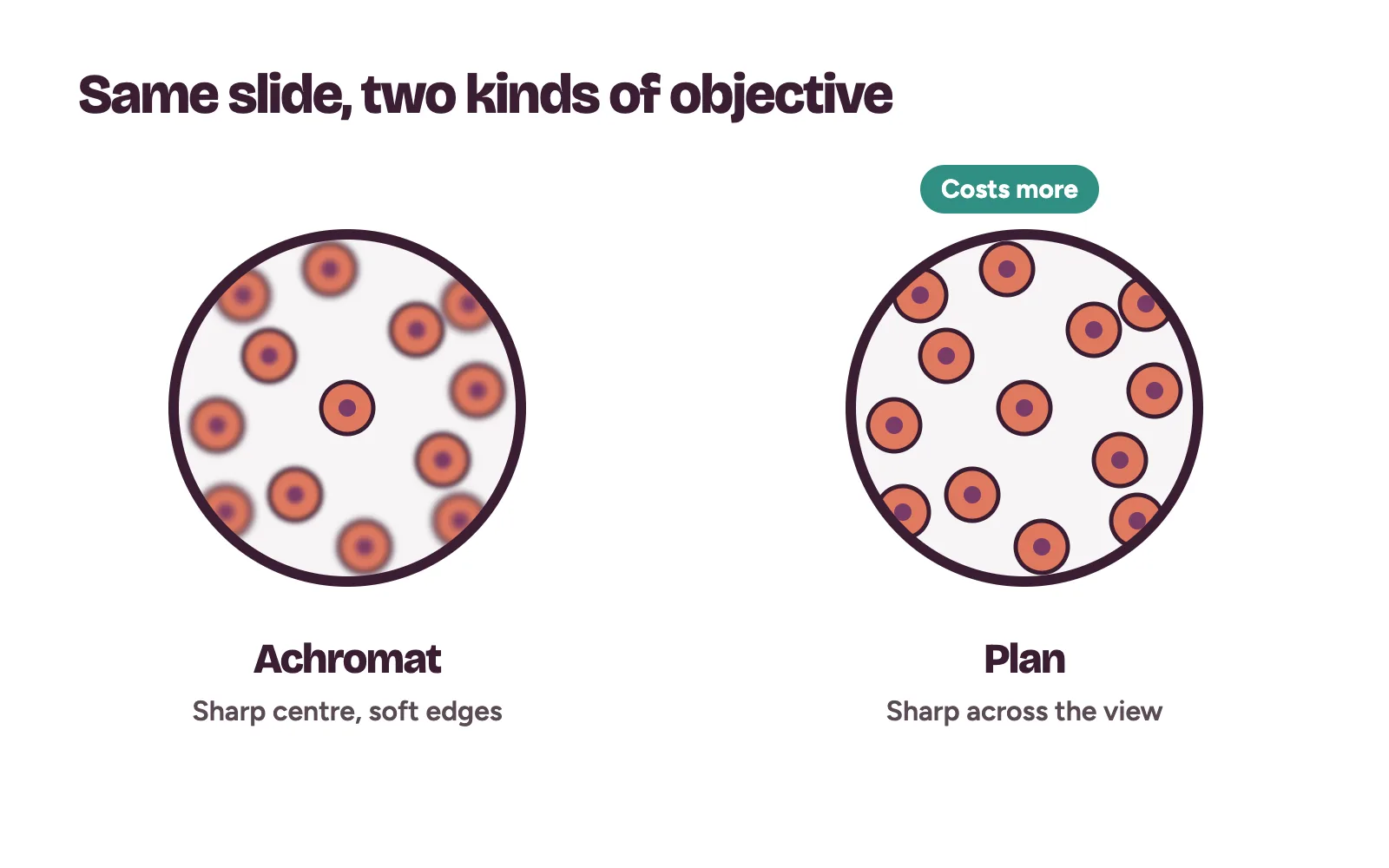
- Achromat objectives are the least expensive and most common. The edges of the view can sit slightly out of focus when the centre is sharp.
- Plan objectives correct that. The whole view stays in focus at once, which matters on long reading days.
- Higher grades, such as fluorites and apochromats, correct colour more fully and cost more.
- Oil immersion objectives use a drop of oil between lens and slide to gather more light and fine detail.
One more point from the same source: magnification alone does not decide how much detail you see. The lens's numerical aperture, written as "NA", matters too. Compare the NA figures on two quotes, not only the "1000x" on the box.
Service and parts decide the real microscope price in Nigeria
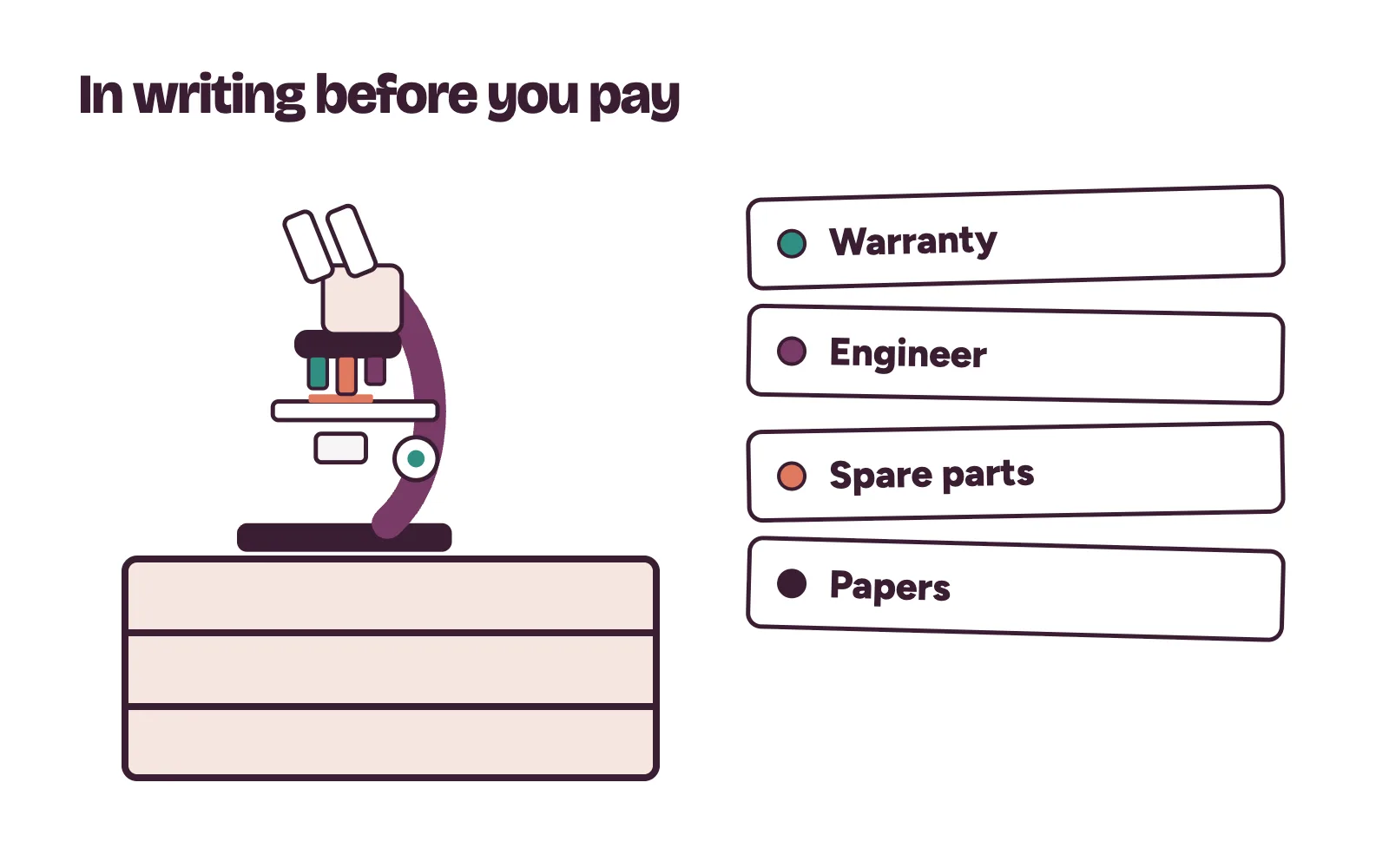
A cheap microscope that waits three weeks for a bulb costs more than it saved. Before you pay, get these in writing:
- Warranty: what it covers, what voids it, and when it starts.
- Engineers: where they are based and how soon they reach Lagos or Abuja.
- Parts: which bulbs, fuses and objectives are stocked in Nigeria, and the price of each.
- Cleaning and checks: who services the optics, how often, and who keeps the record.
- Training: who shows your staff daily care, oil clean-up and safe storage.
The MLSCN treats a working quality management system as a major requirement for registration. Service records are part of showing that your equipment is cared for. Keep them in one file.
For a used or refurbished unit, ask for its history, test it on your own slides, and check that parts are still sold. Our post on how to choose a medical equipment supplier covers the wider checks.
Does a microscope need NAFDAC registration?
NAFDAC's Vaccines, Biologics and Medical Devices directorate registers imported and locally manufactured medical devices, including in vitro diagnostics. Ask your supplier whether the exact model you are buying falls under that, and if it does, ask to see its registration.
Microscope bought. Now fill the bookings.
A registered lab with good optics earns nothing until patients and referring doctors send work. That means being found on Google for your tests, quick replies to every enquiry, and confirmed appointments.
Kren is a done-for-you growth partner for private clinics and labs in Lagos and Abuja. We set up and run how patients find you, how enquiries reach your desk, and the reminders that bring them in. Your own team does the final follow-up and booking. See how we work with diagnostic labs and imaging centres, and how we handle patient enquiries.
Opening a lab or adding tests? On a 30-minute strategy call, we look at how patients will find you, reach you and book. Show me where my clinic is losing patients →
Questions lab owners ask about microscope prices
How much is a laboratory microscope in Nigeria?
On 28 October 2026, most microscope ads on Jiji.ng sat between ₦260,000 and ₦3.2 million. These were sellers' asking prices for very different machines. Get written quotes that include delivery, installation, service and spare parts.
Is a binocular microscope worth the extra cost?
It depends on how many slides your team reads a day. Decide it with your Medical Laboratory Scientist, who will spend the hours at it, and compare quotes for the same model with each head.
What does MLSCN want to see about equipment?
Its approval guidelines ask for a list of equipment able to run at least 50% of your proposed tests, alongside your test list, SOPs, floor plan and quality manual. Confirm current requirements with the MLSCN before you apply.
Should a new lab buy a used microscope?
It can, if it passes the checks a new one would. Test it on your own slides, ask for its service history, and confirm that bulbs and objectives are still available in Nigeria.