Blog · Equipment · 5 min read
Medical equipment suppliers in Nigeria: how to choose one
How to vet a medical equipment supplier: NAFDAC registration checks, warranty, engineers, spare parts, training, documents and payment red flags.
By the Kren Agency team ·
To choose a medical equipment supplier in Nigeria, buy only from one who can prove NAFDAC registration for the exact product, put the warranty in writing, show engineers and spare parts in your city, install and train your staff, and hand over full documents. Pay in stages tied to delivery and a working installation.
What to buy for each room is covered in our hospital equipment list for a new clinic. This post is about who you buy it from, and how to check them before money moves.
What does NAFDAC require for medical equipment?
NAFDAC’s Medical Devices and Related Products Regulations, 2024 say medical devices shall not be manufactured, imported, distributed, sold or used in Nigeria unless they are registered under those regulations (NAFDAC Medical Devices Regulations, 2024). Note the word “used”. The rule reaches your clinic, not only the importer.
The same regulations set out what you can check yourself:
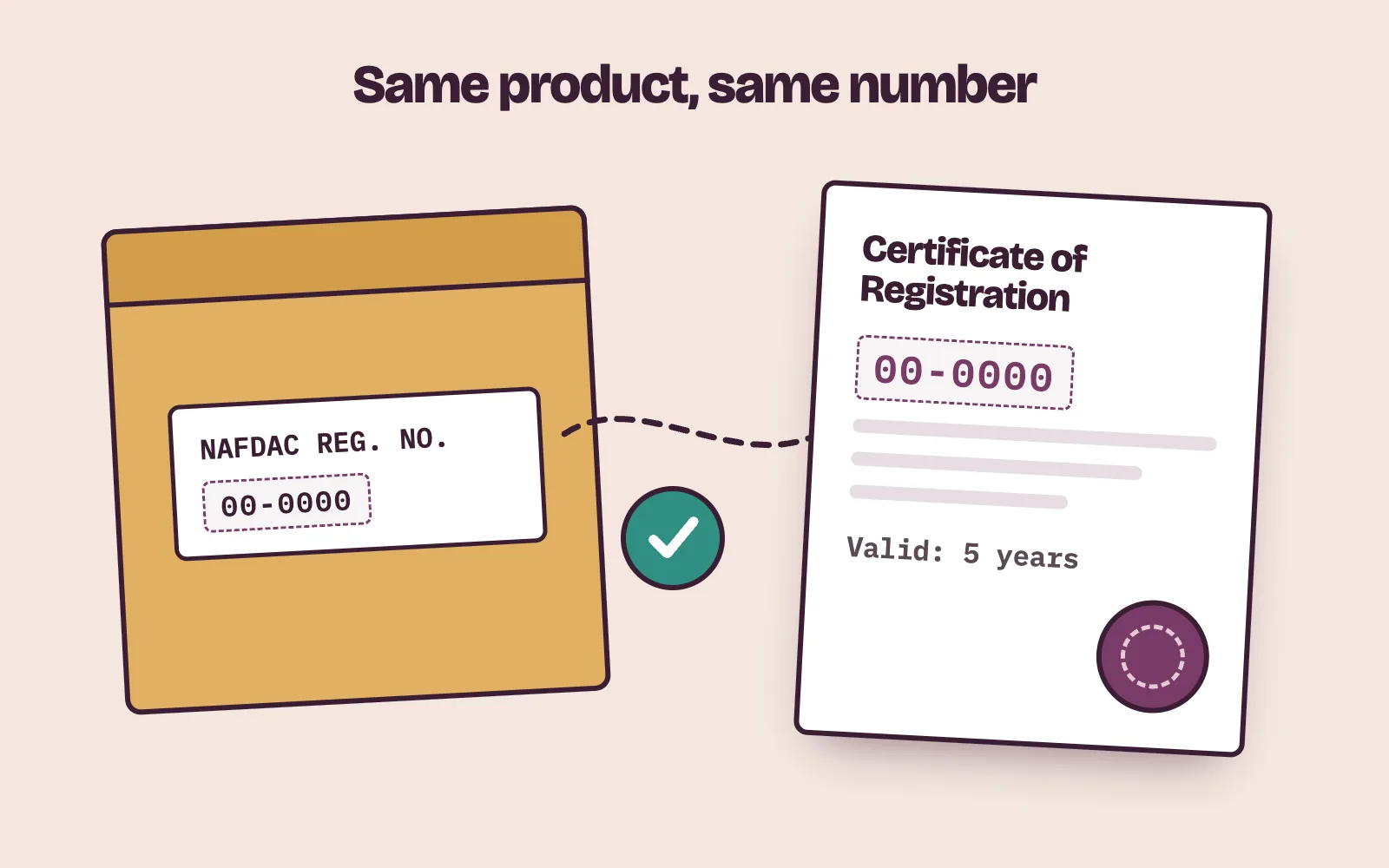
- The number on the box. Packaging must show the NAFDAC REG. NO. exactly as it appears on the product’s Certificate of Registration.
- The certificate date. Registration is valid for five years unless cancelled, and NAFDAC can suspend or cancel it. Ask for a copy and check it is current.
- The label. Instructions for use and clear warnings must be on the label.
- NAFDAC’s list. NAFDAC publishes the list of registered medical devices on its official website from time to time.
Registration applications are handled by NAFDAC’s Vaccines, Biologics and Medical Devices Directorate, which takes enquiries if something doesn’t add up (NAFDAC Medical Devices Directorate). Check with them before you pay, not after delivery.
Is the supplier authorised by the manufacturer?
Many suppliers resell imported equipment. NAFDAC’s guidelines for imported medical devices ask a company registering a foreign product to show a power of attorney from the manufacturer. Ask your supplier a simple question: are you the manufacturer’s authorised agent, or are you buying from someone who is?
A reseller can still be a good choice. But warranty claims and parts usually flow through the authorised agent. Know who that is before you sign.
Warranty, engineers and spare parts
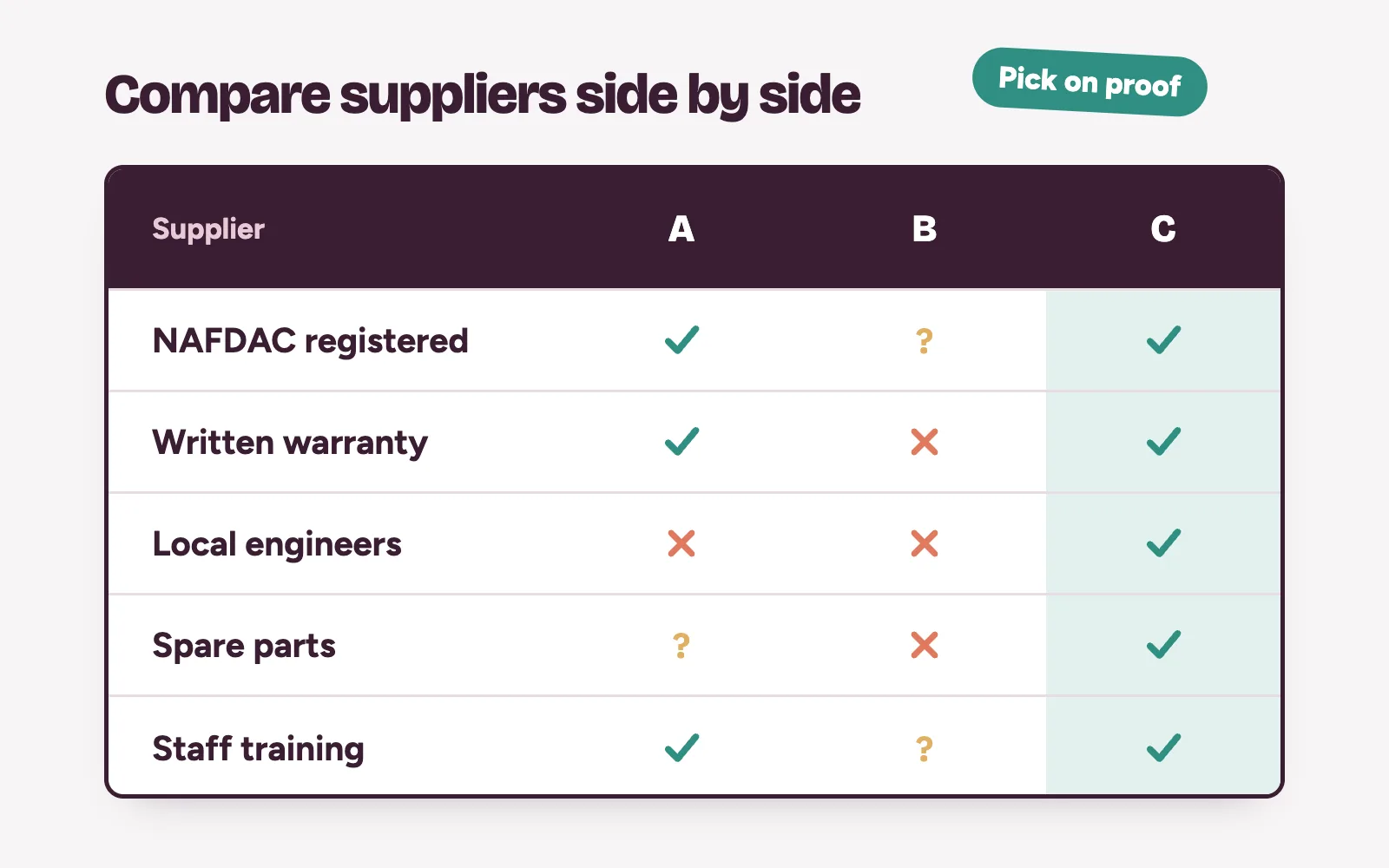
A machine that breaks with no engineer nearby turns a full day of bookings into apologies. Ask these questions and get the answers in writing:
- Warranty. How long, what it covers, and what voids it. Is it the supplier’s promise or the manufacturer’s?
- Engineers. Where are they based? How soon do they come out in Lagos or Abuja after a fault is reported?
- Spare parts. Which parts are stocked in Nigeria, and for how many years after purchase?
- Planned maintenance. Who does it, how often, and is the first year included?
- Loan units. If a repair takes weeks, is there a replacement while you wait?
Vague answers here are the answer.
Installation and training
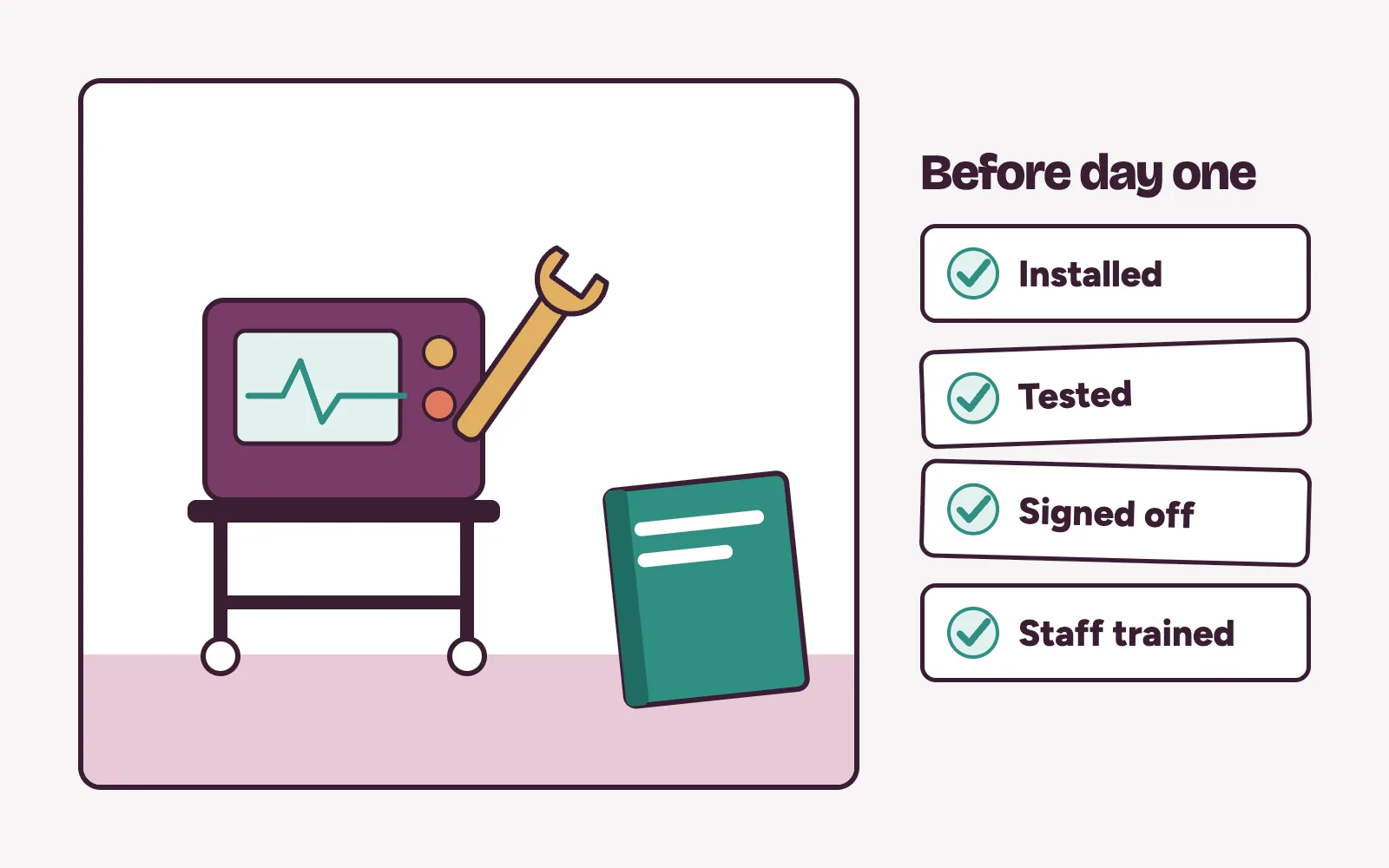
Agree who installs the equipment, who tests it, and who signs it off as working. Agree also who trains your staff on use, cleaning and daily checks, and when. Training should happen before the first patient, not on the first busy morning.
Ask for user manuals and the instructions for use to stay in the clinic.
Buying refurbished medical equipment
Refurbished can make sense for some items. Hold a refurbished seller to the same checks as a new one, plus three more:
- A written record of what was replaced or repaired
- The service history of that exact unit
- Proof that parts and engineers are still available for that model
Ask the registration question too. If the answer is unclear, ask NAFDAC.
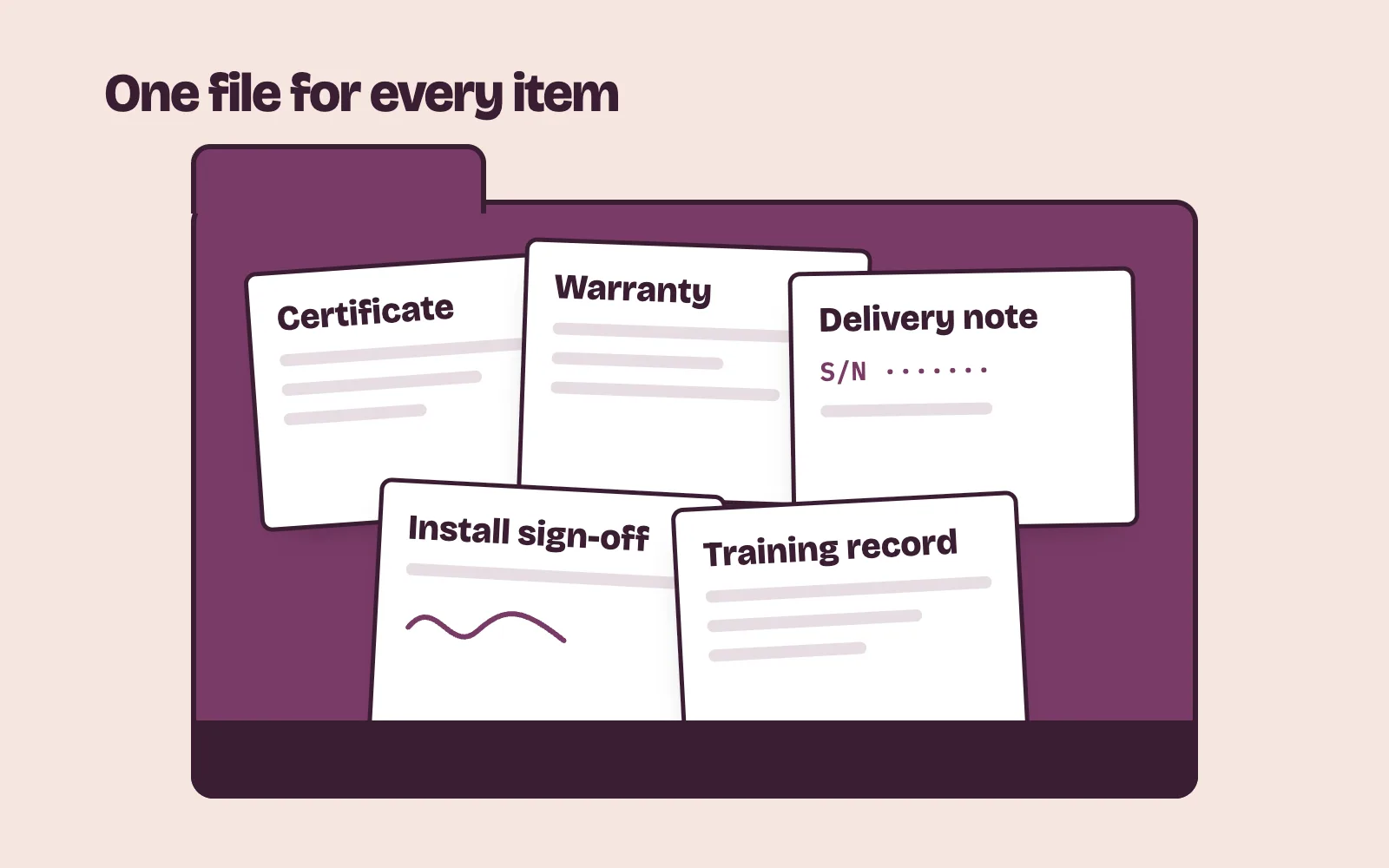
Documents to keep for every item
- Pro forma invoice, final invoice and receipts
- Copy of the Certificate of Registration
- Warranty terms, signed
- Delivery note with serial numbers
- Installation and test sign-off
- Training record with staff names and dates
- Service contract and the engineer’s direct line
Keep them in one file the practice manager can find. The regulations also put duties on users around disposing of expired or obsolete devices, so keep records through to the end of each item’s life.
Payment red flags
- Full payment up front, with no delivery date in writing
- Payment to a personal account rather than the company’s account
- Pressure to pay today because “the price goes up tomorrow”
- No pro forma invoice with model numbers before you pay
- Warranty that starts at shipping, not at installation
A fair structure pays part on order, part on delivery and the rest after installation and sign-off.
Equipment ready. Now fill the bookings.
A well-chosen supplier keeps your rooms working. It doesn’t bring patients through the door. That comes from being found on Google, answering every enquiry fast and confirming every appointment.
Kren is a done-for-you growth partner for private clinics in Lagos and Abuja. We set up and run how patients find you, how enquiries reach your desk, and the reminders that keep them coming. Your own team does the final follow-up and booking. See how we handle patient enquiries and bookings and no-shows, or how we work with clinics.
Opening a clinic or adding a new room? On a 30-minute strategy call, we look at how patients will find you, reach you and book. Show me where my clinic is losing patients →
Questions clinic owners ask about medical equipment suppliers
Must medical equipment be registered with NAFDAC?
Yes. NAFDAC’s Medical Devices and Related Products Regulations, 2024 say devices shall not be imported, distributed, sold or used in Nigeria unless registered. Ask for the Certificate of Registration and check the number on the packaging matches it.
How long does NAFDAC registration last?
Five years, unless it is cancelled, and it can be renewed. NAFDAC can also suspend or cancel a registration, so check the certificate is current when you buy.
What should a medical equipment warranty cover?
Parts, labour and engineer visits for a stated period, with clear terms on what voids it and a start date at installation.
Should we pay a supplier in full up front?
Agree staged payments where you can: part on order, part on delivery, the rest after installation and sign-off. Pay only into the company’s account, against a pro forma invoice with model numbers.