Blog · Growth · 5 min read
Clinic leak closure: why we fix bookings before ads
Why we close the gaps in replies, follow-up and booking before bringing a clinic more patients, what we test and fix, and what your own team keeps doing.
By the Kren Agency team ·
Leak closure is the work we do before we bring a clinic more patients. We find every place where enquiries go unanswered, unfollowed or unbooked, and we close those gaps first. We do leak closure clinic by clinic, because more ads into a front desk that misses calls only buys more missed calls.
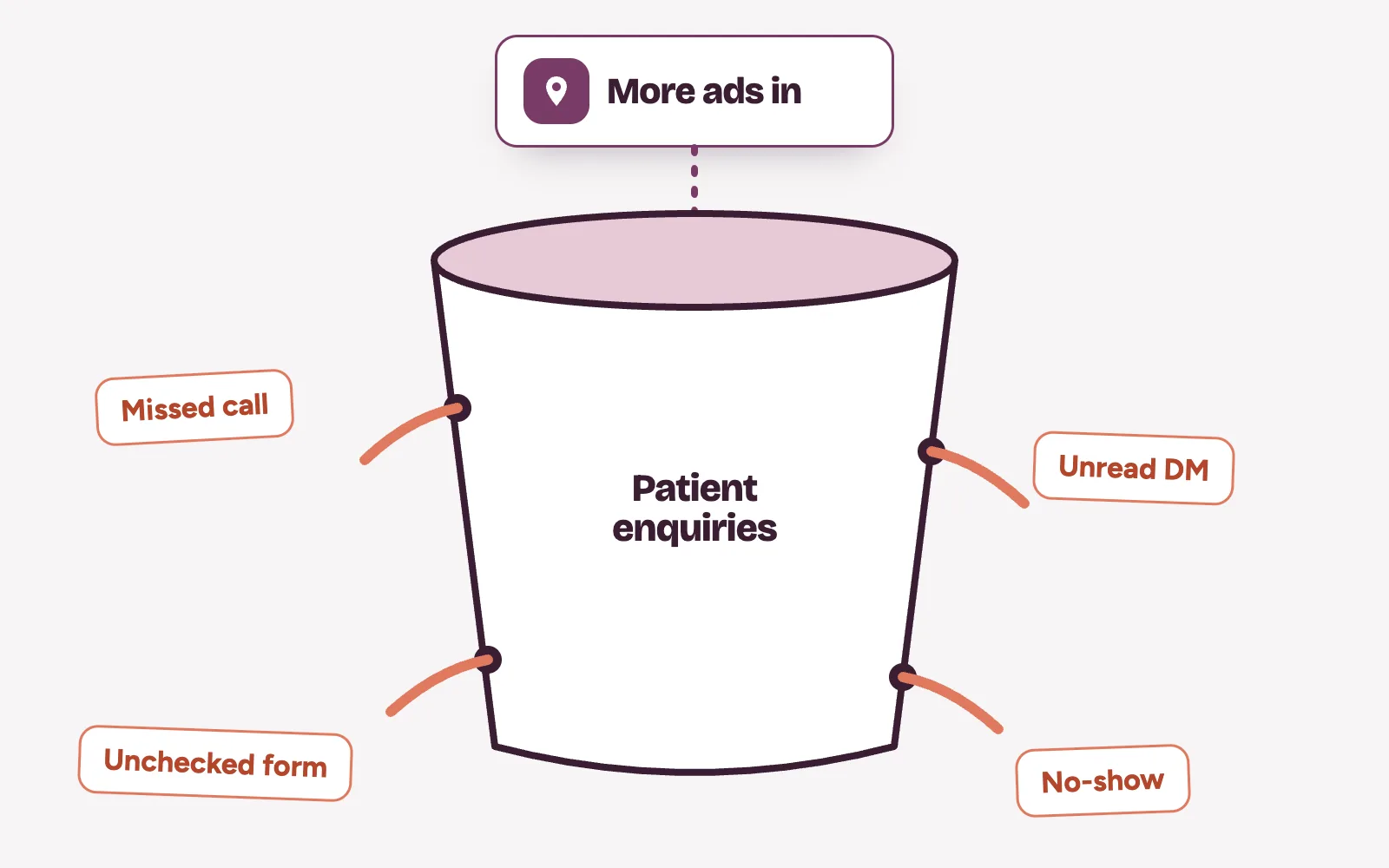
Why do we fix leaks before running ads?
Every patient who calls, sends a DM or fills in a form has already picked your clinic to try. If nobody answers, they don't wait. They try the next clinic on the list, and nobody at your clinic ever finds out.
Ads raise the number of people who reach out. They don't change what happens after that. If enquiries die at the front desk today, they will die there next month too, only now you paid for each one.
So we close the holes first. Every patient you stop losing makes every other channel pay more. If you want the wider picture, read how every step from search to repeat visit fits together.
Where do clinic enquiries usually leak?
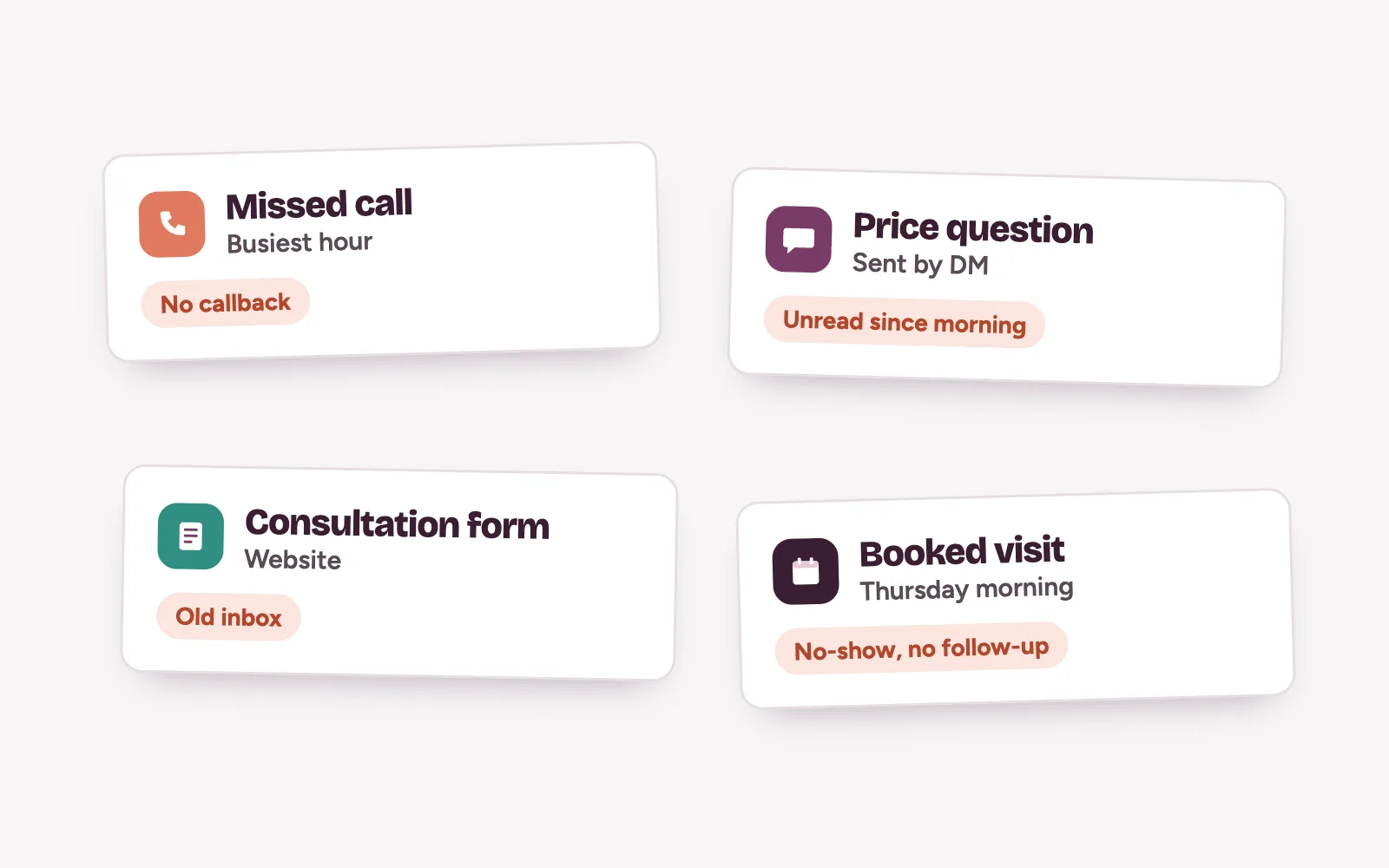
The leaks are rarely dramatic. They are small, daily and invisible from the owner's office:
- Calls ring out at the busiest hour, and nobody calls back.
- "How much?" DMs sit unread until the next day.
- Website forms land in an inbox nobody checks.
- Booked patients don't show, and nobody follows up.
- The Google profile lists hours or a phone number that no longer match the clinic.
Each one looks minor on its own. Together they decide how many of the patients who wanted you end up booked.
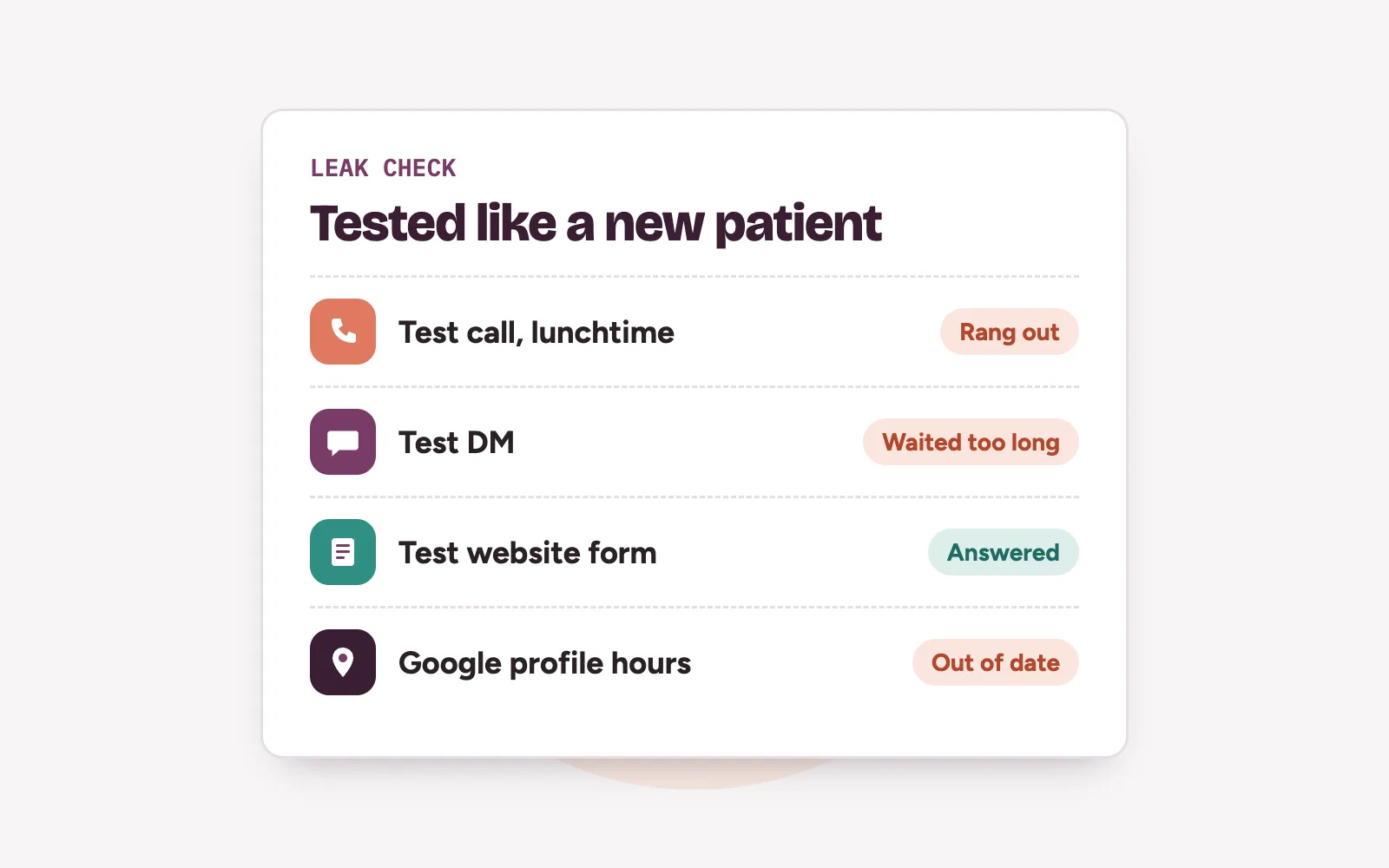
How we find the leaks: we test like a new patient
We don't start with a questionnaire. We test your clinic the way a new patient would. We call at different times of day, send DMs, fill in your forms and check your Google profile. Then we map exactly where an enquiry waited too long or got no reply at all.
We start this check live on the strategy call, so you see the first gaps with your own eyes.
The Google profile gets special attention because it is often the first thing a patient sees. Google asks businesses to provide their regular customer-facing hours, and lets them set special hours for holidays and particular dates (Google Business Profile Help: hours). If the profile says you are open and the phone rings out, that is a leak. We make sure what Google shows matches how your clinic really runs. Our post on setting up a Google Business Profile for clinics covers the rest of the profile.
What we fix, leak by leak
Once the leaks are mapped, we close them in order of how many patients each one is costing you:
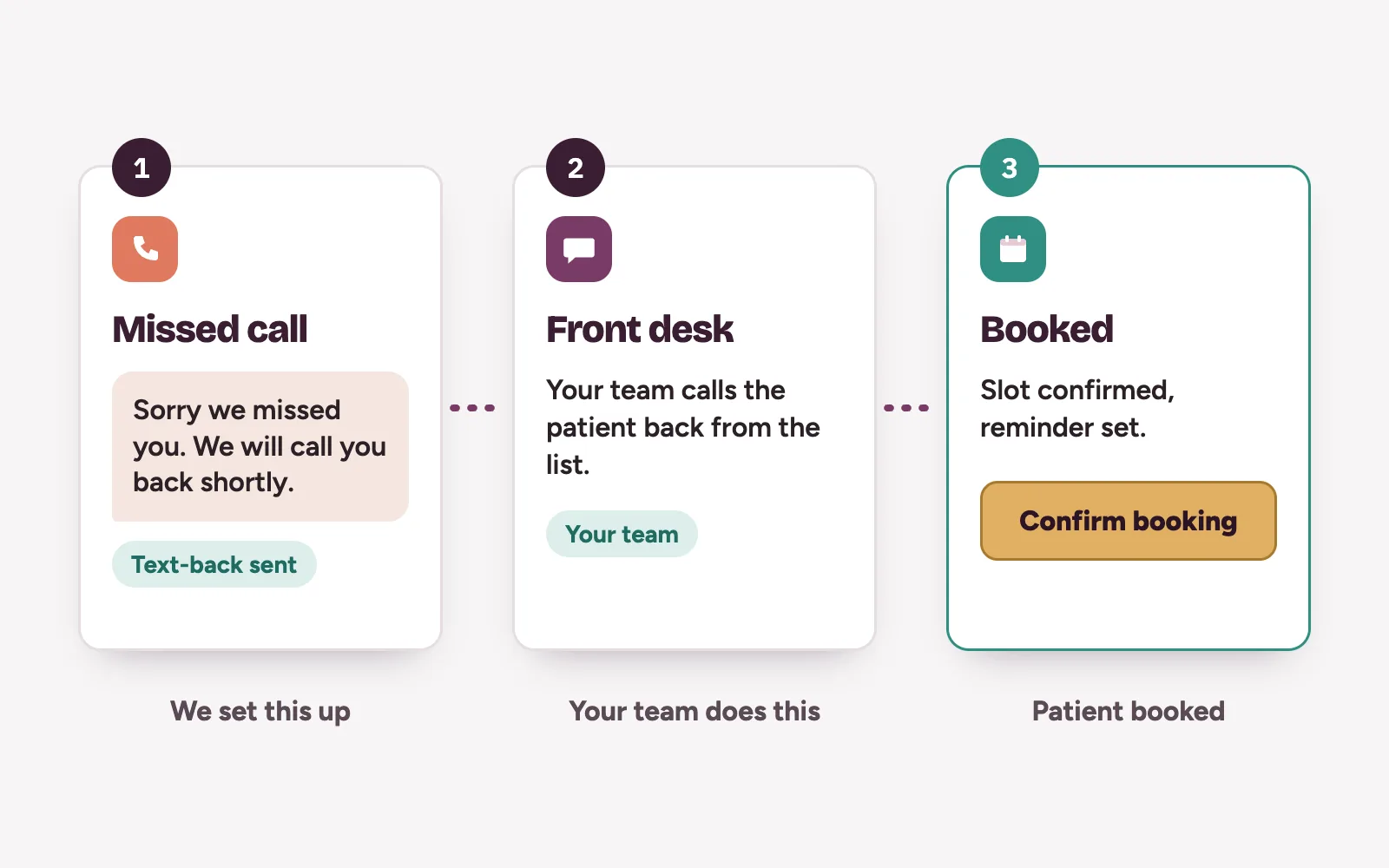
- Missed calls caught. We set up text-backs and callback lists, so a missed call turns into a conversation instead of a lost patient.
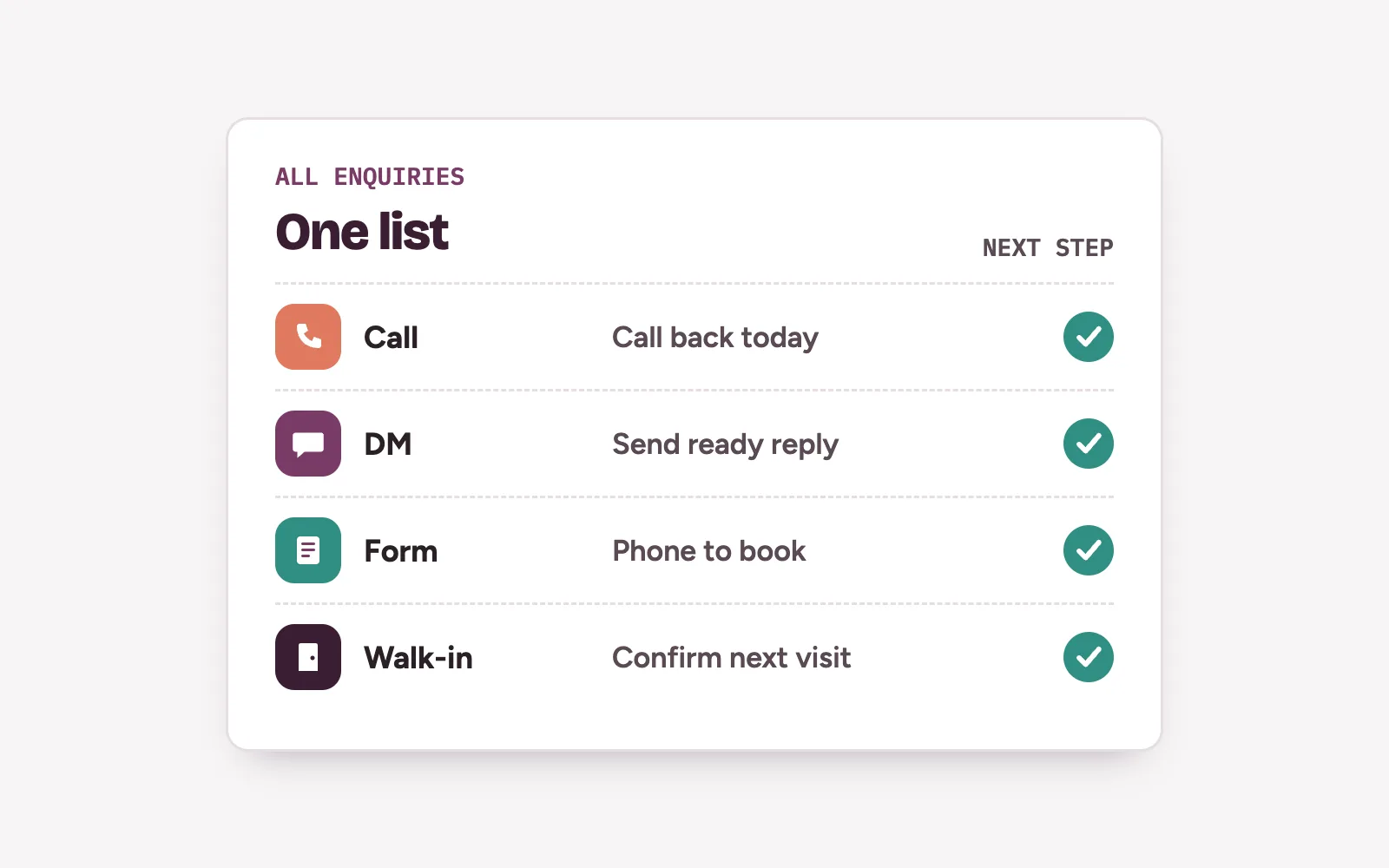
- Every enquiry in one place. Calls, DMs, forms and walk-ins are logged where your team can see them, so nothing waits in a forgotten inbox.
- Reply times your team can hit. Clear response standards and ready replies for the questions patients ask most, built around your front desk's real day.
- No-shows chased. Confirmations and reschedule follow-ups, so an empty slot gets refilled instead of written off. Our post on reducing patient no-shows explains the reminder side in detail.
- Monthly leak checks. We test again every month, so nothing quietly reopens.
What does your clinic team keep doing?
The conversations stay with your team. We set up the automations and the tracking. We never reply for you. Your own team does the final follow-up and books the patient, because patients want to speak to the clinic that will treat them.
A few rules we keep on every leak closure job:
- Every automated message is approved by you before it goes out.
- No patient details in any ad, report or case study.
- Follow-ups are set up within your profession's rules and your clinic's own policies.
One honest warning. Closing leaks needs your people on board. If the front desk won't change how it works, the fixes won't stick, and we will tell you that straight on the call. For reply habits your team can start using today, read how to stop losing patients in your DMs.
What happens after the leaks are closed?
Then we turn up the volume. With the holes plugged, more enquiries can become more bookings. Depending on what your clinic needs next, that means instant replies and reminders that keep leaks closed day and night, one pipeline for every enquiry and slot, or bringing in more patients who are searching for your treatments.
Every month we show you what came in, what got a reply and what booked. We can't promise a number of extra bookings, and nobody honest can. You can see the full scope on our Leak Closure service page.
Questions clinic owners ask about leak closure
Our front desk is already stretched. Won't this add work?
It should take work away. Text-backs, ready replies and one place to see every enquiry cut the chasing and the repeat questions. We build the routine around the team you have and the hours they actually work.
Do you answer calls and messages for us?
No. We set up the automations and the tracking. Your own team does the final follow-up and books the patient.
Can we close leaks without running ads at all?
Yes. Leak closure works on the enquiries you already get, so it stands on its own. For a clinic watching its budget, leak closure across the whole clinic is often the sensible first step before spending more on reach.
How can we tell if our clinic has leaks?
Call your own number at your busiest hour, send a price question by DM and fill in your website form. Note how long each one takes to get a reply. Our clinic growth audit checklist walks through the rest.