Blog · Growth · 5 min read
Clinic growth audit checklist: 32 checks for private clinics
Thirty-two yes-or-no checks across your Google profile, website, enquiries, follow-up, show rate, reviews, recall and numbers, each explained in one line.
By the Kren Agency team ·
A clinic growth audit is a plain check of every step a patient takes, from finding you on Google to coming back for their next visit. Use this clinic growth audit checklist to mark each item yes, no or not sure. The no and not sure answers show you where bookings are slipping away.
Run it with your practice manager and front desk lead. It takes about an hour, and it needs honest answers more than it needs data. Each section below covers one part of the clinic sales system, in the order a patient moves through it.
1. Google Business Profile
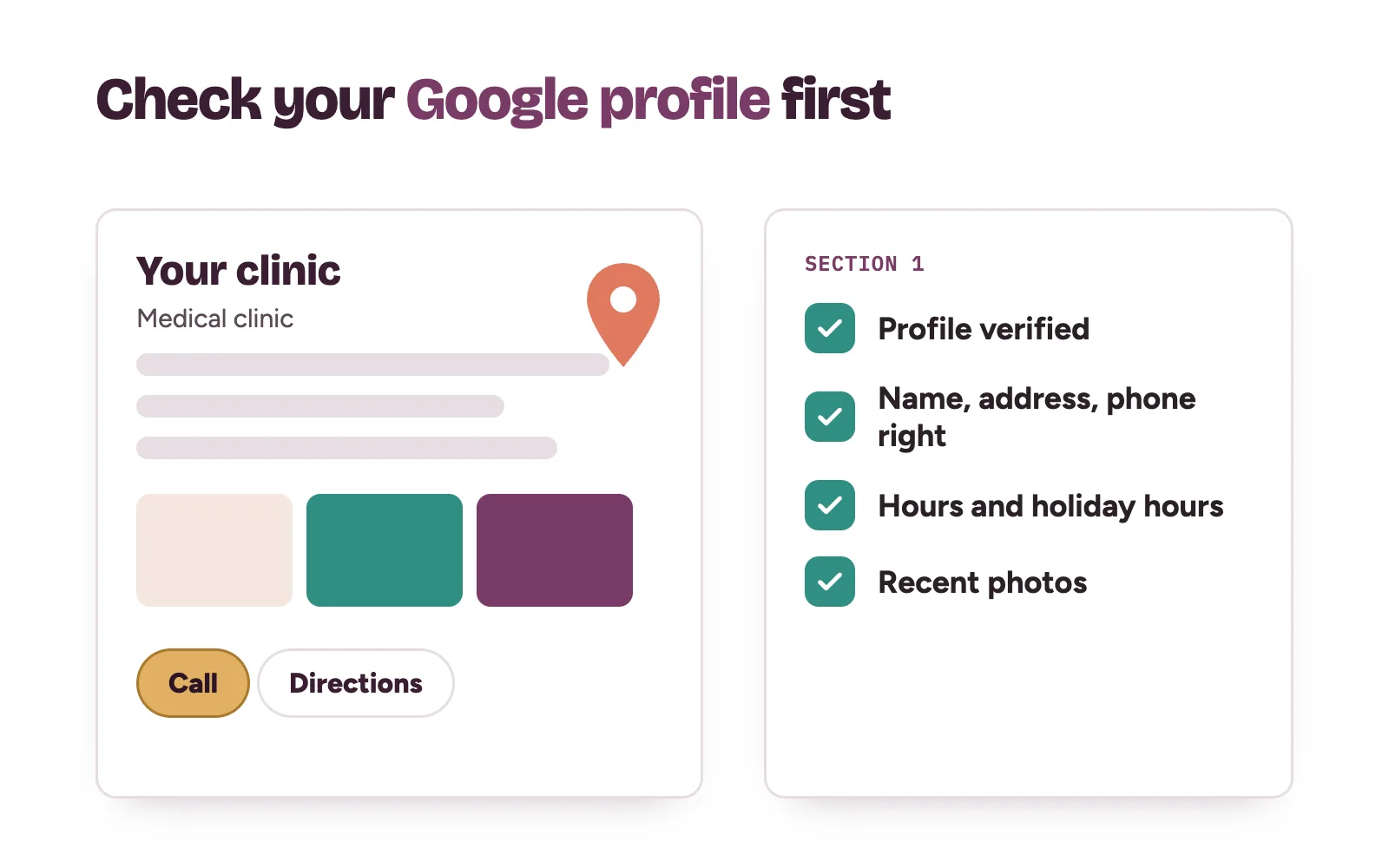
For many patients, your profile on Google Search and Google Maps is the first thing they see. Google says that businesses with complete and accurate info are more likely to show up in local search results.
- The profile is verified. Google says verification makes a profile more likely to show up in results.
- Name, address, phone and category are correct. One wrong digit in the phone number sends calls nowhere.
- Opening hours and holiday hours are current. Patients who arrive to a locked door rarely try again.
- Recent photos show the building, entrance and rooms. They help a first-time patient find you and feel sure about walking in.
Our post on Google Business Profile for clinics covers each of these in detail.
2. Website
- Each main treatment has its own page. A patient searching for one treatment should land on a page about that treatment.
- Every page shows one clear way to book. A call button, a booking form or a message link, visible without hunting.
- Your doctors and their qualifications are named. Patients want to know who will see them.
- The site works properly on a phone. Open it on your own phone and try to book. Note every point where you get stuck.
3. Enquiries
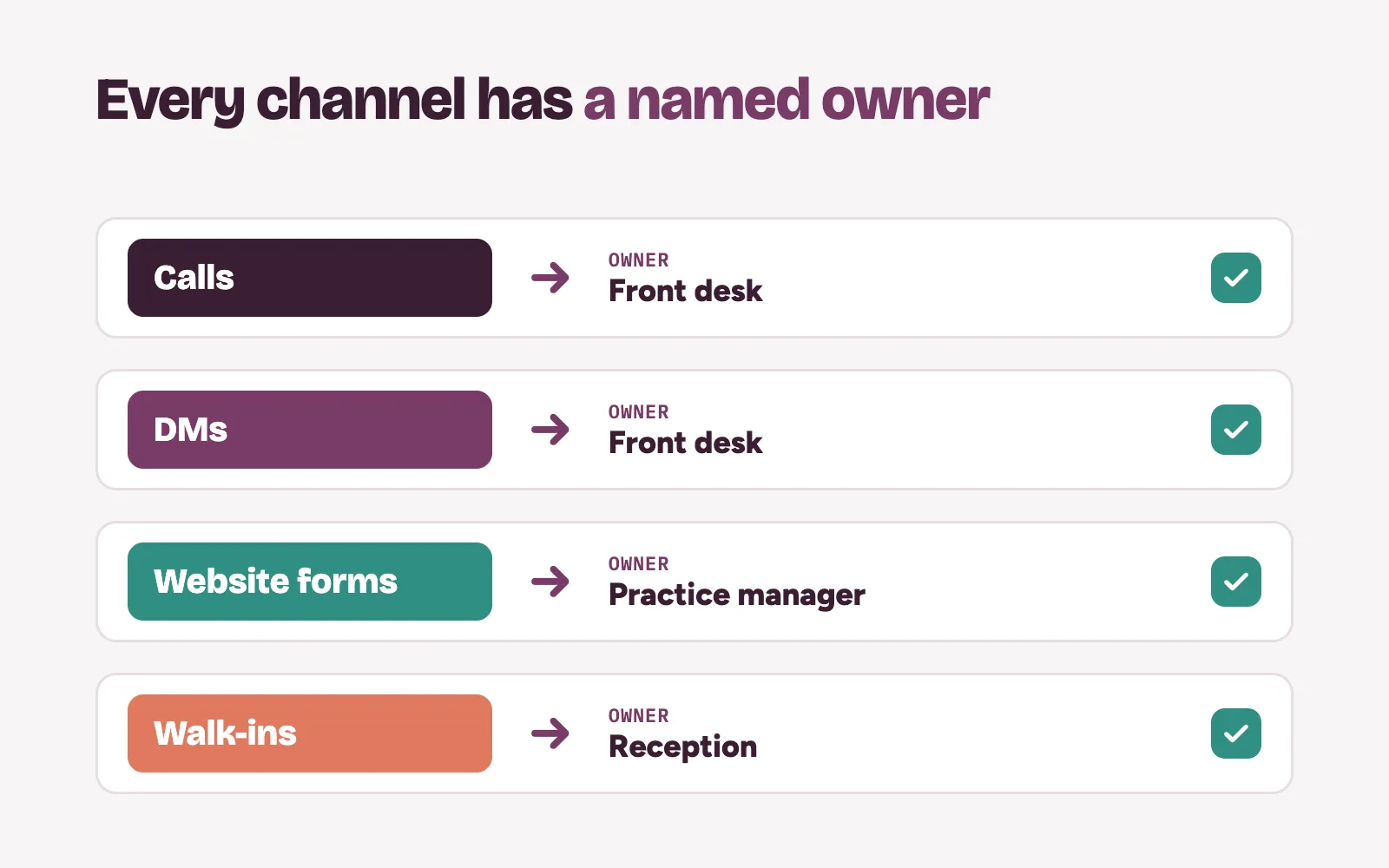
- Someone owns every channel. Calls, DMs, website forms and walk-ins each have a named person.
- You know your reply time. Check how long the last ten enquiries waited for an answer.
- Missed calls get called back the same day. A missed call is often a patient who will ring the next clinic.
- The “How much?” question has a calm, agreed answer. Your team gives a range or a reason to come in, never a cold figure and a goodbye.
4. Follow-up
- Enquiries that don't book get a second contact. Many patients need more than one conversation before they decide.
- Every enquiry is logged in one place. A shared list or CRM, not scattered across personal phones.
- Follow-up stops at a clear point. Your team knows when to close an enquiry politely.
- Follow-up messages are private. No treatment details that a family member could read over a shoulder.
5. Show rate
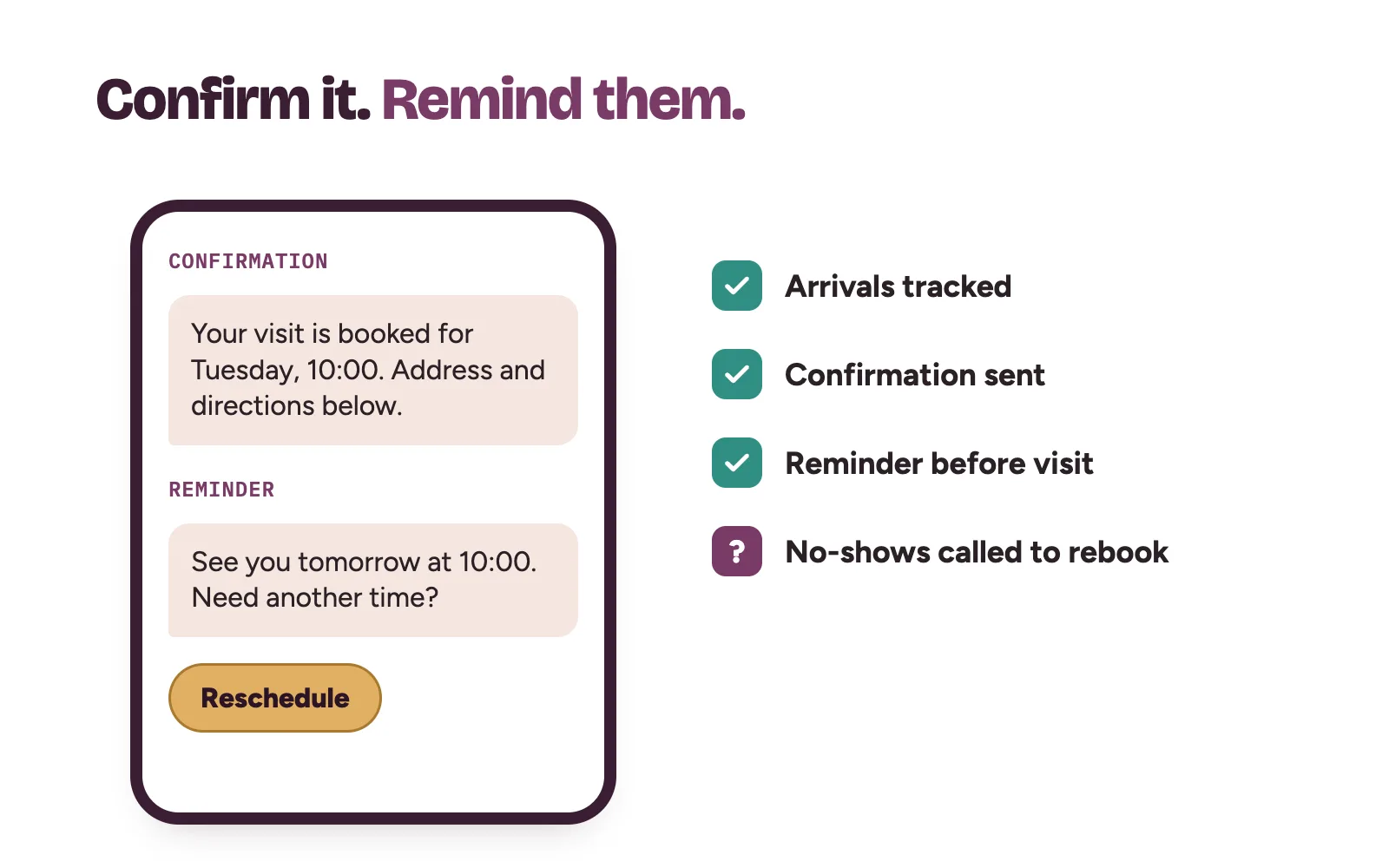
- You track how many booked patients actually arrive. Without this number you can't tell if no-shows are growing.
- Every booking gets a confirmation. Date, time, address and how to reschedule.
- A reminder goes out before each visit. By message or call, at a time your team has agreed.
- No-shows are contacted to rebook. A missed visit is a patient you can still win back.
Our post on how to reduce patient no-shows has reminder timing and wording you can use.
6. Reviews
- You ask happy patients for a review. At the right moment, with a direct link.
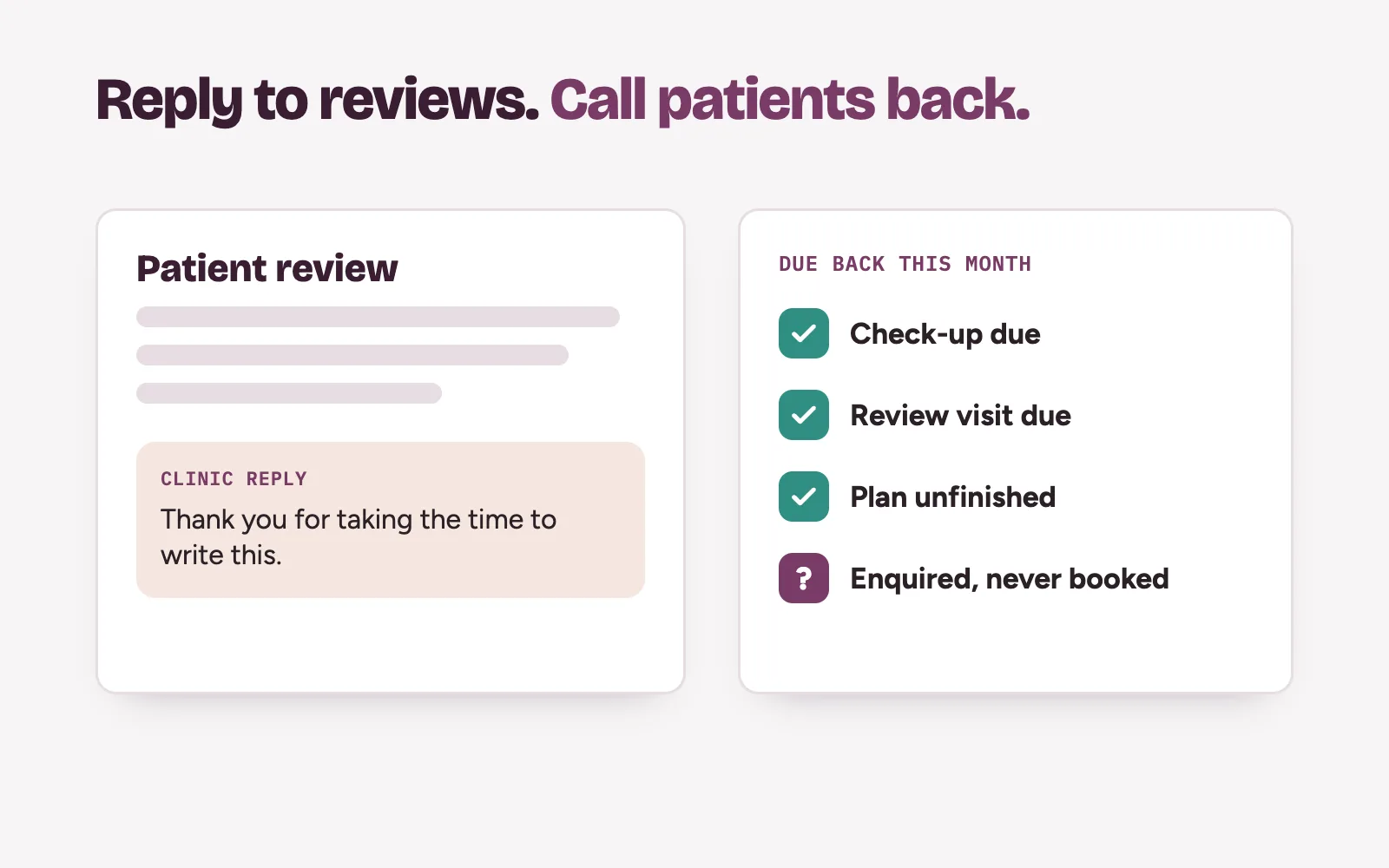
- Every review gets a reply. Google says positive reviews and helpful replies can help a business stand out.
- Replies never confirm someone was a patient. Thank them without mentioning any treatment or visit details.
- Complaints reach a manager. A bad review is often a sign of a problem inside the clinic.
7. Recall
- You know which patients are due back. Check-ups, reviews, unfinished treatment plans.
- Someone contacts them on a schedule. Recall that depends on memory doesn't happen in a busy month.
- Old enquiries that never booked are on a list. They already know your name.
- Patients can book their next visit before they leave. The easiest booking is the one made at the front desk.
8. Measuring
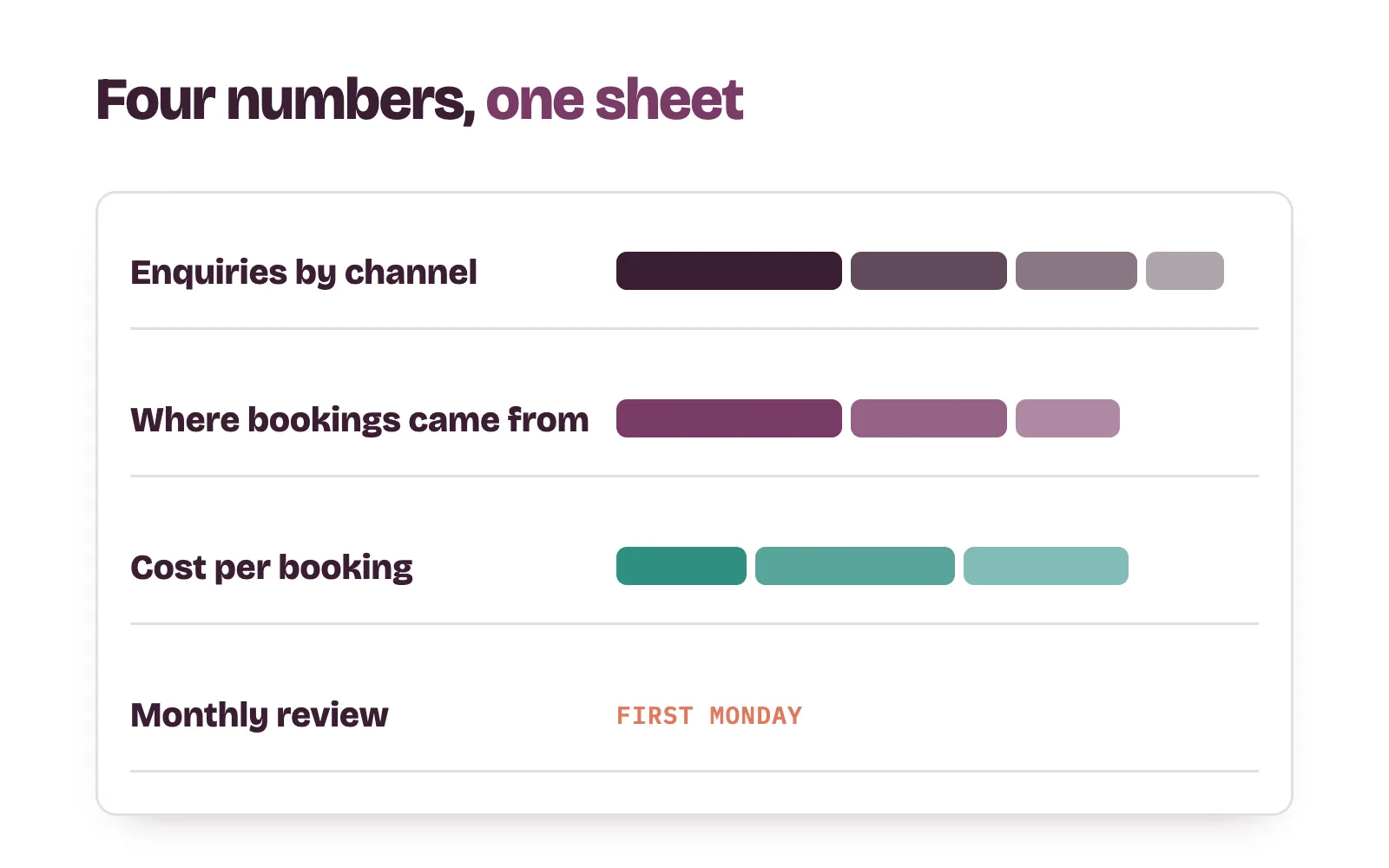
- You count enquiries each week, by channel. Calls, DMs, forms, Google and walk-ins.
- You know where each booking came from. Ask every new patient how they found you, and log it.
- You know your cost per booking for each ad channel. Ad spend divided by the bookings it brought.
- Someone reviews the numbers monthly. Numbers nobody reads change nothing.
What to do with your clinic growth audit results
Count your no and not sure answers in each section. Don't try to fix everything at once. Start with the section closest to the money: usually enquiries, follow-up or show rate, because those patients have already raised their hand.
Spending more on ads before those gaps are closed often means paying for enquiries that still slip away. Fix the leaks first, then add more patients at the top.
Want us to run this checklist with you?
Kren is a done-for-you growth partner for private clinics in Lagos and Abuja. On a 30-minute strategy call, we go through this checklist with you, find where your clinic is losing patients and show you what to fix first. If you work with us, we set up and run the website, Google, ads and the fixes that stop enquiries slipping away. Your own team does the final follow-up and booking.
Show me where my clinic is losing patients →
Questions clinic owners ask about a clinic growth audit
How often should a clinic run this checklist?
Run the full checklist once a quarter. Check the measuring section every month, because those numbers show early when something has slipped.
Who should take part?
The owner or medical director, the practice manager and whoever handles enquiries. The front desk often knows where patients drop off better than anyone else.
What if we can't answer many of the questions?
A “not sure” is a finding in itself. It usually means nobody owns that step or nothing is being tracked. Start by naming an owner and logging the basics for a month.
Which section should we fix first?
Usually enquiries, follow-up or show rate. Those patients already chose to contact you, so closing those gaps tends to add bookings faster than chasing new patients.