Blog · Growth · 6 min read
The clinic sales system: how every piece fits together
The seven steps every patient takes from searching to booking, showing up and coming back, what breaks at each one, and how to find the step costing you the most patients.
By the Kren Agency team ·
A clinic sales system is the whole path a patient takes from searching for a clinic to booking, showing up, coming back and sending friends. It has seven steps: found, trusted, answered, booked, showed up, returned and referred. When bookings are flat, one of those steps is usually broken, and fixing that one step is the fastest way to more patients.
What is a clinic sales system?
Every clinic already has one, even if nobody drew it. A person finds you, decides you look safe, sends a message or calls, gets a reply, books, turns up and pays. Some come back. A few tell their sister.
The question is whether that path is planned or left to chance. A planned path has an owner for each step, a few numbers to watch, and a clear fix when a number drops.
Most owners judge marketing by how busy the phone feels. The path explains why a busy month can still end with thin bookings: patients leak out between the steps.
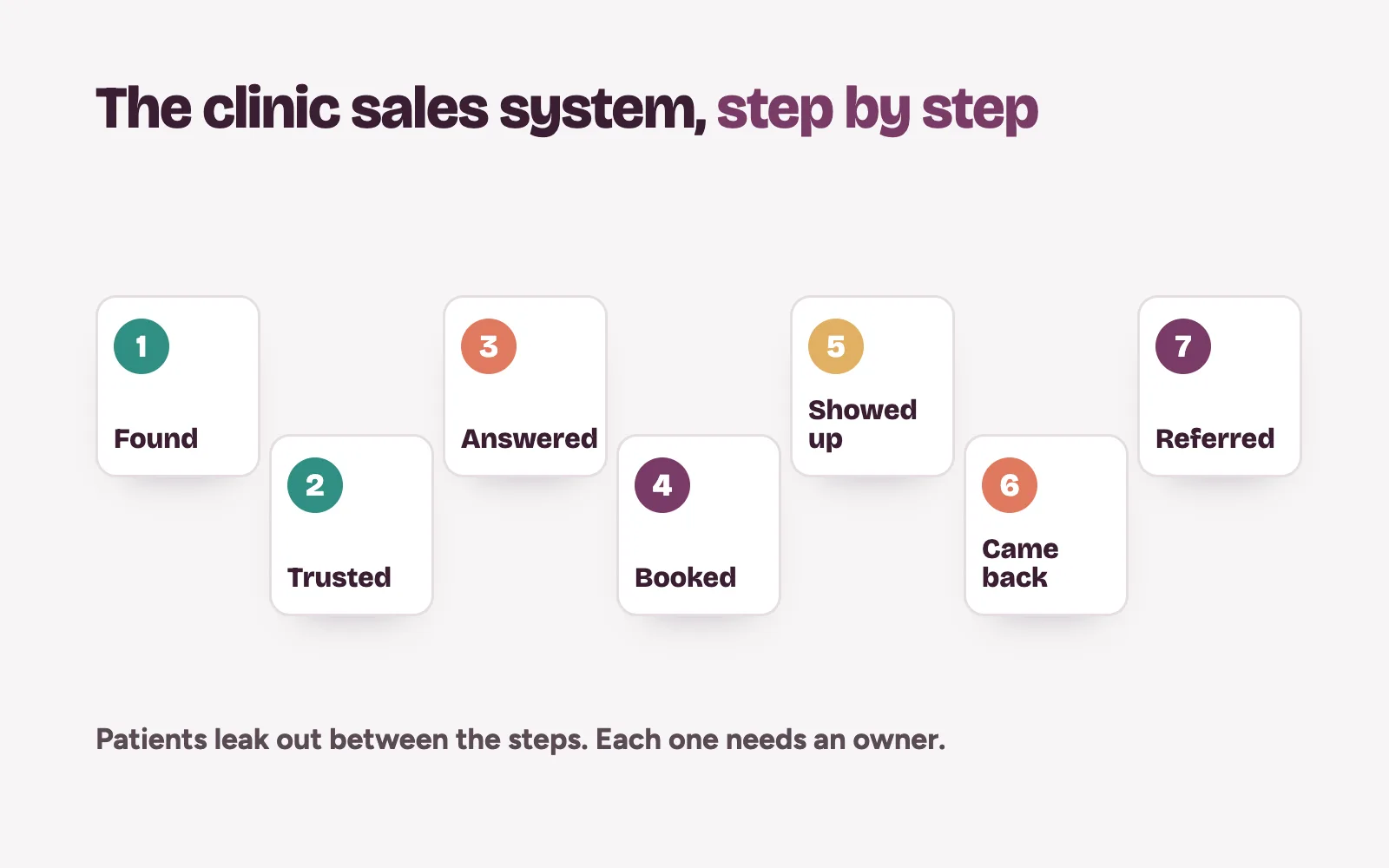
Step 1: Are patients finding you?
Patients find clinics on Google Search, Google Maps, ads on Facebook and Instagram, and through people they know. For local searches, Google says its results are mainly based on relevance, distance and how well-known a business is.
What breaks: an unclaimed or half-filled profile, wrong opening hours, no photos, ads that run without anyone checking what they cost per booking.
What fixing it means: a complete Google Business Profile, treatment pages people can find, and ads judged by bookings. Lead generation for clinics covers where enquiries come from and how to count them.
Step 2: Do they trust you enough to ask?
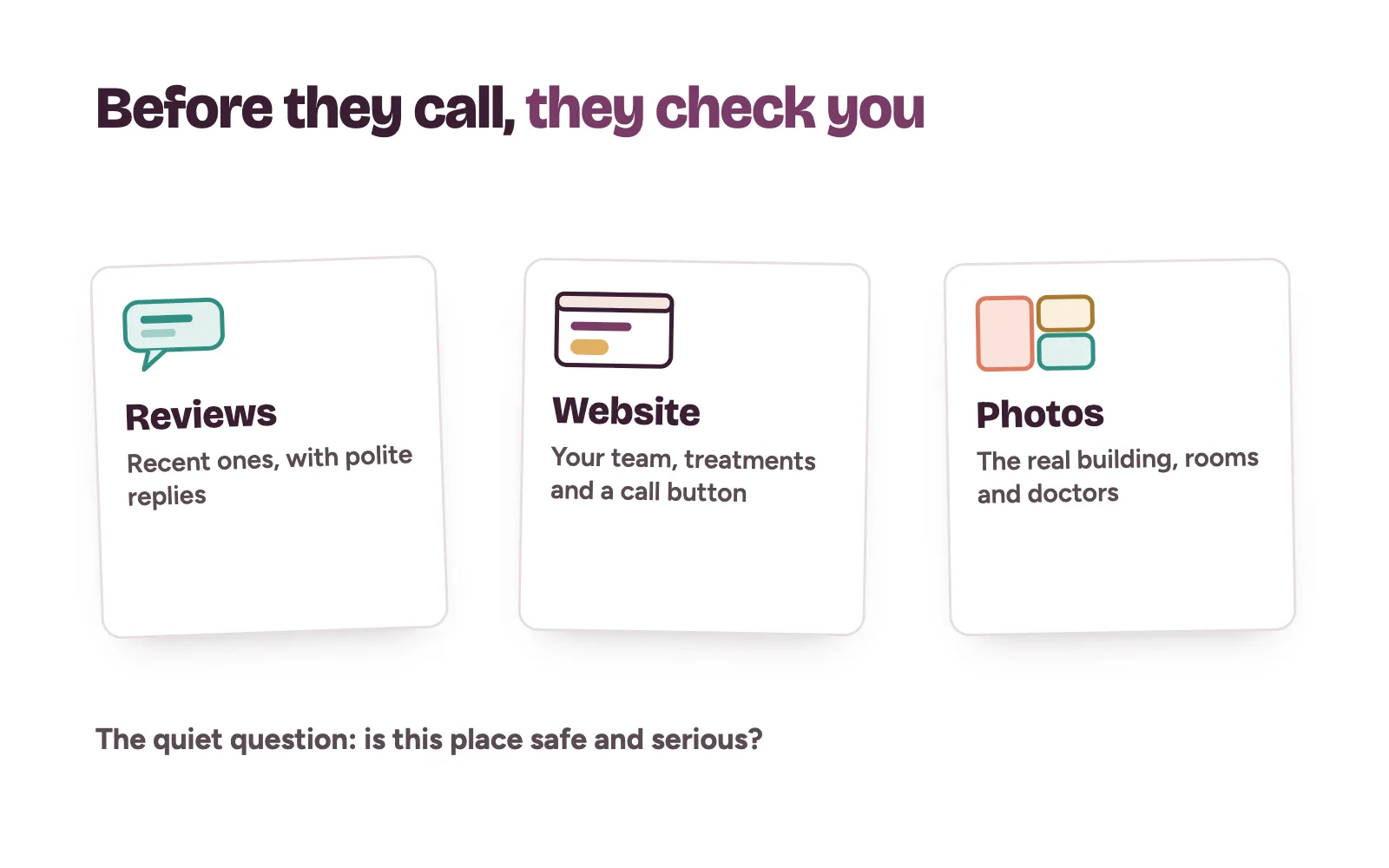
Before anyone calls, they check you. They read your reviews, open your website and look at your photos. They are asking one quiet question: is this place safe and serious?
What breaks: a handful of old reviews with no replies, a slow or confusing website, no named doctors, no clear way to get in touch.
What fixing it means: a steady flow of honest Google reviews with polite replies, and a clinic website that shows your team, your treatments and a call button on every page. Stay inside your professional rules: no promised outcomes and no patient details.
Step 3: Is every enquiry answered fast?
This is where most paid enquiries leak. A person messages three clinics. The first one to reply properly usually gets the visit.
What breaks: missed calls nobody returns, DMs read hours later, price questions answered with a single number and no invitation to book.
What fixing it means: a reply target for opening hours, an instant first reply after hours, and same-day call-backs. Calls, DMs, forms and walk-ins all count. Our post on stopping lost patients in your DMs goes deeper on replies.
Step 4: Does the enquiry become a booking?
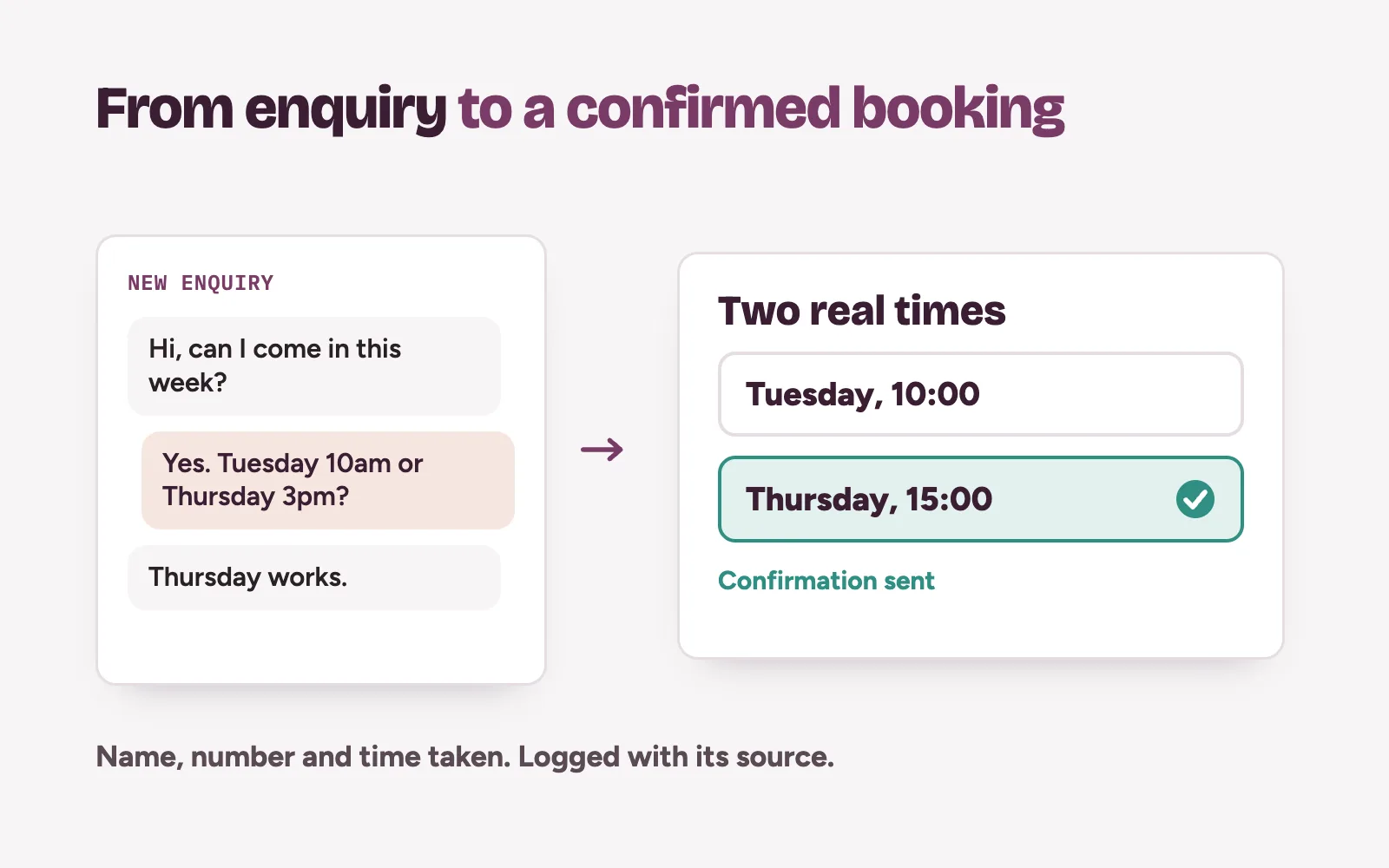
An answered enquiry is still only a conversation. It becomes a booking when someone offers a specific time and confirms it.
What breaks: “We are open Monday to Saturday, come anytime.” No date, no time, no name taken. The person means to come and never does.
What fixing it means: the front desk offers two real times, takes the name and number, and sends a confirmation. Every enquiry is logged with its source and whether it booked.
Step 5: Do booked patients show up?
An empty slot costs the same as a slot nobody booked. No-shows quietly undo good marketing.
What breaks: bookings made a week ahead with no reminder, so patients forget or something else wins the day.
What fixing it means: a reminder the day before and on the morning, with an easy way to move the time instead of skipping it. SMS reminders for clinics explains how to send them within the rules.
Steps 6 and 7: Do patients come back and refer others?
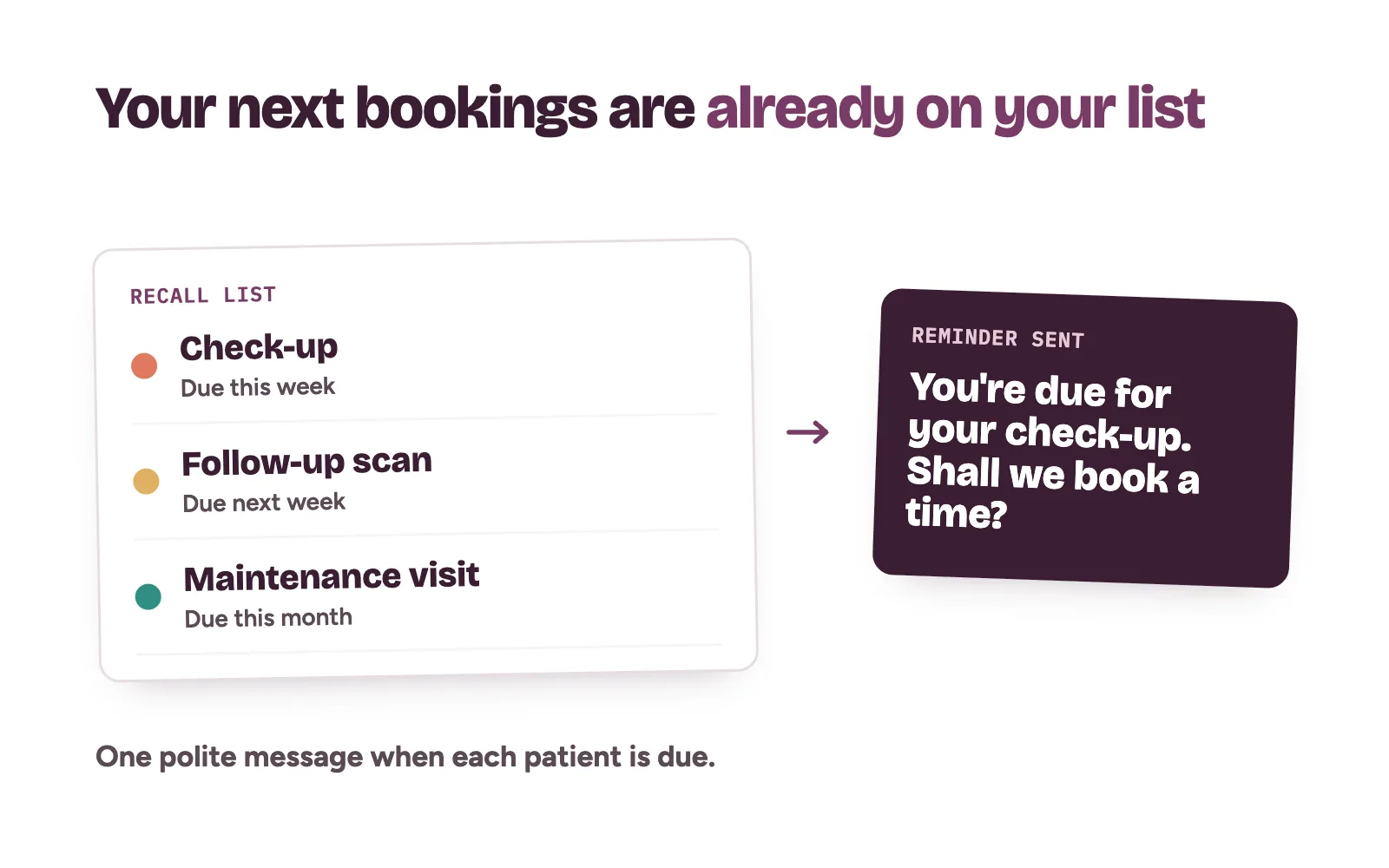
The cheapest patient is the one who already trusts you. Check-ups, follow-up visits, repeat scans and maintenance treatments are all bookings waiting to be made.
What breaks: nobody owns recall. Patients who were due for a visit months ago never hear from you again.
What fixing it means: a recall list by treatment and due date, a polite message when each patient is due, a simple ask for a review after a good visit, and an easy way for happy patients to send friends your way.
How do you find the broken step?
Count one number per step for the last 30 days:
- Found: calls, website clicks and direction requests from your Google profile, plus ad enquiries.
- Answered: how many enquiries got a reply within your target.
- Booked: how many enquiries became a confirmed booking.
- Showed up: how many bookings arrived.
- Returned: how many past patients booked again.
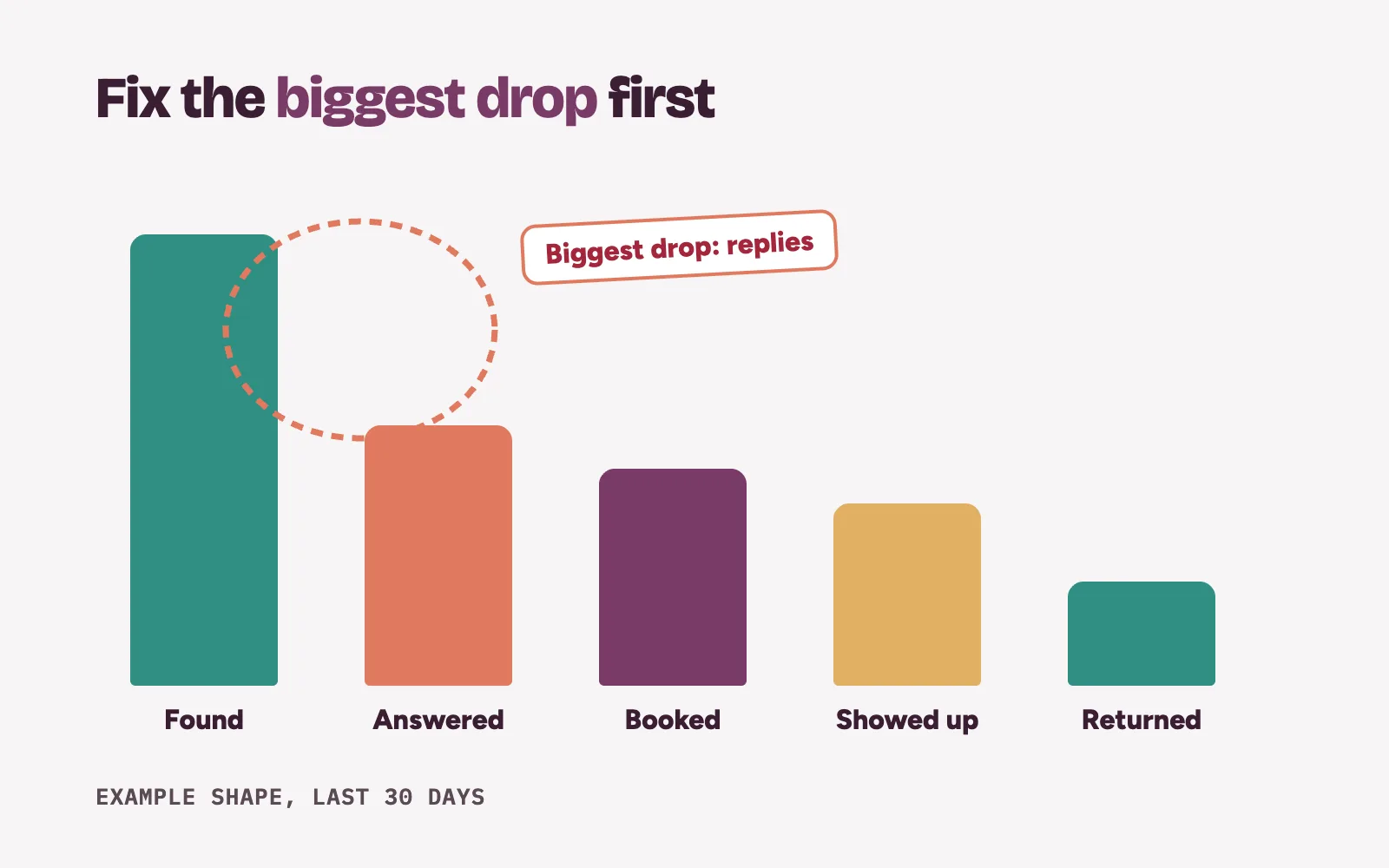
The step with the biggest drop is where to start. Spending more on ads while step 3 leaks only buys more lost enquiries.
How Kren builds a clinic sales system with you
Kren is a done-for-you growth team for private clinics in Lagos and Abuja. We work through each step: your Google presence, website, ads, closing the leaks between enquiry and booking, reminders and recall. We set up the follow-up automations. Your own team does the final follow-up and booking.
On a 30-minute strategy call, we walk your path with you and show you which step is costing you the most patients. Show me where my clinic is losing patients →
Questions clinic owners ask about a clinic sales system
Which step should a clinic fix first?
The one with the biggest drop in your monthly numbers. For many clinics that is the reply step, because enquiries wait too long. Fix replies before spending more on ads.
Do we need new staff to run it?
Usually not. Most of the work is clear habits for the team you already have: reply targets, offering times, sending reminders and keeping a recall list. Automations handle the first reply and reminders so staff can focus on patients.
How long before bookings change?
It depends on which step was broken. Reply and reminder fixes act on patients who are already enquiring, so they tend to show first. Reviews and search presence build more slowly, so track your numbers monthly.
Does this work for every type of clinic?
The seven steps apply to dental, aesthetic, fertility, diagnostics, physiotherapy and private hospitals. What changes is the detail, such as recall timing and which treatments you promote.