Blog · Growth · 5 min read
Clinic marketing budget: how much to spend in Nigeria
How to set a clinic marketing budget from your booking goal and what a patient is worth, then review it monthly by cost per booking.
By the Kren Agency team ·
A clinic marketing budget in Nigeria should come from two numbers you already have: how many extra bookings you want each month, and what a new patient is worth to your clinic. Multiply the bookings you want by the most you can afford to pay for each one, and you have a monthly figure you can defend. Copying another clinic's spend skips both numbers, which is why it so often disappoints.
Why is there no standard amount to spend?
A fertility clinic and a physiotherapy practice can sit on the same street and need very different budgets. Their treatments earn different amounts. Their patients take different times to decide. Their front desks convert enquiries at different rates.
So the useful question is "what can we afford to pay for one booking?" Once you know that, the monthly amount follows.
How do you work out a clinic marketing budget?
Use your own records from the last six to twelve months. Rough numbers are fine for a start.
- Find what a new patient is worth. Take the average a new patient pays on the first visit, then add what they usually spend with you over the next year in follow-ups and repeat treatments. Use the profit left after direct costs, since that is what pays for marketing.
- Decide what share you will spend to win one. Pick the part of that patient value you are willing to put into getting them through the door. This is your target cost per booking.
- Set your booking goal. Count the extra bookings you want each month for two or three priority treatments, and check you have the staff and room to see them.
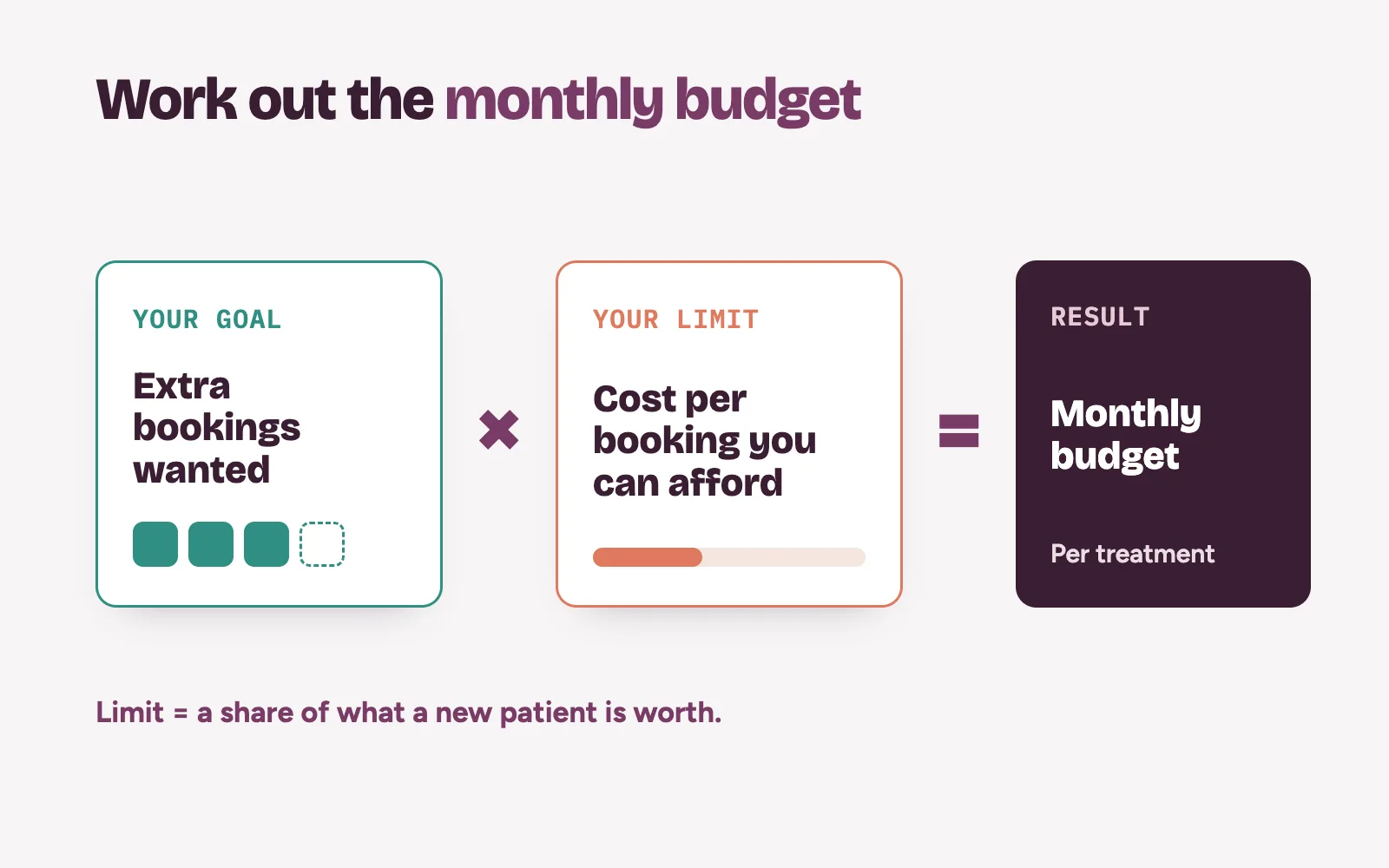
- Multiply. Extra bookings wanted × target cost per booking = your monthly budget for winning new patients.
Work it out per treatment if values differ a lot. A high-value treatment can carry a higher cost per booking.
Should you fix leaks or buy more enquiries first?
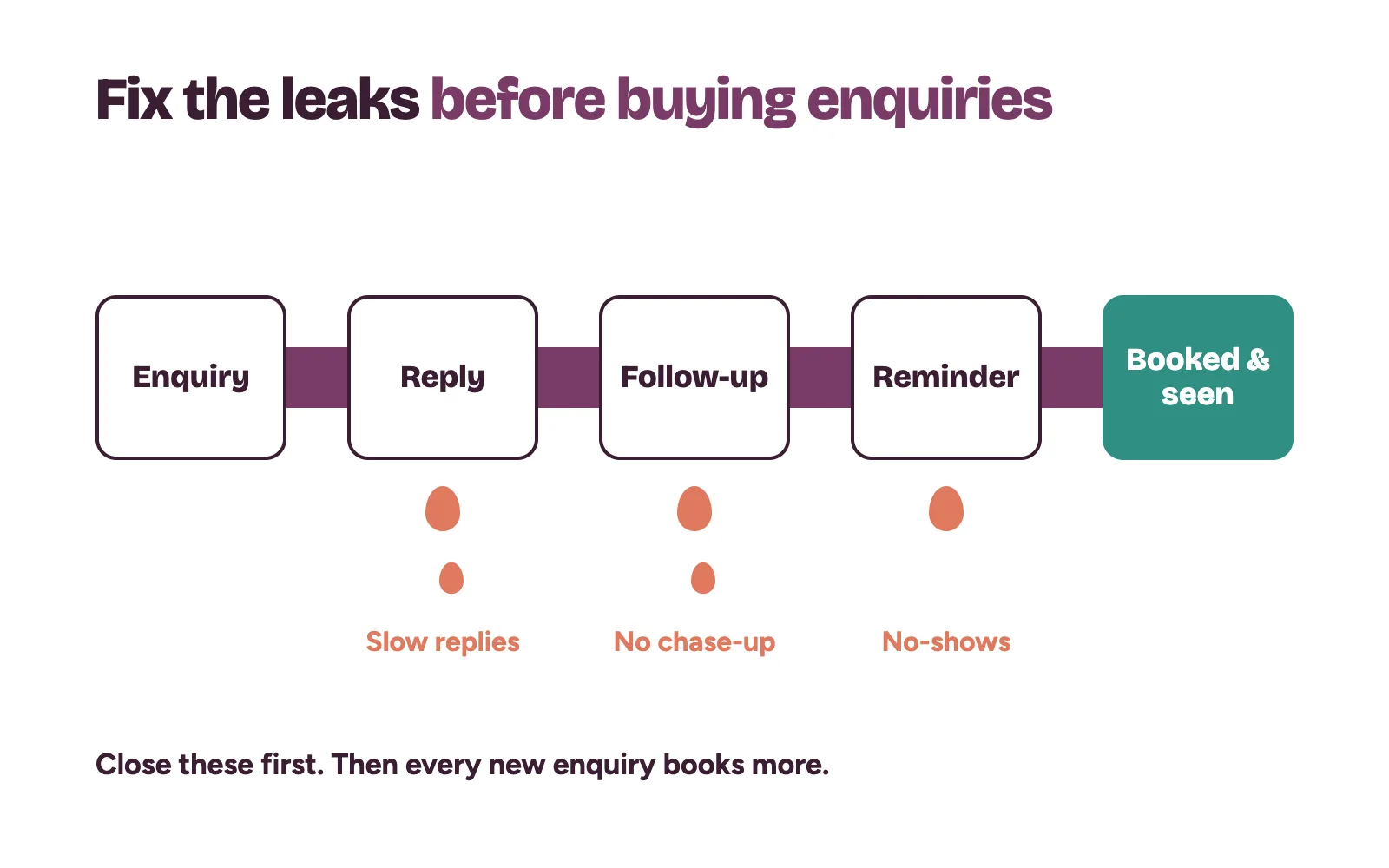
Fix leaks first. Every enquiry you already get has a cost. If a third of them never get a reply, or get a price and no follow-up, your real cost per booking is far higher than it needs to be.
Common leaks in private clinics:
- Calls and messages answered hours later, or not at all after closing time.
- "How much?" answered with a number and nothing else.
- No follow-up for people who asked but did not book.
- No reminder before the appointment, so booked patients don't show up.
- No recall of past patients who are due back.
Our posts on replying to patient messages and reducing no-shows cover the fixes. Close these gaps first, and every naira you later put into ads goes further.
A practical split: in the first one or two months, put most of the money into fixing the path from enquiry to booking. Once that holds, move the larger share to getting new enquiries.
Ad spend and management: why budget them separately?
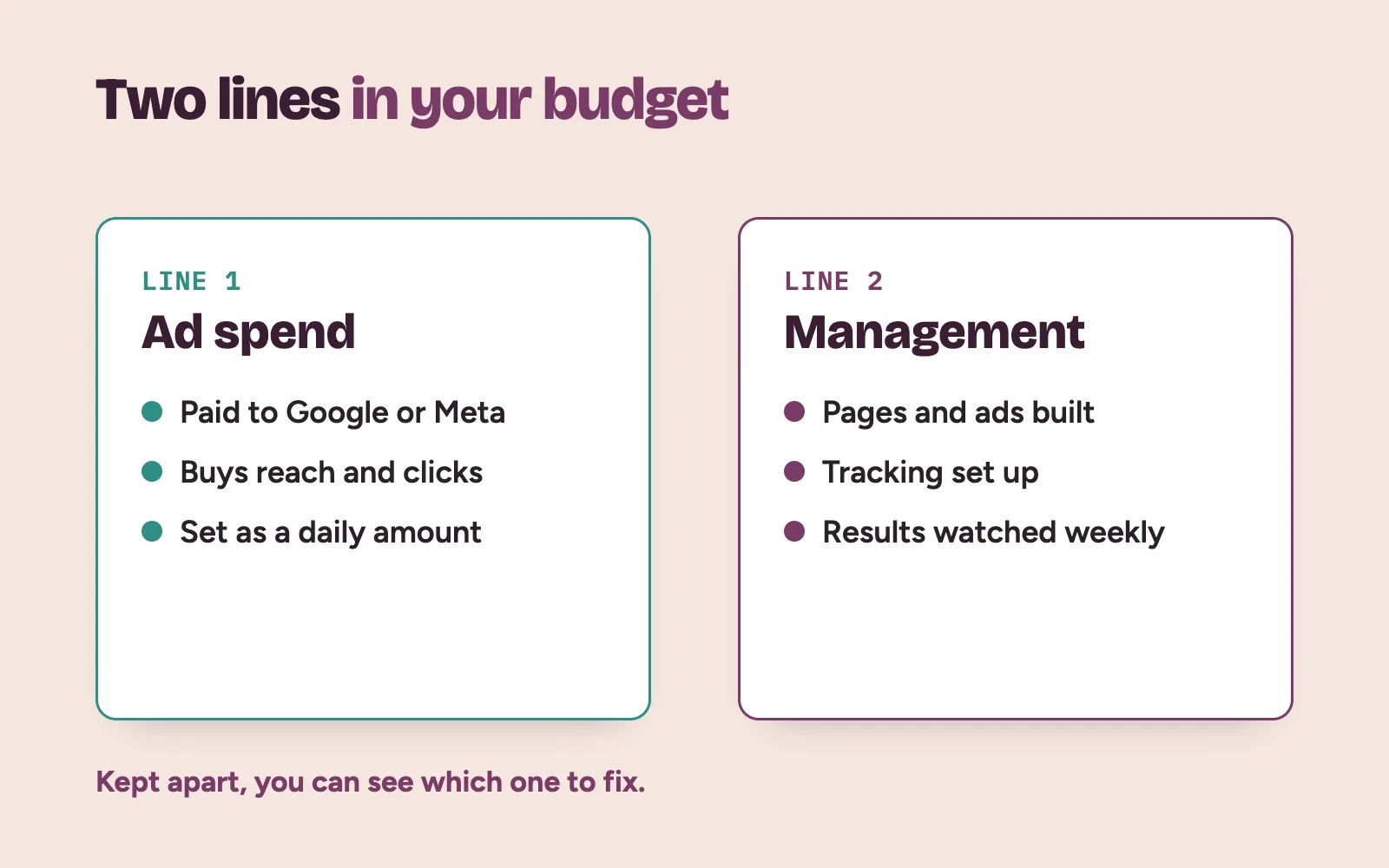
Paid advertising has two costs. Ad spend is the money Google or Meta charges for showing your ads. Management is what you pay people to build the pages, write the ads, set up tracking, watch results and make changes.
Keep them as two lines in your budget. If you lump them together, you can't tell whether poor results come from too little reach or from weak ads and pages.
Know how the ad accounts spend, too. Google Ads works on an average daily budget. Google says a single day can spend up to twice that amount for most campaigns, while the monthly limit is 30.4 times the average daily budget. So divide your monthly ad figure by 30.4 to set the daily number. Our post on Google Ads for clinics covers campaign set-up.
How should you review the budget each month?
Judge every channel by cost per booking. Clicks, likes and reach tell you little about whether patients came in.
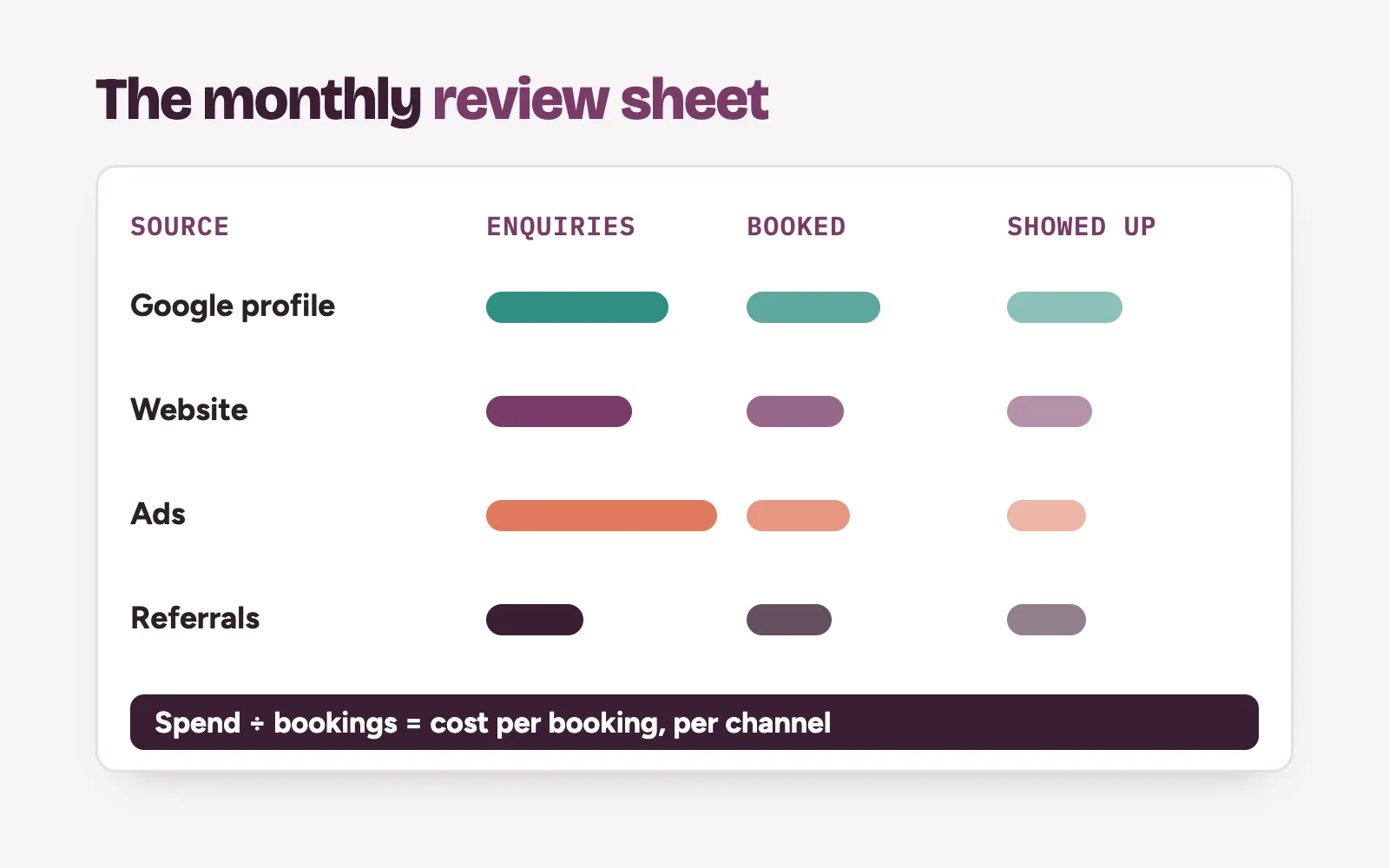
- Log every enquiry with its source: Google profile, website, ads, referral, walk-in.
- Log which of those enquiries booked, and which booked patients showed up.
- For each paid channel, add ad spend and its share of management, then divide by the bookings it produced.
- Compare each channel's cost per booking with your target.
- Move money from channels above target to channels below it.
When should you raise or cut spending?
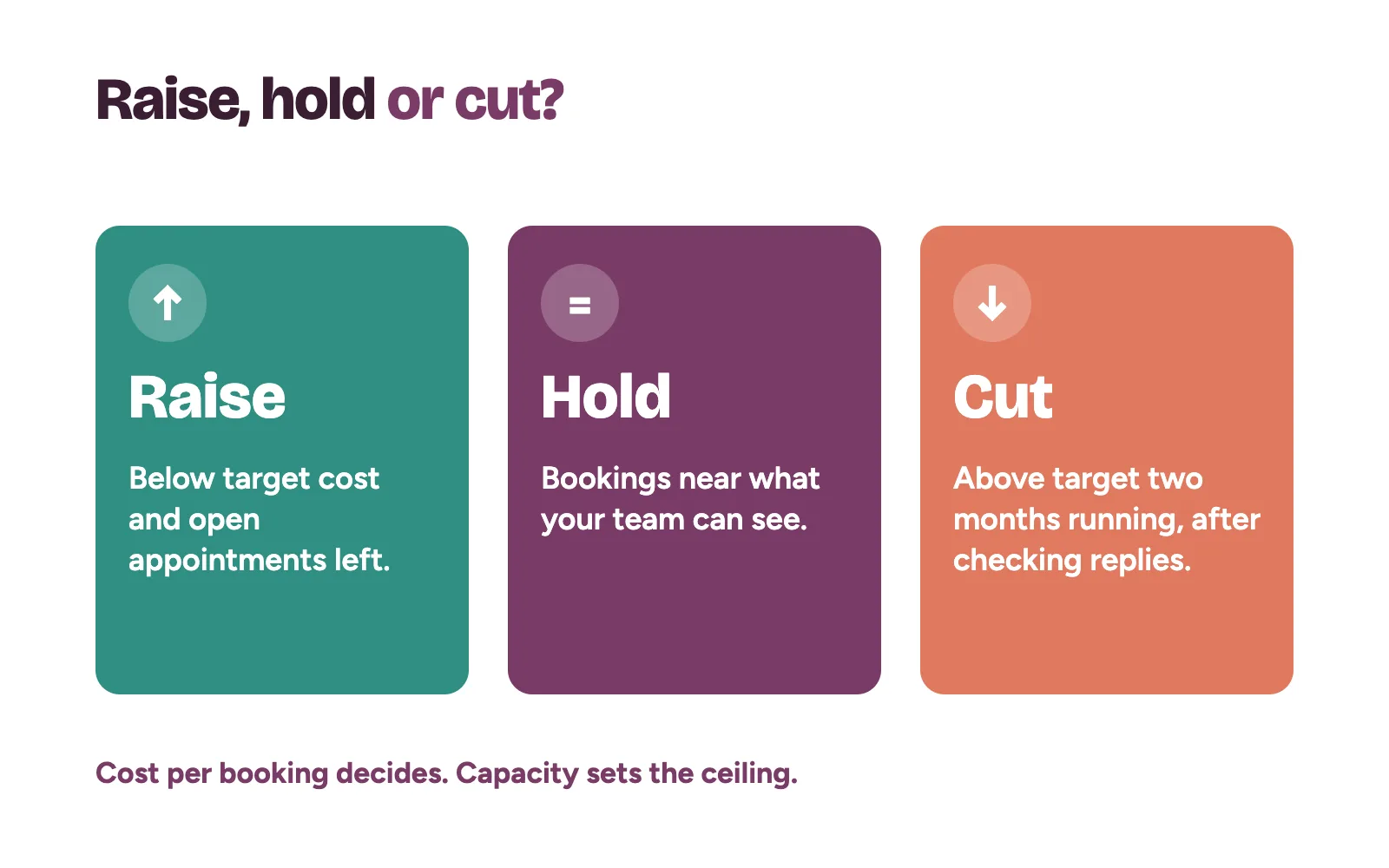
Raise it when a channel books patients below your target cost, and you still have open appointments for that treatment. Raise slowly, then check whether the cost per booking holds.
Cut or pause when the cost per booking stays above target for two months running and you have already checked the replies, follow-up and landing page. Sometimes the ad is fine and the problem sits at the front desk.
Hold steady when bookings are close to what your team can handle. For where the budget fits in the wider plan, see our one-page clinic marketing strategy.
How Kren helps you spend where it books patients
Kren is a done-for-you growth partner for private clinics in Lagos and Abuja. We work out your target cost per booking with you, close the leaks through our leak closure work, then set up and run the website, Google, ads and follow-up automations. Your own team does the final follow-up and booking.
On a 30-minute strategy call, we look at where your current spend goes and which part is costing you patients. Show me where my clinic is losing patients →
Questions clinic owners ask about a marketing budget
Should a new clinic spend more on marketing in the first year?
A new clinic has no past patients to recall and few reviews, so it usually leans more on paid reach at the start. Build the Google profile, treatment pages and follow-up early, so that paid enquiries actually turn into bookings.
What if we don't know what a patient is worth?
Start with the average first-visit payment from your records for the last three months. Add repeat visits once you have a year of data, and update the figure every quarter.
Is a percentage of revenue a good way to set the budget?
It gives you a ceiling, which is useful. It doesn't tell you how many bookings that money should buy, so pair it with a target cost per booking.