Blog · Growth · 5 min read
How long does clinic marketing take to work?
Replies and follow-up move first, ads take rounds of testing, and Google ranking builds slowest. Here is the order, and what to measure while you wait.
By the Kren Agency team ·
How long clinic marketing takes depends on which part you are fixing. Changes inside your clinic, like faster replies and proper follow-up, can turn into bookings as soon as enquiries are coming in. Ads take a few rounds of testing to find what books, and climbing Google takes the longest because it builds up slowly.
So the honest answer is an order of work. Some parts pay back early, some pay back later, and you can measure all of them from the first week.
Why is there no single answer?
Clinic marketing is several jobs running together. Each one moves at its own speed. A front desk that answers every enquiry the same day changes things quickly. A Google ranking that depends on reviews and links from other websites changes slowly.
Be careful with anyone who gives you a fixed date for results. Google's own page on hiring an SEO tells business owners to ask what results to expect, in what timeframe, and how success is measured. Ask the same three questions of any agency, Kren included.
What moves first: replies and follow-up
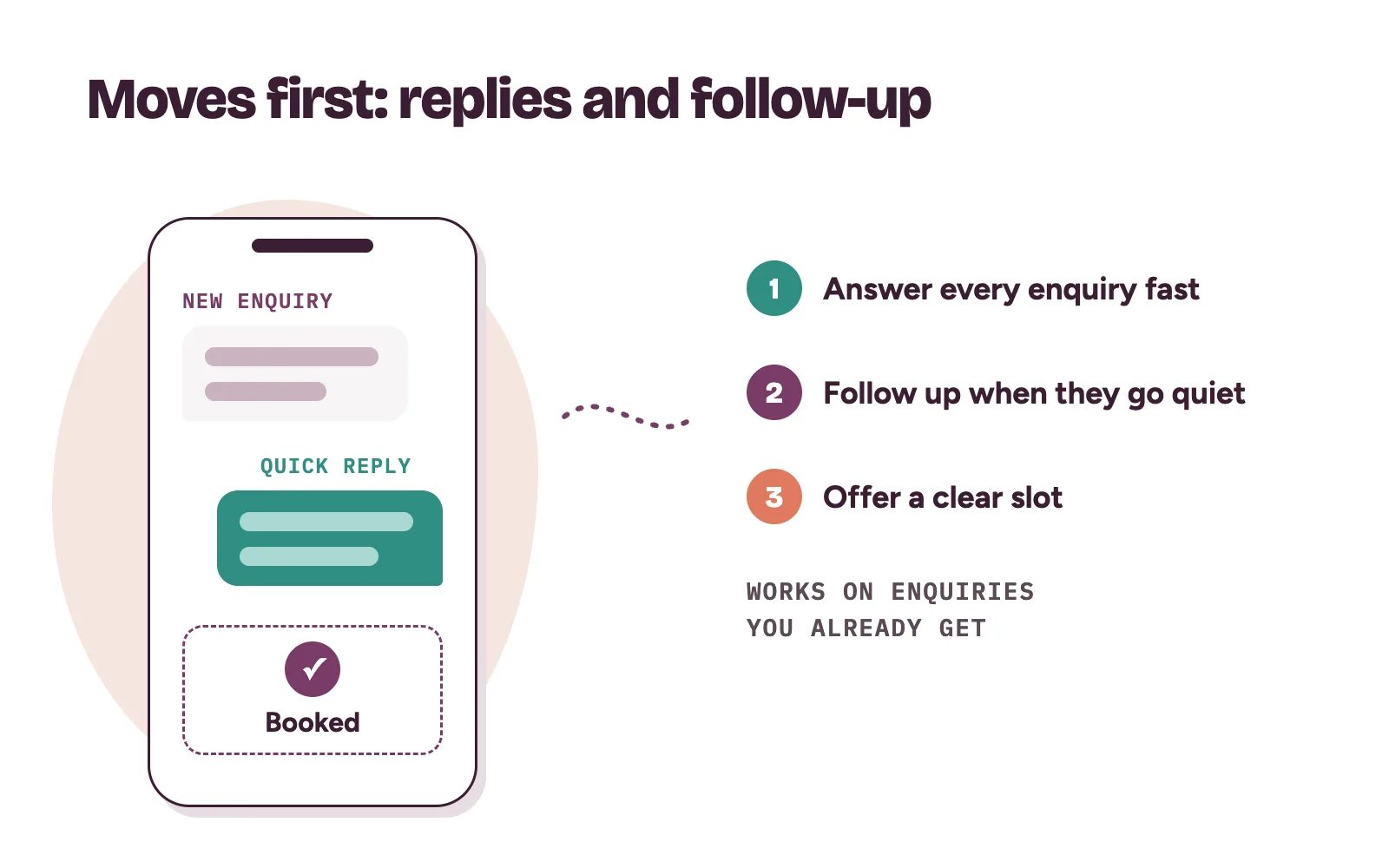
Most clinics already get more enquiries than they book. Calls ring out. DMs wait until the evening. A patient asks a price, gets an answer, and nobody checks back. Every one of those is a patient you already paid to attract.
Fixing this is the fastest part because nothing outside your clinic has to change. The day your team starts replying quickly, following up and offering a clear slot, the enquiries you already get start converting better. Our post on clinic leak closure explains why we close these gaps before spending anything on ads.
What moves next: ads
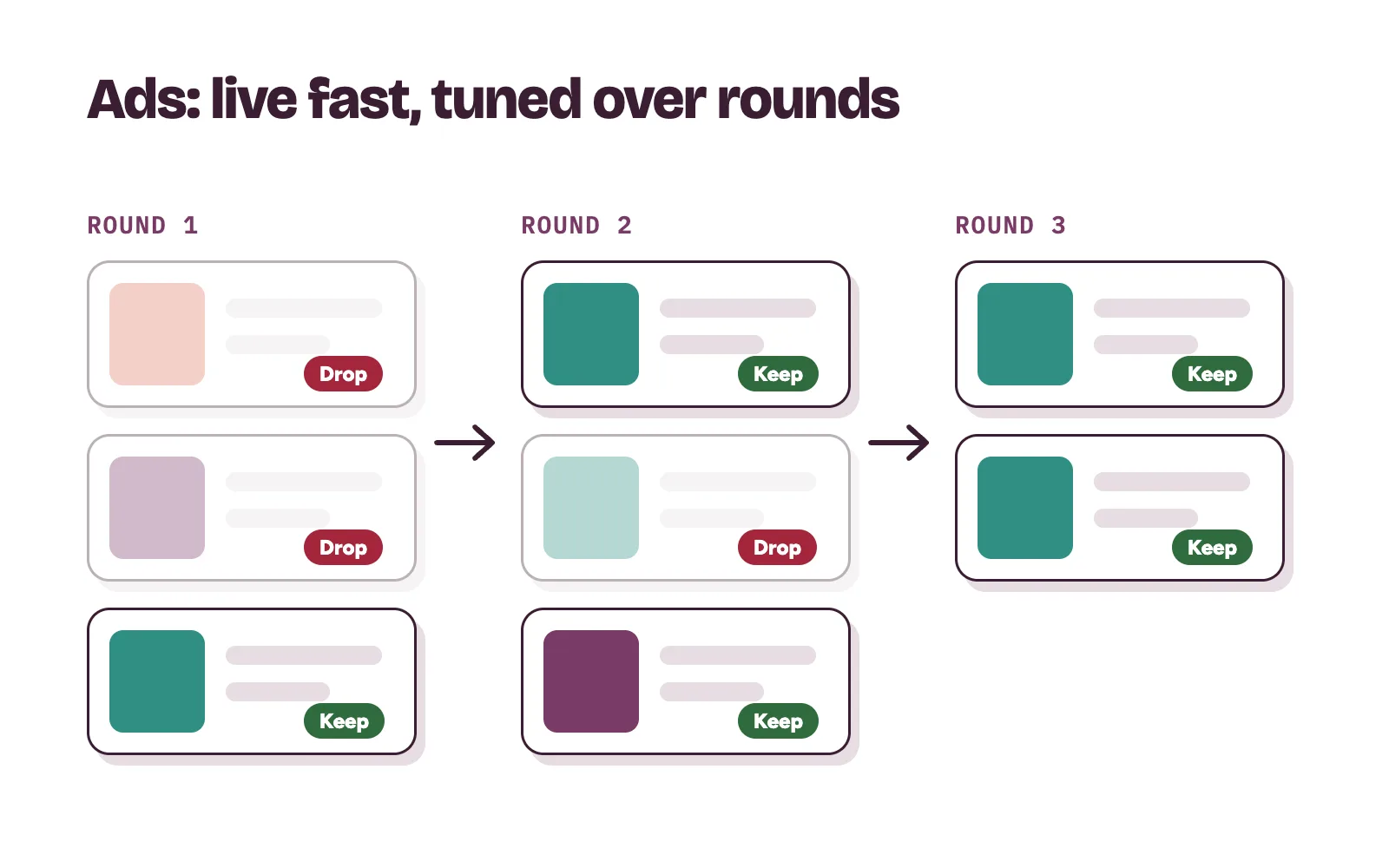
Ads can start showing soon after Google or Meta approves them. Booking patients from them comes later. The first round tells you which message, offer and audience bring real enquiries. The next rounds keep what works and drop what doesn't.
How many rounds that takes depends on your budget, your treatment and how well your team handles the enquiries. If replies are slow, even good ads look bad, because the enquiries go cold. That is another reason the reply fix comes first. Our post on why clinic ads stop working covers the usual causes.
What takes longest: Google ranking and reviews
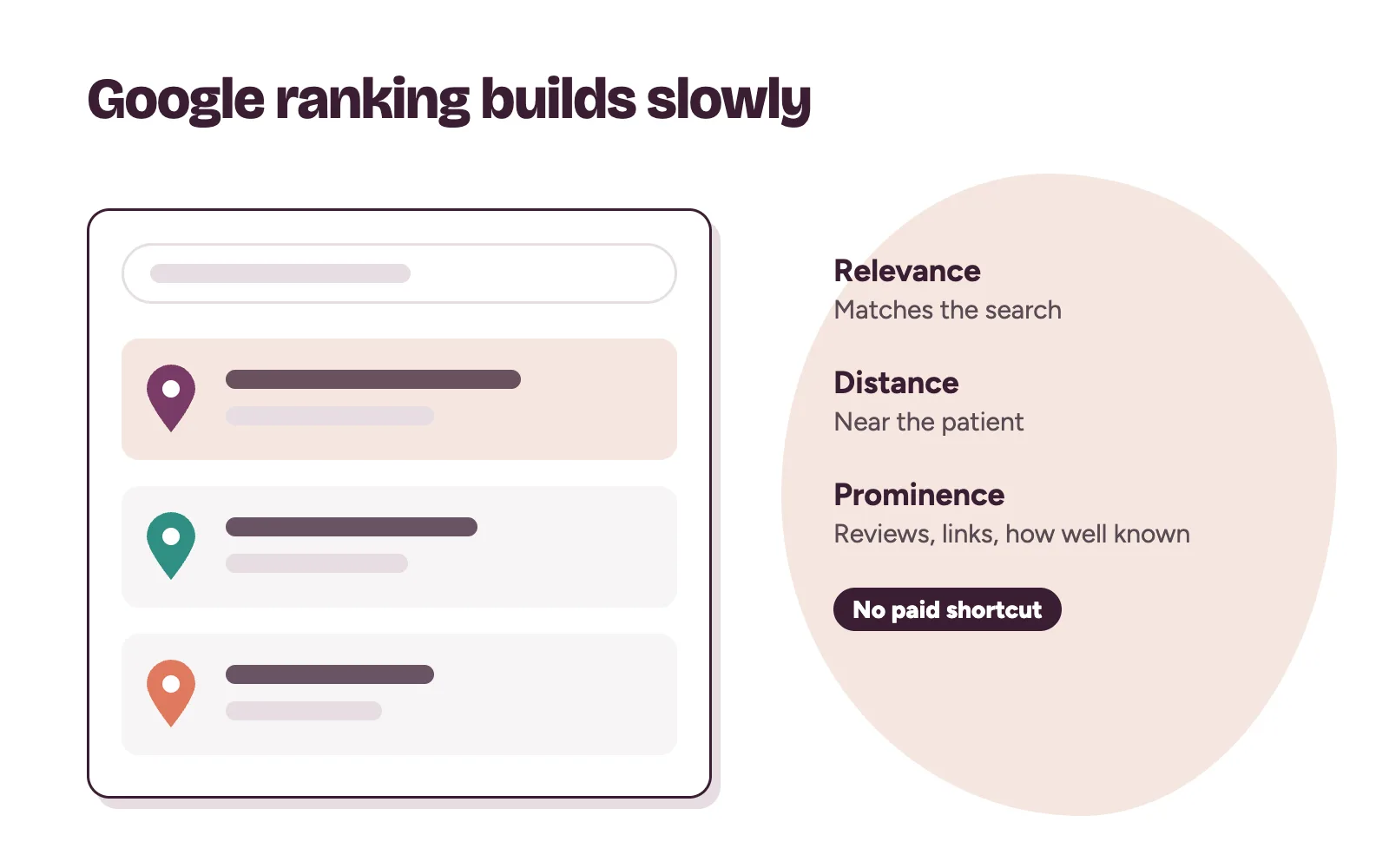
Showing higher on Google Search and Google Maps is the slowest part, and nobody can buy a shortcut. Google says on its local ranking help page that there is no way to request or pay for a better local ranking.
The same page says local results are mainly based on relevance, distance and prominence. Prominence covers how well known a business is, including how many websites link to it and how many reviews it has. More reviews and positive ratings can help.
Reviews and links build up one patient and one mention at a time. That is why this work runs in the background from the start and keeps paying back long after. Our post on what SEO means for clinic owners explains the rest in plain words.
What should you measure while you wait?
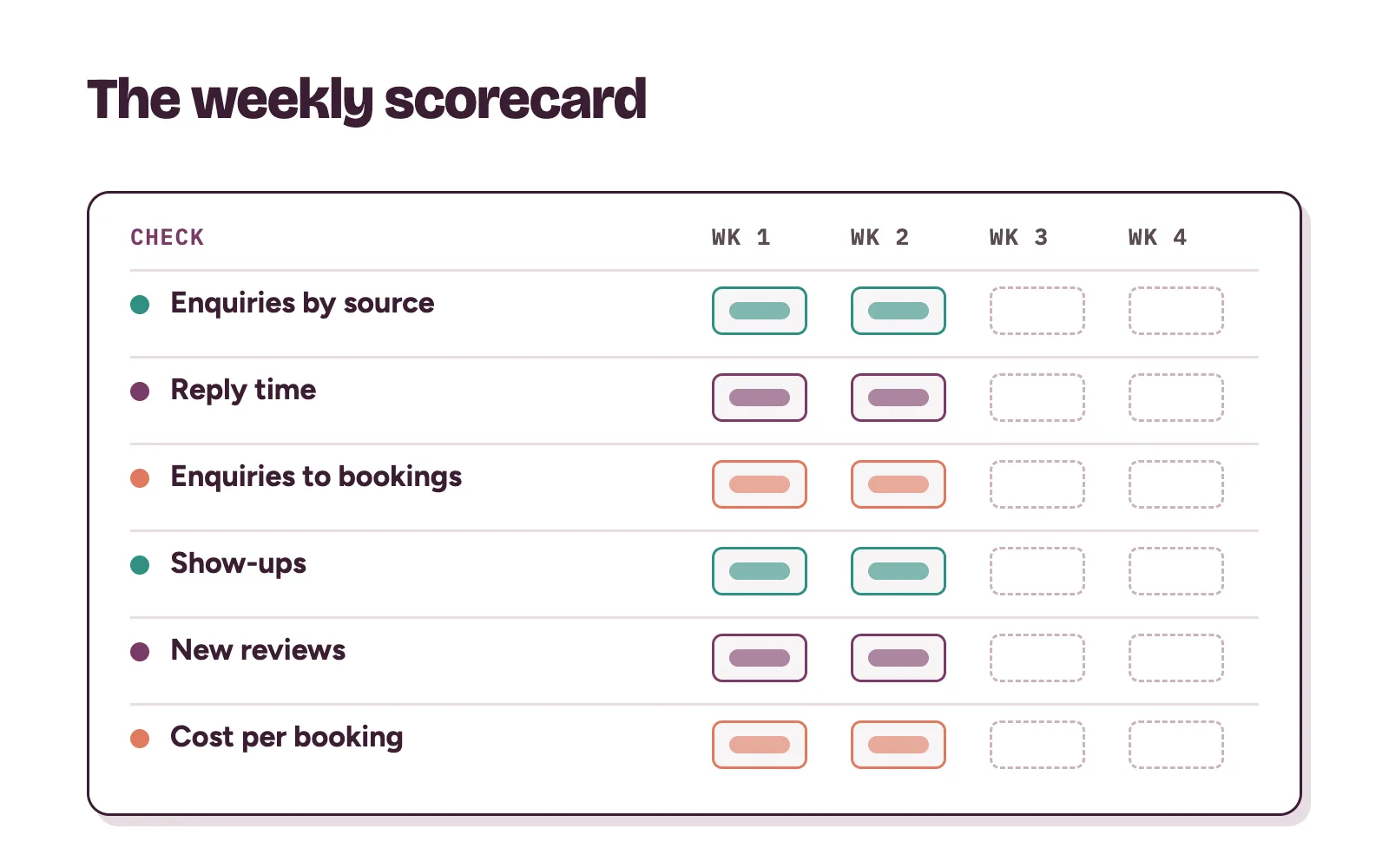
Waiting blind is what makes owners quit too early. Track a few numbers every week and you will see movement long before Google rankings shift:
- Enquiries by source. Calls, DMs, forms, Google and walk-ins, counted separately.
- Reply time. How long a new enquiry waits for a first answer.
- Enquiries to bookings. Out of every enquiry, how many book a slot.
- Show-ups. Out of every booking, how many arrive.
- New reviews. How many patients left a Google review this week.
- Cost per booking. Ad spend divided by the bookings it brought.
The first four respond to work inside the clinic. The last two show whether the slower work is building. If enquiries rise but bookings don't, look at the front desk first.
How long clinic marketing takes in your clinic
Your timeline depends on where you start. A clinic with steady enquiries and weak follow-up can see the early gains fastest. A new clinic with few enquiries leans more on ads at first. A clinic that ranks poorly on Google has the longest road for that part, so it should start early.
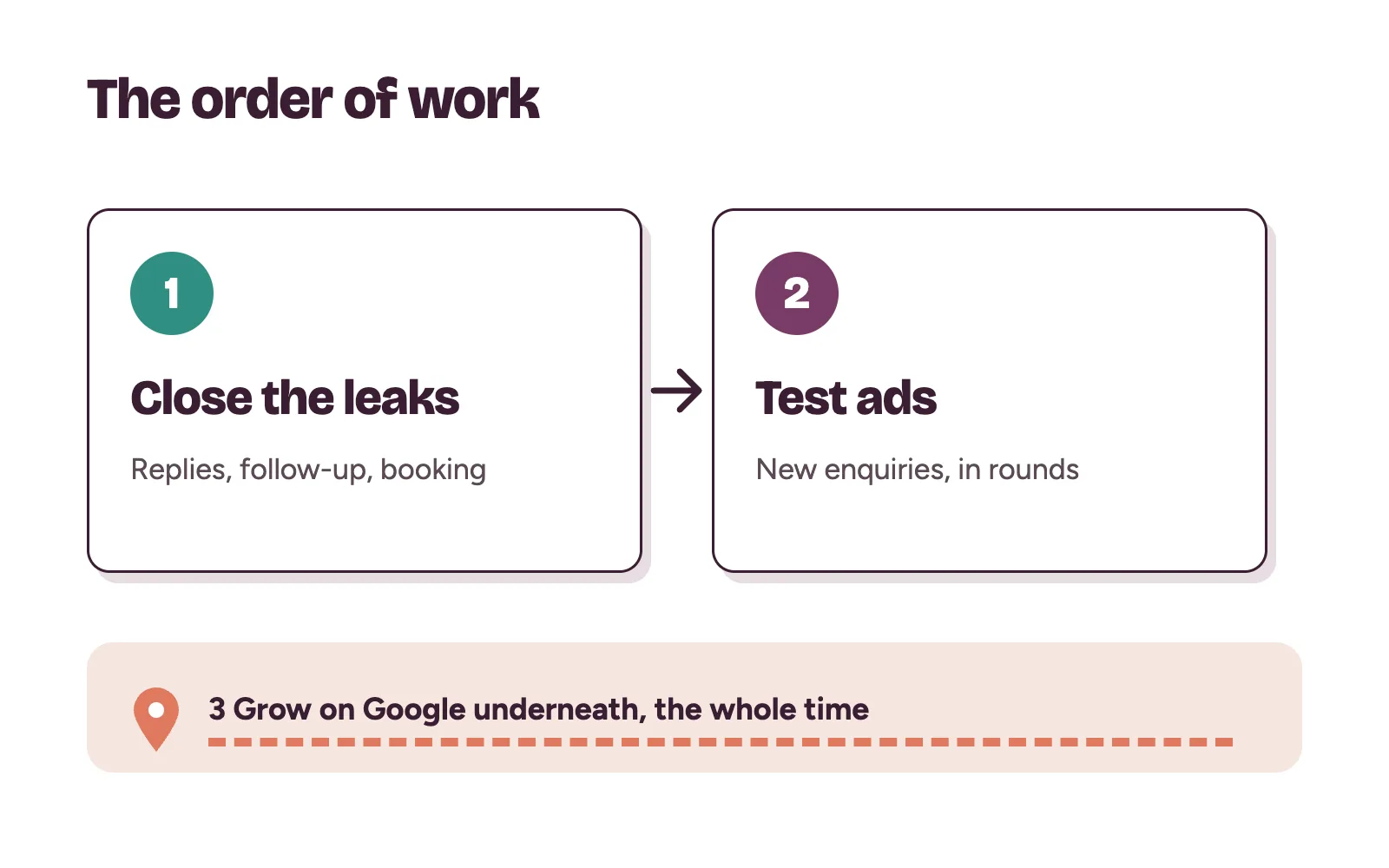
The order stays the same in every case:
- Close the leaks in replies, follow-up and booking.
- Bring in new enquiries with ads, tested in rounds.
- Build Google ranking and reviews underneath, the whole time.
Kren is a done-for-you growth partner for private clinics in Lagos and Abuja. We set up and run the website, Google, ads and follow-up automations, and your own team does the final follow-up and booking. See how our leak closure work fits into that order.
Questions clinic owners ask about marketing timelines
Can anyone promise when my clinic will rank first on Google?
No. Google says nobody can pay for a better local ranking, and ranking depends on things like distance and reviews that no agency controls. Treat any fixed promise as a warning sign.
Should we stop if nothing changes in the first month?
Look at the weekly numbers before deciding. If reply time and enquiries to bookings improved, the work is moving. If nothing moved at all, find the step that is broken before you stop.
Is it better to start with ads or with Google?
Start with the leaks, because ads and Google both send enquiries to the same front desk. Then run ads for new enquiries while Google work builds in the background.
Do we need a big budget to see anything?
No. The fastest part, fixing replies and follow-up, costs little to run. Ads need enough budget to test properly, and our post on monthly marketing spend shows how to work that out.