Blog · Growth · 5 min read
How do I know which marketing is working for my clinic?
Ask every new patient how they found you, tag every enquiry, and judge each channel by cost per booking. One simple monthly sheet shows where to spend.
By the Kren Agency team ·
To know which marketing is working, ask every new patient how they found you, tag every enquiry with its source, and mark which ones booked. Then divide what each channel cost by the bookings it brought. A month of that tells you more than any number of likes or views.
Why is it hard to tell which marketing is working?
Most clinics run several things at once. A Google profile, an Instagram page, a few ads, referrals from doctors, a signboard. Enquiries arrive by call, DM, form and walk-in, and nobody writes down where each one came from.
So the owner judges by feel. The ads "seem busy". Instagram "gets engagement". The front desk says "most people come from Google". None of that tells you where to put the next naira.
The fix is one question, one tag and one sheet.
Step 1: Ask every new patient how they found you
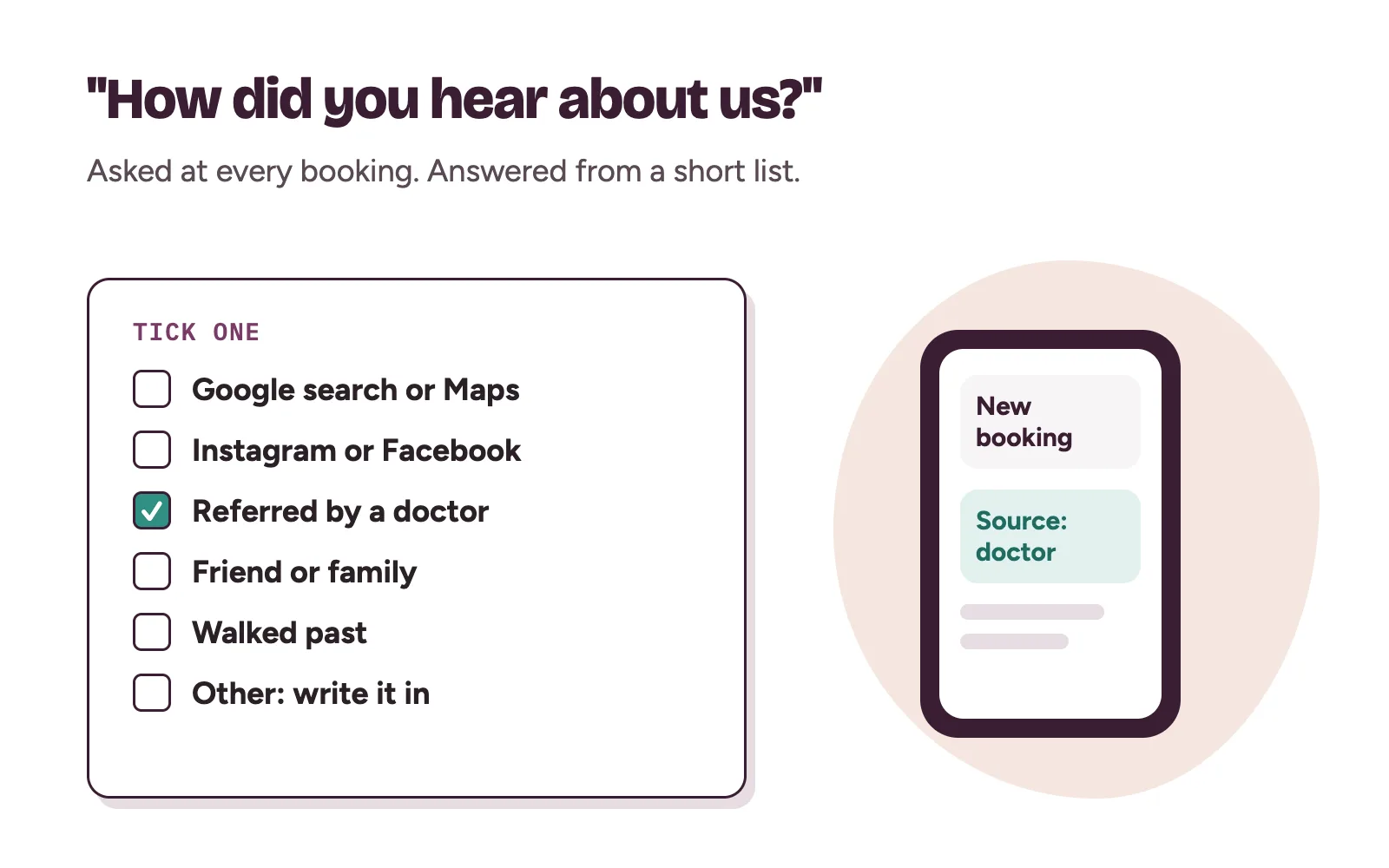
Make it part of booking. Whoever takes the call or message asks, "How did you hear about us?" and writes the answer down before the conversation ends.
Give the team a short fixed list so answers can be counted:
- Google search or Google Maps
- Instagram or Facebook (ad or page)
- Referred by a doctor
- Referred by a friend or family member
- Website
- Walked past
- Other (write it in)
Answers like "online" can't be counted. A fixed list can.
Step 2: Tag every enquiry, booked or not
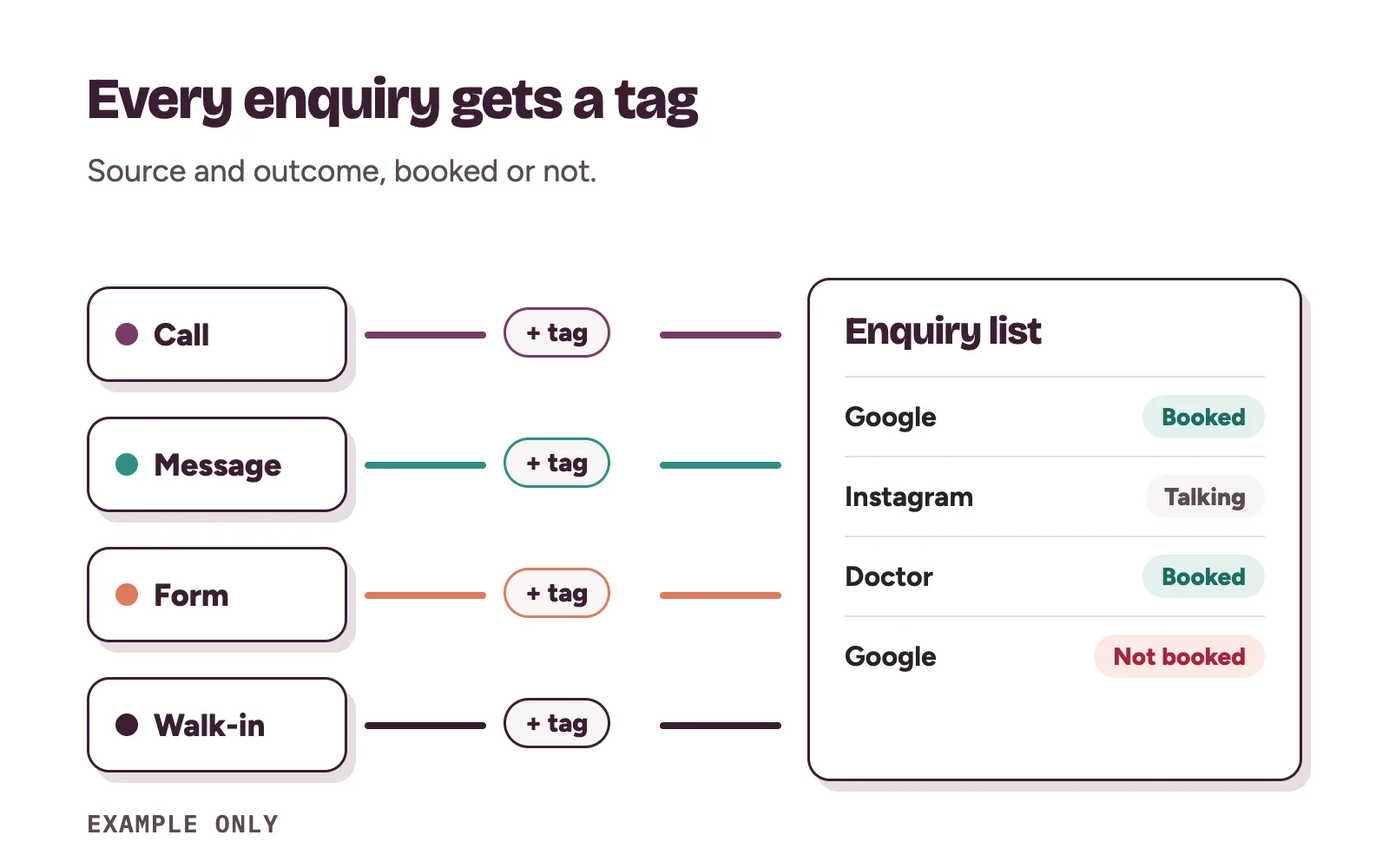
Asking at booking only covers people who booked. You also need the ones who asked and went quiet, or you can't see which channel brings serious enquiries and which brings price-checkers.
Log every call, DM, form and walk-in enquiry with three things: the date, the source and the outcome (booked, not booked, still talking). A shared sheet works for a small clinic. A clinic with several staff answering may want a CRM for clinic enquiries so nothing gets lost between shifts.
Two places give you numbers you don't have to collect by hand:
- Google Business Profile. The Performance section shows calls from the call button, website clicks, direction requests, messages and the search terms people used, for a period you choose, according to Google's help page on profile performance.
- Tagged links. Add UTM tags to the links in your ads, Instagram bio and emails. Google Analytics then shows visits by source, medium and campaign. Its help page on UTM parameters recommends always using all three, and notes that values are case sensitive, so agree one spelling and stick to it.
Step 3: Judge each channel by cost per booking
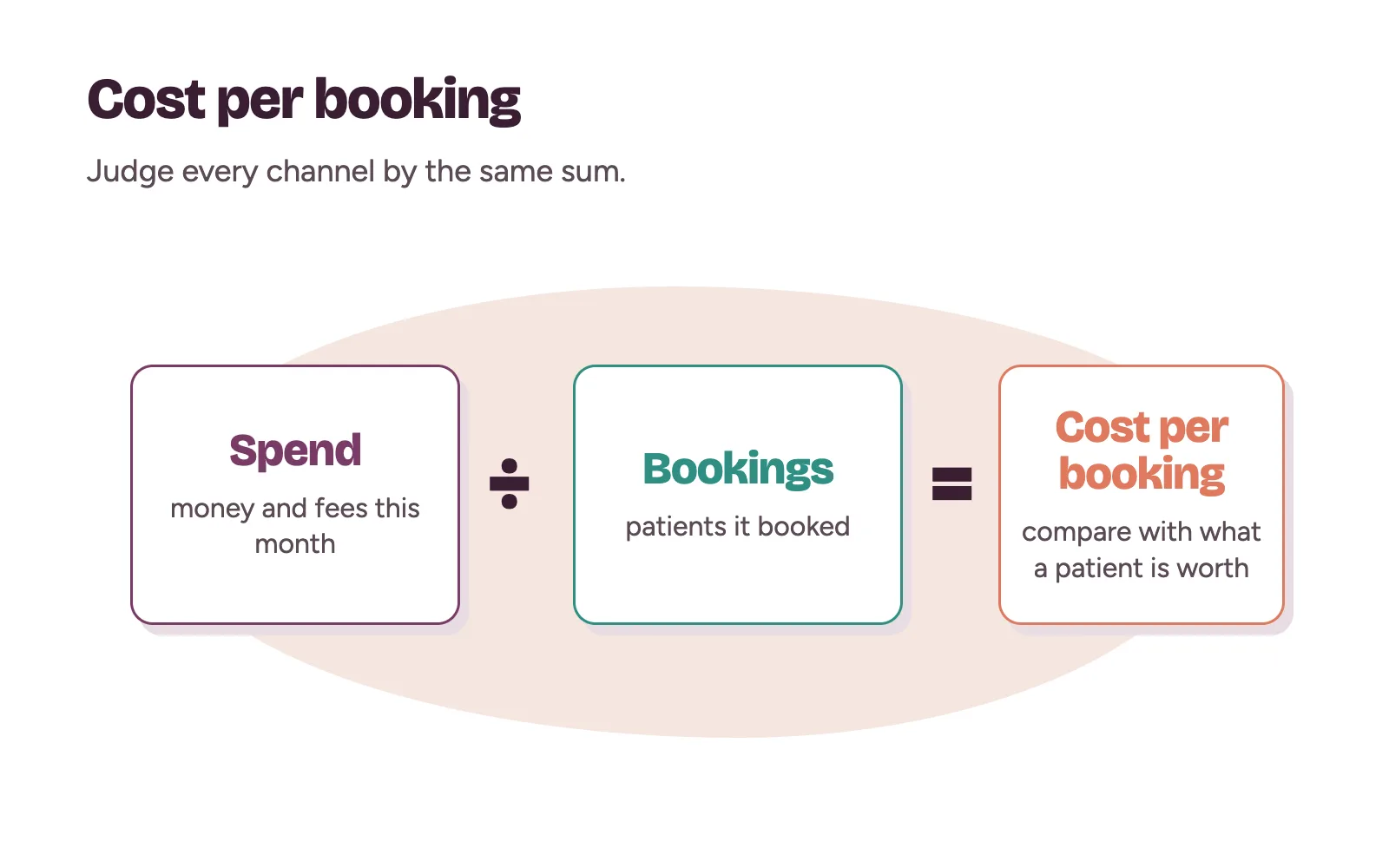
Likes, reach and clicks are early signs. Bookings are the result. For each channel, take what you spent on it in the month, including any agency or freelancer fee, and divide it by the bookings it brought.
That is your cost per booking. Compare it with what a new patient is usually worth to the clinic. A channel that costs more per booking than a patient brings in is losing money, however busy it looks.
Referrals and your Google profile may cost little in cash but still take staff time. Note that too.
Step 4: Keep one simple monthly sheet
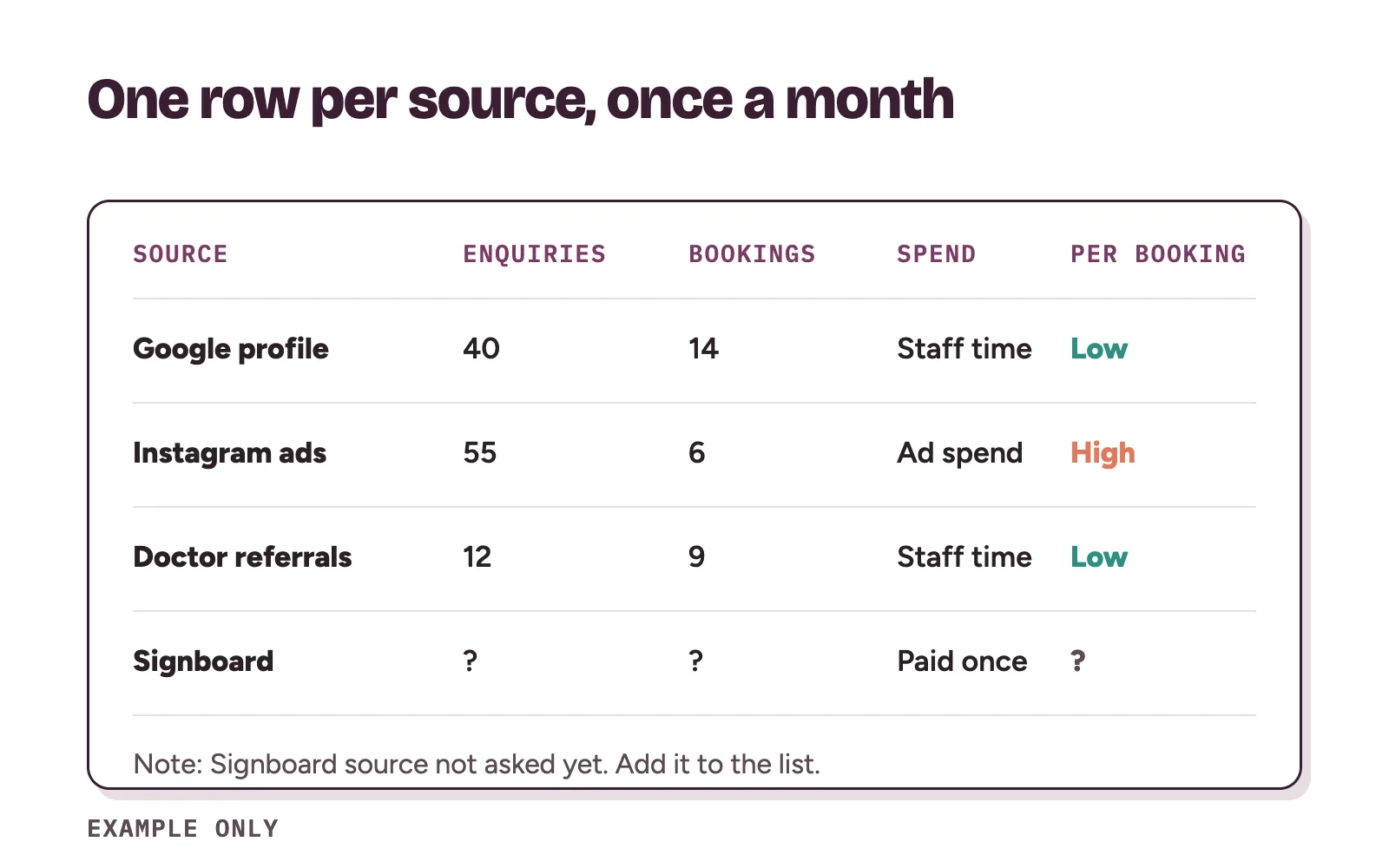
At the end of each month, one person fills in a single row per source:
- Source: Google, Instagram ads, doctor referrals, and so on.
- Enquiries: how many came in.
- Bookings: how many of those booked.
- Spend: money and fees for that source.
- Cost per booking: spend divided by bookings.
- Note: one line on what changed that month.
After three months you will see patterns no single month shows. Our post on the patient sales funnel shows how to count each stage from enquiry to return visit.
What about marketing that doesn't bring direct bookings?
Patients rarely take one straight path. Someone sees your Instagram, hears your name from a friend, then searches the clinic on Google and calls. Ask them and they may say "Google".
So add a second question when it fits naturally: "Had you heard of us before?" And watch your profile's search terms. More people searching your clinic's name usually means something else is building awareness.
Don't cut a channel just because it rarely gets the last word. Cut it if bookings stay flat after you've given it a fair test.
What should you do with the numbers?
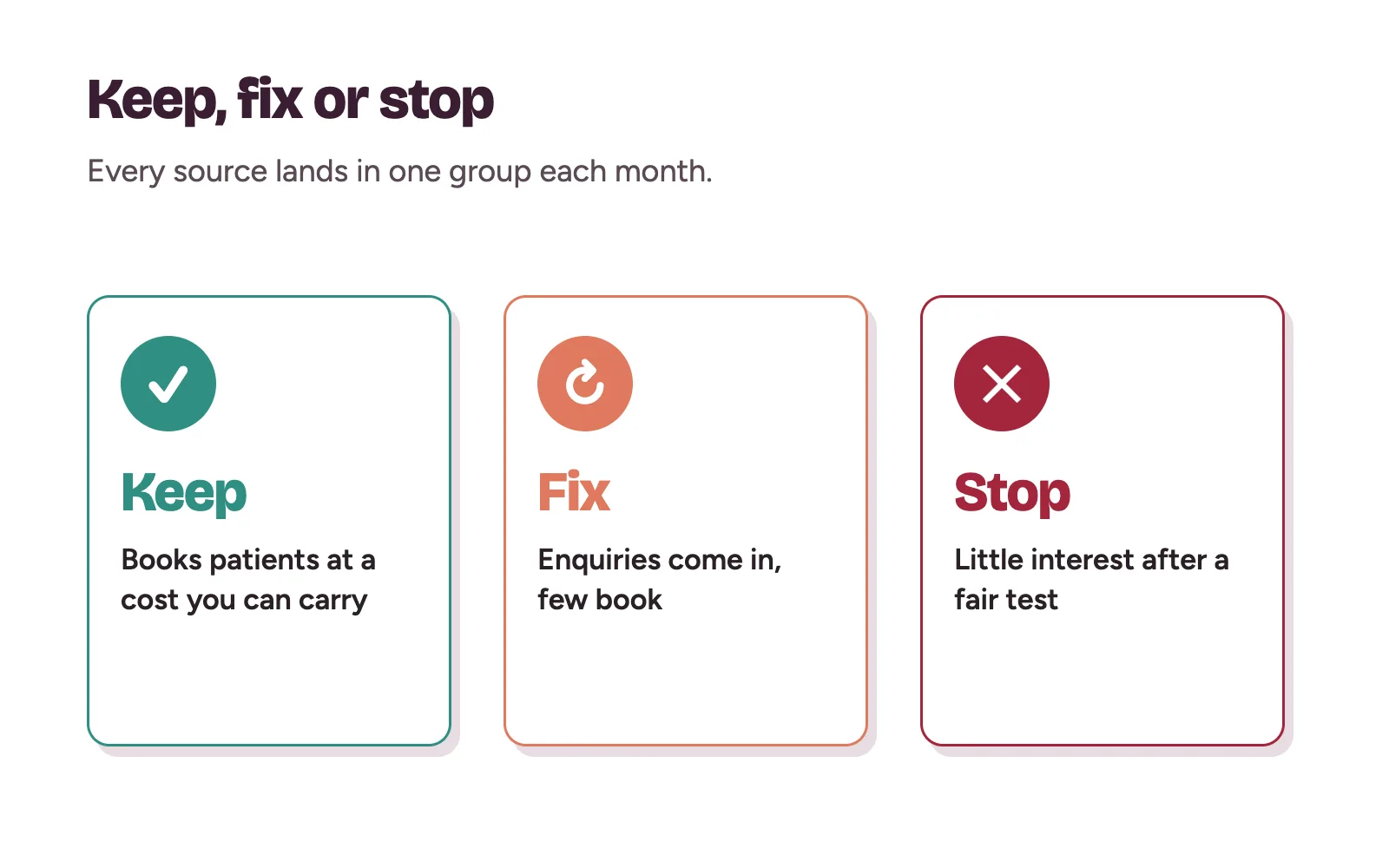
Each month, put every source into one of three groups:
- Keep: books patients at a cost the clinic can carry. Consider spending more here.
- Fix: brings enquiries that don't book. Check reply speed and how the price question is handled before blaming the channel.
- Stop: costs money, brings few enquiries and fewer bookings after a fair test.
Change one thing at a time so you can tell what made the difference. Our post on setting a clinic marketing budget covers when to raise or cut spend.
How Kren helps you see what's working
Through our lead generation work, Kren sets up source tracking on ads, links and your Google profile, builds the enquiry record and reports bookings by source. We set up the follow-up automations. Your own team does the final follow-up and booking.
Questions clinic owners ask about tracking marketing
What if patients can't remember how they found us?
Some won't. Record "not sure" rather than guessing, and keep the fixed list short so the answer is easy. If "not sure" is a large share, ask earlier in the conversation, while the patient still has your ad or profile in mind.
How long before we can trust the numbers?
One month shows you the gaps in your tracking. Three months of clean records usually show which sources book patients steadily. Slow and busy seasons can swing a single month, so compare like with like.
Do we need special tools to track this?
No. A shared sheet, a fixed list of sources and one person responsible will do for most small clinics. Add tagged links and a CRM when the volume of enquiries makes the sheet hard to keep up.
Who should own the monthly sheet?
One named person, often the practice manager. The front desk records sources daily, and the owner reviews the sheet each month and decides what to keep, fix or stop.