Blog · Enquiries · 5 min read
My front desk misses calls and messages. What do I do?
Why a clinic front desk misses calls and messages, how to find the cause in one week, and the fix that matches each one.
By the Kren Agency team ·
Front desk missed calls and unread messages usually come from one of four causes: too many contacts at the same moment, hours that don't match when patients reach out, too few hands at busy times, or too many channels spread across too many phones. Count one week of misses, find which cause is yours, and fix that cause first.
Blaming the receptionist rarely helps. In most clinics the person at the desk is doing three jobs at once.
First, count what is being missed
For one normal week, ask the front desk to keep a simple log next to the phone.
- Every missed call: the day and the hour. The phone's own call log shows these.
- Every message that waited more than an hour for a reply, and which channel it came in on.
- What the desk was doing at that moment: checking in a patient, taking a payment, on another call, on a break.
At the end of the week, look for clusters. Are the misses bunched at opening time, lunch and after close? Are they mostly DMs on one app? Is it always the same shift? The pattern tells you the cause.
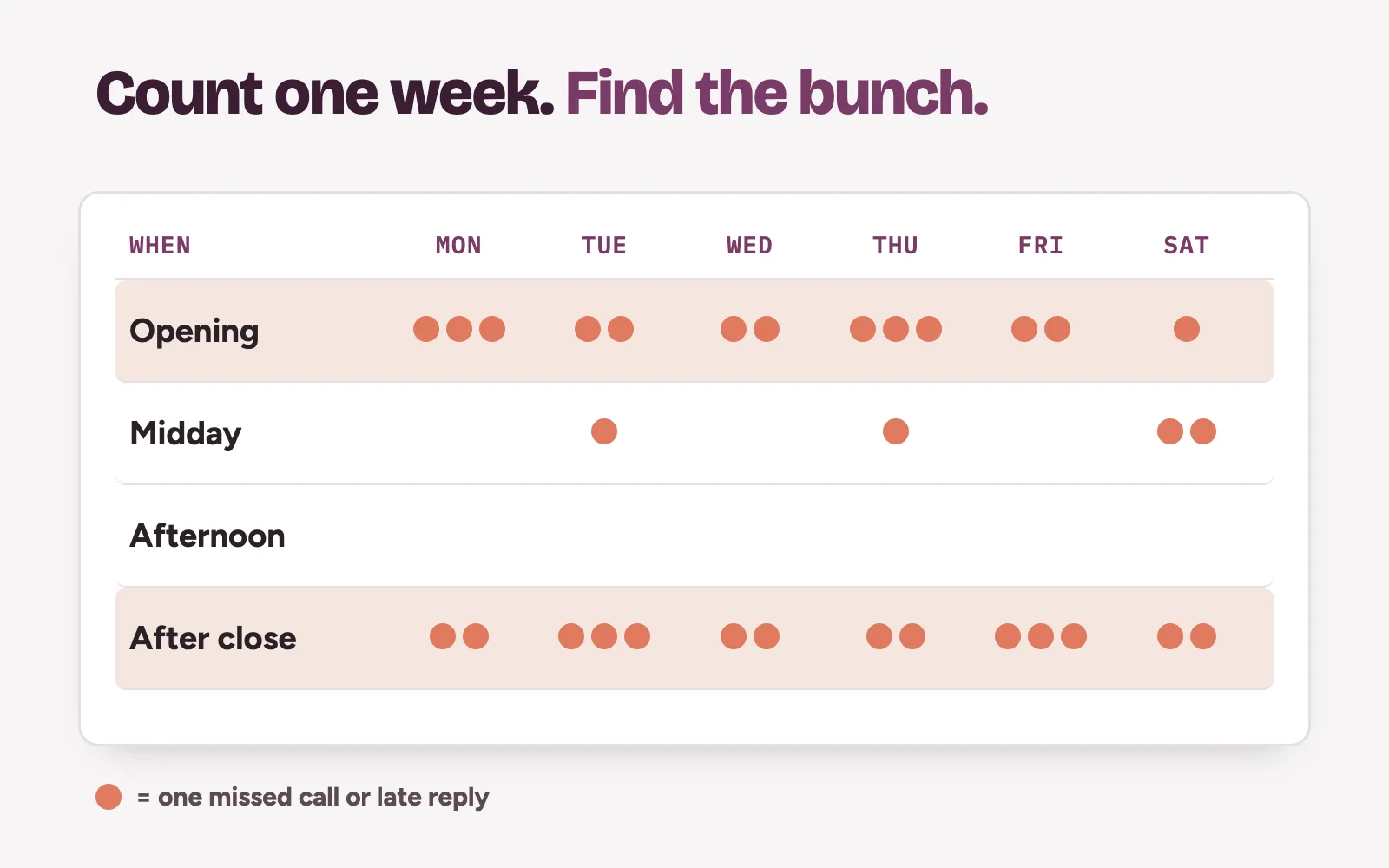
Why does a front desk miss calls and messages?
1. Too much at the same moment
Calls don't arrive evenly. They spike when the clinic opens, around lunch and as people finish work. Those are often the same hours patients are arriving, paying and asking questions at the counter. One person can't greet a patient, take a payment and answer the phone at once, so the phone loses.
2. Hours that don't match when patients reach out
Many patients call or message in the evening and at weekends, when they finally have a moment. If nobody is there, those enquiries sit until morning, and some have already booked elsewhere. Also check what your listing says. Google lets you set main hours, special hours for holidays and more hours for different services on your Business Profile. If the profile says you're open and nobody answers, the patient remembers.
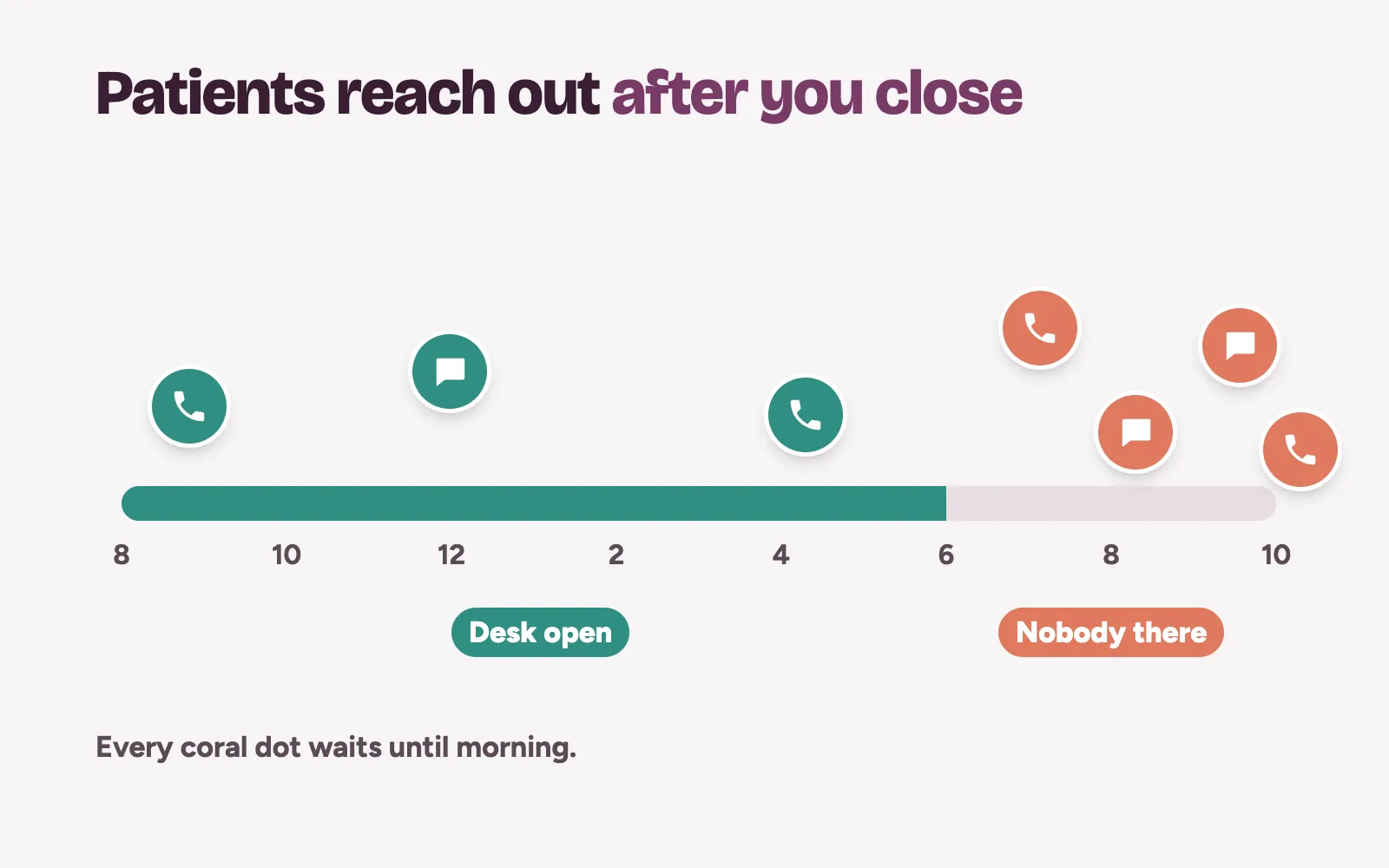
3. Too few hands at busy times
The receptionist also files records, chases payments and covers other jobs. Breaks leave the desk empty. Nobody is named to cover. The phone is everyone's job, so it's nobody's.
4. Too many channels in too many places
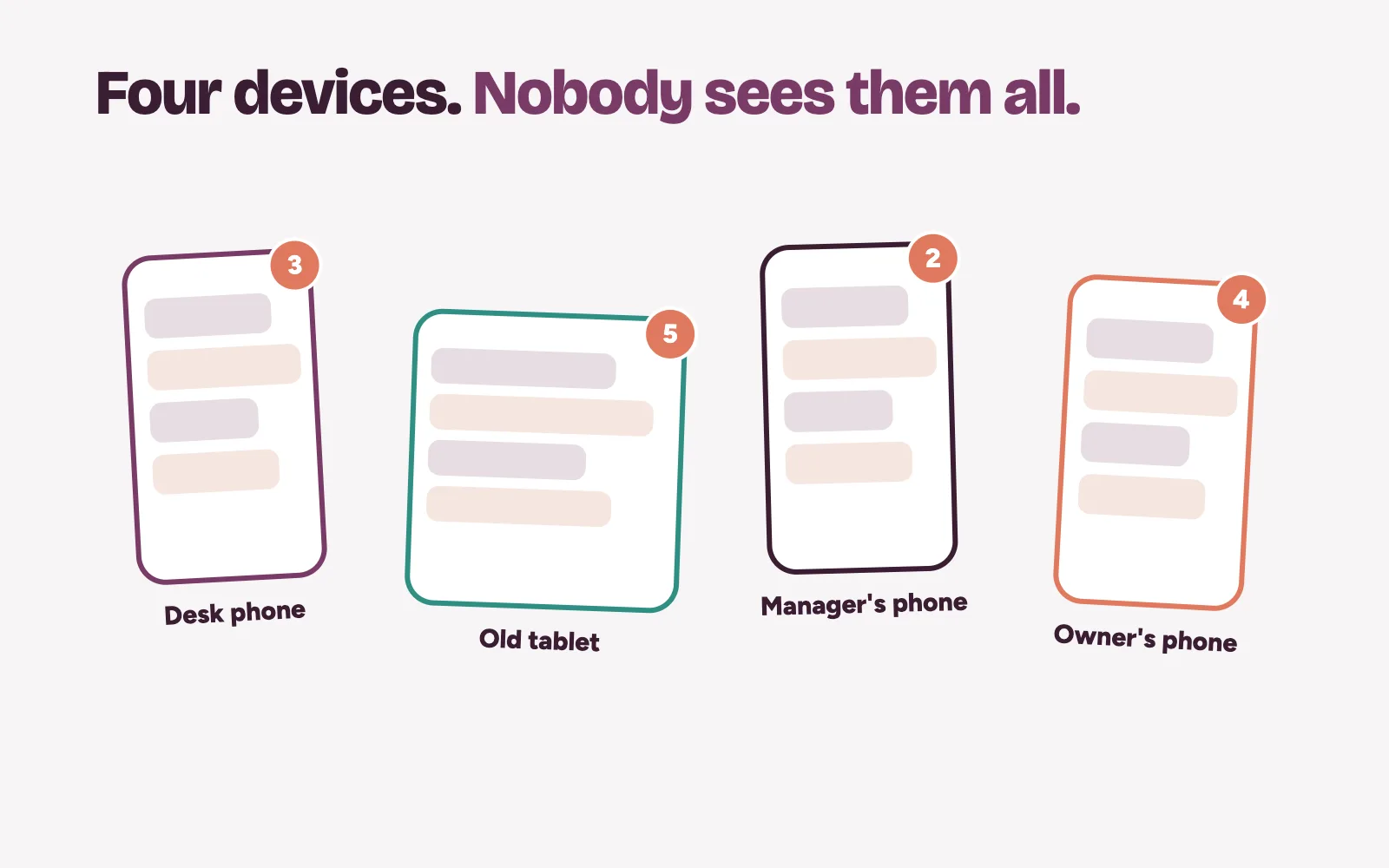
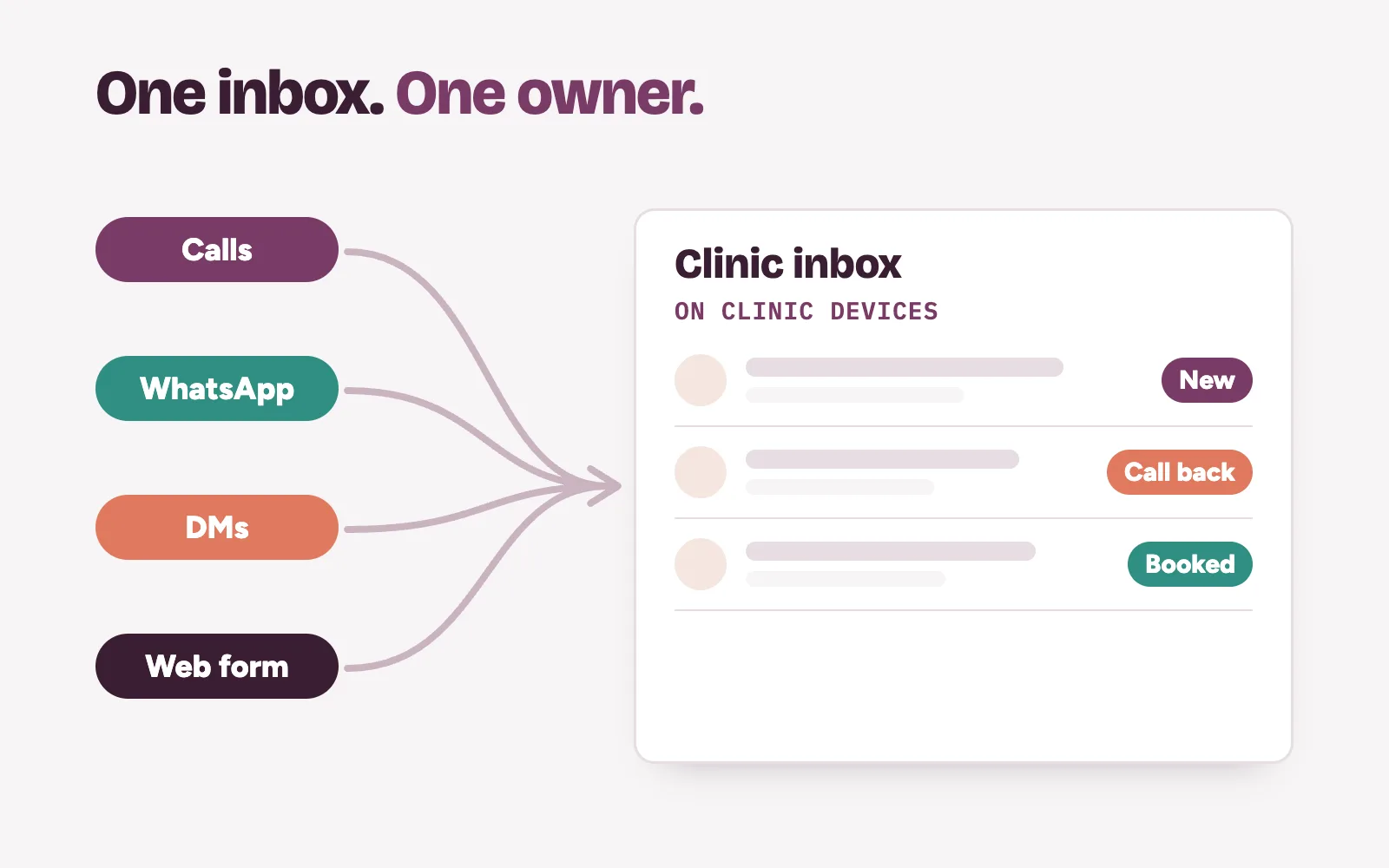
Patients call the landline, message the WhatsApp line, send Instagram and Facebook DMs and fill in the website form. In many clinics these live on different devices: the desk phone, an old tablet, the manager's phone, the owner's personal phone. Nobody sees them all, so messages wait days.
Fixes that match each cause
For busy moments: route the overflow
Ask your phone provider whether an unanswered call can ring a second phone, such as one in the back office. Move filing and payment chasing out of peak hours. If peaks are predictable, put a second person on the desk for those hours only.
For every miss: a callback list with one owner
Each missed call goes on one list the moment it's noticed. One named person owns that list for the shift and calls back within a time you agree. If there's no answer after two tries, send a short message with your booking options. Cross it off only when the person is booked or has said no.
For scattered channels: one inbox on clinic devices
Bring every channel onto clinic-owned devices in one place at the desk. No enquiries on staff or owner personal phones. The WhatsApp Business app offers away messages for messages received outside business hours, quick replies and labels, which help the desk sort what needs a reply. Our post on setting up WhatsApp Business for a clinic covers the set-up. Remember patients also call, DM and use Google, so the inbox must cover those too.
For after hours: an honest reply and a morning routine
Set an away message that says when the team will reply and how to reach emergency care if needed. Keep your Google hours accurate, including holidays. Make the callback list the desk's first task each morning, before the walk-ins start.
Once the misses are under control, the way the desk answers matters just as much. Our post on front desk customer service standards covers greetings, price questions and booking scripts, and how to stop losing patients in your DMs covers the reply itself.
How to track front desk missed calls each week
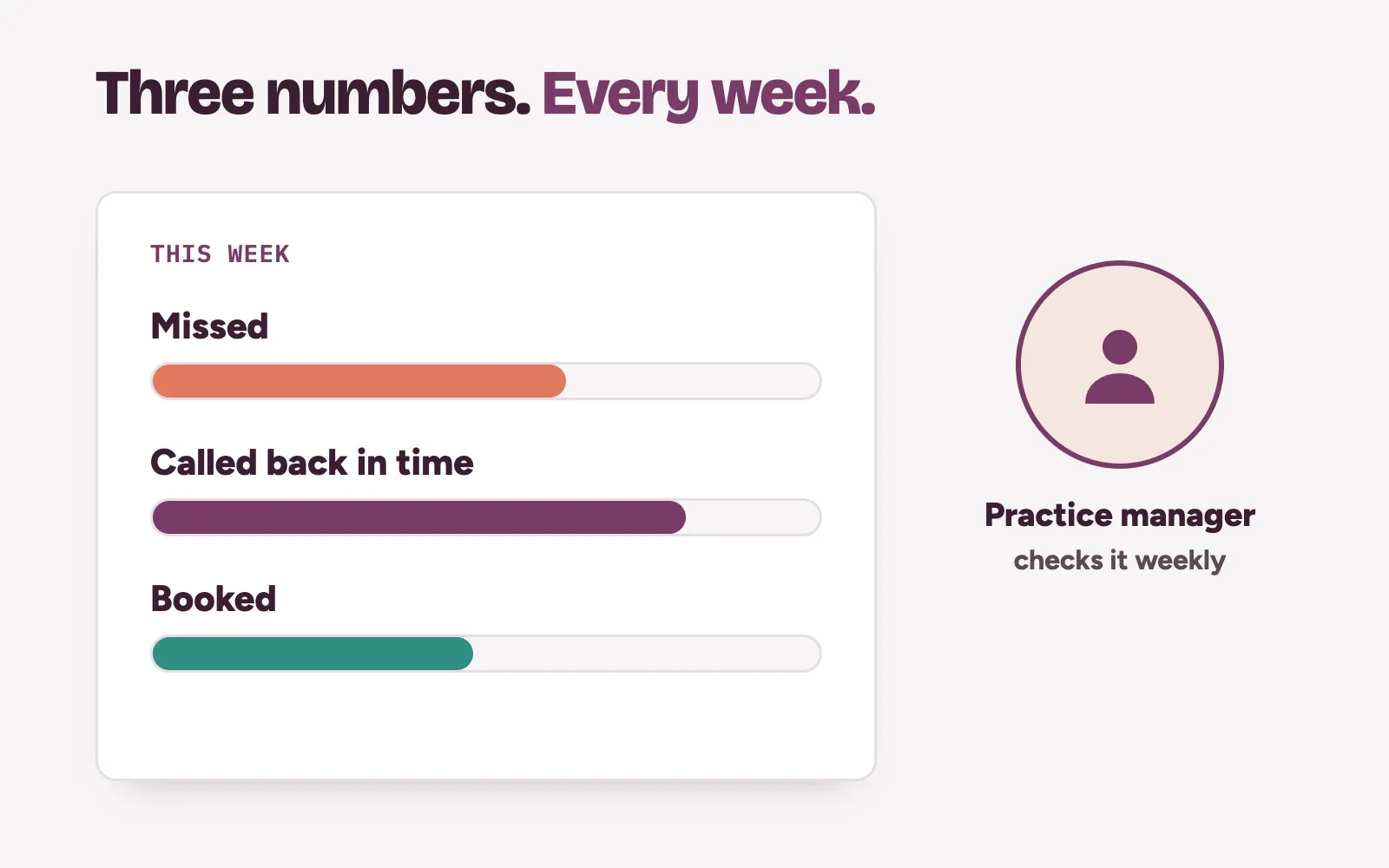
Keep it to three numbers, checked every week by the practice manager:
- Missed calls and unanswered messages.
- How many were returned within your agreed time.
- How many of those became bookings.
Compare each week with the one before. If misses drop but bookings don't rise, the problem has moved from answering to converting.
Want help closing the gap?
Kren is a done-for-you growth partner for private clinics in Lagos and Abuja. On a 30-minute strategy call, we look at where enquiries slip through at your front desk. If you work with us, we set up the follow-up and booking operations that keep every call and message on one list. Your own team does the final follow-up and booking.
Show me where my clinic is losing patients →
Questions clinic owners ask about missed calls
Should I hire another receptionist?
Count first. If misses cluster in two or three busy hours, extra cover for those hours may be enough. If they are spread across the day, the desk may have too many jobs.
Is it fine for staff to answer patients from their own phones?
It is better to keep enquiries on clinic-owned phones and accounts. Personal phones hide enquiries from the rest of the team, and the clinic loses the history when that person leaves.
How fast should we call back a missed call?
Agree a time the team can actually keep, write it down and check it weekly. The sooner the callback, the less chance the patient has booked somewhere else.
What if most of our missed calls come after closing time?
Set an away message that says when you will reply, keep your Google hours accurate and make the callback list the first job each morning. If evening demand stays high, consider later hours on some days.