Blog · Growth · 6 min read
How to price medical services so the numbers work
A clear method for setting clinic prices from true cost, patient value and a fair market check, plus how to explain them and when to review.
By the Kren Agency team ·
Knowing how to price medical services starts with what each service really costs your clinic: clinician time, consumables, staff and a fair share of overheads. Add the margin the clinic needs, then test the price against the value patients get and what nearby clinics charge, without copying them. Write the price down, explain it the same way every time, and review it every year.
Skip a step and the price list quietly loses money on some services, or scares patients away from others.
Why do clinic prices drift out of shape?
Prices are often set once, when the clinic opens, and then left alone. Three habits cause most of the damage:
- Copying the clinic down the road. Their costs, rent and staff are different from yours.
- Guessing from memory. The owner knows the price of a syringe, but not the true cost of 40 minutes in the procedure room.
- Never reviewing. Suppliers raise prices and salaries go up, while the price list stays the same.
The result: nobody can say which services actually pay for the clinic.
How to price medical services, step by step
Work through one service at a time. Start with the five you deliver most often.
1. Cost the clinician's time
Take what the clinic pays a clinician in a month. Divide it by the hours they actually see patients. That gives a cost per patient-facing hour. Multiply by the minutes the service takes, including set-up, notes and clean-down.
2. Add consumables
List everything used on one patient: gloves, drapes, needles, dressings, lab materials, single-use tips. Use what you paid on your last invoice, not last year's figure.
3. Add support staff
Nurses, assistants and the front desk all spend time on each visit. Cost their minutes the same way as the clinician's.
4. Share out overheads
Rent, power, diesel, internet, insurance, equipment servicing and licence fees keep the doors open. Add them up for the month and divide by the clinic's total patient hours. Every service carries its share, based on how long it takes.
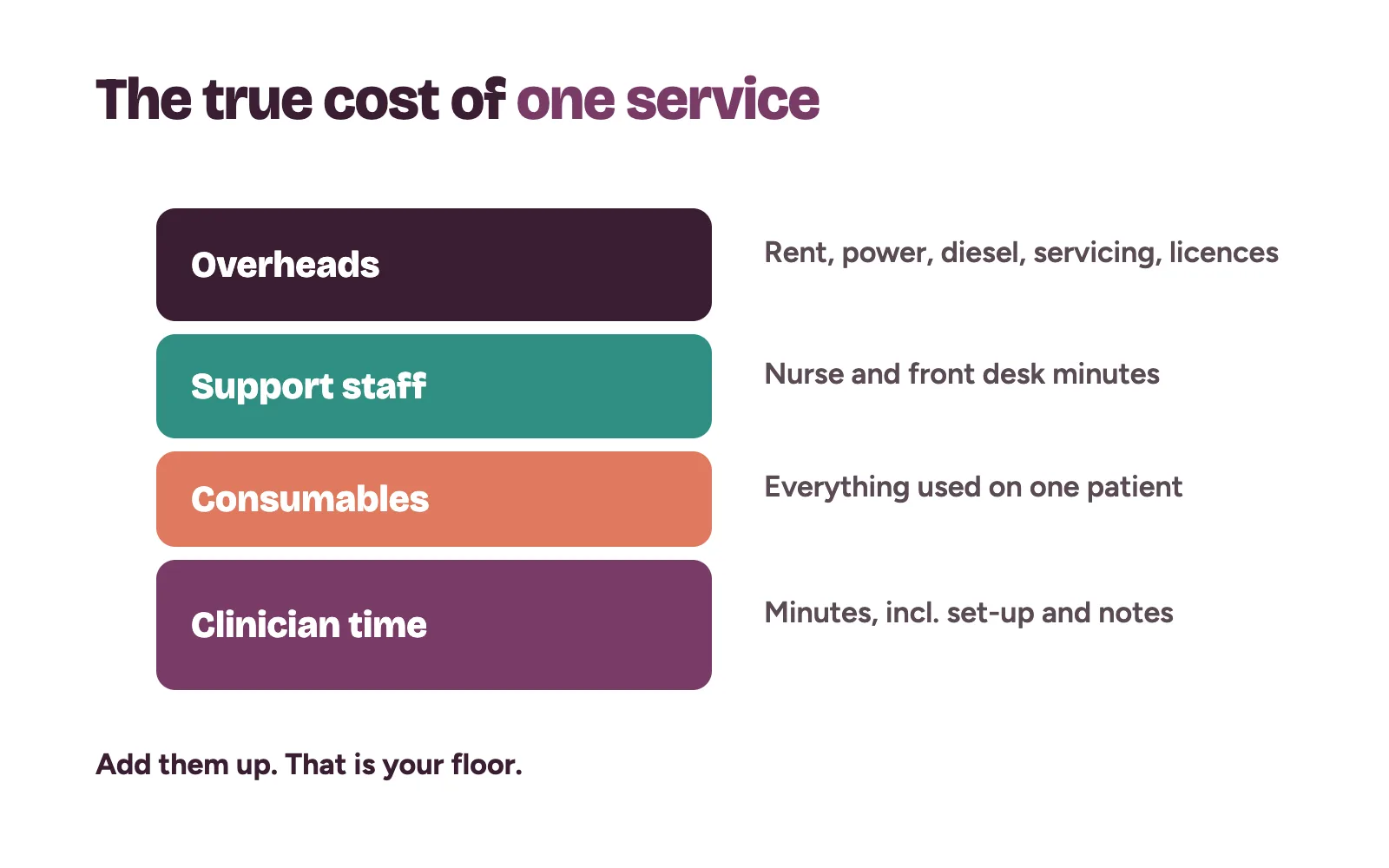
5. Add the margin the clinic needs
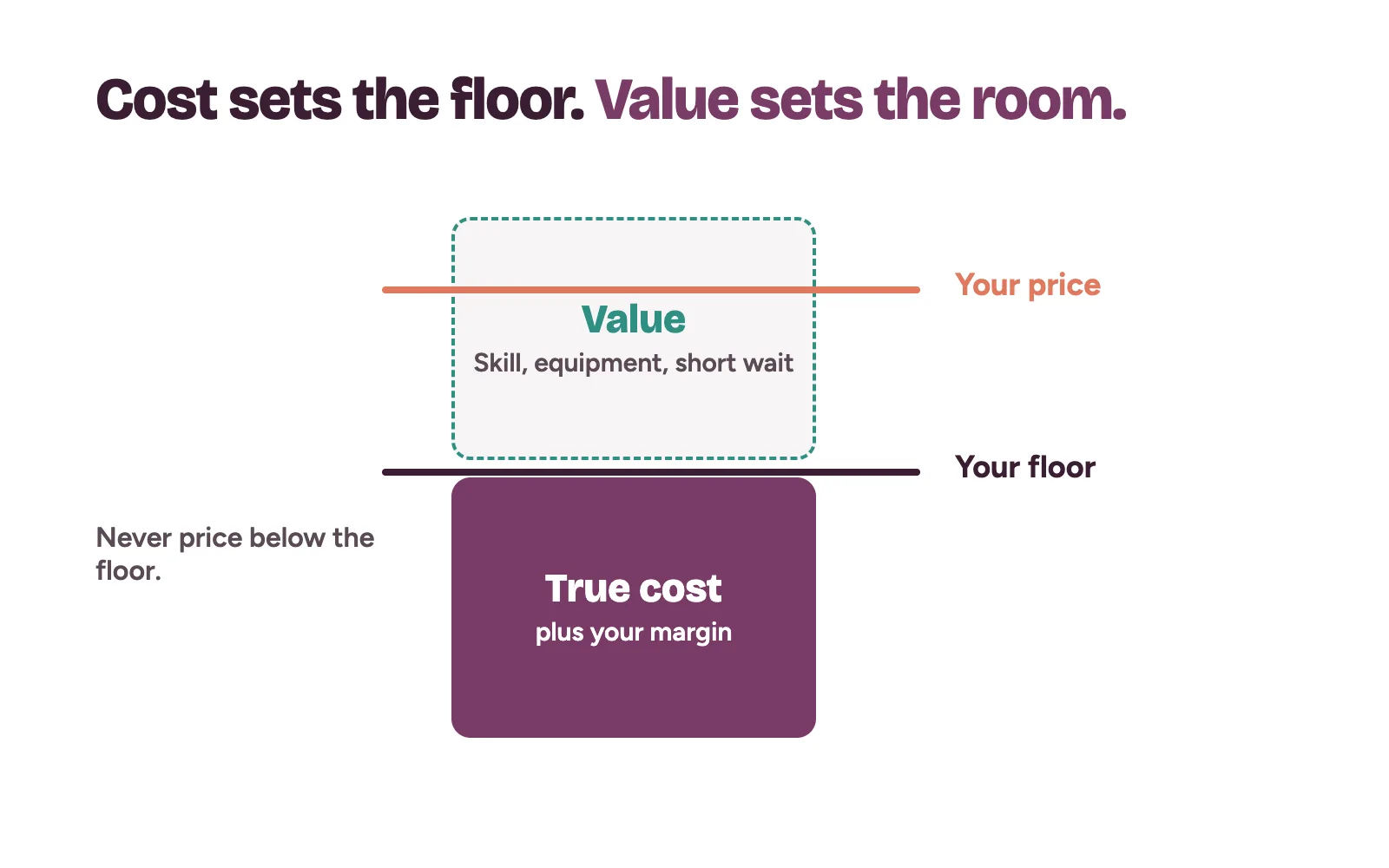
The total so far is your floor. Price below it and every booking loses money. The margin on top pays for growth, new equipment, marketing and the bad months. Set it on purpose, with your accountant.
Cost-plus or value: which way should you price?
Cost-plus pricing is the method above: true cost plus a margin. It is safe, because you never sell below cost. Its weakness: it ignores what the service is worth to the patient.
Value pricing starts from the patient's side. A senior specialist, a scarce skill, a well-equipped room or a short wait all carry value. Patients will pay more for them when they understand them.
Use both. Cost sets the floor. Value, and what patients in your area can pay, set how far above it you go.
How do you check the market without copying it?
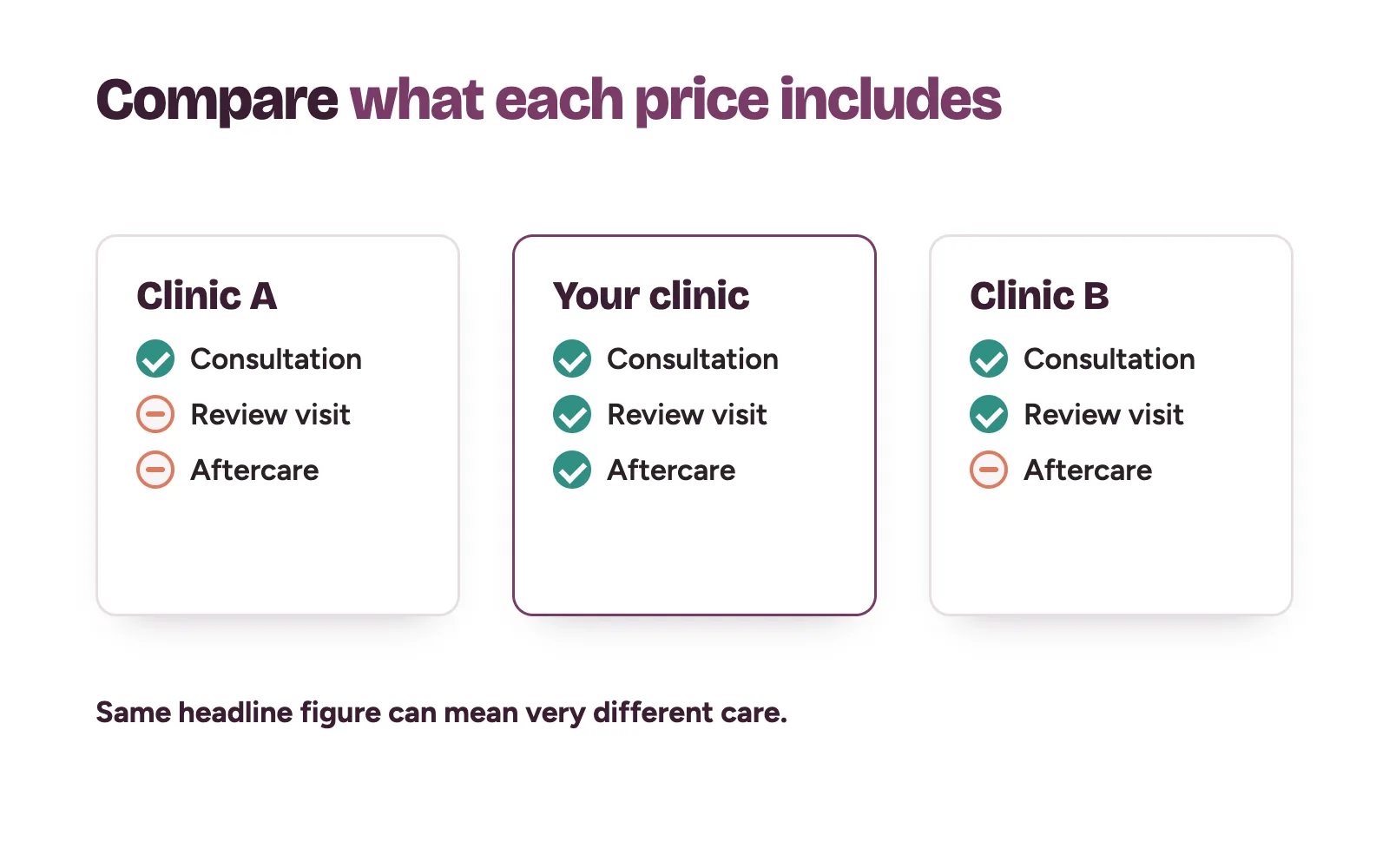
Look at three to five clinics that patients would compare you with. Note what each price includes. One clinic's price may include the review visit, another's may not.
Then ask where you stand. If you are higher, can a patient see why? If you are lower, are you leaving money on the table that you need for staff and equipment? Place your clinic on purpose.
Should you offer packages?
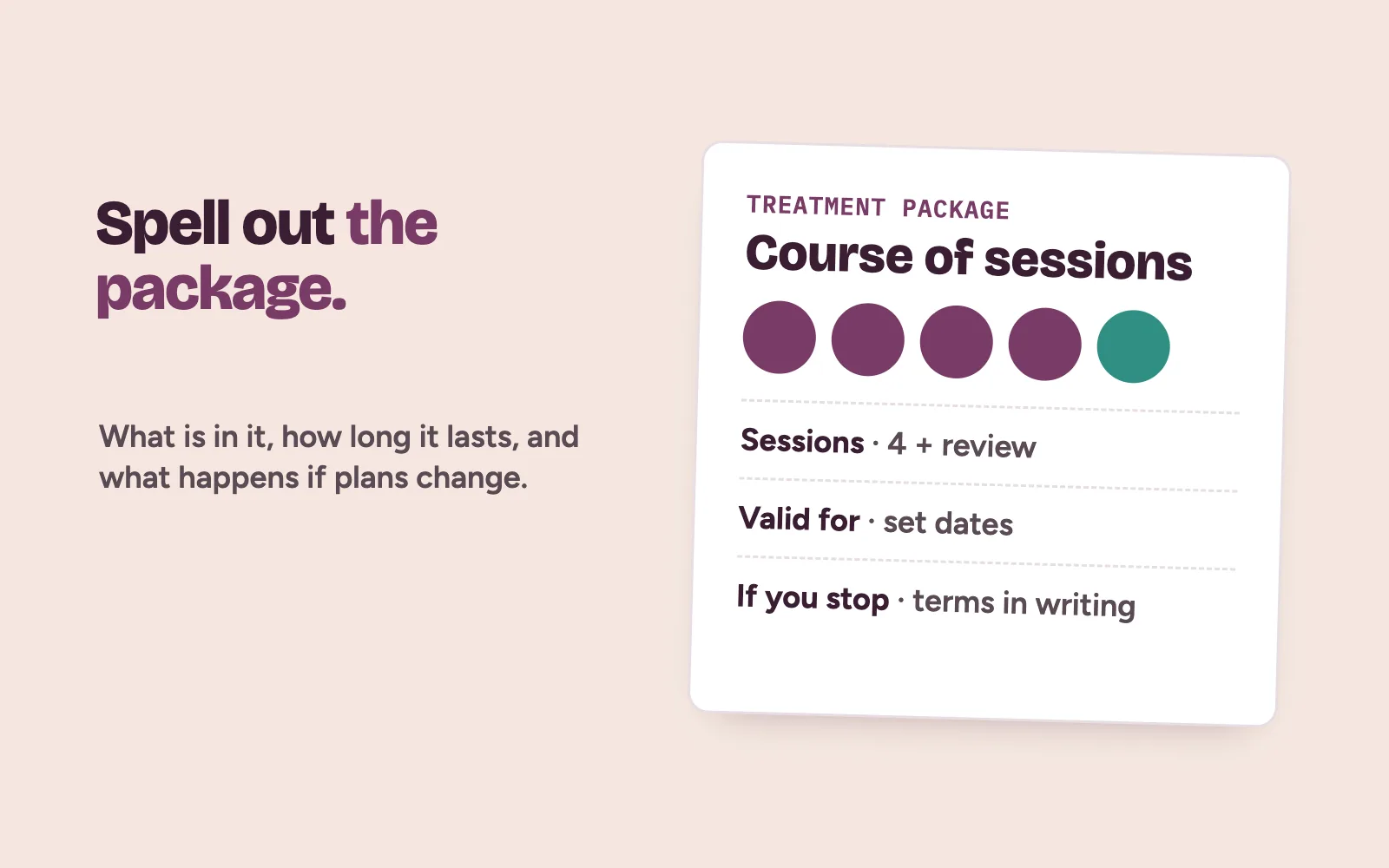
Packages work when a treatment naturally needs several visits, or when services belong together. A course of sessions, a check-up with tests, or a treatment with its review visits are clear examples.
Build a package from the true cost of every part. Any saving should come from real efficiency, such as fewer separate bookings, not from cutting your margin to nothing. State what is included, how long the package is valid and what happens if the patient stops part way.
Never use a package to push patients into treatment they do not need.
How should your team talk about price?
A good price explained badly still loses the booking. Agree the wording once.
- Give a range when the final fee depends on assessment, and say what moves it.
- Put the full fee in writing before treatment, with what is included and what is extra.
- Charge what you quoted. Nigeria's Federal Competition and Consumer Protection Commission says businesses are expected to display transparent pricing information.
- Discuss fees privately, never in public comments.
Our post on answering braces cost enquiries shows this in action, and front desk standards for clinics covers the wider conversation.
When should you review your prices?
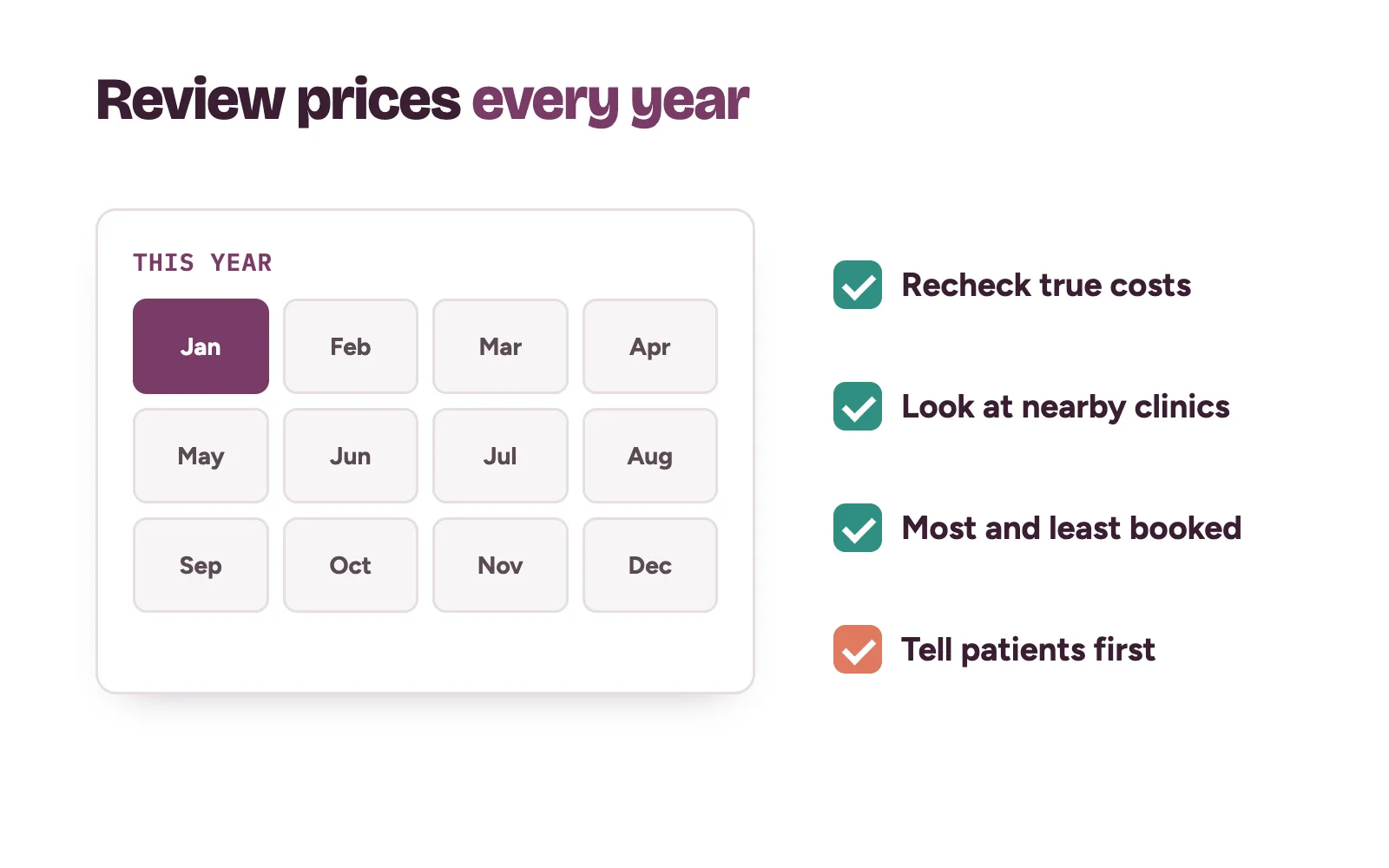
Once a year at minimum. Recheck the costs from step one, look again at nearby clinics, and see which services are booked most and least.
Review sooner if a major supplier raises prices, salaries change, rent goes up, or you add new equipment. Tell existing patients about changes before their next visit, not at the till.
How Kren helps clinics turn prices into bookings
Kren is a done-for-you growth partner for private clinics in Lagos and Abuja. Pricing is your decision. We help with how your prices are presented, answered and followed up. Our sales strategy work and follow-up automations support your team, and your own team does the final follow-up and books the patient.
If you are also deciding how much to spend bringing patients in, read our post on setting a clinic marketing budget.
On a 30-minute strategy call, we look at where price questions are costing you bookings today.
Show me where my clinic is losing patients →
Questions clinic owners ask about how to price medical services
Should our prices be on the website?
That is your decision. A starting price or a range often brings more enquiries, because some patients will not call with no idea of cost. If you prefer not to, state the consultation fee and what it covers.
Is it wise to be the cheapest clinic in the area?
Rarely. A low price has to cover the same costs, so it leaves less for staff, equipment and quality. Price from your true cost and the value you give, and explain it well.
How do we raise prices without losing patients?
Give notice, explain what has changed, and keep the quality visible. Existing patients take a change better when they hear it from you before their visit.
Who should set the prices?
The owner or medical director, with the accountant, using real cost figures. The front desk should explain the prices, never set or change them.