Blog · Growth · 5 min read
The patient sales funnel, explained for clinic owners
Five stages from first search to repeat visit, one number to watch at each, and how to find the stage losing your clinic the most patients.
By the Kren Agency team ·
A patient sales funnel is the path a person takes from first seeing your clinic to booking, showing up, paying and coming back. At every stage some people drop out. Map the five stages, count how many people reach each one every week, and fix the stage that loses the most. That is the whole job of a clinic sales funnel.
What is a patient sales funnel?
It is a simple picture of where patients come from and where they get lost. Wide at the top, because many people see you. Narrow at the bottom, because fewer book, fewer still turn up, and only some return.
Every clinic has one, planned or not. The difference is whether anyone counts it. Our post on the clinic sales system explains every piece in depth. This one stays practical: five stages, one number each, and where each stage leaks.
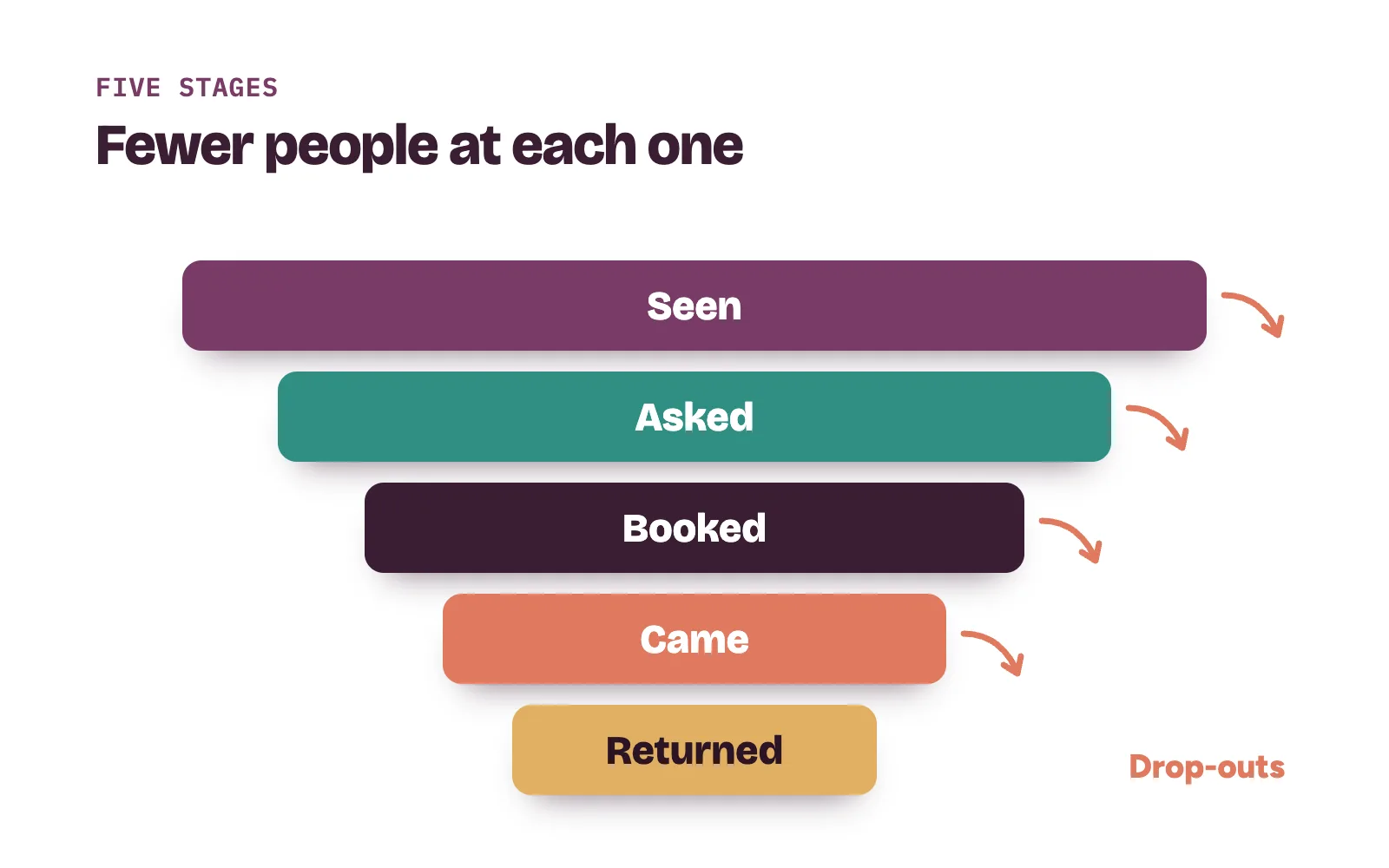
The five stages, and the number to watch at each
1. Seen: do the right people find you?
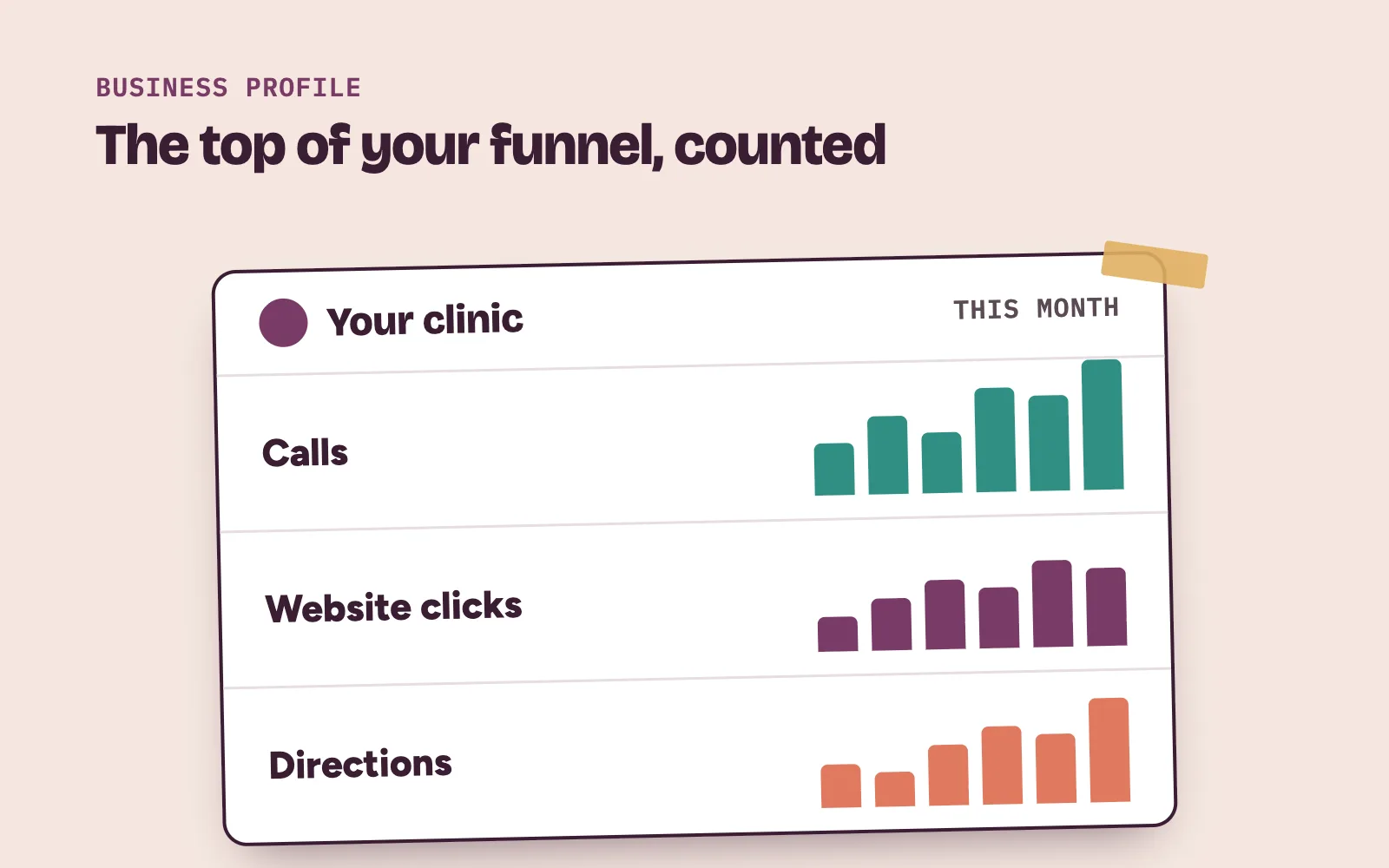
People see you on Google Search, Google Maps, Facebook, Instagram and through friends. For Google, your Business Profile already counts a lot of this. Google's own help page lists views, searches, calls, website clicks, messages and direction requests for verified profiles.
Number to watch: calls, website clicks and direction requests each month. Views alone pay no bills.
Where it leaks: an unverified profile, wrong hours, no photos, ads nobody checks against bookings.
2. Asked: does interest turn into an enquiry?
An enquiry is any call, DM, form or walk-in question. This is the first moment a person raises a hand.
Number to watch: enquiries per week, split by where each one came from.
Where it leaks: missed calls, DMs answered the next day, a website with no clear way to get in touch. Our post on front desk customer service sets standards for the first reply.
3. Booked: does the enquiry become a booking?
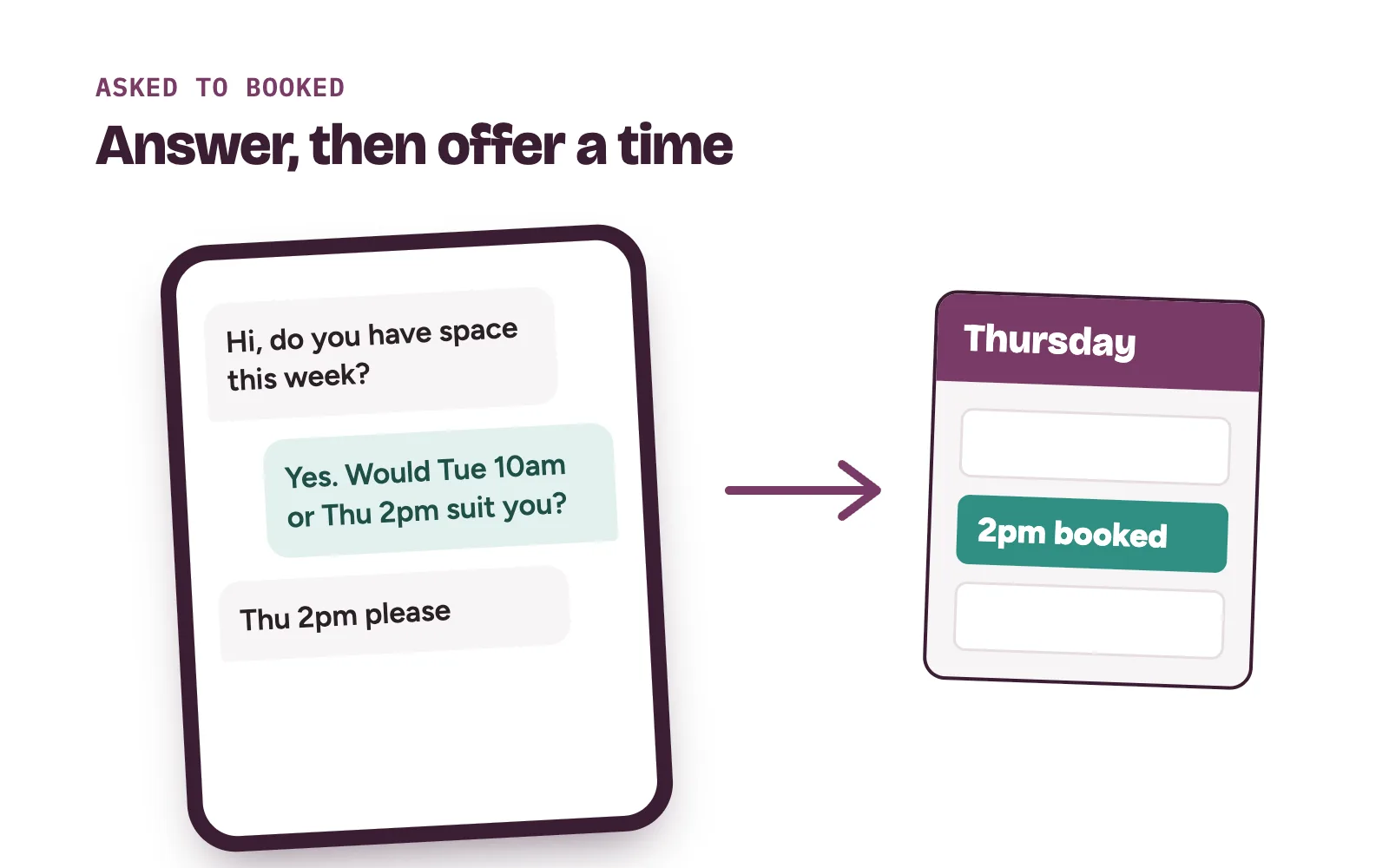
Here the front desk does the selling. The patient asks about price or availability, and the reply decides whether they book with you or keep searching.
Number to watch: bookings divided by enquiries. Track it per channel, because DMs and calls often behave differently.
Where it leaks: a price sent with no next step, no time offered, no follow-up after the patient goes quiet.
4. Came: do booked patients turn up?
A booked slot only pays when the patient walks in.
Number to watch: your show rate, meaning patients who came divided by patients still booked.
Where it leaks: vague confirmations, no reminders, no easy way to change the time. Our post on reducing patient no-shows covers the fixes step by step.
5. Returned: do patients come back and send others?
Reviews, check-ups, second treatments and referrals all live here. A returning patient costs you no new ad money.
Number to watch: returning patients each month, and new patients who say a friend sent them.
Where it leaks: nobody books the next visit before the patient leaves, and nobody asks for a review.
How to count your sales funnel this month
You don't need new staff or a big report. You need one sheet and four weeks of honest counting.
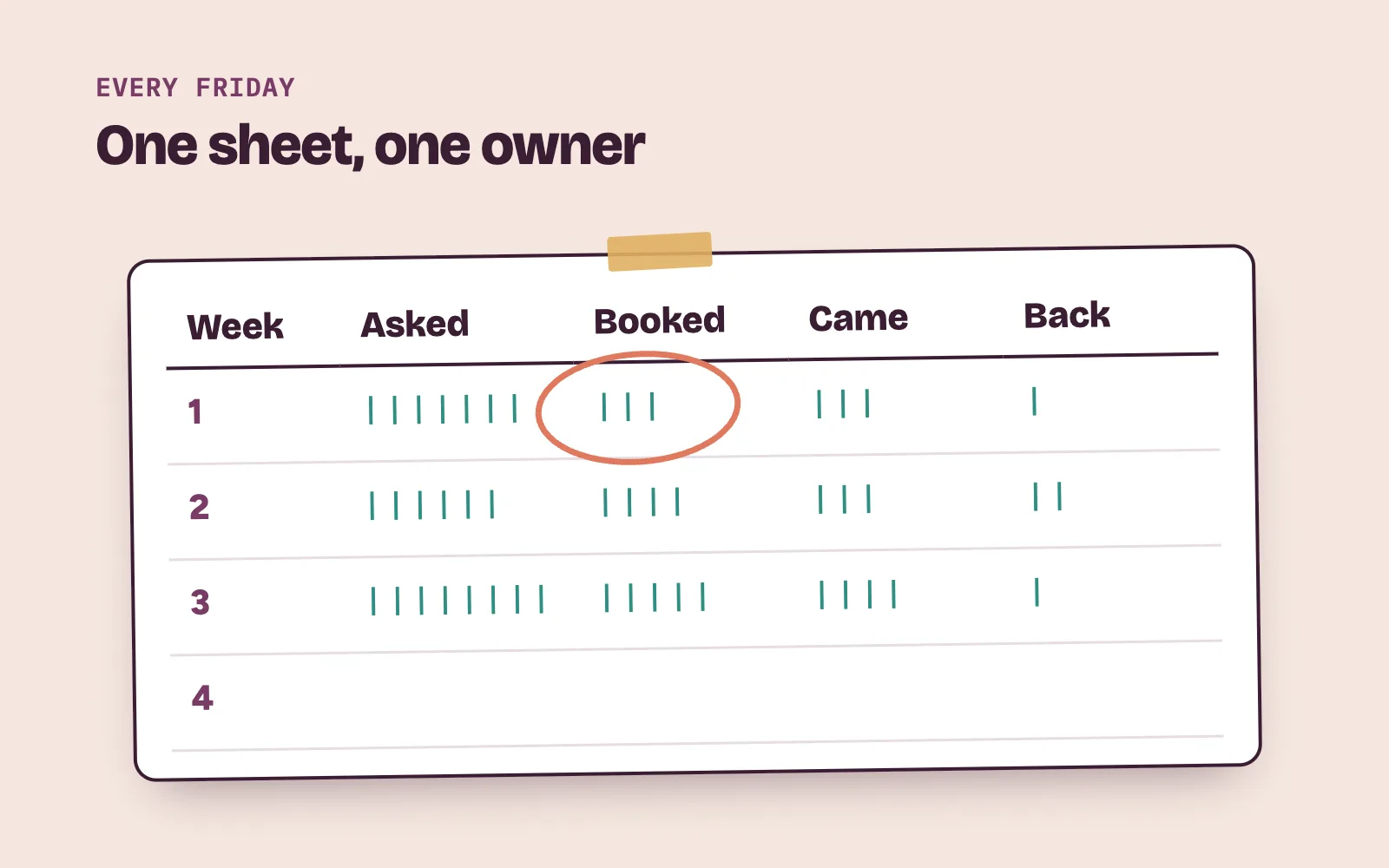
- Make one row per week. Columns: calls and clicks from Google, enquiries, bookings, patients who came, returning patients.
- Add a source column. Ask every new enquiry how they found you, and write it down.
- Fill it every Friday. One named person owns it. Same day, every week.
- Divide stage by stage. Bookings divided by enquiries. Patients who came divided by bookings. Say 40 people asked and 10 booked: that stage keeps one in four.
- Circle the biggest drop. That is the stage to fix first.
Which stage should you fix first?
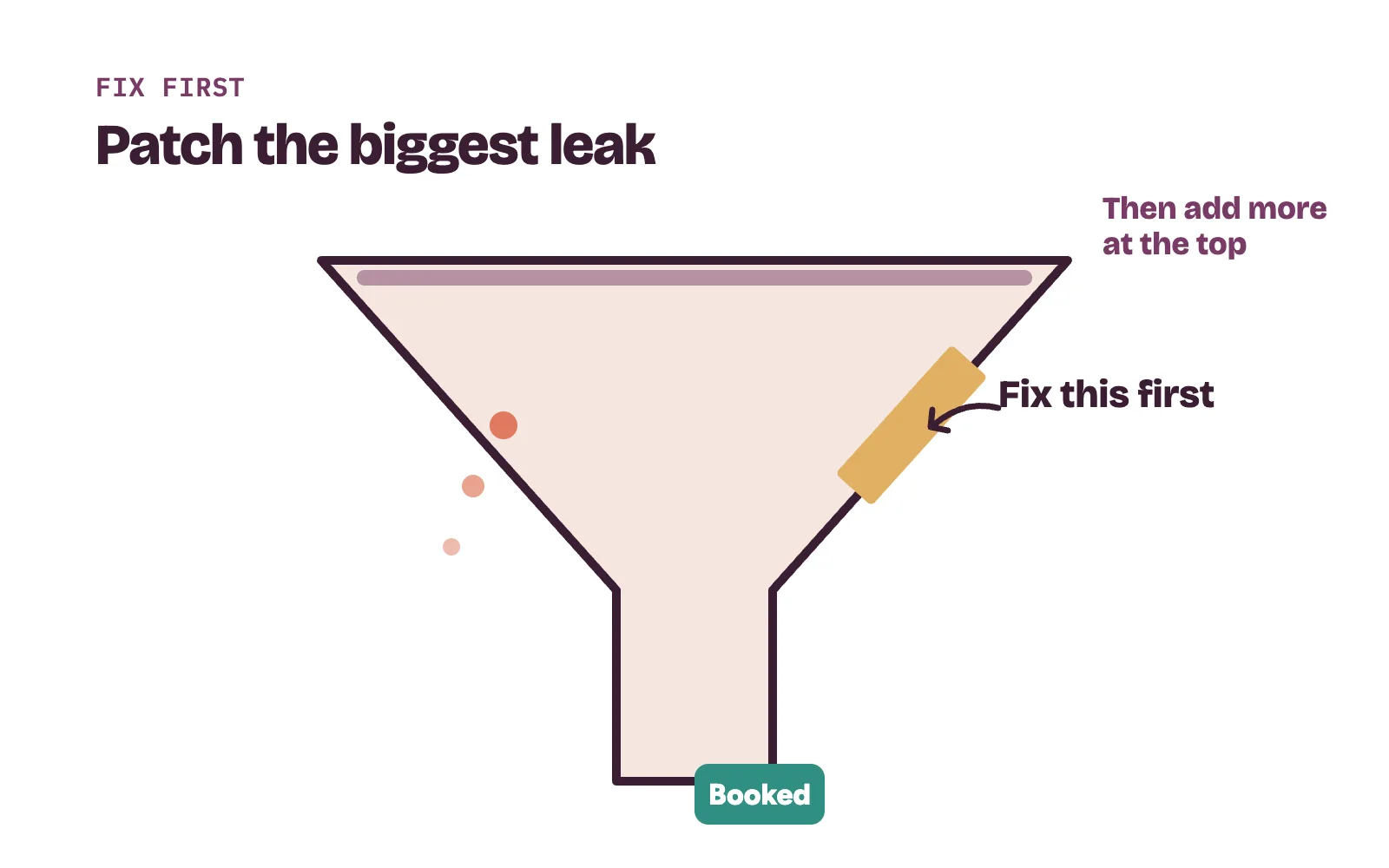
Fix the leak before you pour in more. If half your enquiries never get a reply, more ads only buy more unanswered messages.
Start with the lowest broken stage that touches money. Booked patients who don't come are paid slots lost today. Unanswered enquiries come next. Visibility work matters, but it pays off most once the stages below it hold.
Change one thing at a time, then watch the number for two to four weeks. If it moves, keep the change. If it doesn't, try the next fix.
How Kren helps clinics fix their funnel
Kren is a done-for-you growth partner for private clinics in Lagos and Abuja. We map your patient sales funnel with you, set up the counting, close the leaks and run the work at the top: your website, Google, ads, follow-up and booking management. Your own team does the final follow-up and booking.
See our sales strategy work and how we handle closing patient leaks. On a 30-minute strategy call, we look at your numbers and name the stage to fix first. Show me where my clinic is losing patients →
Questions clinic owners ask about the sales funnel
Is a sales funnel only for clinics that run ads?
No. Walk-ins, referrals and Google searches all enter the same funnel. Ads only add people at the top. The stages below work the same way however patients arrive.
What is a good enquiry-to-booking rate?
There is no single number that fits every clinic or treatment. A cleaning and a fertility consultation behave very differently. Track your own rate weekly and aim to beat last month.
How long before the numbers mean something?
Four weeks of counting gives you a first picture. A single week can mislead, because holidays and paydays move bookings. Compare month with month once you have two.
Who should own the funnel numbers?
One named person, usually the practice manager or front desk lead. The owner or medical director reviews them each week. Shared ownership tends to mean nobody fills the sheet.