Blog · Leads · 5 min read
Why don't my patients come back after one visit?
Most patients who never return had no complaint. Here are the four usual reasons, the signs of each and the fix to start with.
By the Kren Agency team ·
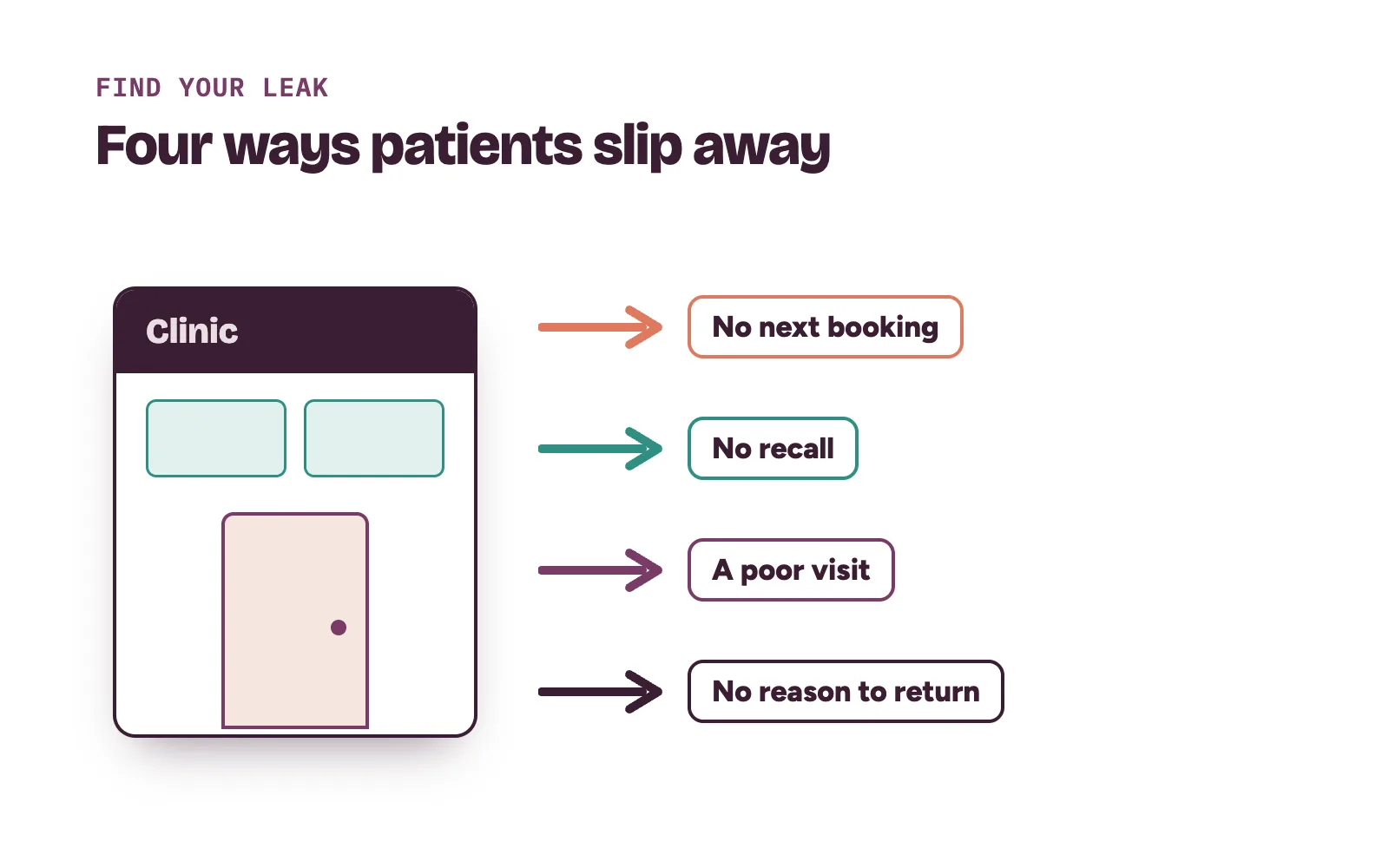
Most patients not coming back to a clinic had no complaint about their care. They left without a next booking, nobody contacted them when they were due, something small in the visit put them off, or nobody gave them a clear reason to return. Find out which of these four is happening at your clinic before you spend another naira on ads.
Each reason has its own signs and its own fix. Here is how to tell them apart.
First, check it really is a return problem
Before you fix anything, count. Take every patient seen in one month, three months ago. Mark the ones the doctor asked to come back. Then check how many of those have booked again since.
That one number tells you more than any feeling. If most returned, your problem sits earlier, in getting found or getting booked. If few returned, keep reading.
Reason 1: They left without a next booking
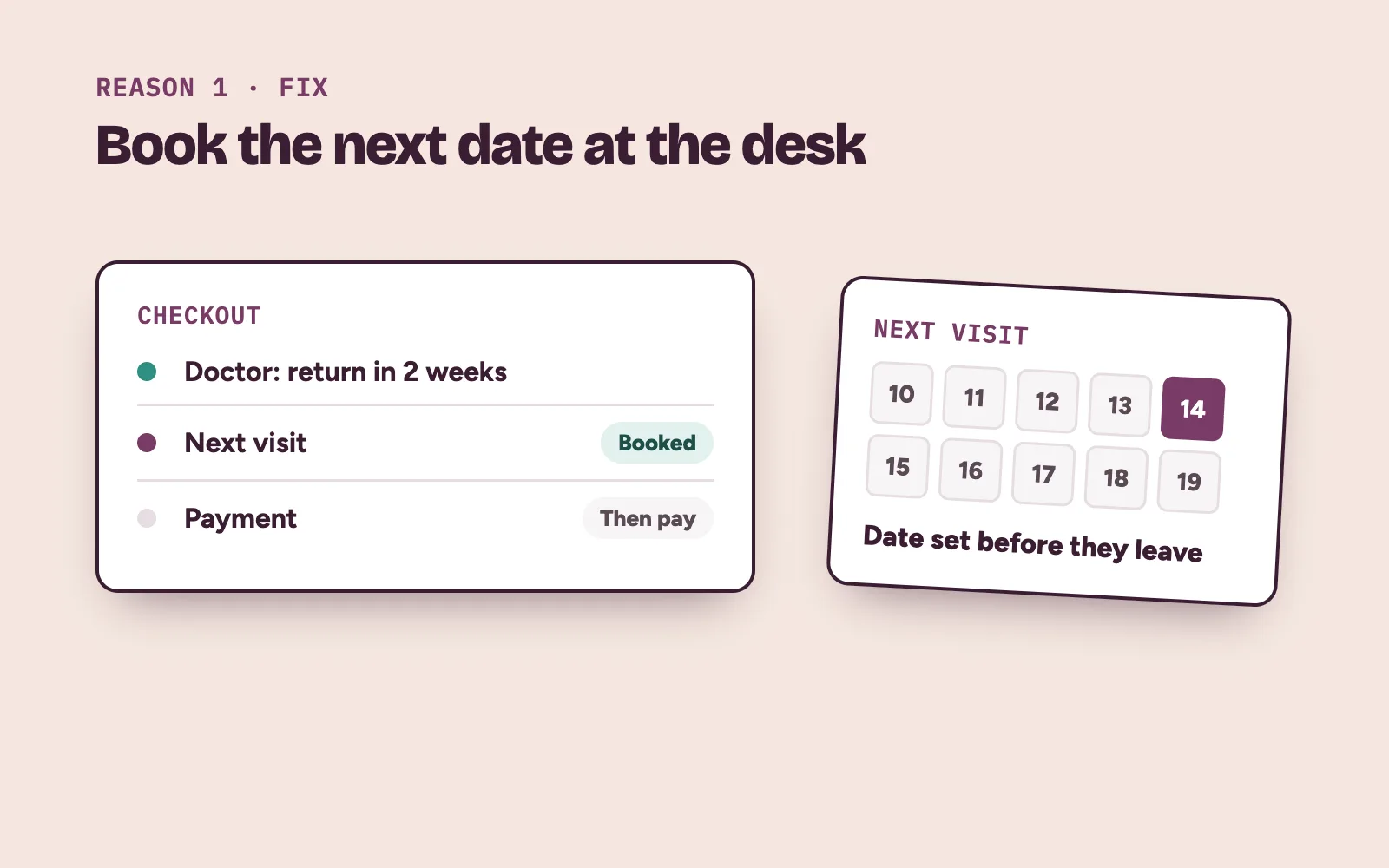
The doctor says "come back in two weeks." The patient nods, pays and walks out. Nobody at the desk offers a date.
Two weeks pass. Work gets busy. The patient means to call and never does.
Signs: your records show return visits recommended but few booked. The desk staff can't tell you who was asked to come back last week.
Fix: make the next date part of checkout. The doctor notes when the patient should return. The desk offers a specific day before taking payment. If the patient can't commit, the desk writes down the due month so someone can call later.
Reason 2: Nobody reminded them when they were due
Some returns are months away: a six-month check-up, a yearly scan, a review after a course of treatment. No patient remembers those dates on their own.
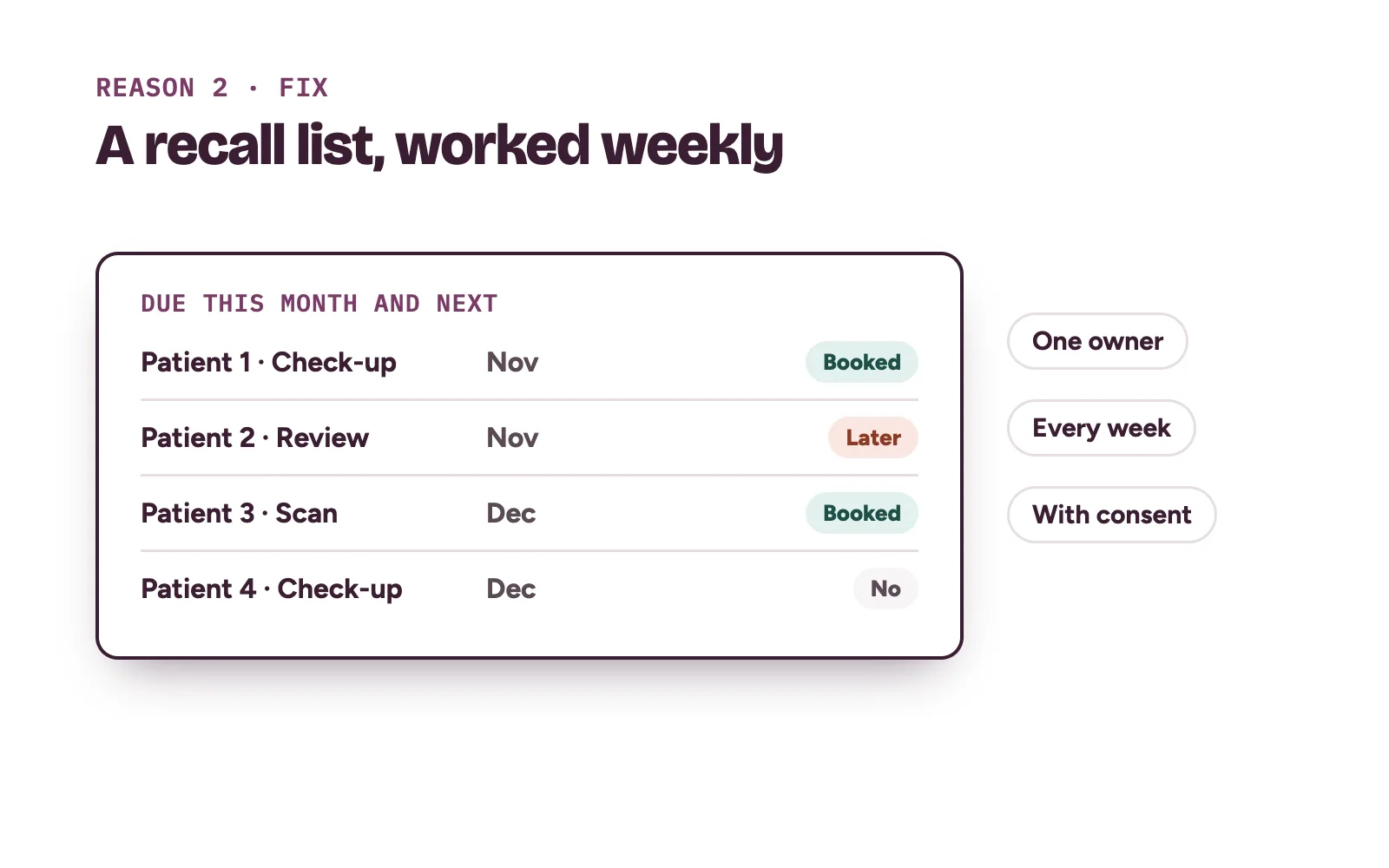
Signs: there is no list of who is due next month. Recall happens when someone at the desk remembers, which means it rarely happens.
Fix: keep one due-date list and work it every week. Our post on customer retention for clinics sets out how to run that list, step by step. Reminders by SMS need the patient's permission and private wording; the post on bulk SMS reminders covers both.
Reason 3: Something in the visit put them off
This one hurts most, because patients rarely say it to your face. They just don't return.
The cause is often small and outside the consulting room:
- A long wait with no apology or explanation.
- A bill higher than the price they were told.
- A doctor who seemed rushed.
- A front desk that was curt, or a phone nobody answered.
- No clear instructions after the visit.
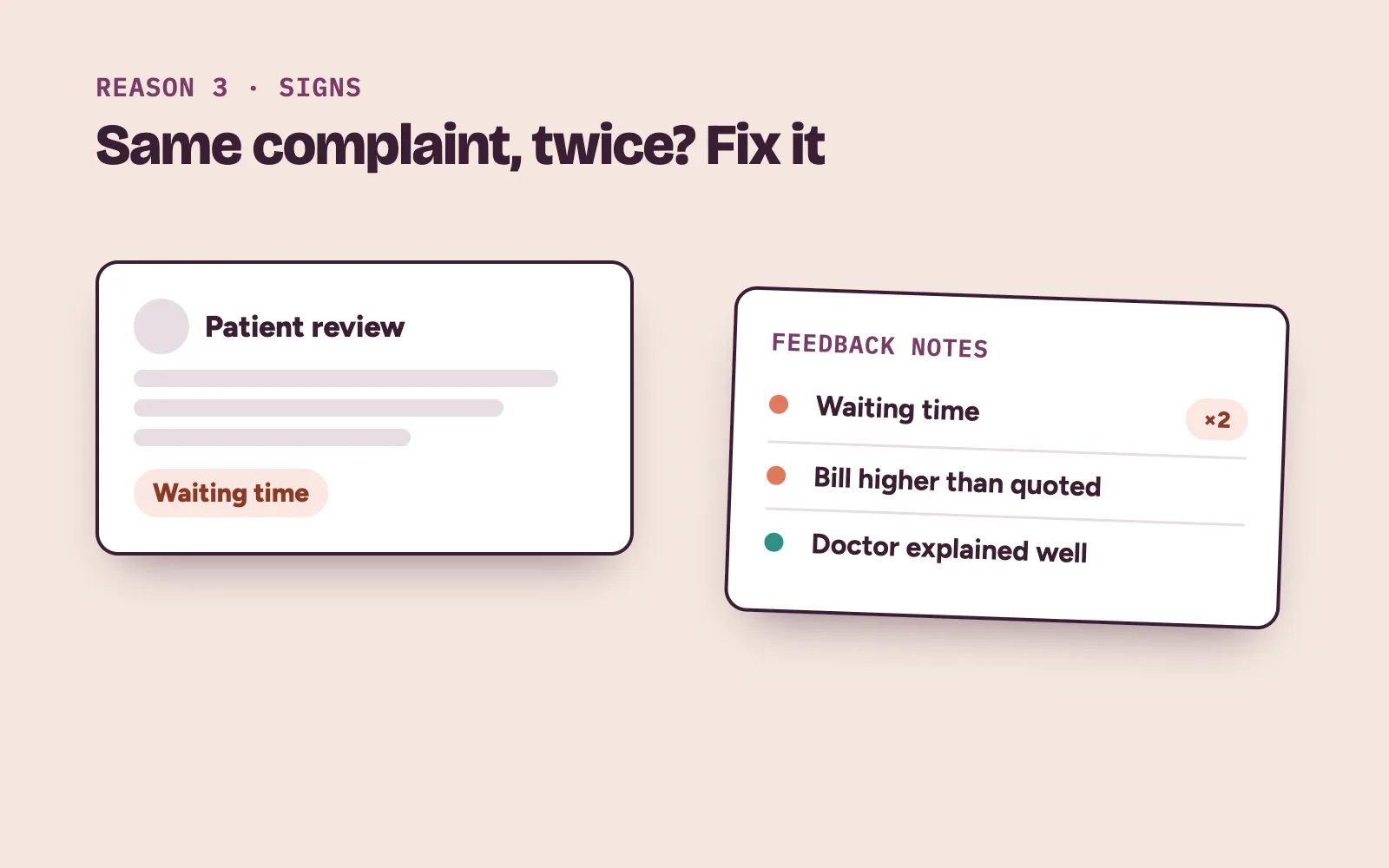
Signs: the same complaint appears more than once in reviews, messages or comments to staff.
Fix: ask every patient two short questions after the visit: how was it, and what one thing would you change? Read every answer. Fix anything that comes up twice. Then reply to your Google reviews, including the hard ones. Google's help page on reading and replying to reviews says the reviewer is notified when you reply, and can still change their review after reading it. Our post on Google reviews for clinics covers how to ask and reply.
Reason 4: They saw no reason to come back
Many patients treat a clinic visit as a one-off. They came with a problem, it got better, they moved on. If nobody explained what happens next, they assume nothing does.
Signs: patients stop halfway through a course of treatment. Patients come back only when something goes wrong, and sometimes to a different clinic.
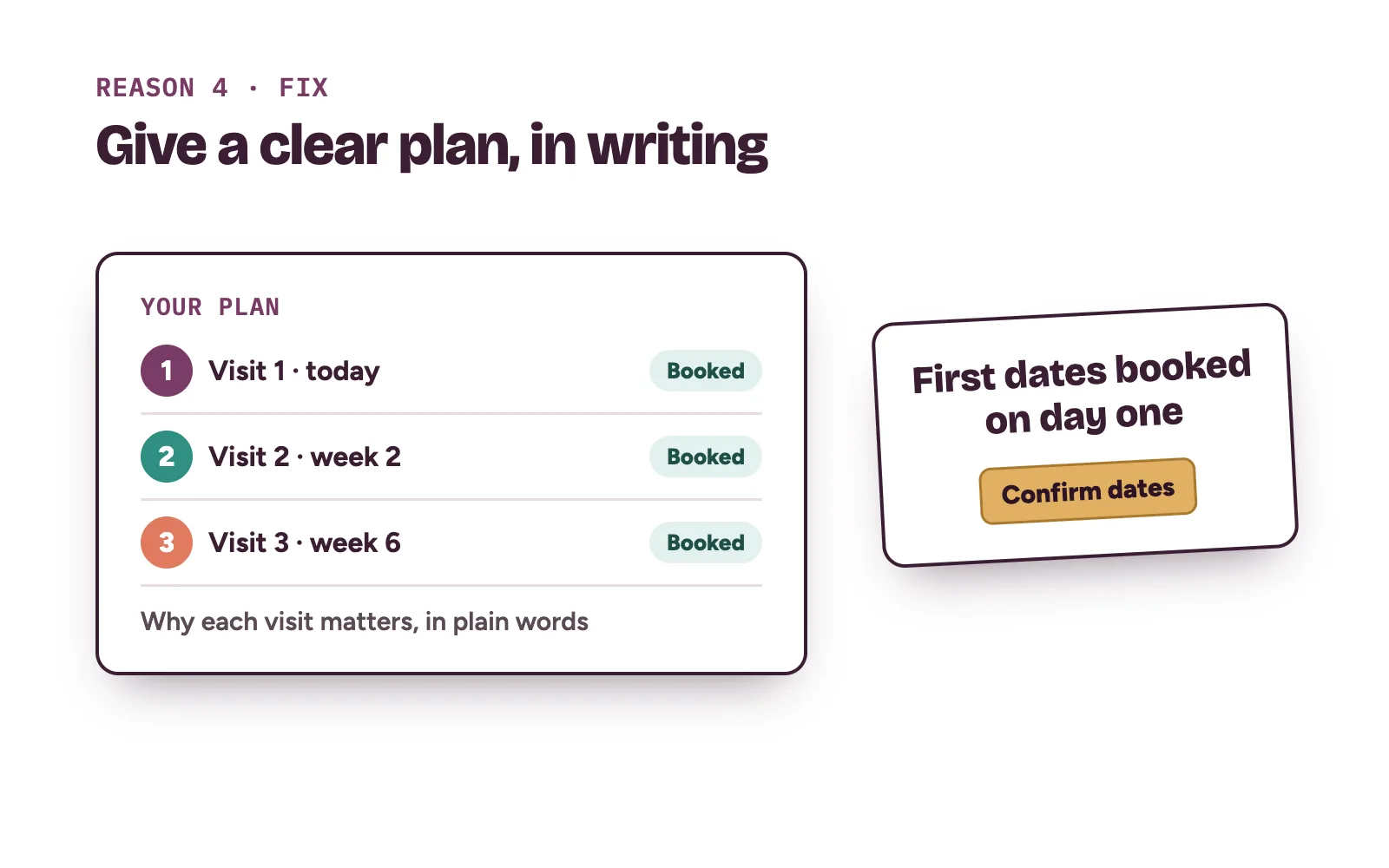
Fix: the doctor explains the plan in plain words: what the next visit is for and why the timing matters. Give it in writing too. For treatments that run as a course, book the first few dates on day one.
Keep it honest. Recommend only the care the patient needs. Points, prizes and discounts for returning can push patients toward treatment they don't need, so check any offer against your professional code first.
Which reason should you fix first?
- The next booking at the desk. It costs nothing but a habit, and it catches patients while they are still in the building.
- The recall list. One named person, one list, one set time each week.
- The visit itself. Start feedback now, so you know which complaint to fix.
- The reason to return. Agree with your doctors how they explain next steps.
Count again in three months. If more patients told to return have booked, the fix is working.
How Kren helps patients come back
Kren is a done-for-you growth partner for private clinics in Lagos and Abuja. We set up recall reminders and after-visit messages as follow-up automations, and help your front desk with booking management so next visits get booked before patients leave. Your own team does the final follow-up and booking.
Questions clinic owners ask about patients not coming back
How do I know how many of my patients come back?
Take all patients seen in one past month and check how many have booked again. Look at the ones the doctor asked to return first. Repeat the count every month so you can see the trend.
Should we offer a discount to bring old patients back?
Be careful. Discounts can push people toward care they don't need, and your professional code may limit them. A reminder at the right time, with an easy way to book, is usually what a patient was missing.
Can a patient change a bad review after we fix the problem?
Yes. Google says the reviewer is notified when you reply and can still change their review afterwards. Reply calmly, say what you have changed and invite them to contact the clinic.
Who should contact patients who haven't returned?
Give the job to one named person at the front desk, with a set time each week. When everyone owns it, nobody does it.
Want to know which of the four reasons is costing your clinic the most? Book a 30-minute strategy call and we will look at it with you.