Blog · Leads · 5 min read
Customer retention for clinics: how to keep patients coming back
Patients who don't come back cost you bookings you already earned. Here is how to book next visits, run recall, check in after treatment and ask for feedback.
By the Kren Agency team ·
Customer retention for a clinic means patients come back for their next check-up, finish the course they started and return when something new comes up. You get there with a booked next visit before they leave, a short check-in after treatment, recall on time and a feedback habit. Every returning patient is a booking you didn't pay an ad to win.
Why patients drift away after one visit
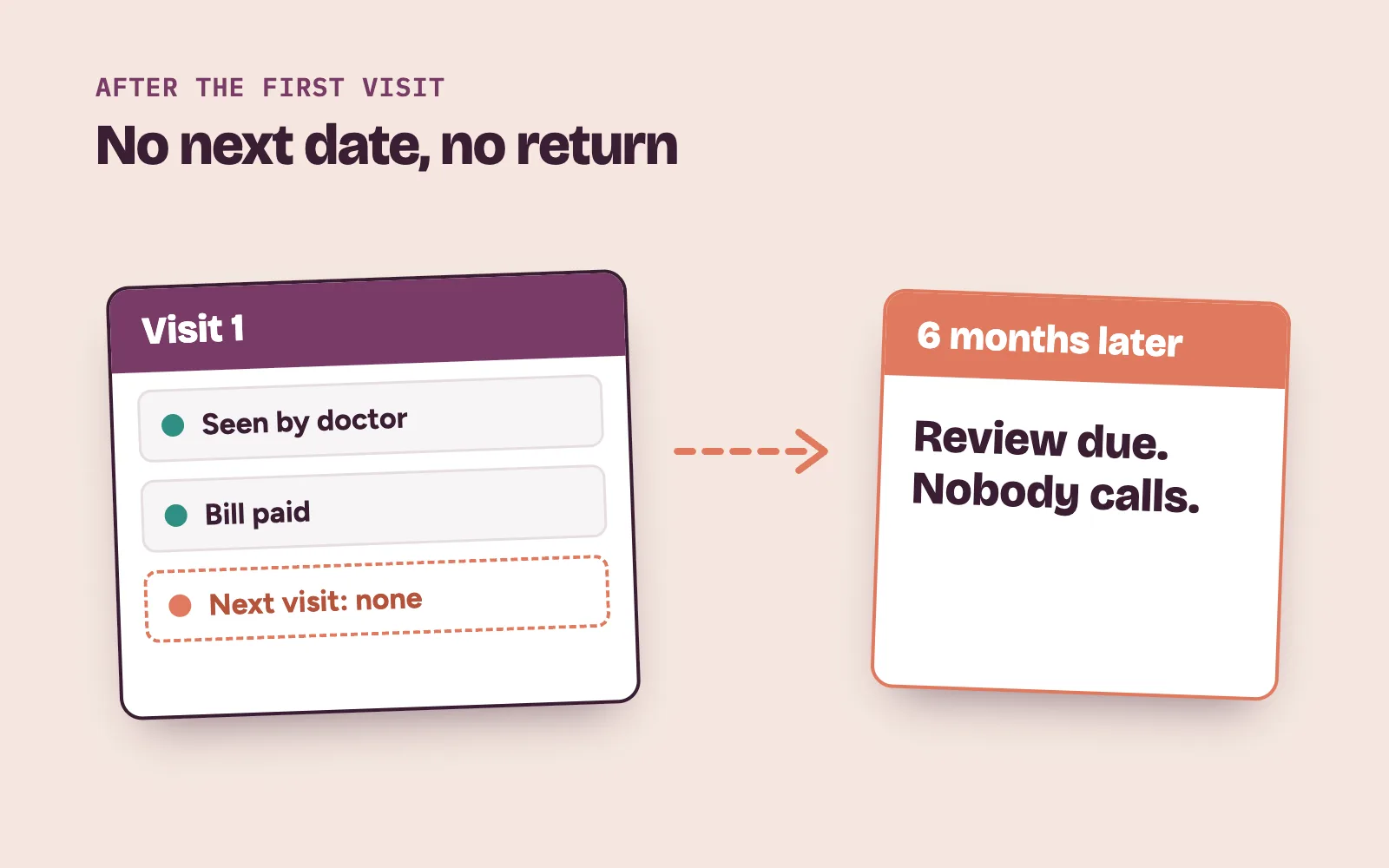
Most clinics chase new patients. Once the bill is paid, the patient walks out with no next date, no call and no reason to think of the clinic again.
Six months later, their review is due. Nobody reminds them. A clinic closer to their office runs an ad that week, and they book there.
They had no complaint about your care. They simply weren't asked to come back.
1. Book the next visit before the patient leaves
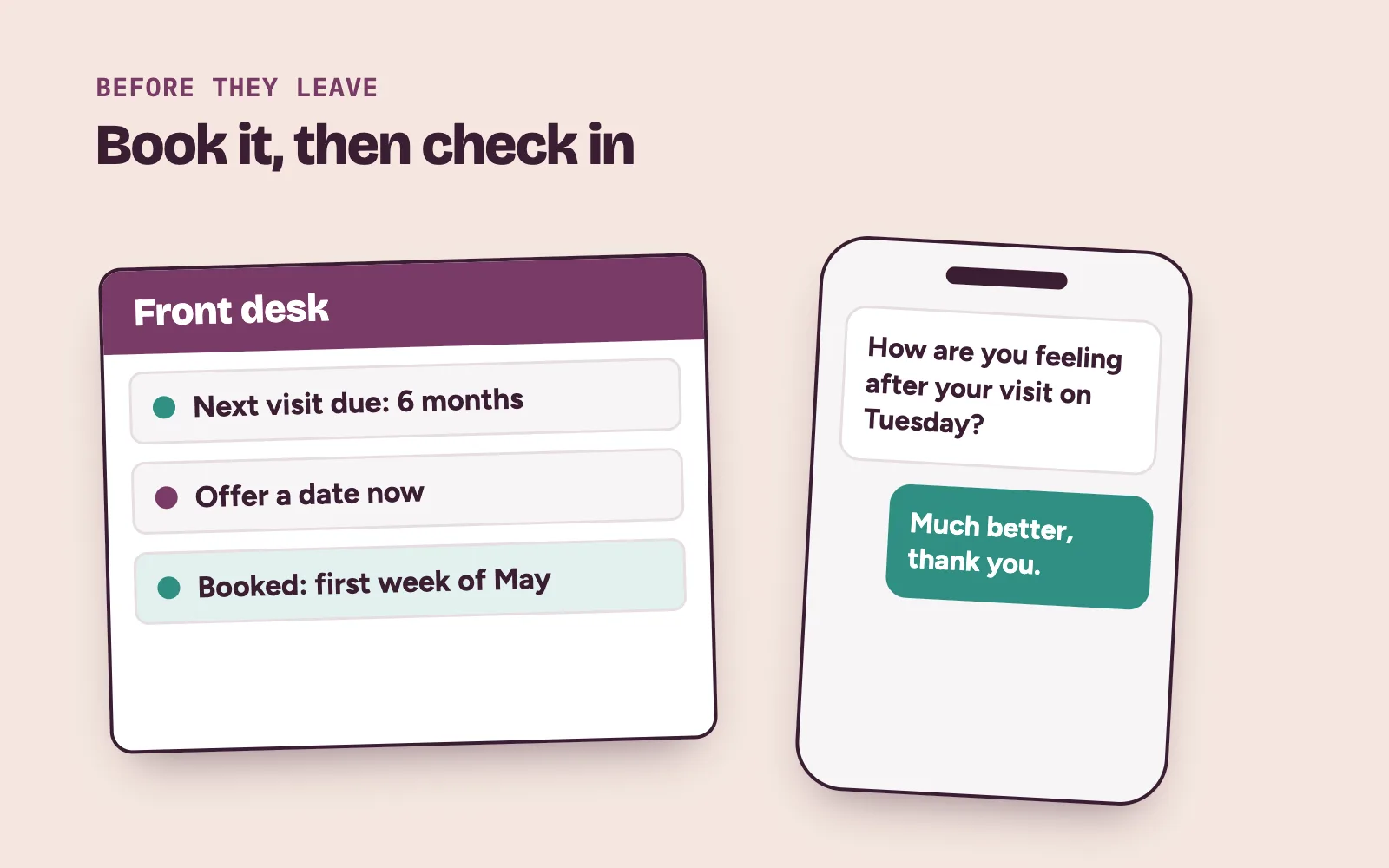
The easiest return visit to win is the one booked at the desk. If the doctor recommends a review in two weeks or a check-up in six months, the front desk should offer a date there and then.
- Doctor to desk: the doctor notes when the next visit is due on the patient's file.
- Desk asks: "The doctor wants to see you again in six months. Shall I book you for the first week of May?"
- Patient can't commit? Note the due month and add them to the recall list.
2. Check in after treatment
A short call or message a day or two after a procedure tells the patient someone is paying attention. Ask how they are feeling and whether they have questions. Send anything clinical to the doctor.
Keep it private: "your visit on Tuesday," never the treatment name.
3. Book the whole course at the start
Physiotherapy, orthodontics, fertility cycles and many aesthetic treatments run as a course. Patients who book one session at a time drop off in the middle.
- Explain the full plan at the start: how many visits and roughly how far apart.
- Book the first few dates on day one.
- At each visit, confirm the next one before the patient leaves.
- If someone misses a session, call the same day to rebook. Our post on reducing patient no-shows covers the wording.
4. Run recall from a due-date list
Recall is how a clinic brings back patients who are due for a check-up, a scan, a cleaning or a review. It only works if someone owns a list.
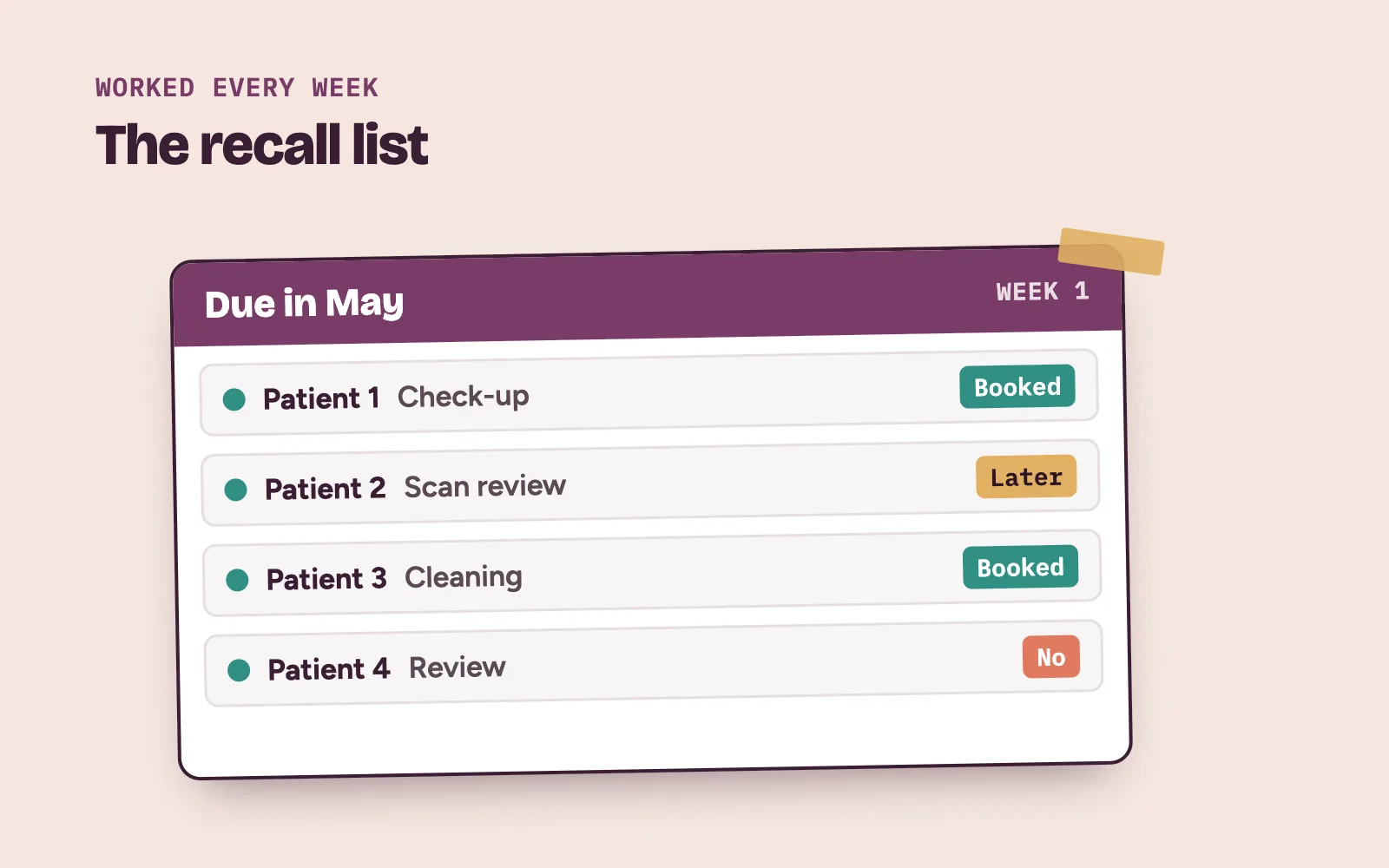
Keep one list with each patient's name, phone number, what kind of visit is due and the due month. Each week, the desk contacts everyone due in the coming month. Mark who booked, who said later and who said no.
Recall messages count as marketing in many cases, so get the patient's permission first and make stopping easy. Our post on bulk SMS reminders in Nigeria explains consent, timing and private wording.
5. Ask for feedback, then ask for reviews
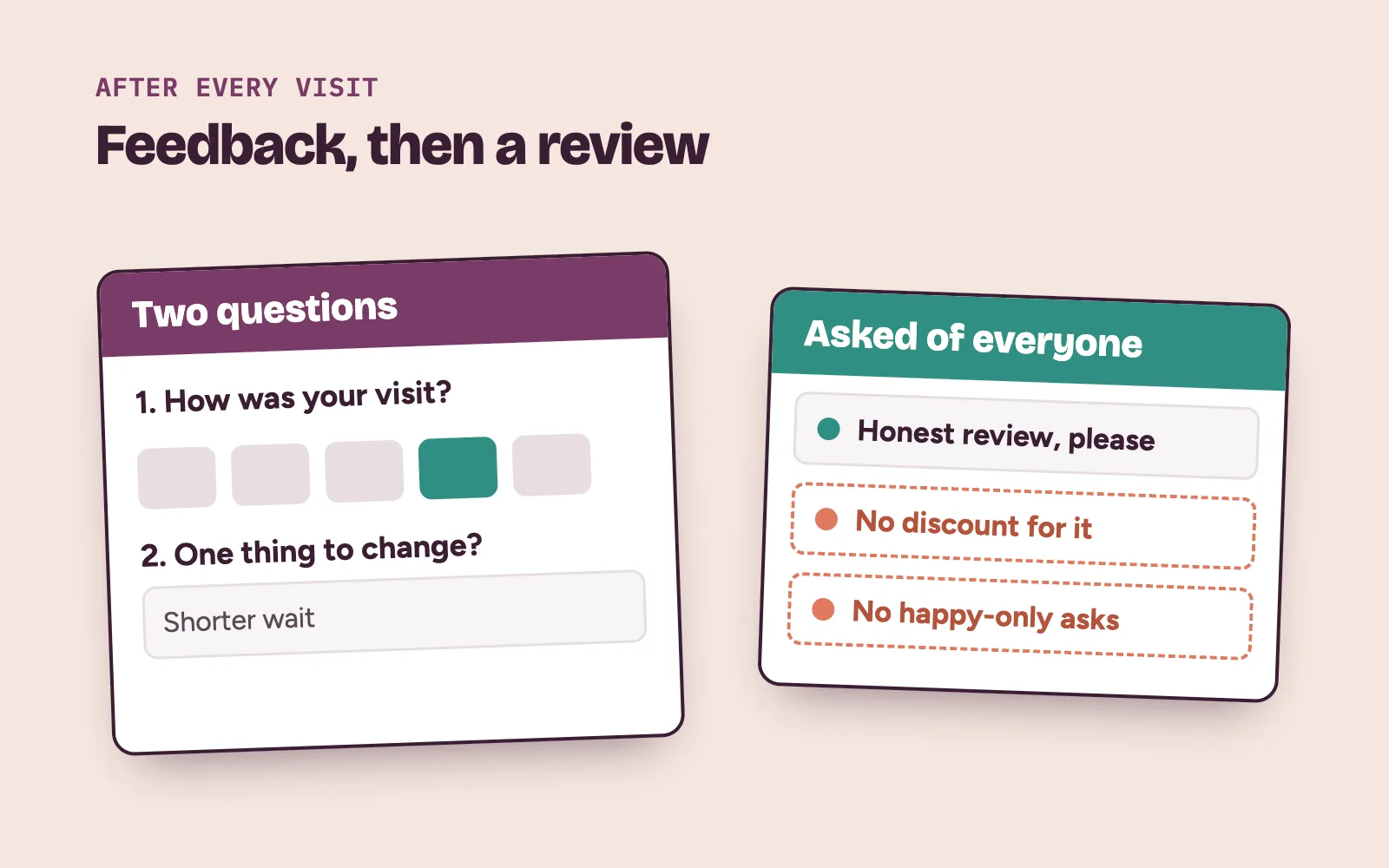
Feedback tells you why patients don't return. Ask two questions after a visit: how was it, and what one thing would you change? Read every answer. Fix the complaints that come up more than once, like waiting time or unclear prices.
Reviews are a separate step. Ask every patient, happy or not, for an honest Google review. Google's Maps user contributed content policy says businesses must not offer incentives such as payment, discounts or free services for reviews, and must not selectively ask only happy customers. Our post on Google reviews for clinics covers asking and replying.
Loyalty that stays within medical rules
Points, prizes and "bring a friend, get a discount" belong in shops. In a clinic they can push patients toward care they don't need.
Patients stay loyal to clinics that are easy to deal with. That looks like:
- The same doctor where possible, who remembers their history.
- Clear prices given before treatment.
- Calls and messages answered quickly.
- Short waits, and an apology when there is one.
If you want to run any offer, package or referral scheme, check it against your professional code and your regulator's guidance first.
How to measure customer retention at your clinic
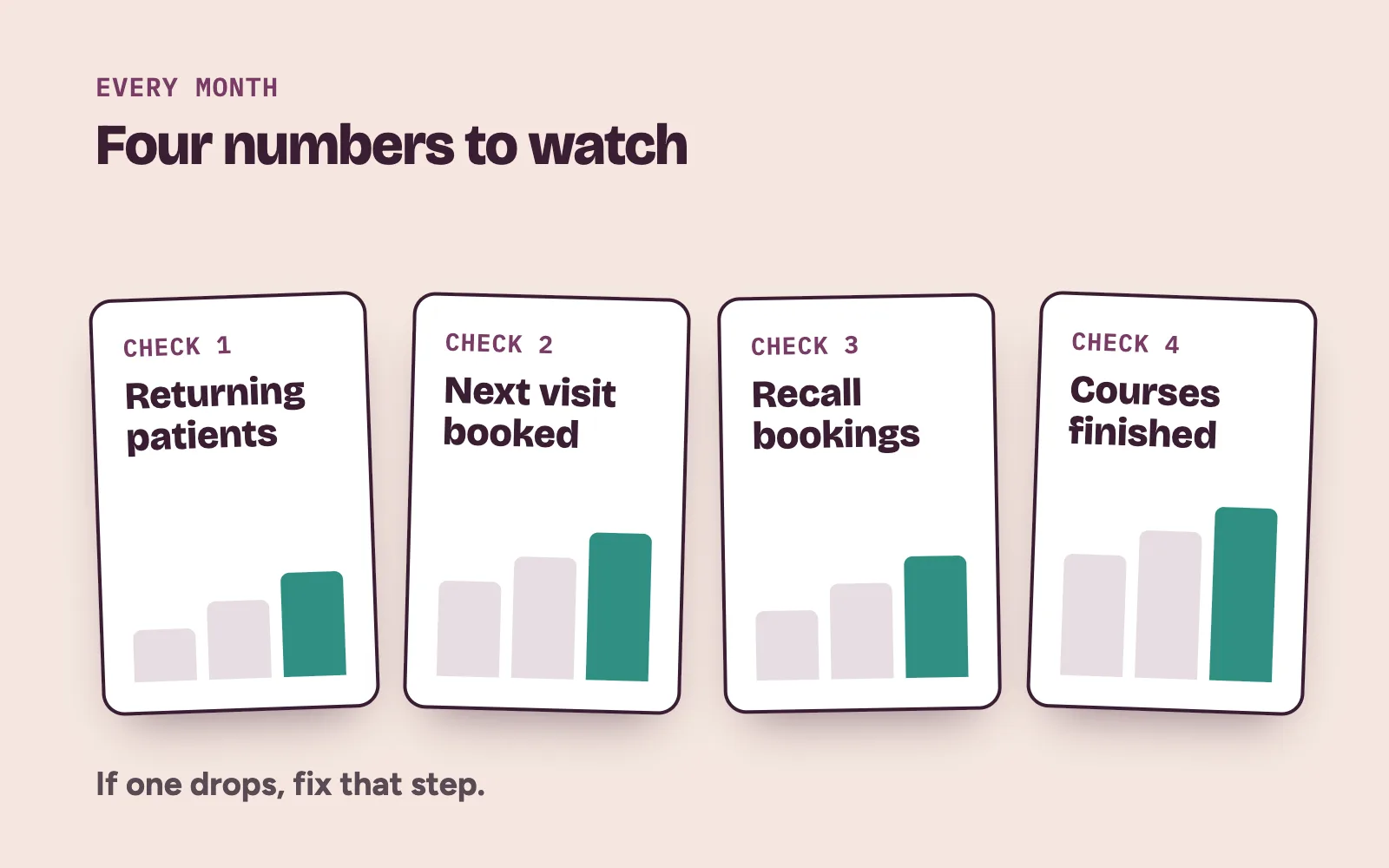
Track a few numbers every month:
- Returning patients: how many of this month's bookings came from people who visited before.
- Next visit booked at the desk: out of patients told to return, how many left with a date.
- Recall bookings: out of patients contacted, how many booked.
- Courses finished: out of patients who started a course, how many completed it.
If one number drops, you know which step to fix. The clinic sales system post shows where "comes back" sits next to finding, booking and showing up.
How Kren helps clinics keep patients coming back
Kren is a done-for-you growth partner for private clinics in Lagos and Abuja. We set up your recall lists, after-visit check-ins and feedback requests as follow-up automations, write the private wording, and track the bookings they bring. We also help your desk manage bookings so next visits get booked before patients leave. Your own team does the final follow-up and booking.
On a 30-minute strategy call, we look at where past patients slip away and what to fix first. Show me where my clinic is losing patients →
Questions clinic owners ask about customer retention
Is it cheaper to keep a patient than to find a new one?
A returning patient already knows your clinic, so there is no ad or search needed to win them. The cost is mostly staff time for recall and follow-up.
How soon should we contact a patient after treatment?
A day or two after a procedure suits most clinics, but follow what the treating doctor wants. Keep the message short and private, and pass any clinical question to the doctor.
Can we give discounts to patients who leave a Google review?
No. Google's policy forbids offering payment, discounts or free services in exchange for reviews, and such reviews can be removed. Ask every patient for an honest review with nothing attached.
Who at the clinic should own recall?
Give it to one named person on the front desk, with a set time each week to work the list. When everyone owns recall, nobody does it.