Blog · Physiotherapy · 5 min read
Physiotherapy patient retention: how to get patients to finish their plan
Most physio patients stop halfway because nobody booked the next session. Five front-desk habits that keep plans booked to the end.
By the Kren Agency team ·
Physiotherapy patient retention means patients finish the plan their physio set, instead of stopping once the pain eases. Most drop-offs happen because nobody booked the next session. Five habits fix most of it: book the course upfront, remind before every visit, show progress, follow up missed sessions the same day and give patients a home programme.
Why do physio patients stop halfway?
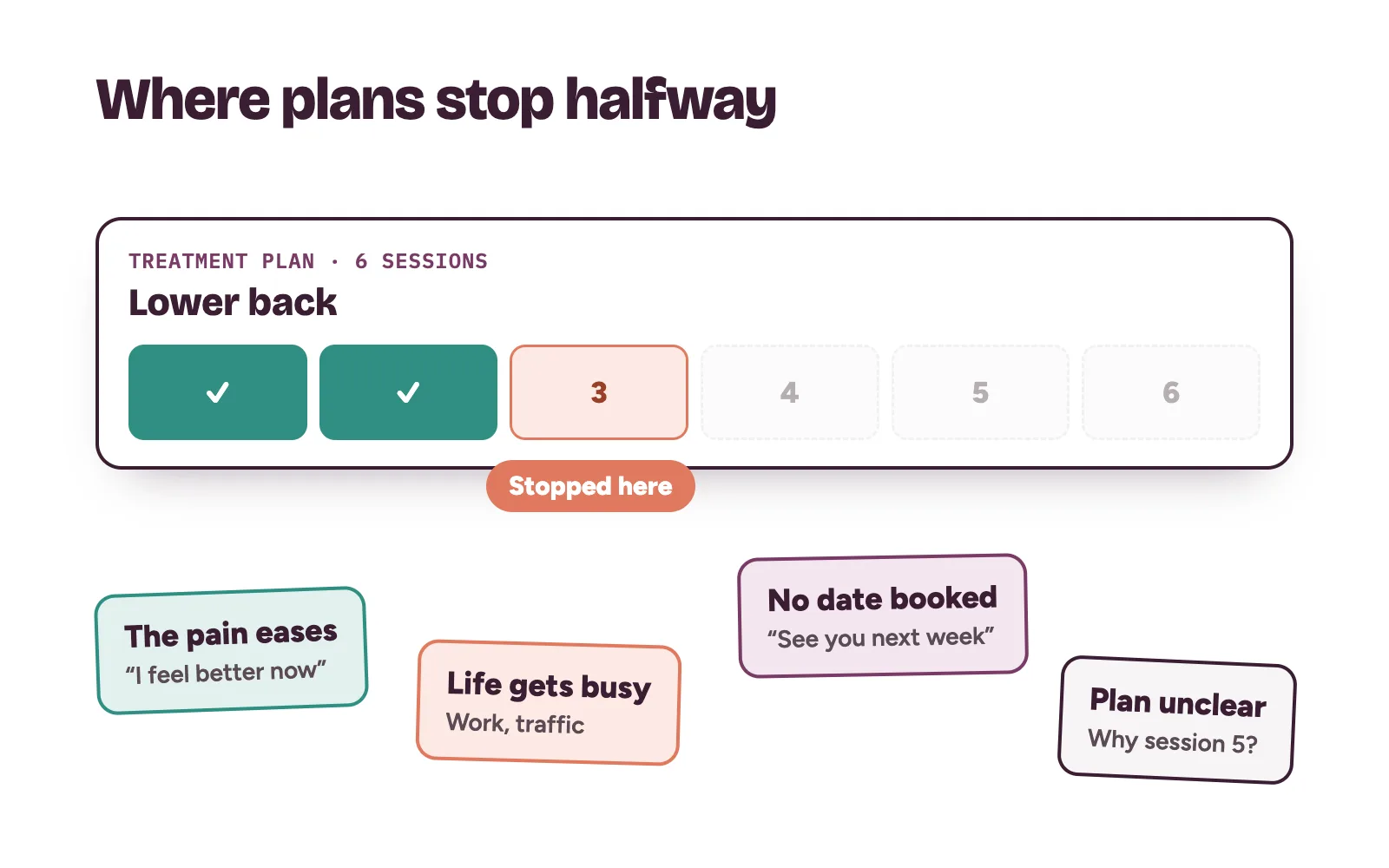
A physio plan asks for something hard: keep coming back when you already feel a bit better. Patients drop off for ordinary reasons.
- The pain eases. After two or three sessions the patient feels better and assumes the job is done.
- Life gets in the way. Work, traffic and family push the next visit back a week, then a month.
- Nothing is booked. The patient leaves with “see you next week” and no date.
- Nobody explained the plan. They don’t know why session five matters.
Each of these is a booking problem your team can fix. Whether a patient continues stays between them and their physio.
How to improve physiotherapy patient retention in five habits
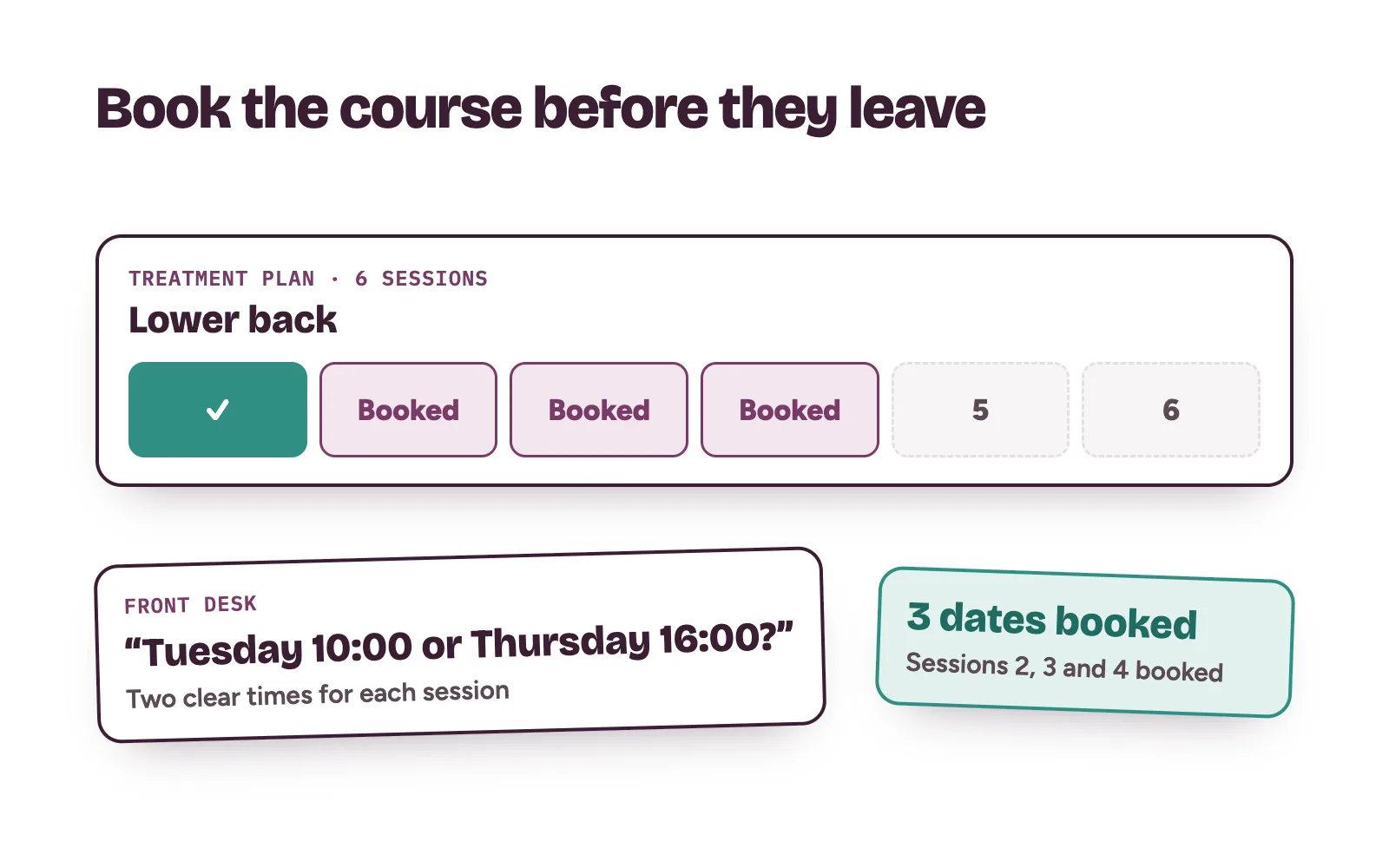
1. Book the course before the patient leaves
Once the physio sets the plan at the assessment, the front desk books the next two or three sessions on the spot. Offer two clear times for each one, such as “Tuesday 10:00 or Thursday 16:00?”.
A patient who leaves with dates is far more likely to turn up than one who promises to call. Book the rest of the course as each session ends, so there is always a next date in the bookings.
2. Remind before every session
Send a short reminder the day before each visit, with the time and an easy way to change it. Keep the condition out of the message, because other people see phone screens. Our post on reducing patient no-shows covers timing and wording.
3. Show progress at set check-ins
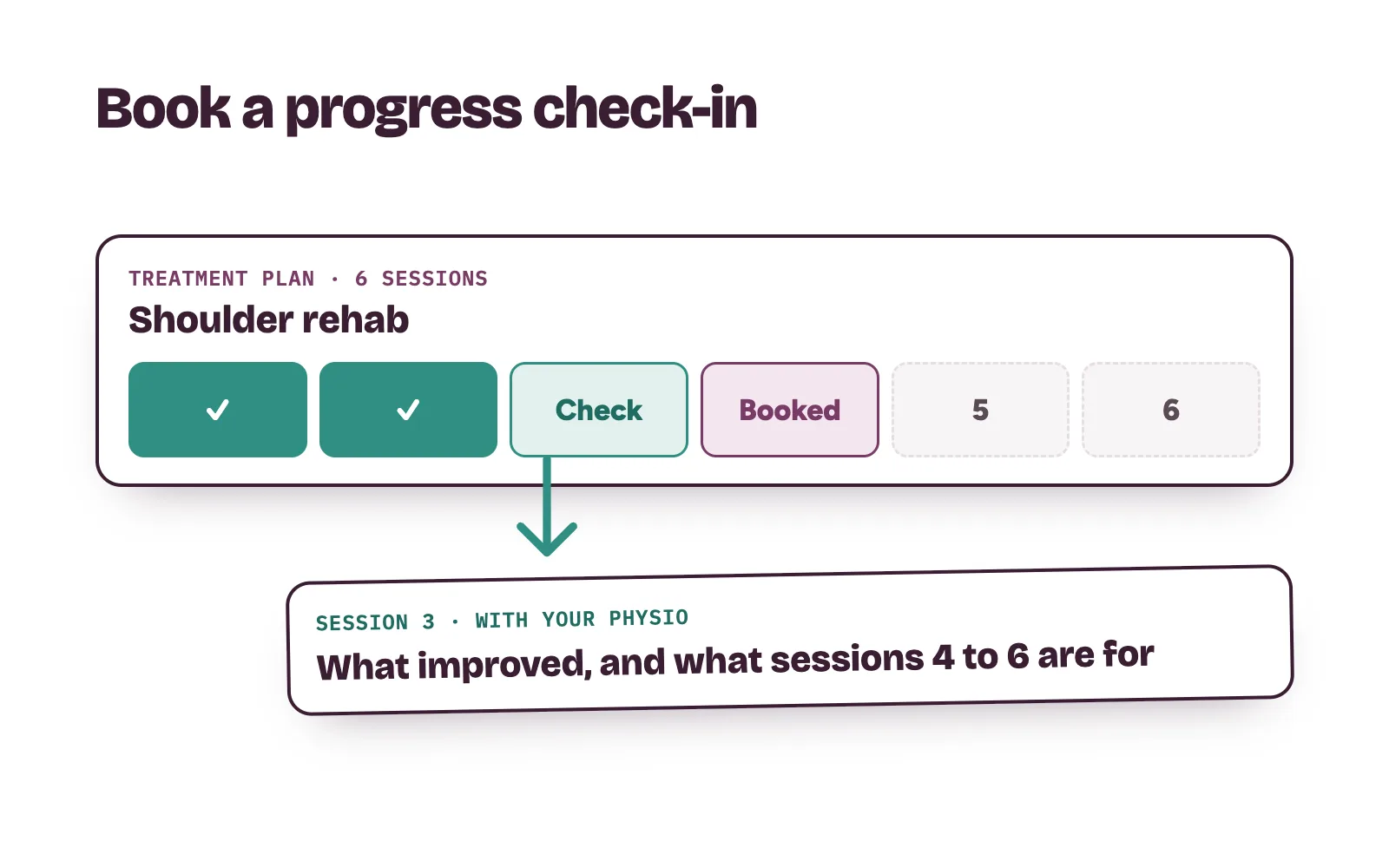
Patients stay when they can see the plan working. Ask your physios to review progress at set points, for example every third session, and explain in plain words what has improved and what the remaining sessions are for.
The physio decides what to measure and whether the plan changes. The front desk’s job is to make sure the check-in session is booked and that nobody slips past it.
4. Follow up a missed session the same day
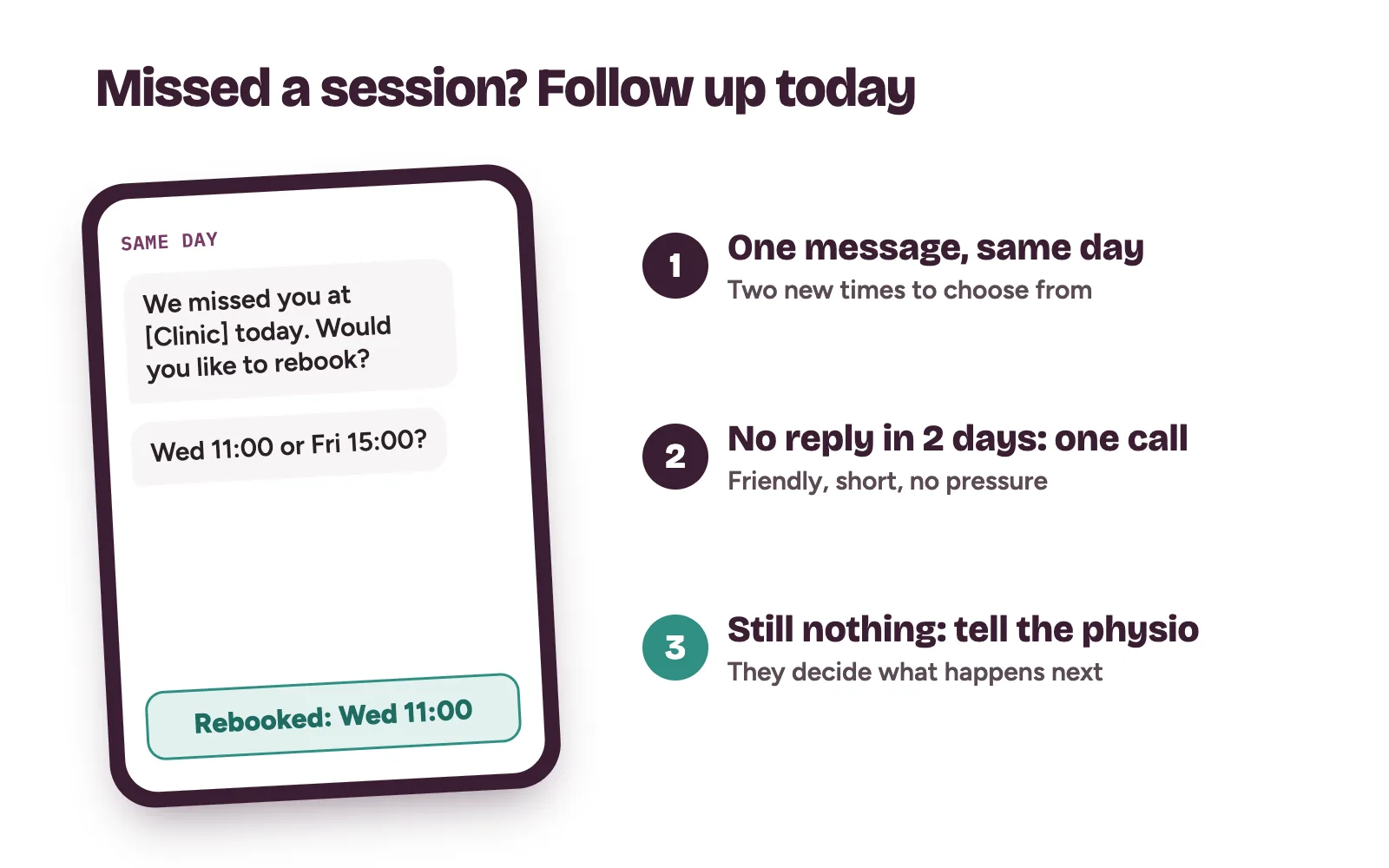
A missed session is the moment a plan is most likely to end. Send one friendly message the same day:
“We missed you at [Clinic] today. Would you like to rebook? We have Wednesday 11:00 or Friday 15:00.”
If there is no reply in two days, call once. If the patient still doesn’t rebook, pass the name to their physio, who can decide whether a call from them makes sense. Don’t keep chasing.
5. Give every patient a home programme
The World Health Organization describes rehabilitation as including education that strengthens self-management, and says it can be delivered in settings such as the patient’s home (WHO rehabilitation fact sheet). A home programme keeps patients involved between visits.
The physio chooses the exercises. Your team makes sure the patient leaves with them in writing and that the next session starts by asking how the exercises went.
Who does what: the physio or the front desk?
Retention breaks when everyone assumes someone else is following up. Split it clearly:
- The physio sets the plan, runs check-ins, sets home exercises and decides any change to treatment.
- The front desk books sessions ahead, sends reminders, follows up misses and passes non-responders to the physio.
Write this down and put one person in charge of the follow-up list each day.
How do you know retention is improving?
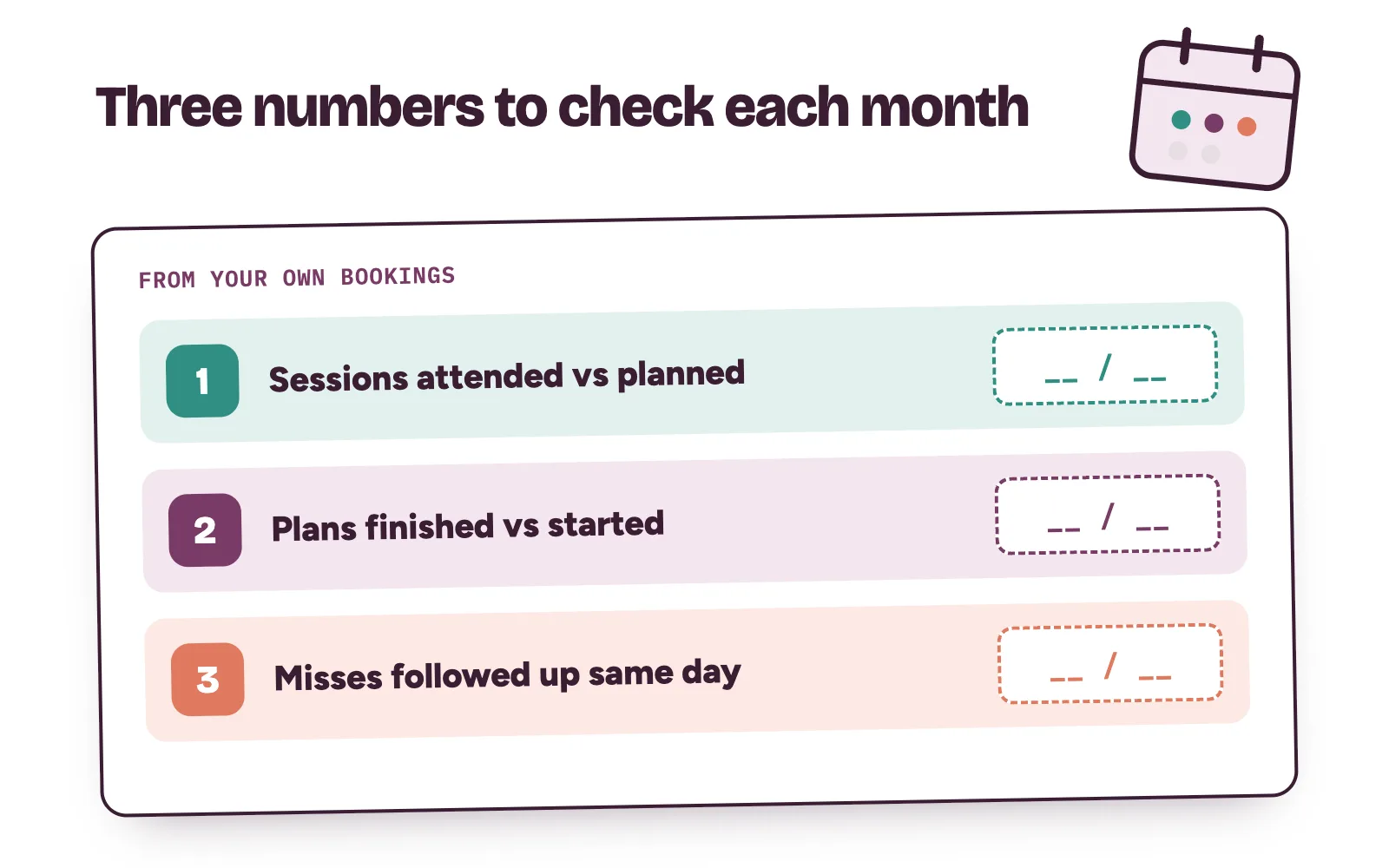
Track three numbers each month from your own bookings:
- Sessions attended against sessions planned, across all active plans.
- Plans finished, out of plans started that month.
- Missed sessions followed up the same day, out of all missed sessions.
If the first two rise while the third stays high, the habits are working. If a physio’s plans stop early more often, look at how that physio explains the plan at the assessment.
How Kren helps physio clinics keep plans booked
Kren is a done-for-you growth partner for private clinics in Lagos and Abuja. For physiotherapy clinics, we set up the booking, reminder and missed-session follow-up flow, and train your team to run it. Your team does the treatment and the final follow-up that books the patient. For the wider picture, read our post on physiotherapy marketing in Nigeria.
On a 30-minute strategy call, we look at where plans drop off in your clinic and what to fix first.
Show me where my clinic is losing patients →
Questions clinic owners ask about physiotherapy patient retention
Should we ask patients to pay for the whole course upfront?
That is the clinic’s decision. Paying ahead can help some patients commit to the plan. Only sell the sessions your physio has recommended, and be clear about what happens if the patient stops early.
What if a patient says they already feel better?
Book them in for the next check-in so the physio can review progress. The physio then decides whether the plan should continue, change or end early.
How many reminders is too many?
One reminder the day before each session is enough for most patients. For a missed session, send one message and make one call, then hand it to the physio.
Can a reminder mention the patient’s condition?
Keep it out. Use the clinic name, the date and time, and a way to change the booking.