Blog · Growth · 5 min read
How to handle slow months in a private clinic
Quiet months come back every year. Find them in your own bookings, then start recall, content and ads early and use the time for training and maintenance.
By the Kren Agency team ·
Slow months in a private clinic are rarely a surprise. They tend to come back around the same time each year, which means you can plan for them. To get through the slow months clinic owners dread, find them in your own past bookings, start recall early, time content and ads to land before the quiet weeks, and use the extra time for training and maintenance.
Why do slow months keep catching clinics out?
Most clinics react to a quiet month once it has already started. By the time the front desk notices empty slots, it is too late for an ad or a recall message to fill them that month.
The fix is to treat slow months as part of the plan. If you already have a one-page clinic marketing strategy, add one line to it: which months are quiet, and what you start doing before each one.
1. Find your slow months in your own bookings
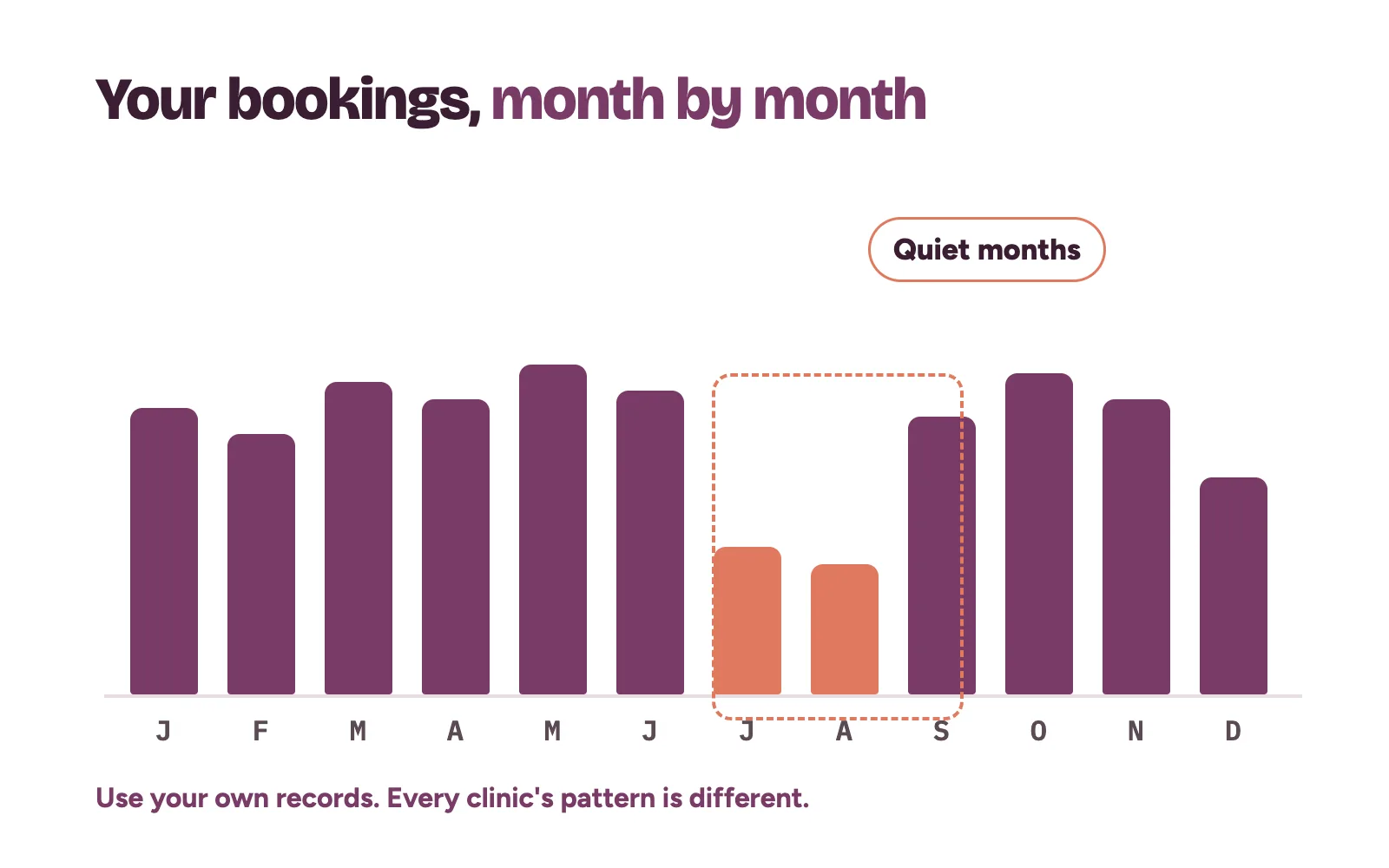
Don't rely on gut feeling or on what other clinics say. Your own records are the only data that counts for your clinic.
- Pull your bookings for the last one to two years, month by month.
- Split them by your main treatments or services. A clinic can be busy overall while one service goes quiet.
- Mark the two or three weakest months.
- Next to each one, note what was happening: holidays, staff leave, an equipment breakdown, an ad that stopped.
Some dips have an outside cause you can't change. Others turn out to be self-inflicted, like a month when nobody answered enquiries properly. Those are the easiest to fix.
2. Start recall before the slow month arrives
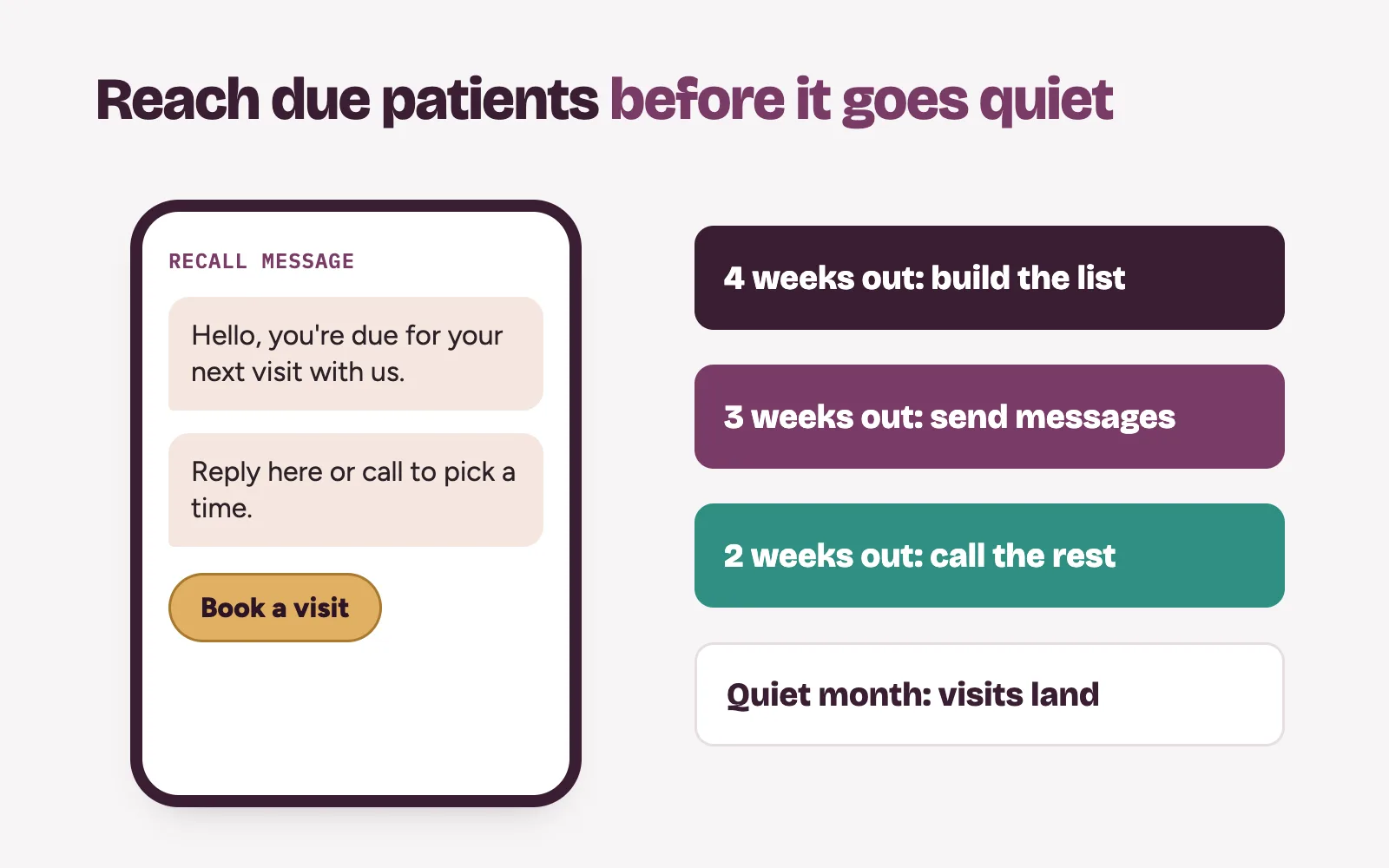
Your cheapest bookings come from patients who already know you. Every clinic has people who are due back: routine check-ups, reviews, unfinished treatment plans, people who enquired and never booked.
Build a list of these patients a few weeks before each slow month. Then reach out by message or phone so their visits land in the quiet weeks. Keep the wording simple and private: their name, that they are due a visit, and how to book. No treatment details in the message.
Our post on keeping patients coming back covers recall in more depth. Recall works well as a steady habit across the year, with an extra push before the months you know are quiet.
3. Time content and ads to land before the quiet weeks
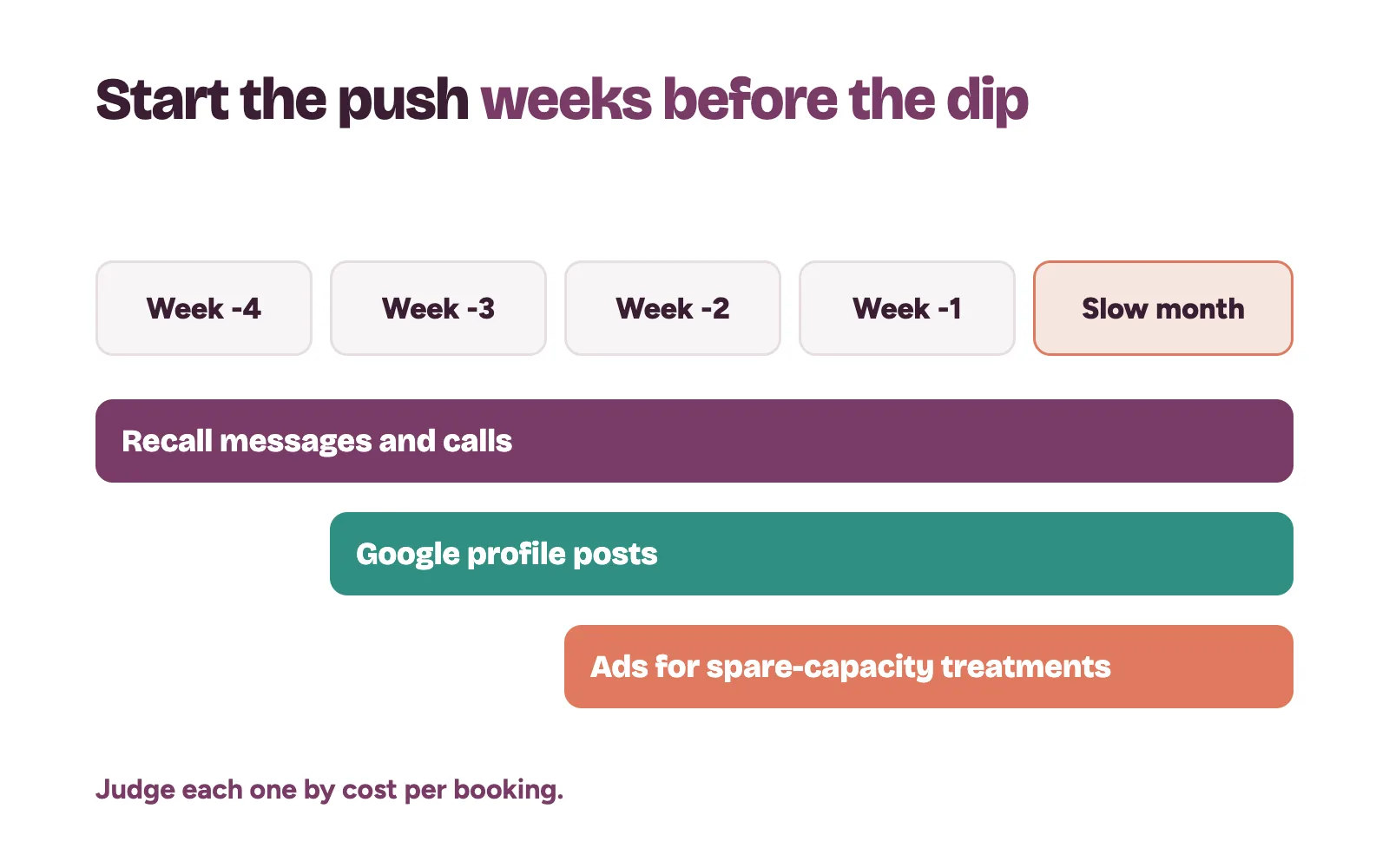
Ads and posts take time to turn into bookings. A patient sees an ad, thinks about it, asks a question, then books. If you start the day the month goes quiet, most of those bookings arrive too late.
Start two to four weeks before. Point everything at one or two treatments where you have spare capacity.
- Google Business Profile. Google lets you publish updates, offers and events on your profile. Offers and events carry start and end dates, and you can schedule a post to go out later. Our post on profile posts and photos shows what to publish.
- Google Ads. Campaigns show at any time by default. Google's ad scheduling lets you limit ads to the days and hours when your team can respond.
- Social posts. Answer the questions patients ask about the treatment you want to fill, a few weeks ahead.
Judge each channel by what it costs per booking. And keep every ad within your professional body's advertising rules: no promised outcomes, no exaggerated claims.
4. Train the front desk while the phones are quiet
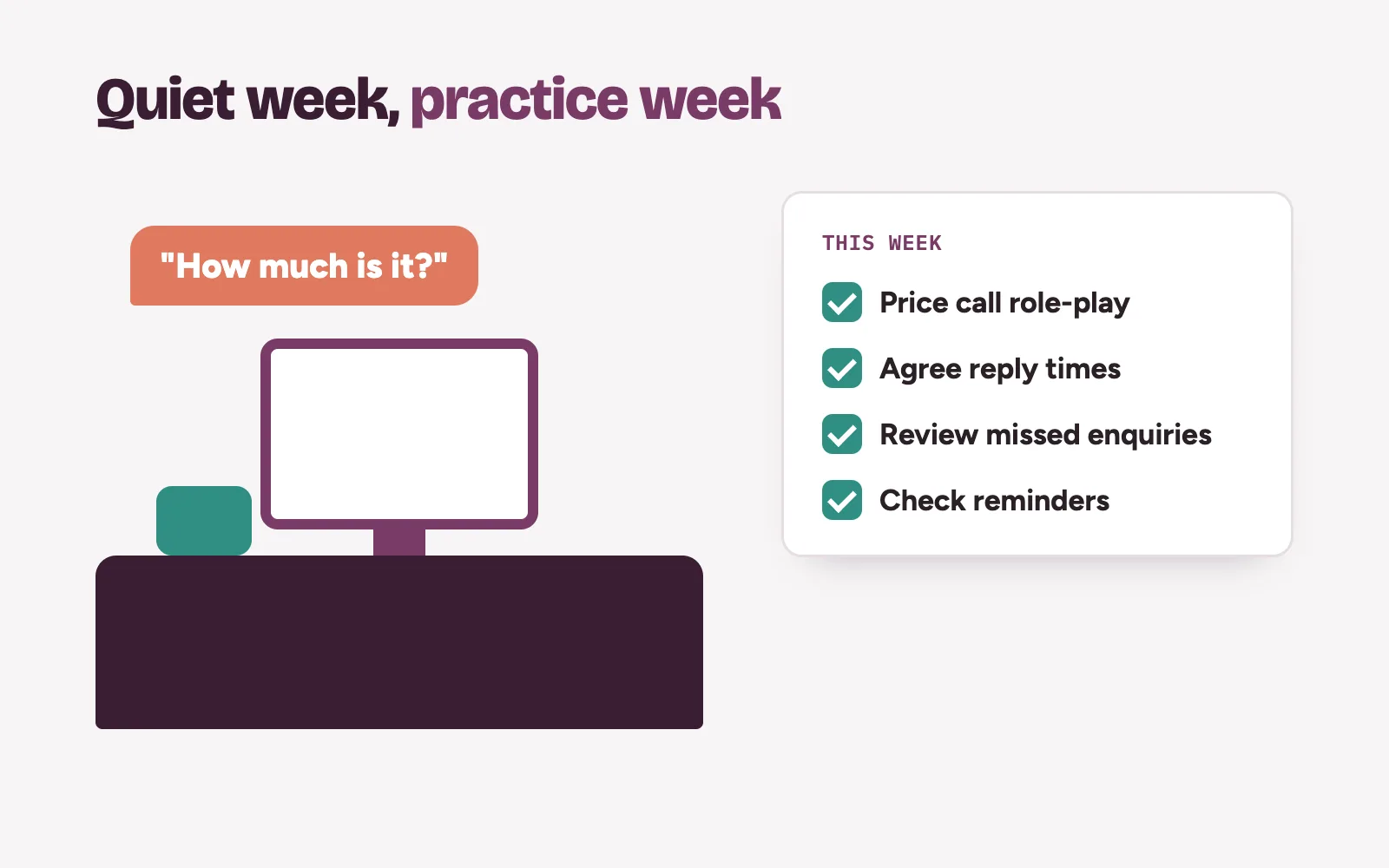
A quiet week is the right time to sharpen the people who turn enquiries into bookings. In busy months, nobody has time to practise.
- Role-play the "How much?" call until every answer sounds calm and clear.
- Agree a reply time for calls, messages and forms, and who covers breaks.
- Go through last month's missed enquiries together. Who followed up, and what happened?
- Refresh how reminders and confirmations go out so fewer booked patients miss visits.
Our post on front desk customer service has scripts and habits worth practising. When the busy season returns, a sharper team books more of the same enquiries.
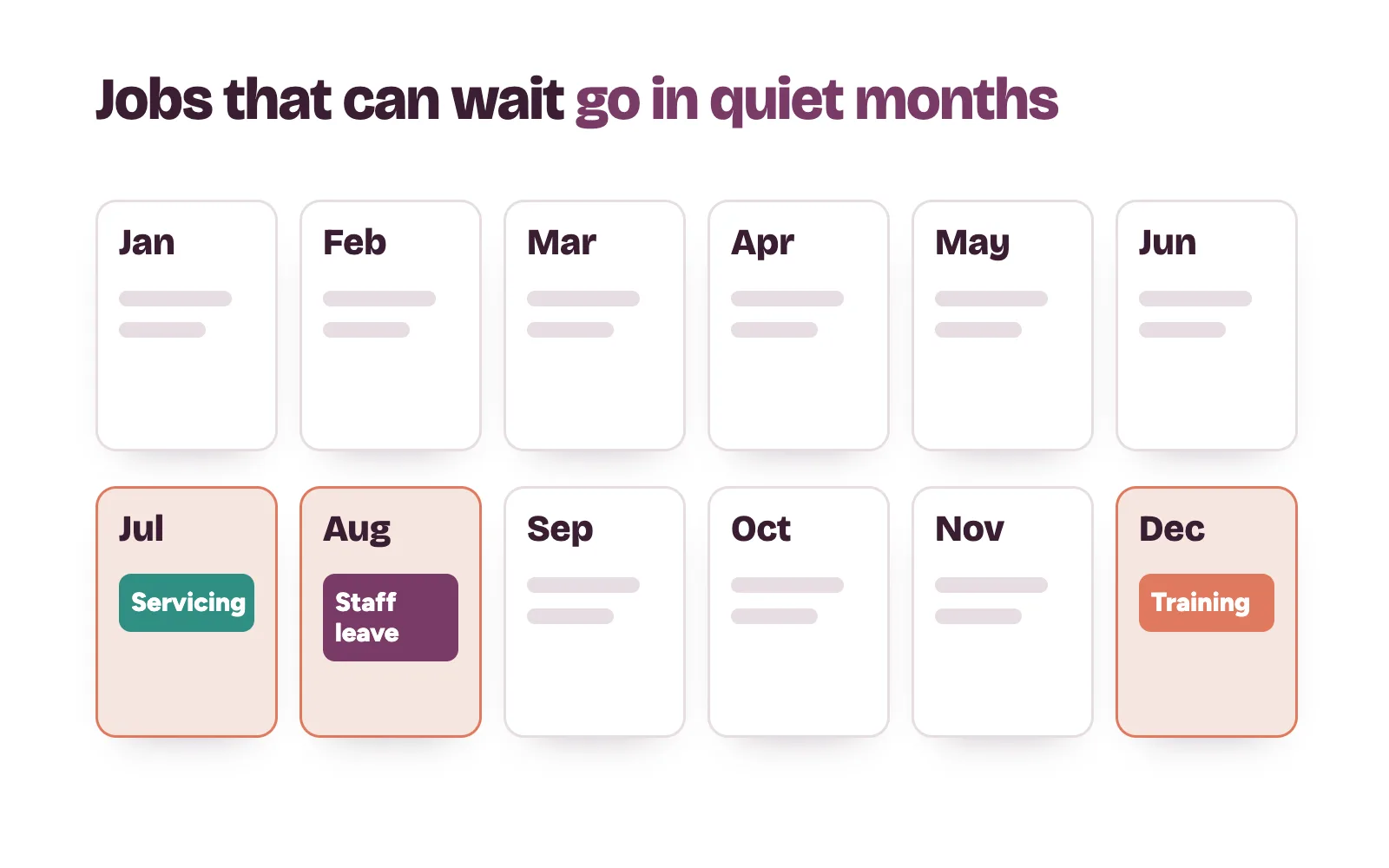
5. Book maintenance and admin into the slow months
Some work always gets pushed back because the clinic is too busy. Move it into the months your records show are quiet.
- Equipment servicing and repairs, so nothing breaks in a busy month.
- Staff leave and training courses.
- Licence and registration renewals that fall due.
- New photos for your Google profile and website.
- Updating treatment pages, prices and booking details on your website.
Planned this way, the slow months clinic teams used to waste become the months that set up the rest of the year.
How Kren keeps bookings steadier all year
Kren is a done-for-you growth partner for private clinics in Lagos and Abuja. We set up and run the website, Google, ads and follow-up automations, and time the push around your quiet months. Your own team does the final follow-up and booking.
On a 30-minute strategy call, we look at where your clinic loses patients and what to start before your next slow month. Show me where my clinic is losing patients →
Questions clinic owners ask about slow months
How early should a clinic prepare for a slow month?
Start a few weeks before. Build the recall list and plan content about a month ahead, then start ads two to four weeks before the quiet weeks so enquiries have time to turn into bookings.
Should we offer discounts in a slow month?
A discount can fill gaps, but it can also teach patients to wait for the next one. Recall and well-timed promotion of treatments with spare capacity usually come first. Any offer you advertise must follow your professional body's rules.
Should we cut the marketing budget when bookings drop?
Cutting during the dip often makes the next month quieter too. Shift spend instead: start earlier before known slow months, and move money to the channels with the lowest cost per booking.
What if we don't have records of past bookings?
Start logging today: bookings by month and treatment, and where each enquiry came from. After a year you will see your own pattern, and you can plan the next one around it.