Blog · SEO · 5 min read
What is SEO? A plain explanation for clinic owners
How Google finds, stores and shows clinic pages, the difference between local and website SEO, and the shortcuts that get clinics pushed down.
By the Kren Agency team ·
What is SEO? It is the work of helping Google understand your clinic’s pages, so they show up when people nearby search for the care you offer. For a clinic owner, good SEO means your website and Google profile appear for the treatments you sell, and give the searcher a clear reason to book.
What is SEO, in plain words?
SEO stands for search engine optimisation, and the idea is simple. Google’s own SEO starter page on Search Central describes it as helping search tools like Google understand your content, and helping people find your site and decide to visit.
That second half matters most for a clinic. Showing up is only useful if the page answers the patient’s questions and makes booking easy.
Search results also cost nothing per click. Ads stop when the budget stops. A strong treatment page can keep bringing enquiries for years.
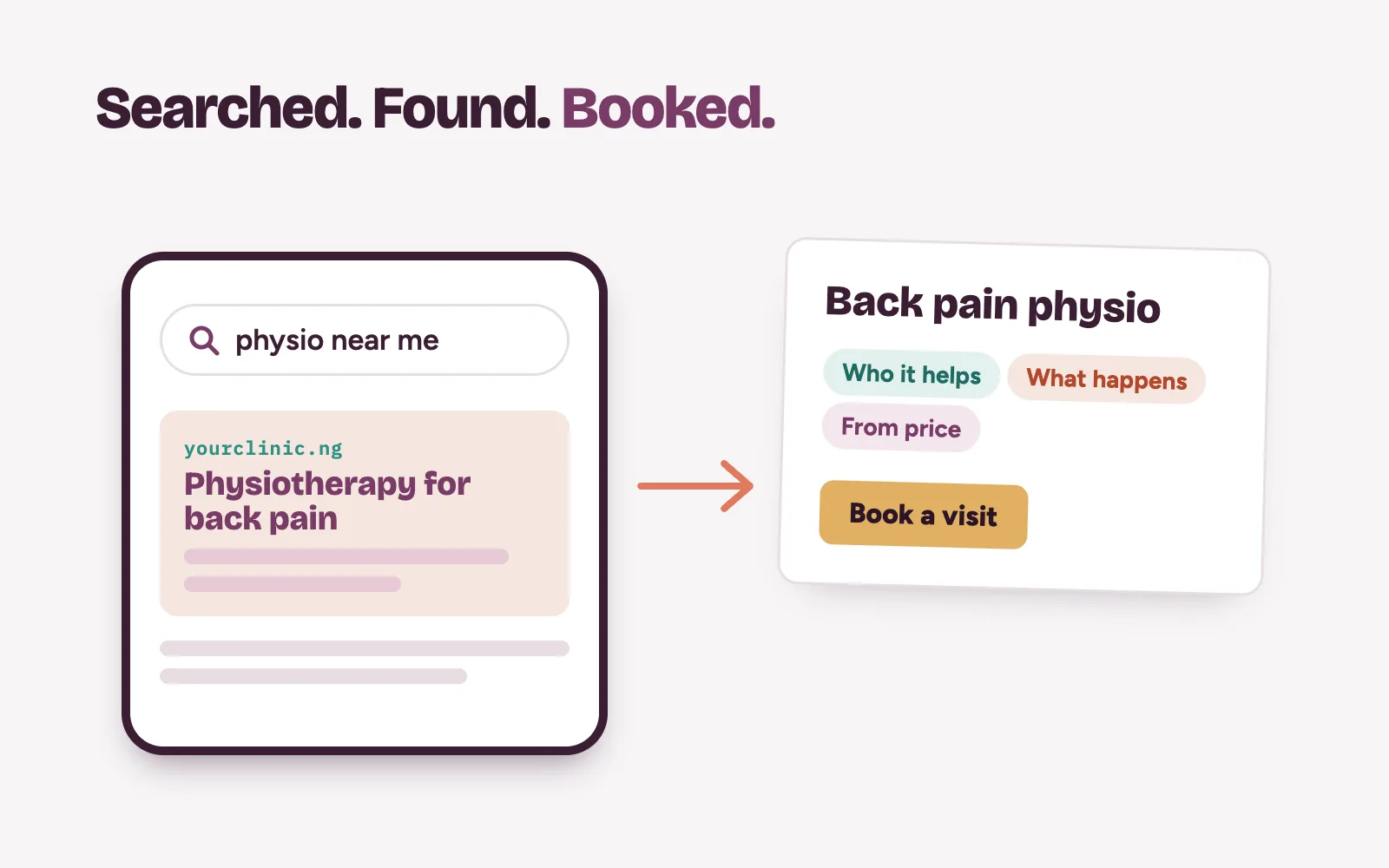
How does Google find, store and show clinic pages?
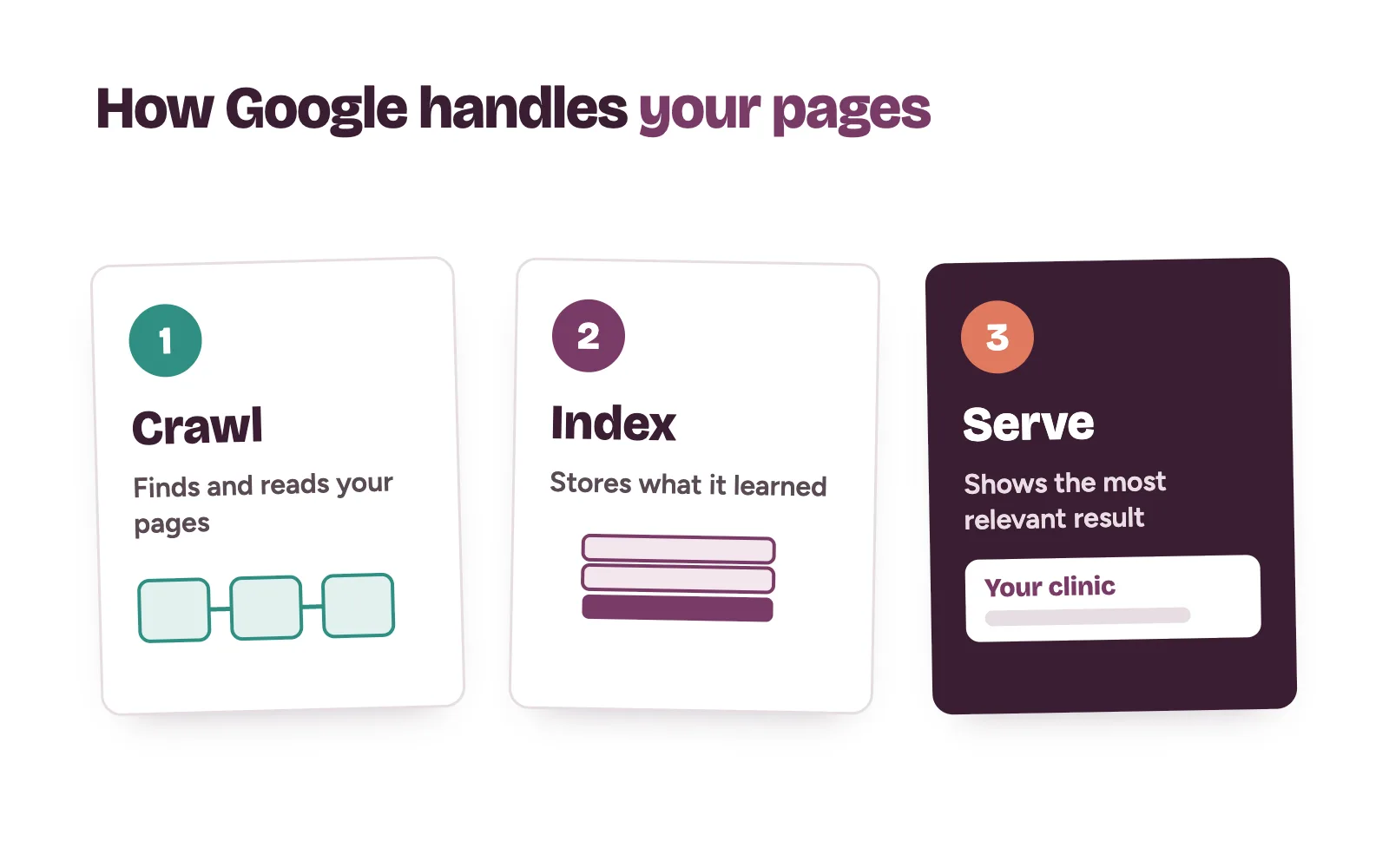
Google’s search works in three stages:
- Crawling. Automated programs called crawlers download the text, images and videos on pages they find. Google finds most pages through links from pages it already knows.
- Indexing. Google analyses each page and stores what it learns in a huge database called the index.
- Serving. When someone searches, Google shows the results it judges most relevant. Their location, language and device all play a part.
Google says it does not take payment to crawl a site more often or rank it higher. Every clinic starts on the same terms.
To see whether Google has your site, search site: followed by your domain, for example site:yourclinic.ng. If your pages appear, you are in the index.
Local SEO vs website SEO: what is the difference?
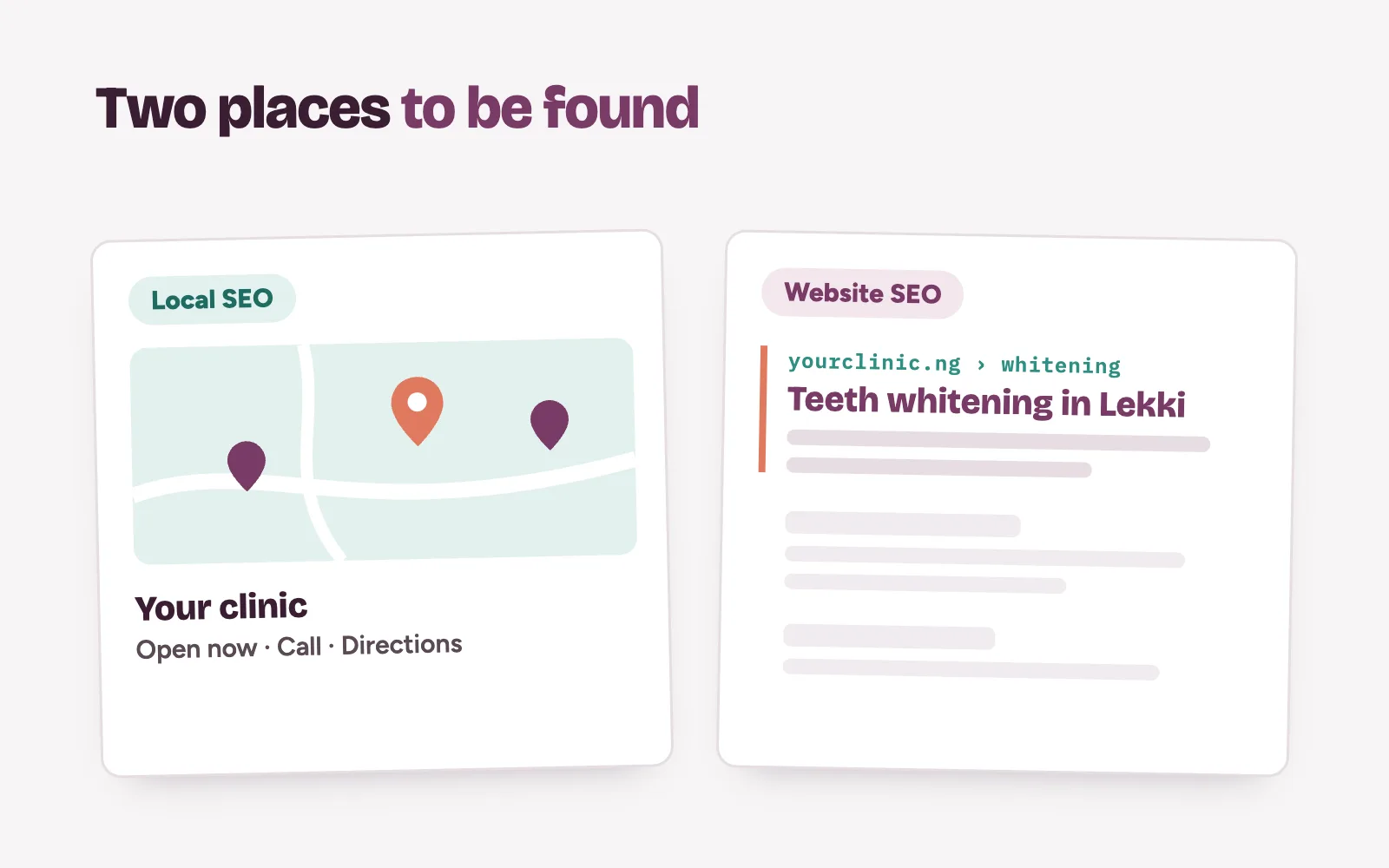
Clinics compete in two places on Google. Both matter.
- Local SEO is about your Google Business Profile. It decides how you show on Google Maps and the map results for searches like “dentist near me”. Complete details and reviews help.
- Website SEO is about your own pages. It decides how you show in the main list of results for searches like “teeth whitening cost Lekki”. Clear treatment pages that answer questions help.
Google’s local ranking help page says local results depend mainly on relevance, distance and how well known the business is. It adds that clinics with complete, accurate details are more likely to show, and that more reviews and positive ratings can help. There is no way to pay for a better local ranking.
Setting the profile up properly is covered in our post on Google Business Profile for clinics.
What should a clinic do for SEO?
Most clinics need the same five things, done well:
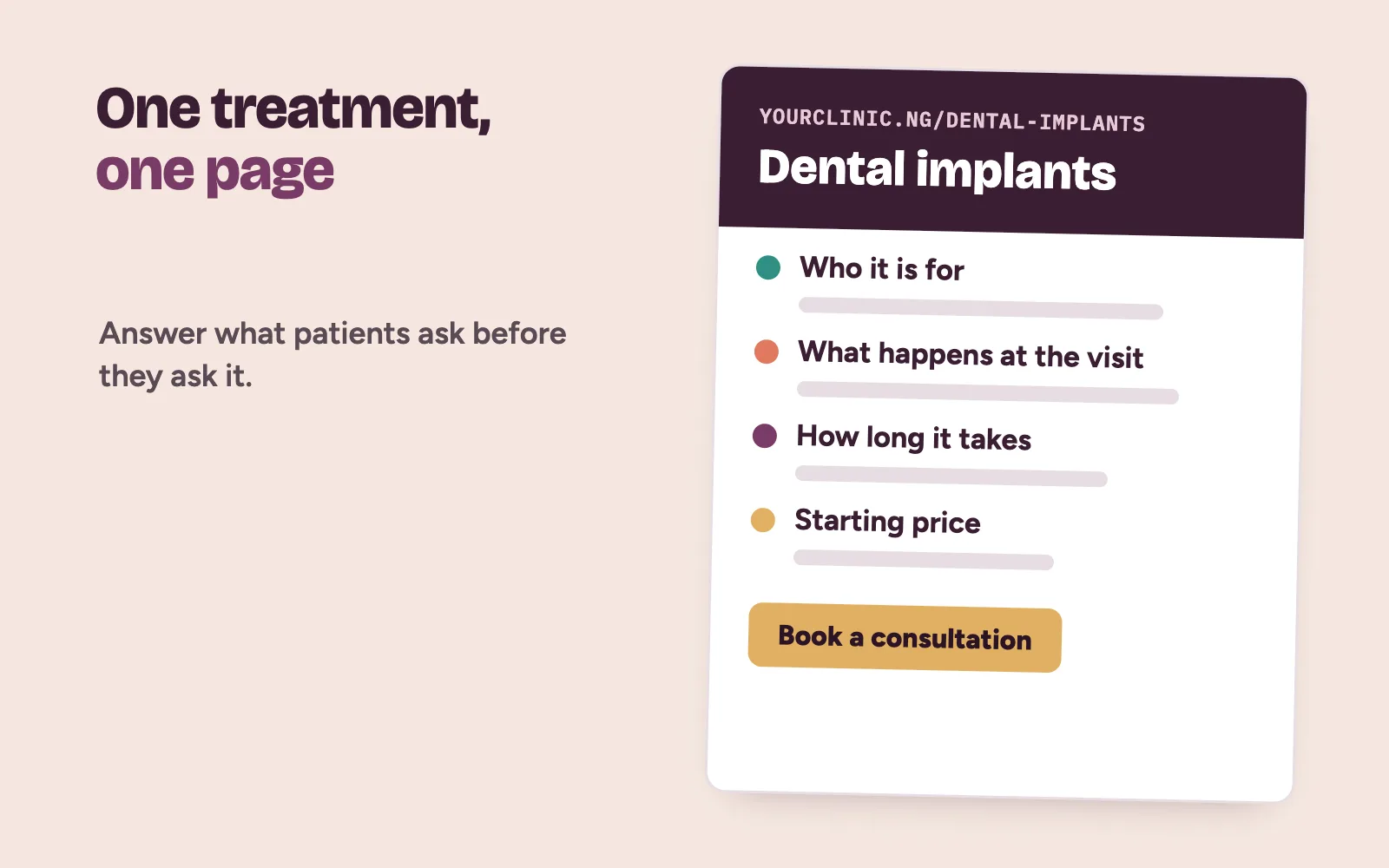
- One page per treatment. Implants, fertility consultations, physiotherapy for back pain. Each gets its own page with a clear address, such as /dental-implants.
- A clear title and description for every page. Google advises a title that is unique, concise and describes the page.
- Content that answers patient questions. Who the treatment is for, what happens at the visit, how long it takes, what it costs or a starting price, and how to book. Promise no outcomes.
- A complete Google Business Profile. Correct hours, category, phone, photos and a link to your site.
- Steady, genuine reviews. Ask every patient and reply to every review. Our post on getting more Google reviews shows how to ask.
Describe your images too. Google calls alt text a short, descriptive line that explains how an image relates to the page.
What SEO tricks should a clinic avoid?
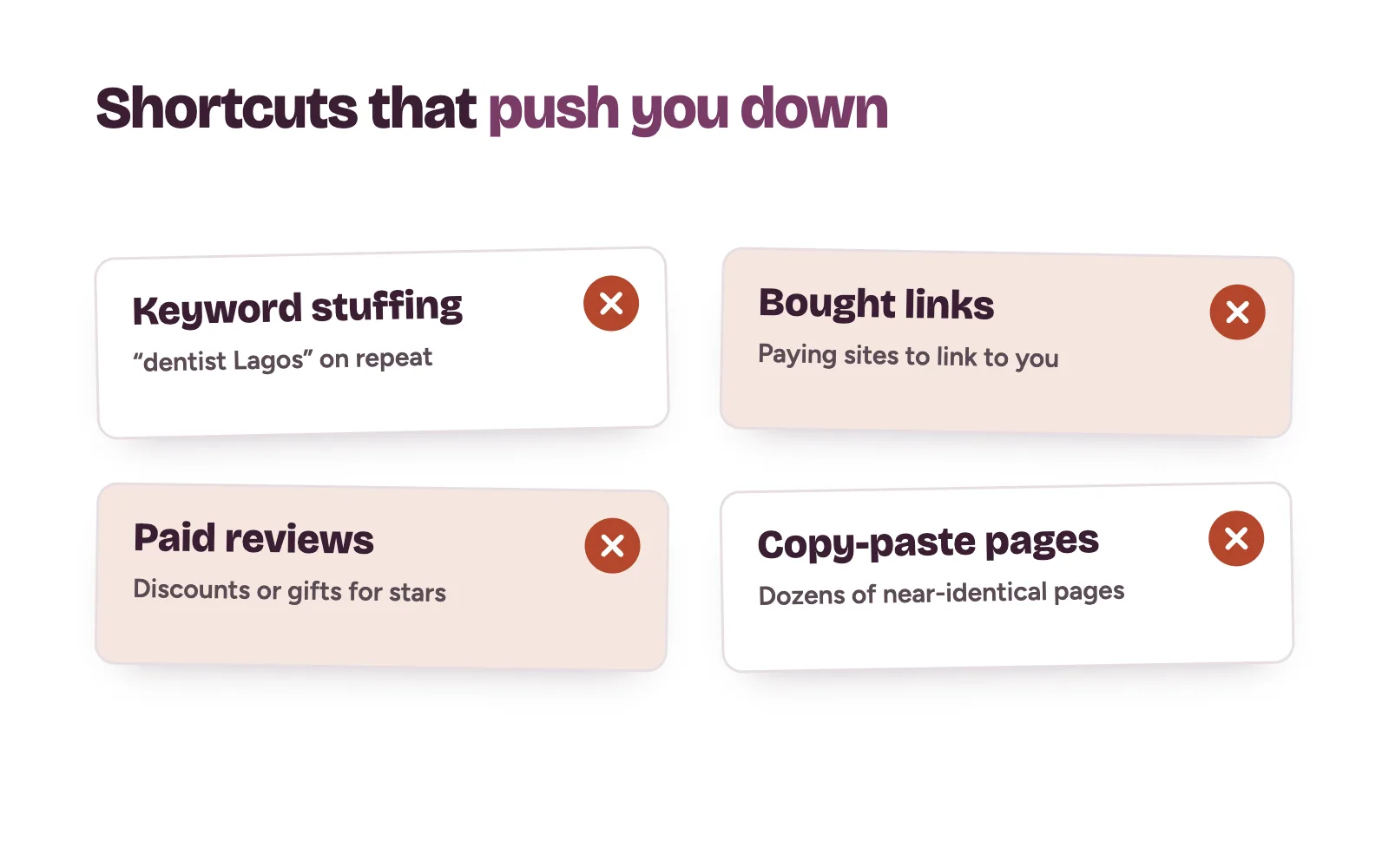
Some shortcuts get a site pushed down. Google’s spam policies say sites that break them “may rank lower in results or not appear in results at all.”
- Keyword stuffing. Repeating “dentist Lagos” twenty times on a page. Google treats this as spam.
- Buying links. Paying other sites for links to push your ranking is listed as link spam.
- Fake or paid reviews. Google Maps removes reviews paid for with money, discounts or free treatment. Asking only happy patients for reviews is also against the rules.
- Mass-produced pages. Dozens of near-identical pages made to rank, with little real help in them.
A few things matter less than people think. Google does not use the keywords meta tag. Keywords in your domain name have hardly any effect. And length alone does not decide ranking.
How long does SEO take to work?
Google says changes can show in a few hours or take several months. It suggests waiting a few weeks before judging whether a change worked.
Judge SEO by enquiries and bookings, not by rankings alone. Count calls and messages from your Google profile, and ask each new patient how they found you. Our post on lead generation for clinics shows how to track each source.
How Kren handles SEO for clinics
Kren is a done-for-you team for private clinics in Lagos and Abuja. We build treatment pages that answer patient questions, keep your Google profile complete and run steady review requests as part of our lead generation work. Your own team does the final follow-up and booking.
On a 30-minute strategy call, we look at how patients find you today and where they drop off. Show me where my clinic is losing patients →
Questions clinic owners ask about SEO
Can we pay Google to rank higher?
No. Google says it does not accept payment to rank a site higher in search results, and there is no way to pay for a better local ranking. Google Ads are a separate, paid placement.
Do we need a blog for SEO?
Not before you have strong treatment pages. Start with one clear page per treatment and a complete Google profile. Add posts later if they answer real questions your patients ask.
Is SEO only about our website?
No. For a clinic, your Google Business Profile is often where patients find you first. Local SEO and website SEO work together, so both need attention.
How do we know if our SEO is working?
Watch enquiries and bookings from Google, month by month. Check calls and website clicks in your Google profile, and log how each new patient heard about you.