Blog · Leads · 5 min read
Lead generation for clinics: how to get more patient enquiries
Where clinic enquiries come from, how to track each source, how to work out cost per booking, and why reply speed decides who gets the patient.
By the Kren Agency team ·
Lead generation for clinics means getting more people to call, message or fill a form asking to see you. It works when you know where each enquiry came from, what it cost, and how many turned into booked patients. Here is how to map your sources, measure them and stop losing the enquiries you already pay for.
Why don’t more enquiries always mean more patients?
Many clinics judge their marketing by how busy the phone feels. A busy week feels good. Then month-end comes and the bookings don’t match the noise.
Usually three things are missing. Nobody knows which source sent which patient. Nobody knows what each booked patient cost. And some enquiries wait hours for a reply, so they book somewhere else.
Fix those three and every naira you spend starts to show its return.
Where do patient enquiries come from?
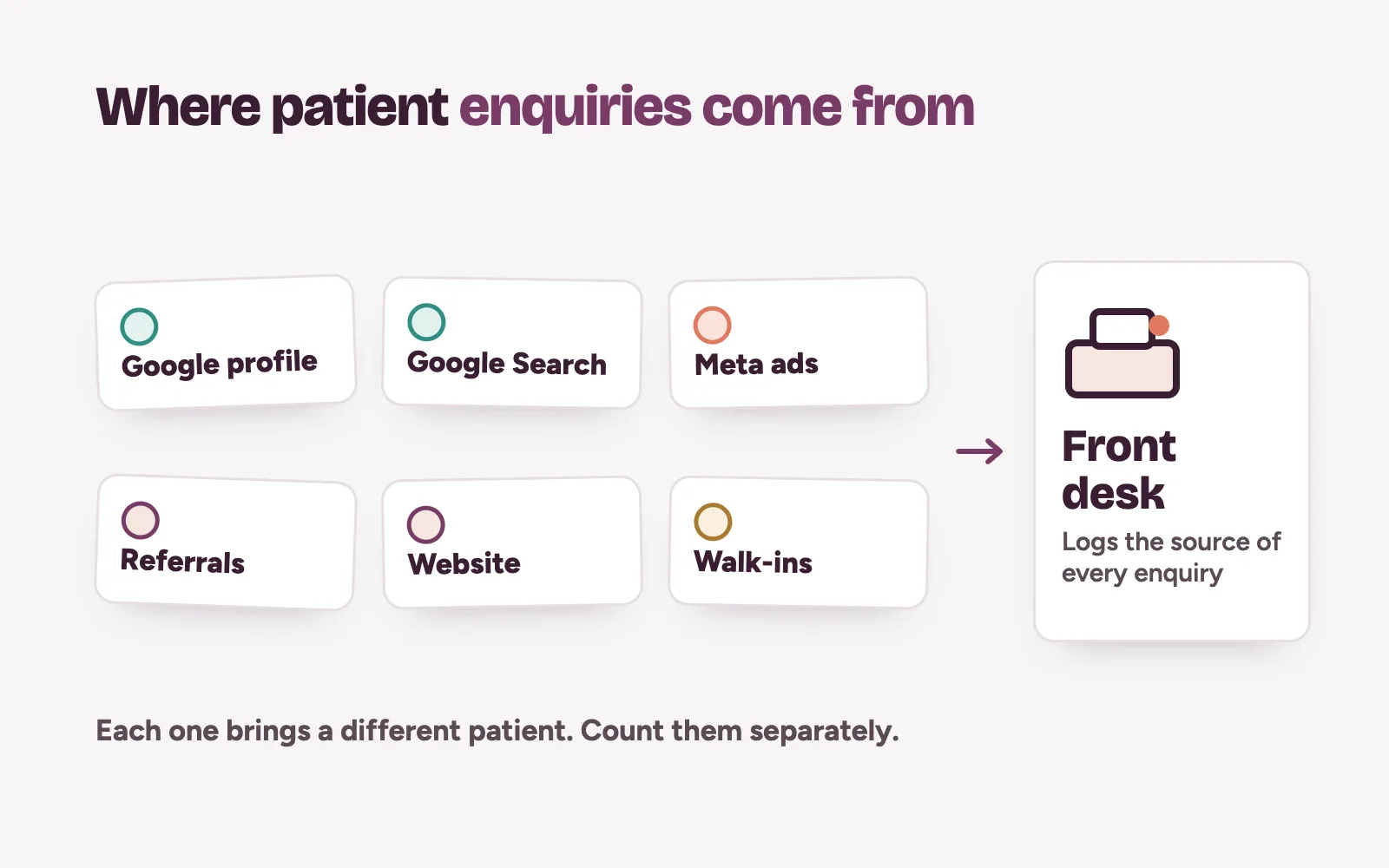
Most private clinics in Lagos and Abuja get enquiries from six places:
- Google Business Profile. People search “dentist near me” and tap call, directions or your website. Setting it up properly is covered in our post on Google Business Profile for clinics.
- Google Search. People search a treatment and land on your website.
- Meta ads. Facebook and Instagram ads that ask for an enquiry. See how Meta Ads Manager works for clinics.
- Referrals. Patients, family and other doctors who send people to you.
- Your website. Booking forms, call buttons and chat links on treatment pages.
- Walk-ins. People who pass the building or work nearby.
Each source brings a different kind of patient. Referrals often arrive ready to book. Ad enquiries often need more follow-up. Count them separately.
How do you track where each enquiry came from?
You need three simple habits. None of them needs new staff.
Read your Google Business Profile performance
Google’s Business Profile performance page shows calls (taps on the call button), website clicks, direction requests and message conversations. It also lists the search terms people used to find you. The data is only available for verified profiles. Check it monthly.
Tag your links
Add UTM tags to the links in your ads, posts and messages. Google Analytics then shows which campaign sent each visit. Use at least utm_source, utm_medium and utm_campaign, for example source “instagram”, medium “paid” and campaign “whitening-may”. The visits then show up by source in Analytics.
Ask every new patient
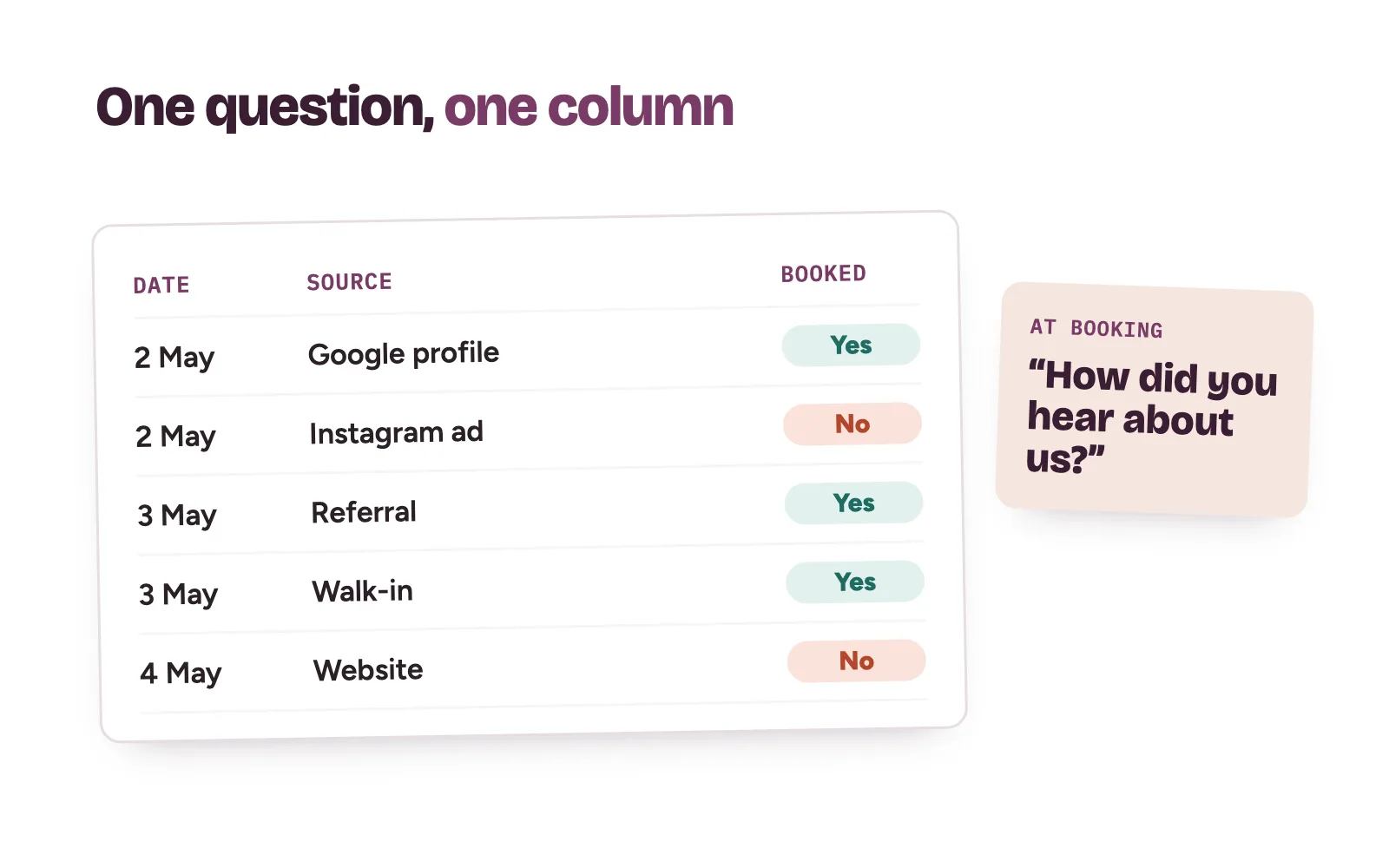
Calls and walk-ins leave no digital trail. Your front desk asks one question at booking: “How did you hear about us?” They log the answer next to the booking. A shared spreadsheet is enough.
How do you measure cost per enquiry and cost per booking?
Do this once a month for every paid source:
- Add up what you spent on that source: ad spend plus any fees.
- Count the enquiries it brought.
- Count how many of those enquiries booked.
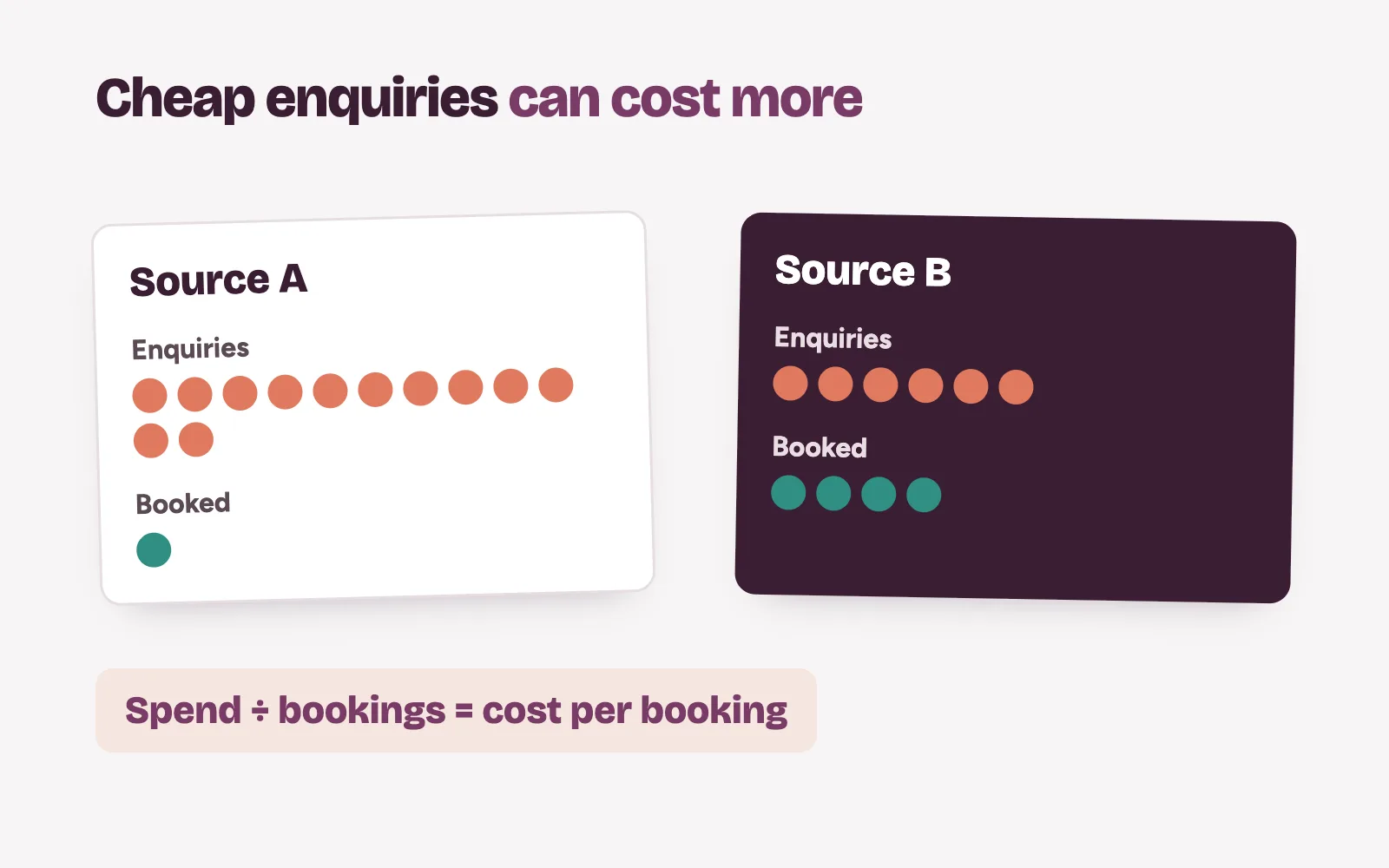
- Divide spend by enquiries. That’s your cost per enquiry.
- Divide spend by bookings. That’s your cost per booking.
Cost per booking is the number that matters. A source with cheap enquiries can still be your most expensive way to get a patient if few of them book.
For free sources such as referrals and your Google profile, track the count of bookings each month. If that count drops, something changed: reviews, photos, opening hours, or how fast the team answers.
How fast should a clinic reply to a new enquiry?
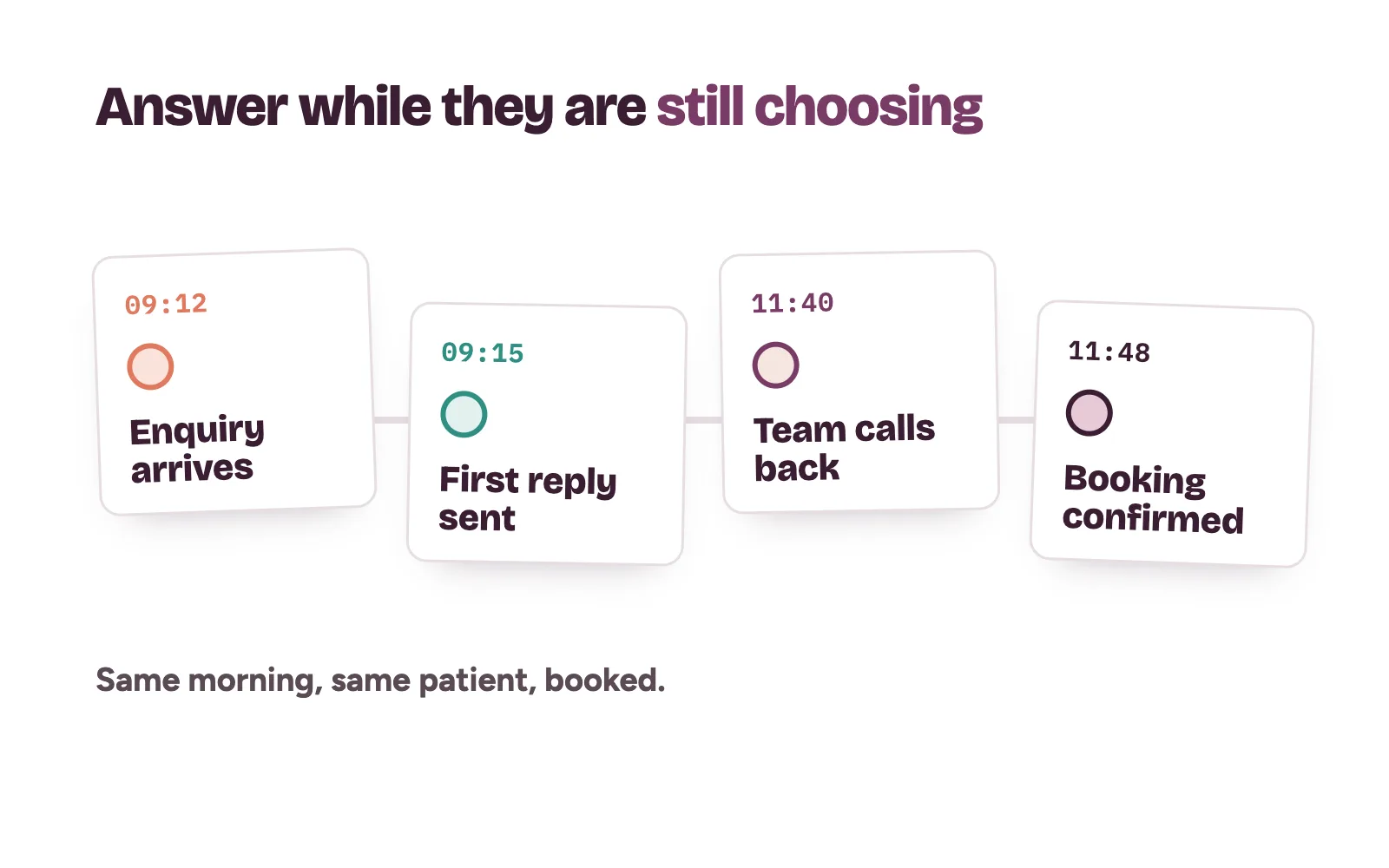
As fast as your team can manage during opening hours. An enquiry is a person comparing clinics right now. While they wait for you, another clinic can answer first.
- Set a reply target for opening hours and check it weekly.
- Send an instant first reply out of hours that says when the team will call back.
- Call back missed calls the same day.
- Follow up on enquiries that went quiet, once or twice, politely.
For many clinics, this is where paid enquiries quietly leak away. We go deeper on this in how to stop losing patients in your DMs.
What rules apply to clinic lead generation ads?
Medical advertising needs care. Your professional body’s rules apply: no promised outcomes, no exaggerated claims and no patient details without written consent.
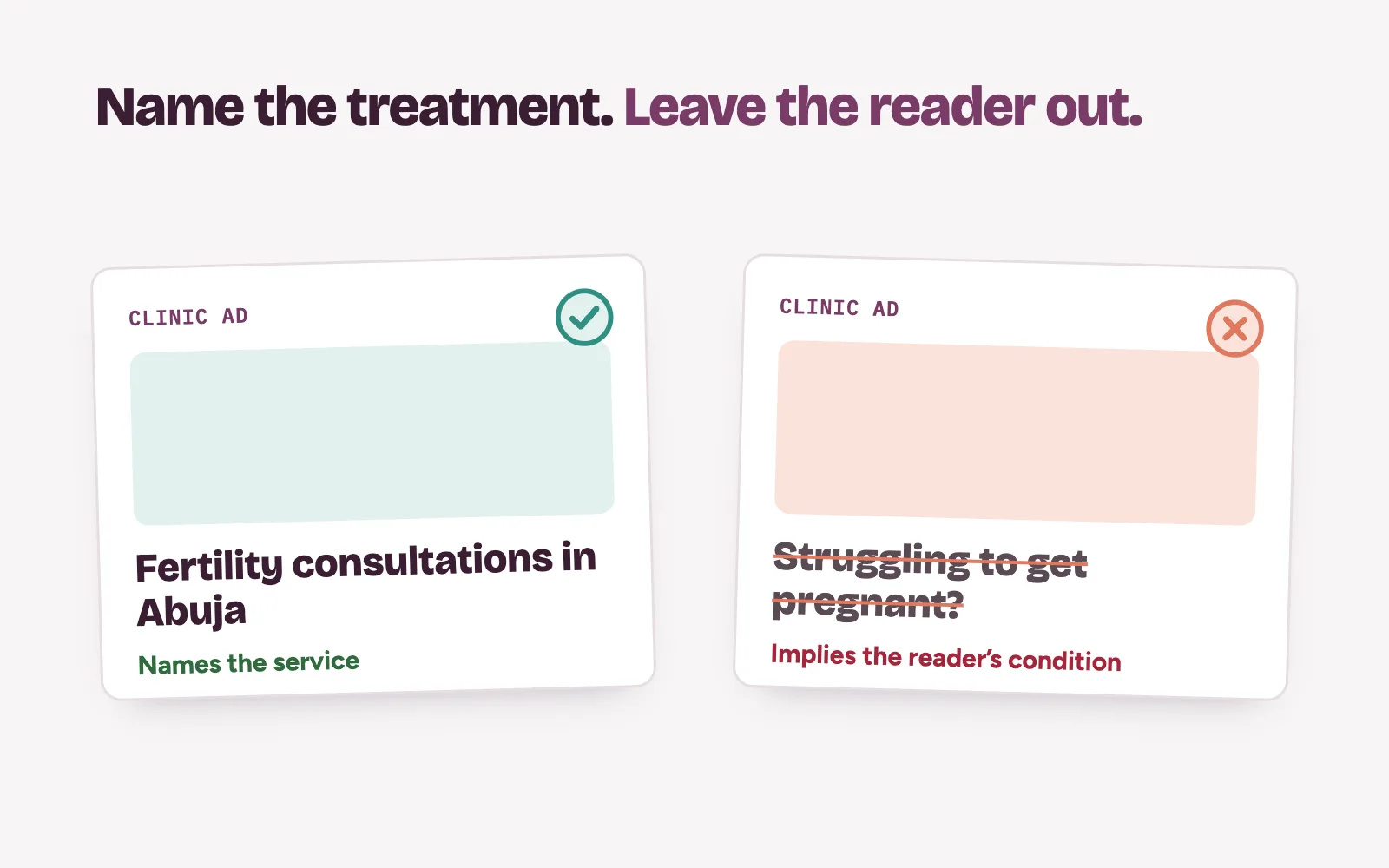
The ad networks add their own rules. Meta’s Advertising Standards bar ads that “imply knowledge of medical information of a user or user’s family.” Meta’s own example: “Do you have diabetes?” is not allowed, while “New diabetes treatment available” is.
So describe the treatment you offer and leave the reader’s health out of it. “Fertility consultations in Abuja” works. “Struggling to get pregnant?” does not.
The same care applies after the enquiry. Ask only what you need to book the visit, and keep medical history for the consultation.
How Kren handles lead generation for clinics
Kren is a done-for-you team for private clinics in Lagos and Abuja. Our lead generation work covers your Google profile, treatment pages and ads, with cost per booking tracked every month. We set up follow-up automations so every enquiry gets a fast first reply. Your own team does the final follow-up and booking.
On a 30-minute strategy call, we look at your enquiry sources and replies with you and show you where patients slip away. Show me where my clinic is losing patients →
Questions clinic owners ask about lead generation
Which lead generation source should a new clinic start with?
Start with your Google Business Profile, because people searching nearby are already looking for a clinic. Add ads once your front desk can answer enquiries quickly and log where each one came from.
How many enquiries should turn into bookings?
It varies by treatment, price and source, so your own numbers are the ones to watch. Track it monthly per source. A falling rate usually points to slow replies or weak follow-up.
Do we need a CRM to track enquiries?
Not to start. A shared spreadsheet with date, source, treatment interest and booked yes or no is enough. What matters is that the front desk fills it in for every enquiry.