Blog · Equipment · 5 min read
X-ray machine buying checklist for Nigerian clinics
What to settle before buying an X-ray machine: the type you need, NNRA authorization, room shielding, supplier checks, NAFDAC registration, installation and service.
By the Kren Agency team ·
Before you buy an X-ray machine for a clinic in Nigeria, plan the room and the paperwork as carefully as the machine. The Nigerian Nuclear Regulatory Authority (NNRA) authorizes diagnostic radiology facilities, and its requirements cover premises, shielding, staff, safety and equipment. Settle those first, then choose a supplier who can install, test, service and train.
This checklist sits beside our hospital equipment list for a new clinic and our post on how to choose a medical equipment supplier. This one covers what makes X-ray different: radiation, and its rules.
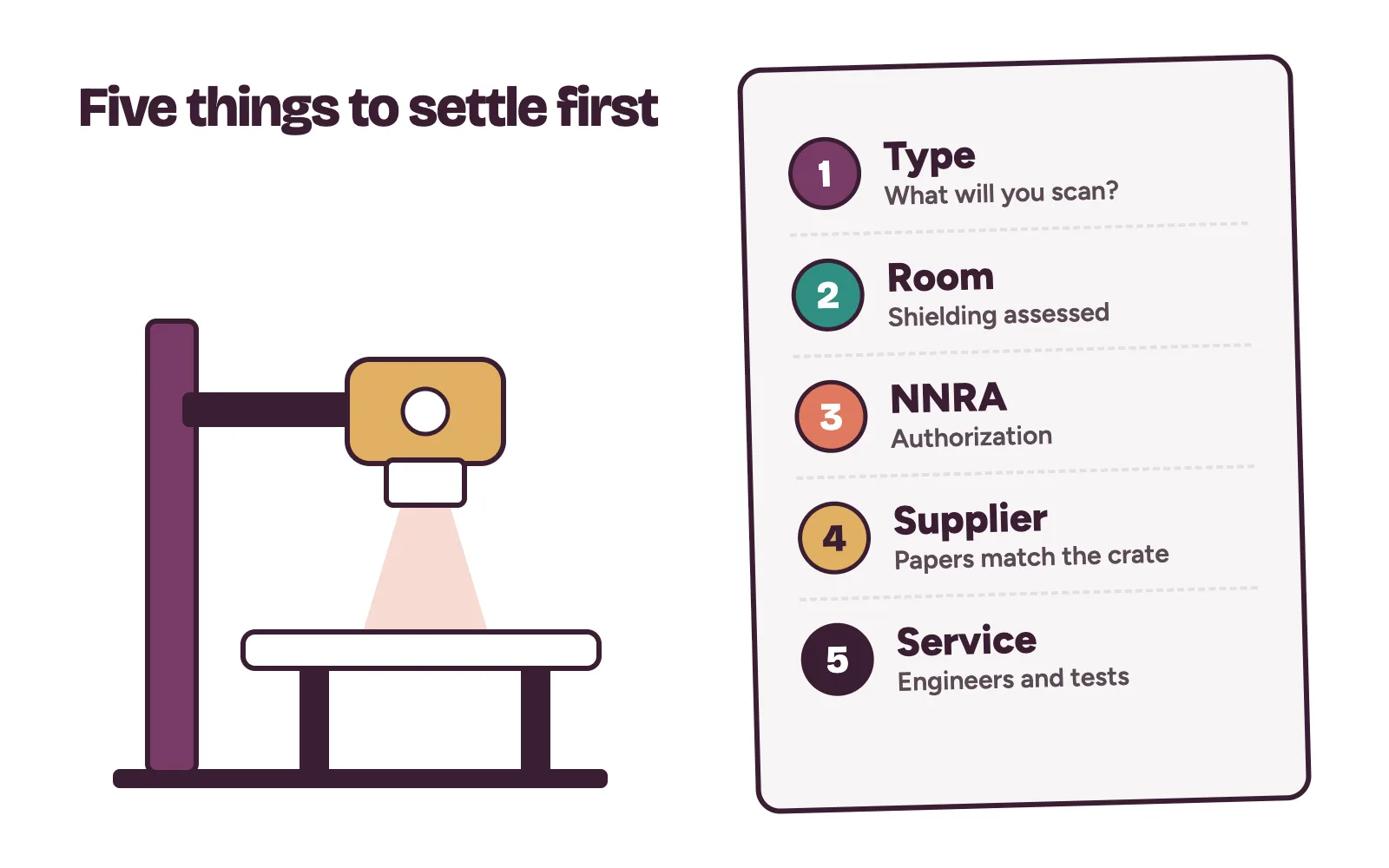
Which type of X-ray machine does your clinic need?
Start from the work. Ask your radiologist or radiographer which examinations the clinic will do, and how many a day. That narrows the field fast.
- Fixed room units live in a dedicated X-ray room.
- Mobile units move to where the patient is. Safety arrangements still apply wherever they are used.
- Dental units cover intraoral and panoramic images.
- Specialist units such as mammography. The NNRA lists separate acceptance tests for mammography units.
Then decide how images are captured. Film needs a darkroom, and the NNRA lists a separate authorization for radiographic darkrooms. Digital capture needs computers, viewing screens and safe storage.
What does the NNRA require before you use an X-ray machine?
The NNRA's minimum requirements for diagnostic and interventional radiology ask a facility to show, among other things:
- Company and registration papers. Certified CAC documents, registration with the Federal Ministry of Health and relevant medical bodies, and a tax clearance certificate from FIRS.
- Safety people. An NNRA-accredited Radiation Safety Adviser, and a Radiation Safety Officer you designate in the clinic.
- Staff monitoring. An NNRA-accredited Dosimetry Service Provider to monitor staff who operate the machines, with written policies for badges and dose reviews.
- Qualified staff. Enough trained, qualified people, with CVs on file and a retraining programme.
- Equipment evidence. Survey meters with valid calibration certificates, an operation manual and proof of quality control tests.
- Written rules. Local rules for how the machine is used, and an emergency programme that includes NNRA's contact numbers.
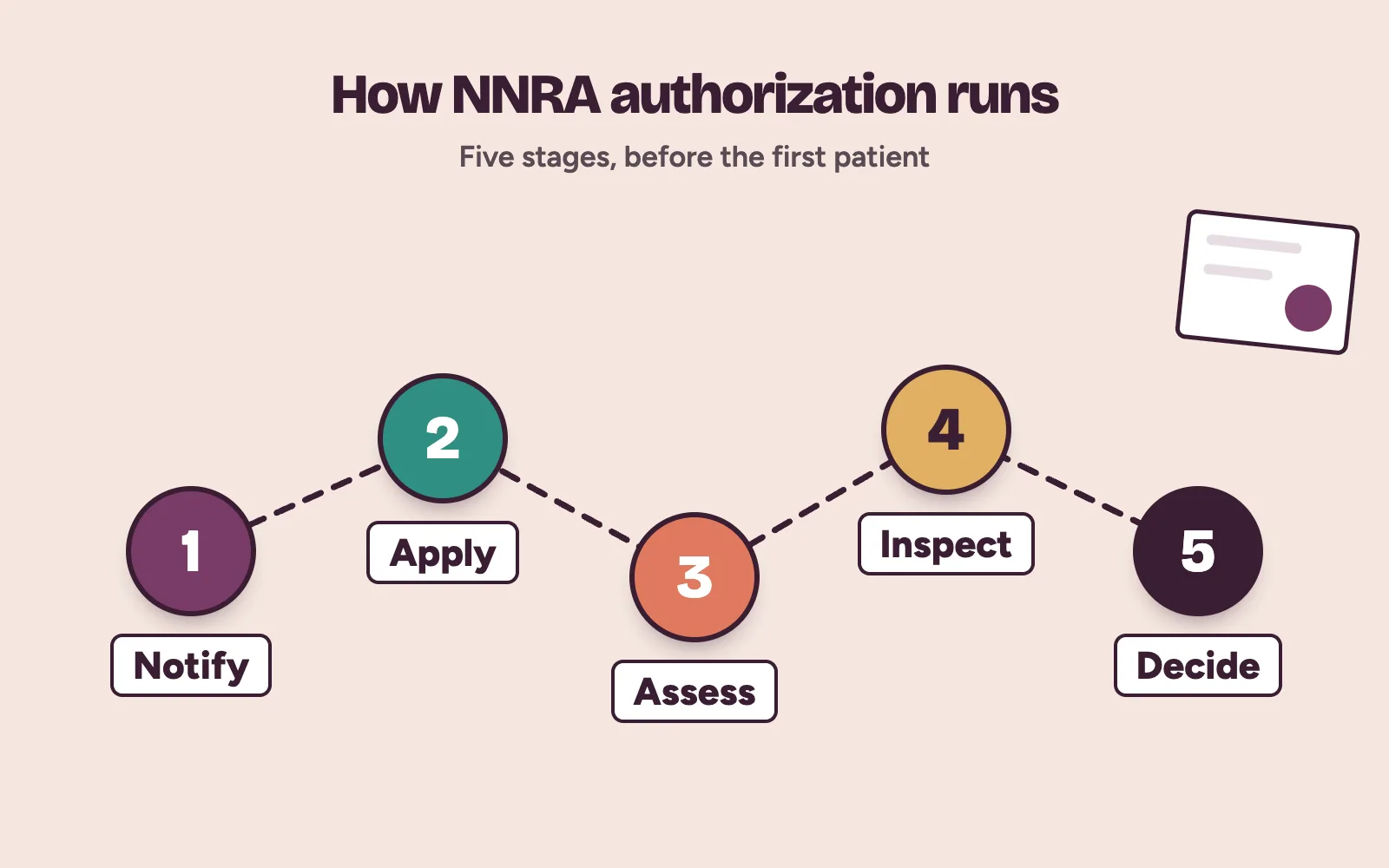
The process runs in five stages: notification, application with fees, assessment, inspection, then a decision. The NNRA says its list is not exhaustive, so confirm current requirements and fees with it before you commit.
Plan the X-ray room before you order
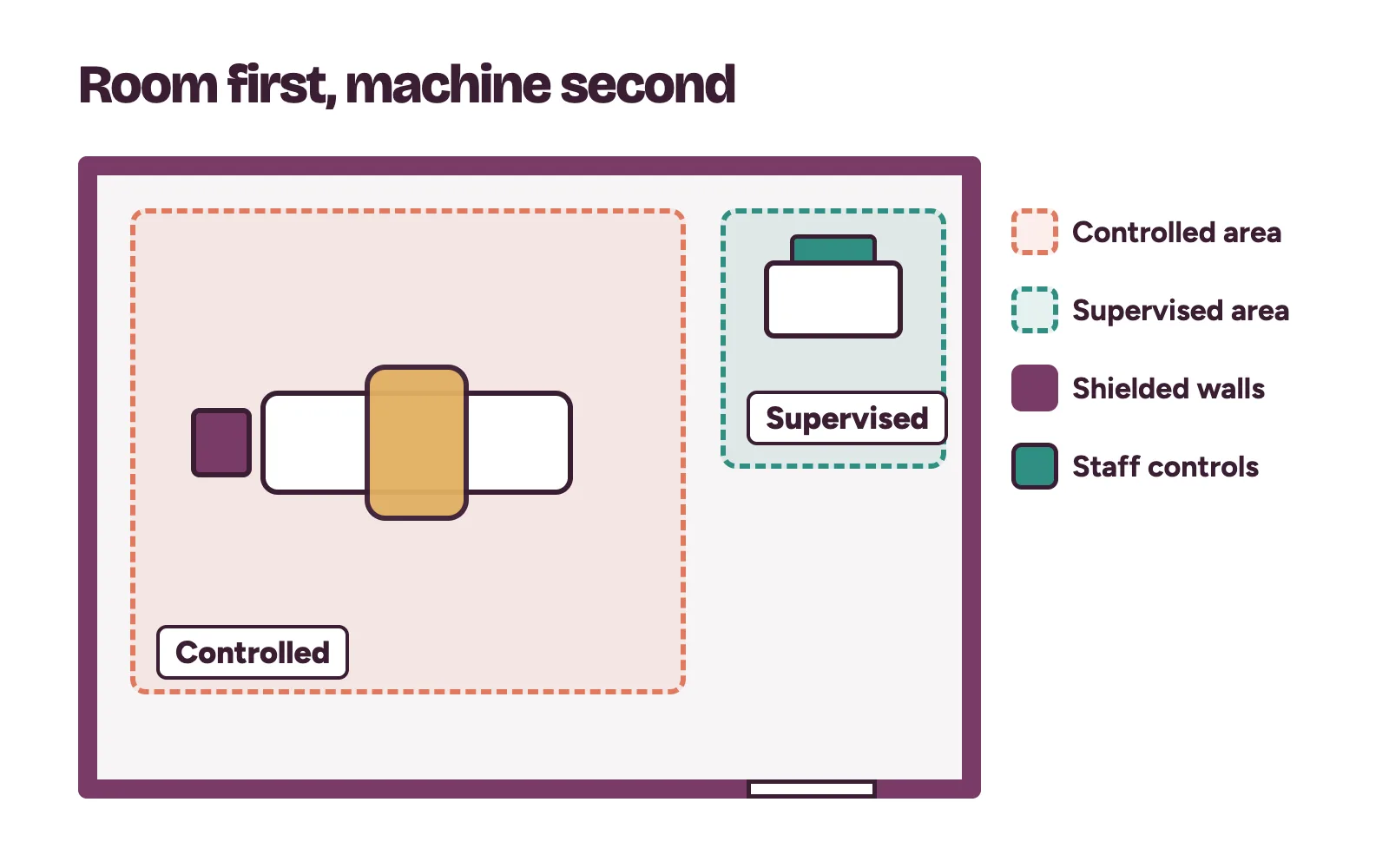
The NNRA asks for a purpose-built facility, a layout plan, a shielding assessment, and the controlled and supervised areas clearly marked. So the room comes first.
- Bring in your Radiation Safety Adviser early, before builders start.
- Get the shielding assessment for the exact machine and the exact room.
- Build to that assessment. Walls, doors and windows should match what it specifies.
- Plan the patient route: waiting, changing, the room itself, and where staff stand during an exposure.
- Ask the supplier for power and space needs in writing, and check them on site.
Fixing a room later costs weeks without X-ray bookings.
Check the supplier and the machine
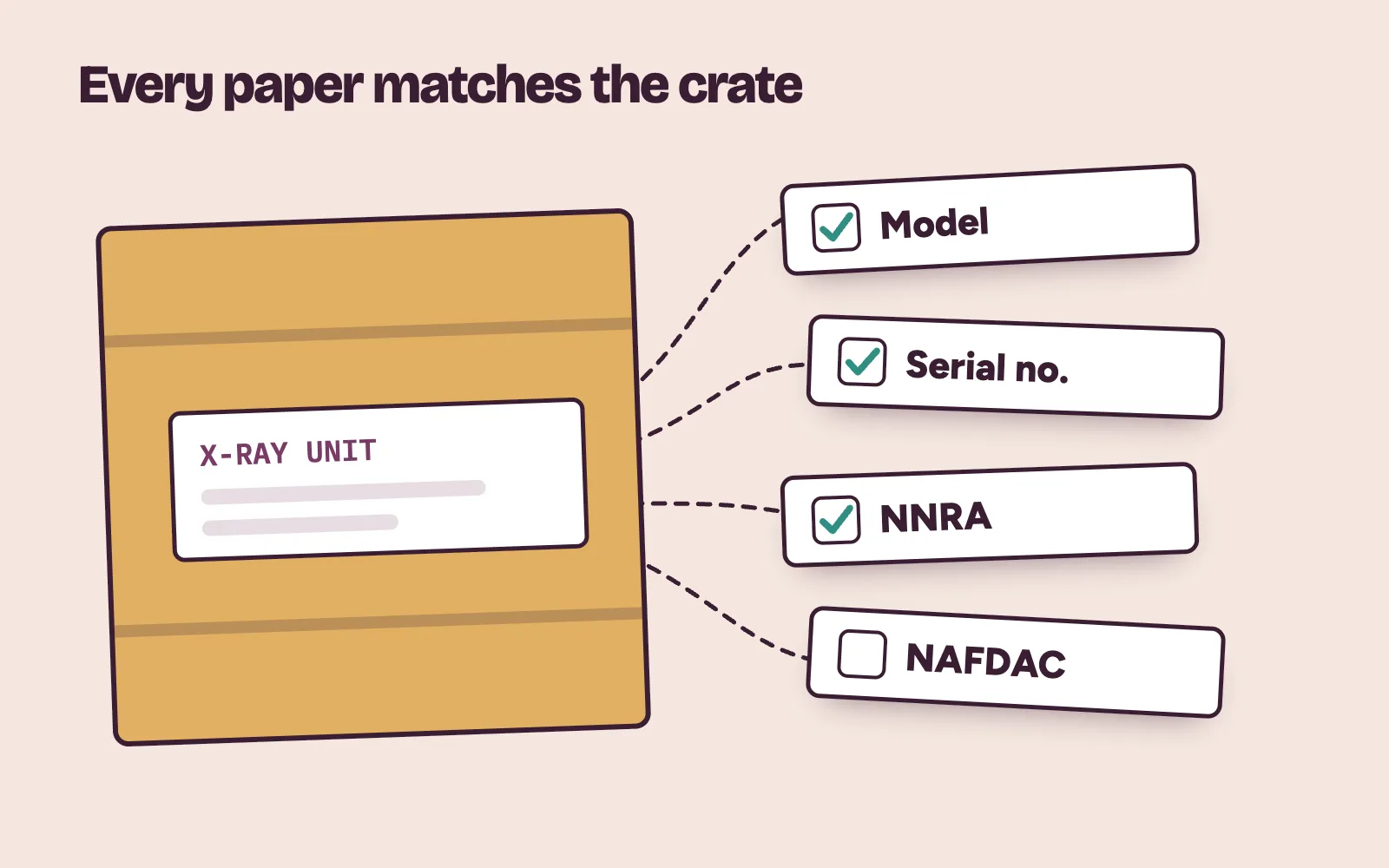
The NNRA also authorizes companies that sell and distribute radiation-generating equipment. Ask your supplier to show you:
- Their current NNRA authorization
- The model, serial number, manufacturer, country and year of manufacture
- Test and calibration certificates for their instruments
- The machine's safety features, including protection against unauthorized access while it is active
- Their maintenance and repair programme
Then the device registration. NAFDAC's Vaccines, Biologics and Medical Devices directorate registers imported and locally manufactured medical devices. Ask for the registration of the exact model you are buying.
Installation, acceptance tests and training
The NNRA lists acceptance tests for diagnostic radiography and an equipment maintenance programme among its minimum requirements. Agree these in writing before delivery:
- Who installs the machine, who runs the acceptance tests, and who signs it off as working.
- Who trains your staff on operation, safety features and daily checks, and when. Training should finish before the first patient.
Service, warranty and quality control
- Warranty: what it covers, what voids it, and a start date at installation.
- Planned maintenance: who does it, how often, and who runs the quality control tests the NNRA expects you to evidence.
- Engineers: where they are based and how soon they reach Lagos or Abuja after a fault.
- Parts and downtime: which parts are stocked in Nigeria, and what happens to your bookings while a repair waits.
Keep every manual, certificate, test report and service record in one file your practice manager can find on inspection day.
Machine installed. Now fill the bookings.
A licensed X-ray room earns nothing until patients and referring doctors use it. That takes being found on Google for your scans, fast replies to every enquiry, and confirmed appointments.
Kren is a done-for-you growth partner for private clinics in Lagos and Abuja. We set up and run how patients find you, how enquiries reach your desk, and the reminders that bring them in. Your own team does the final follow-up and booking. See how we work with diagnostic and imaging centres, and how we handle patient enquiries and bookings and no-shows.
Adding imaging to your clinic? On a 30-minute strategy call, we look at how patients will find you, reach you and book. Show me where my clinic is losing patients →
Questions clinic owners ask about buying an X-ray machine
Who regulates X-ray machines in Nigeria?
The Nigerian Nuclear Regulatory Authority, set up under the Nuclear Safety and Radiation Protection Act 1995, regulates radiation safety. It sets minimum requirements for authorizing diagnostic radiology facilities. NAFDAC handles the registration of medical devices.
Does an X-ray room need a shielding assessment?
Yes. The NNRA's requirements ask for a purpose-built facility, a layout plan and a shielding assessment, with controlled and supervised areas marked. Your Radiation Safety Adviser should be involved before building starts.
Who monitors the radiation dose of clinic staff?
The NNRA asks facilities to engage an accredited Dosimetry Service Provider to monitor staff who operate X-ray machines.
Is a refurbished X-ray machine a sensible buy?
It can be, if it passes the same checks as a new one. Ask for its service history, NAFDAC registration, the supplier's NNRA authorization, acceptance testing and proof that parts are still available.