Blog · Aesthetic · 5 min read
Before-and-after photos: what clinics are allowed to post
Meta allows them in 18+ cosmetic ads, Google Ads does not. What clinics need for consent, honest captions and posts that build trust without promising results.
By the Kren Agency team ·
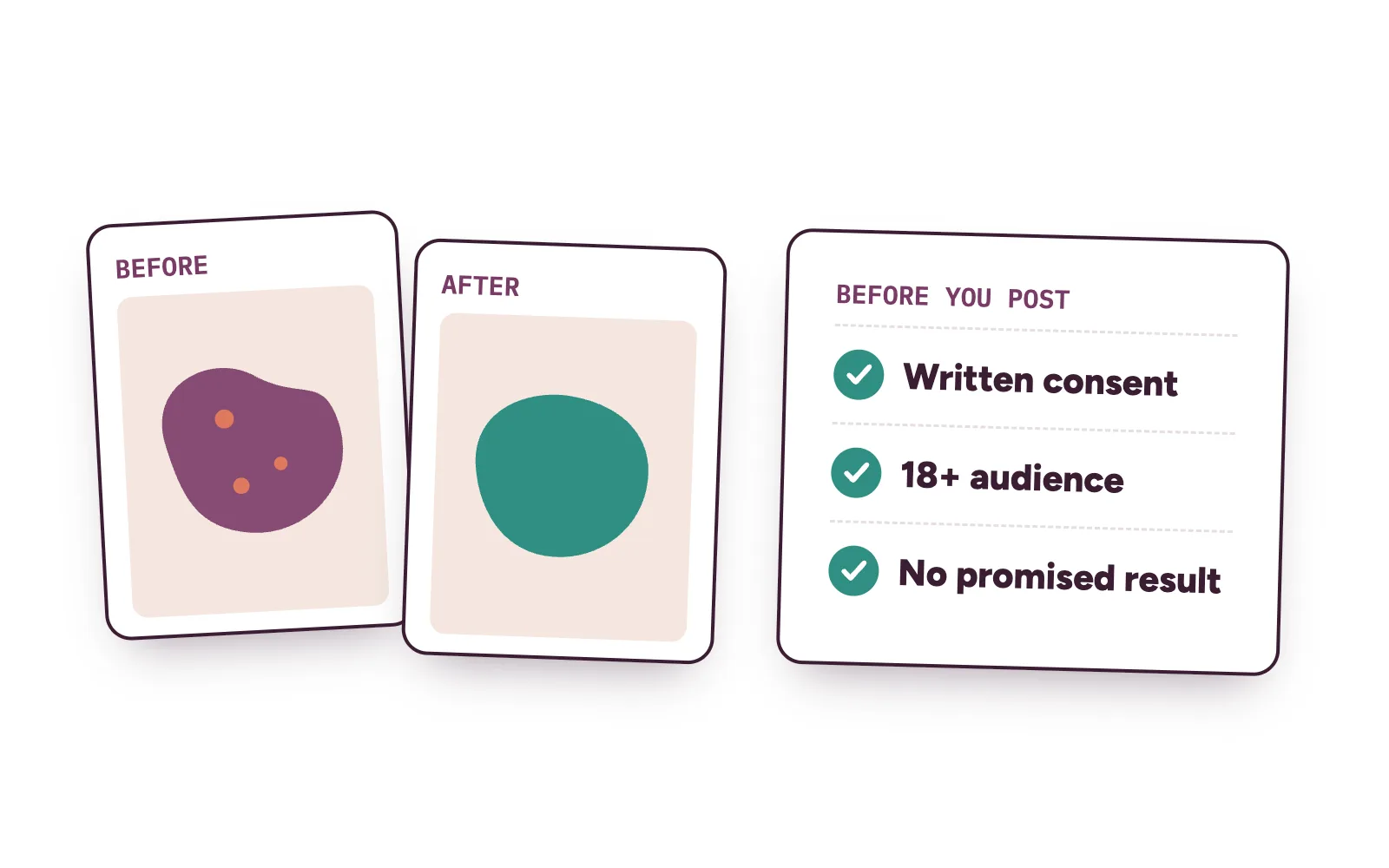
The before and after photos rules for clinics come down to three things: written consent from the patient, the ad network's own policy, and no promised results. On Meta (Facebook and Instagram), ads for cosmetic procedures can show a before-and-after transformation, but only to people aged 18 or over. Google Ads does not allow before-and-after images that promote significant changes to the human body.
Why before-and-after photos get clinics into trouble
For an aesthetic clinic, a good before-and-after is the most persuasive thing you can post. It is also the post most likely to cause a problem.
It goes wrong in three ways. An ad gets rejected or the account gets flagged. A patient finds their face online without having agreed to it. Or a photo reads like a promise, and a new client arrives expecting the exact same result.
What Meta allows in cosmetic procedure ads
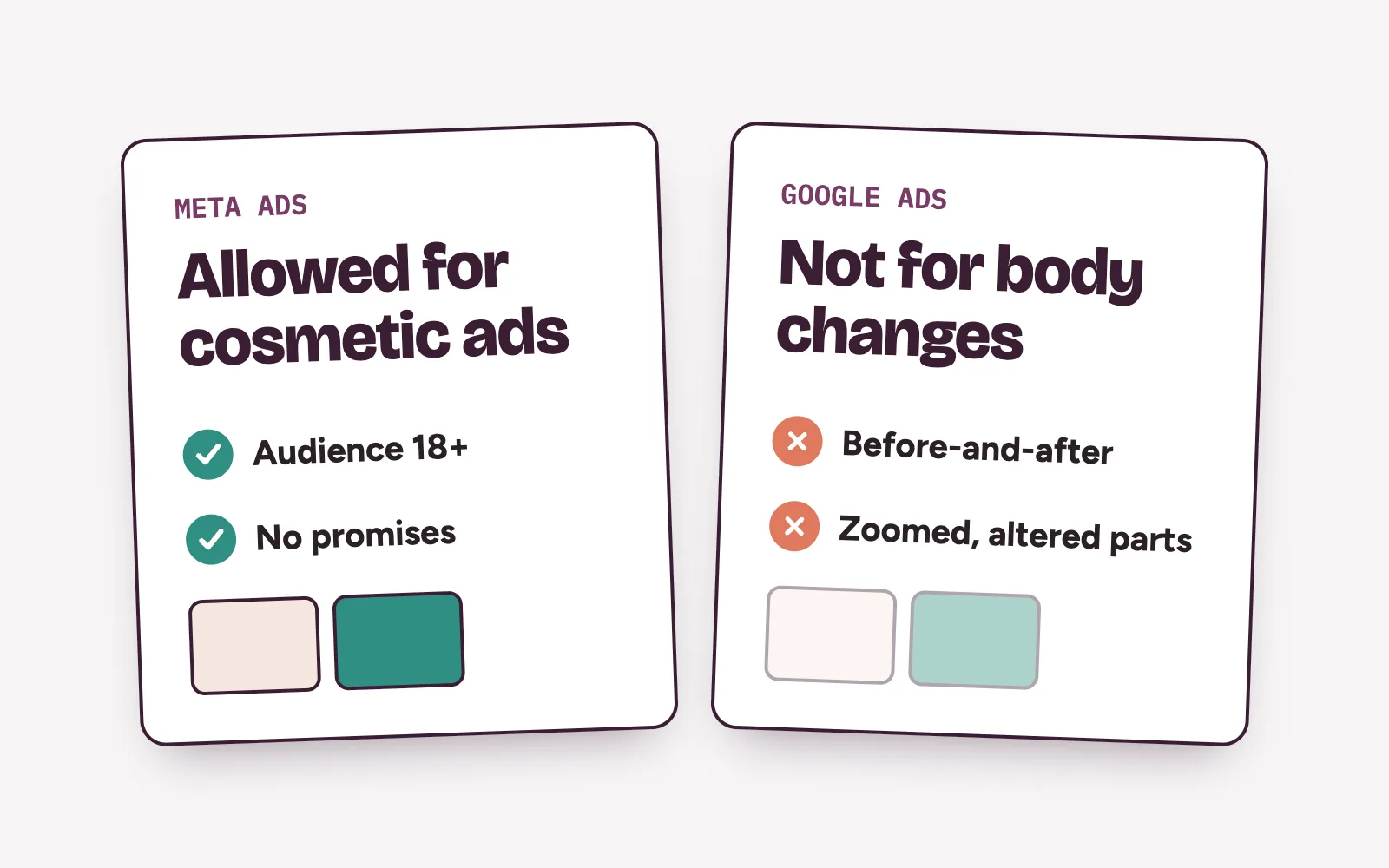
Meta's Advertising Standards on cosmetic procedures and wellness say ads promoting cosmetic products, procedures or surgeries must be targeted to people at least 18 years old. With that audience in place, the list of what advertisers can promote includes cosmetic procedures depicting a before and after transformation.
The same standards rule out two things that often sit next to those photos:
- Statements of inferiority about physical appearance. Captions that attack how someone looks are out.
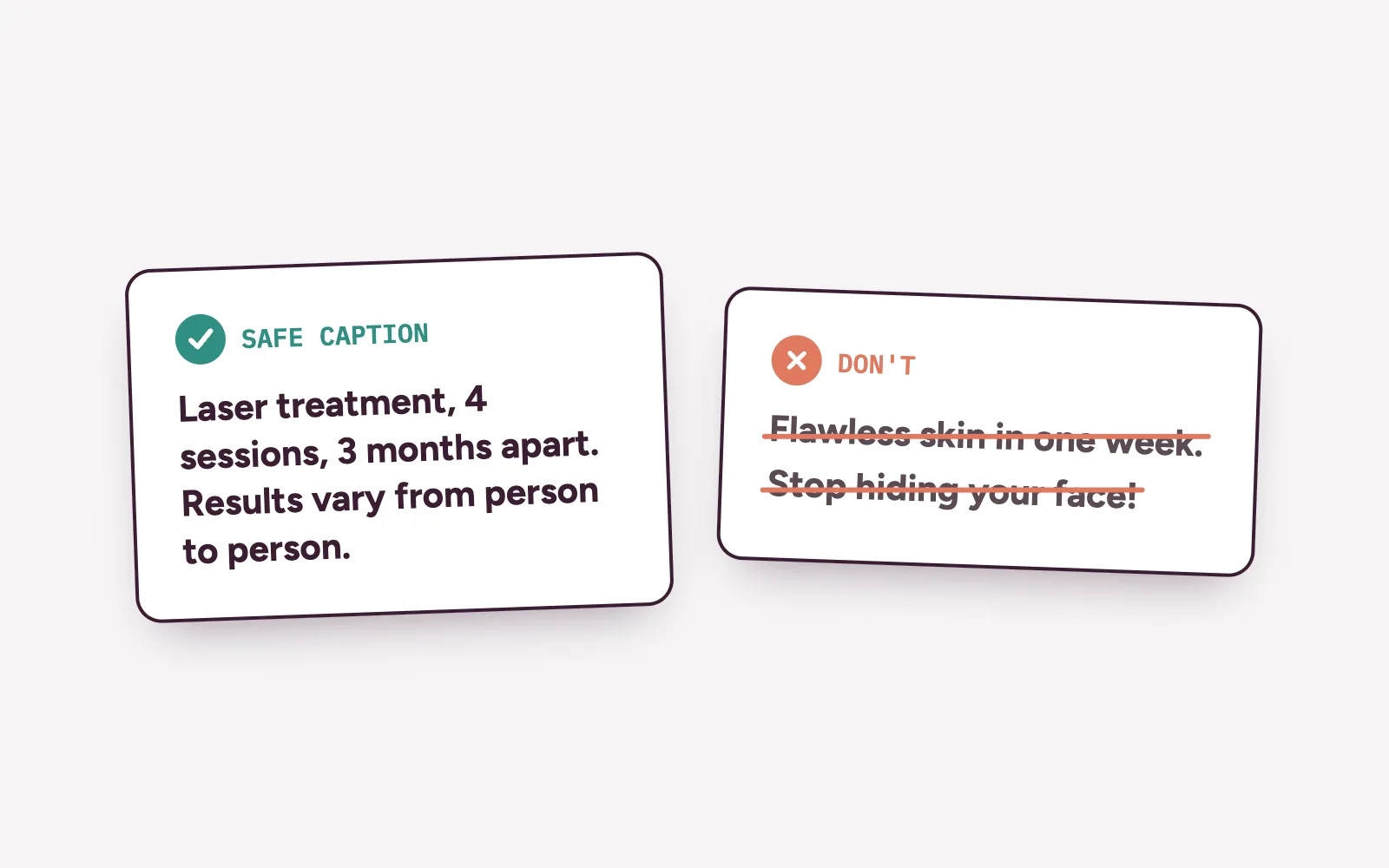
- Promises of specific outcomes within a set timeframe without disclaimers or qualifiers. "Results in one week" with no qualifier is a problem.
Meta's separate policy on personal attributes also stops ads from asserting or implying a person's physical or mental health. Meta's own example of a rejected line is "Do you have diabetes?" Name the treatment, never the reader's body.
Before you run a before-and-after ad on Meta:
- Set the ad set's audience to 18 and over.
- Write the caption about the treatment and the doctor, never about the viewer's flaws.
- Drop any timeframe promise, and add "Results vary from person to person."
- Use only photos the patient agreed could be used in ads.
Our post on Meta Ads Manager for clinics shows where the age and audience settings live.
What Google Ads says about before-and-after images
Google is stricter. Its clickbait ads policy lists ads that use "before and after" images to promote significant alterations to the human body as not allowed. The same policy also rules out clearly altered, zoomed-in body parts.
So keep these images out of your Google ads. Advertise the treatment, the doctor and the consultation instead. Our post on Google Ads for clinics in Nigeria covers how search ads bring patients to a booking.
Consent: the rule that applies on every channel
Ad rules change from network to network. Consent does not. Under the Nigeria Data Protection Act 2023, "sensitive personal data" includes a person's health status. Section 30 says it must not be processed unless one of the listed grounds applies, and the first is that the person has given, and not withdrawn, consent for the specific purpose.
The Act defines consent as freely given, specific, informed and unambiguous. Section 35 gives people the right to withdraw consent at any time, and says withdrawing must be as easy as giving it.
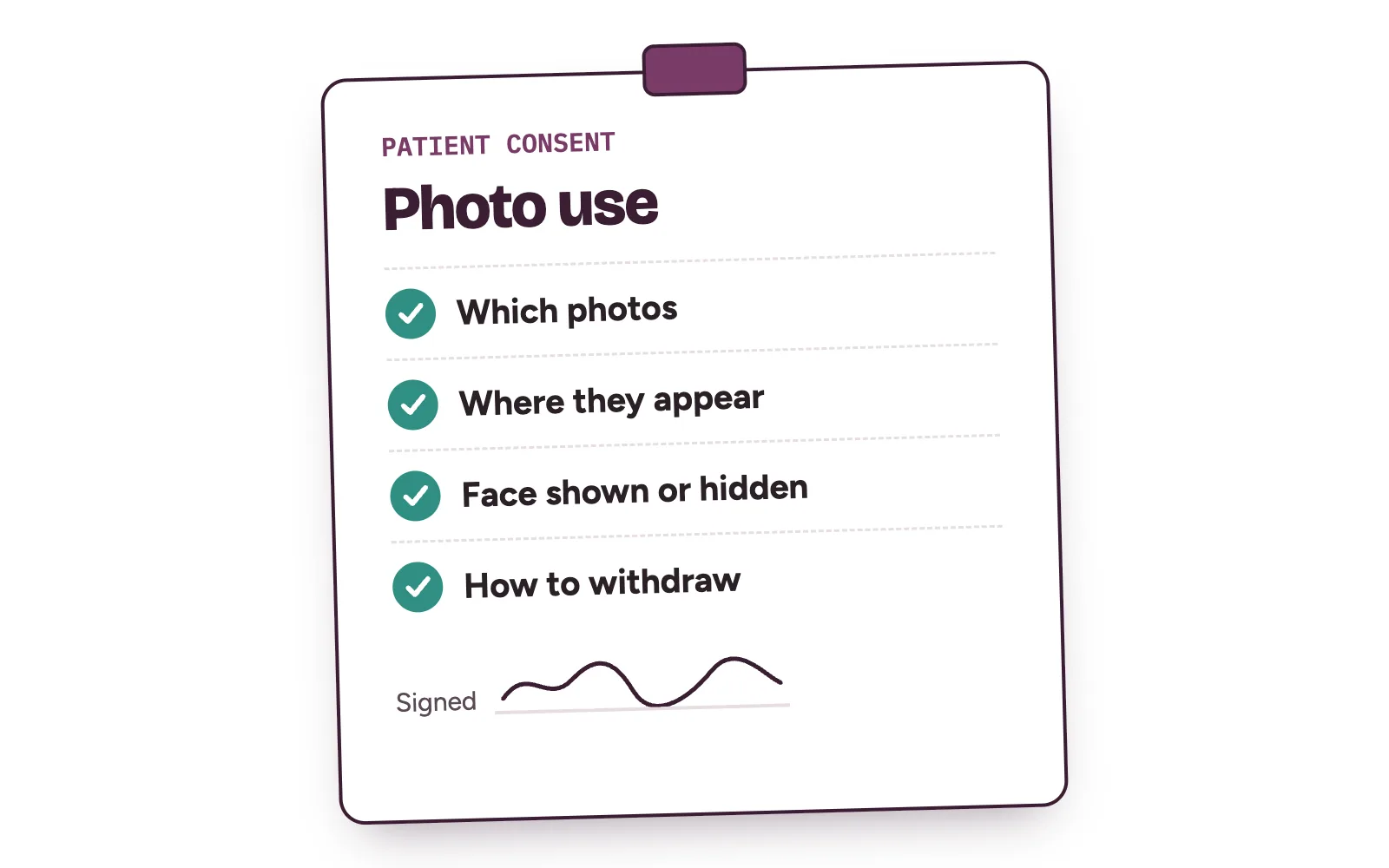
A treatment photo can reveal health information, so handle it with that care. A good photo consent form covers:
- Which photos you may use.
- Where they may appear: website, social pages, paid ads.
- Whether the face is shown, cropped or hidden.
- How the patient can withdraw consent, and what you will then take down.
Keep it separate from treatment consent, and never make treatment depend on it. Have your lawyer review the wording.
How to post before-and-after photos within the rules
Following the before and after photos rules is half the job. The other half is making the photos honest enough that nobody feels misled.
- Same angle, light and distance. No filters, no retouching, no flattering new lighting in the after shot.
- Say what was done. Treatment name, number of sessions and the time between the two photos.
- Add "Results vary from person to person" to every post.
- Show typical results. Your most dramatic case sets an expectation most clients will not meet.
- No names, no tags unless the patient asked for them in writing.
What to post instead of more before-and-afters
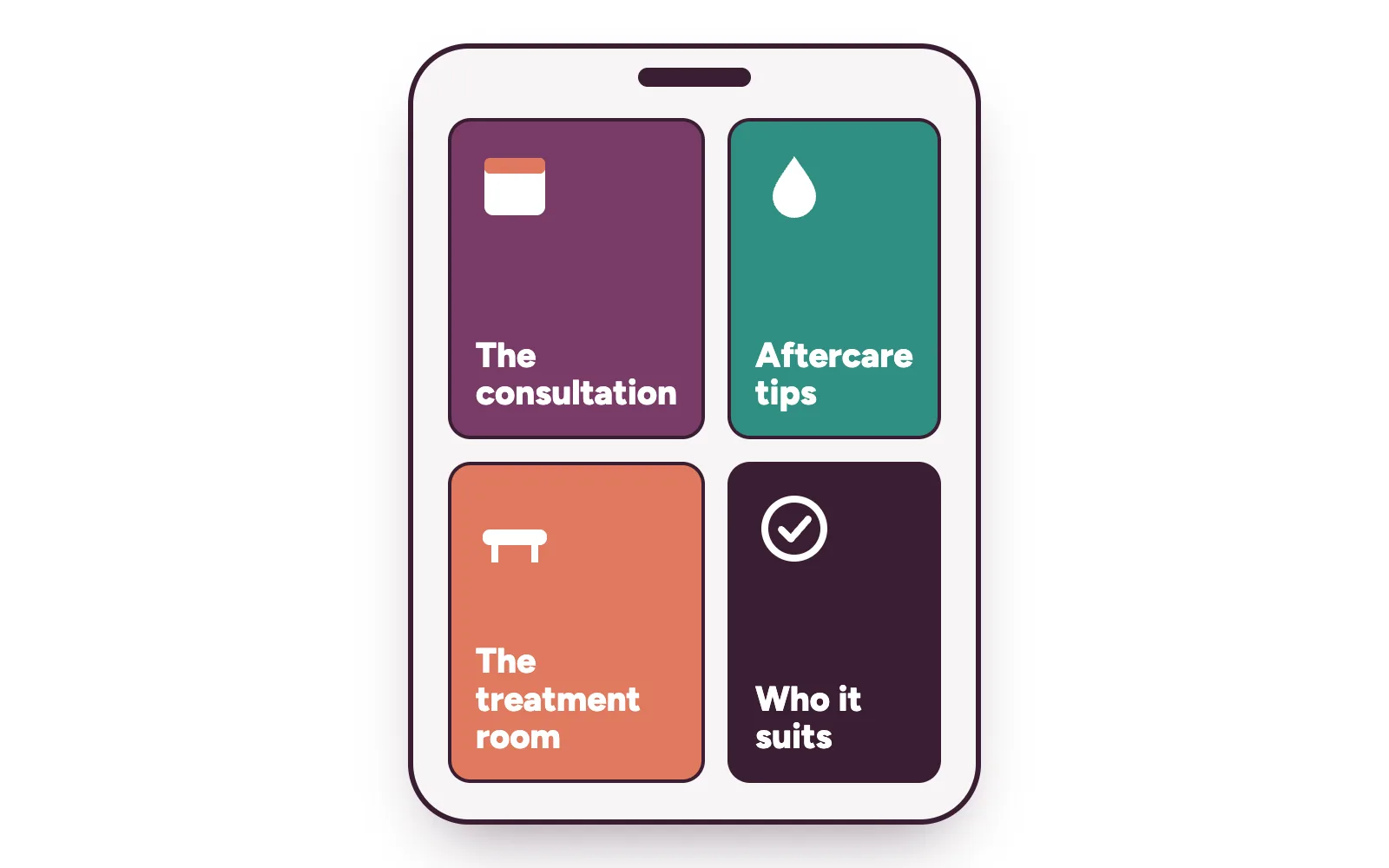
A feed made only of before-and-afters invites one question: "How much?" Content that explains the care behind the result builds trust and brings better enquiries:
- What happens at the consultation, step by step.
- Who a treatment suits, and who it does not.
- Aftercare in plain words.
- The doctor's training and who carries out each treatment.
- How your prices work, if you share them.
Our post on aesthetic clinic marketing in Nigeria shows how these fit into a wider plan that turns attention into bookings.
Where Kren fits
Kren is a done-for-you team for aesthetic clinics in Lagos and Abuja. We plan your content through social media strategy, run your Meta and Google ads within each network's rules, build treatment pages, and set up instant replies and reminders. Your team does the final follow-up and confirms each booking.
Questions clinic owners ask about before-and-after photos
Do we need consent if the face is hidden?
Yes, get written consent anyway. A tattoo, birthmark, jewellery or the room behind someone can still identify them. Consent also shows patients you take their privacy seriously.
What if a patient asks us to remove their photo?
Take it down from your pages and stop using it in ads. The Nigeria Data Protection Act 2023 gives people the right to withdraw consent at any time. Agree in advance who on your team handles these requests.
Can we boost a before-and-after post on Instagram?
A boosted post is an ad, so Meta's ad standards apply. Target people aged 18 and over, keep the caption free of promises and remarks about appearance, and use only photos the patient agreed could appear in ads.
Want to see where your posts and ads are losing patients before they book? On a 30-minute strategy call, we go through your pages, ads and replies with you. Show me where my clinic is losing patients →