Blog · Websites · 5 min read
Physiotherapy clinic website design: how we build one that books
What we put on every page of a physiotherapy clinic website, from condition pages to a self-referral path and course booking, and why each one brings bookings.
By the Kren Agency team ·
A physiotherapy clinic website should turn a search for back pain, a sports injury or rehab after surgery into a booked first assessment, then keep that patient booked through their plan. When we build one, each condition gets its own page, patients without a doctor’s note get a clear way in, and booking the next session takes a few taps. Here is what we put on each page and why it brings bookings.
What does a physiotherapy clinic website need to do?
Physio patients arrive in pain and in a hurry. Some have a doctor’s referral. Many do not.
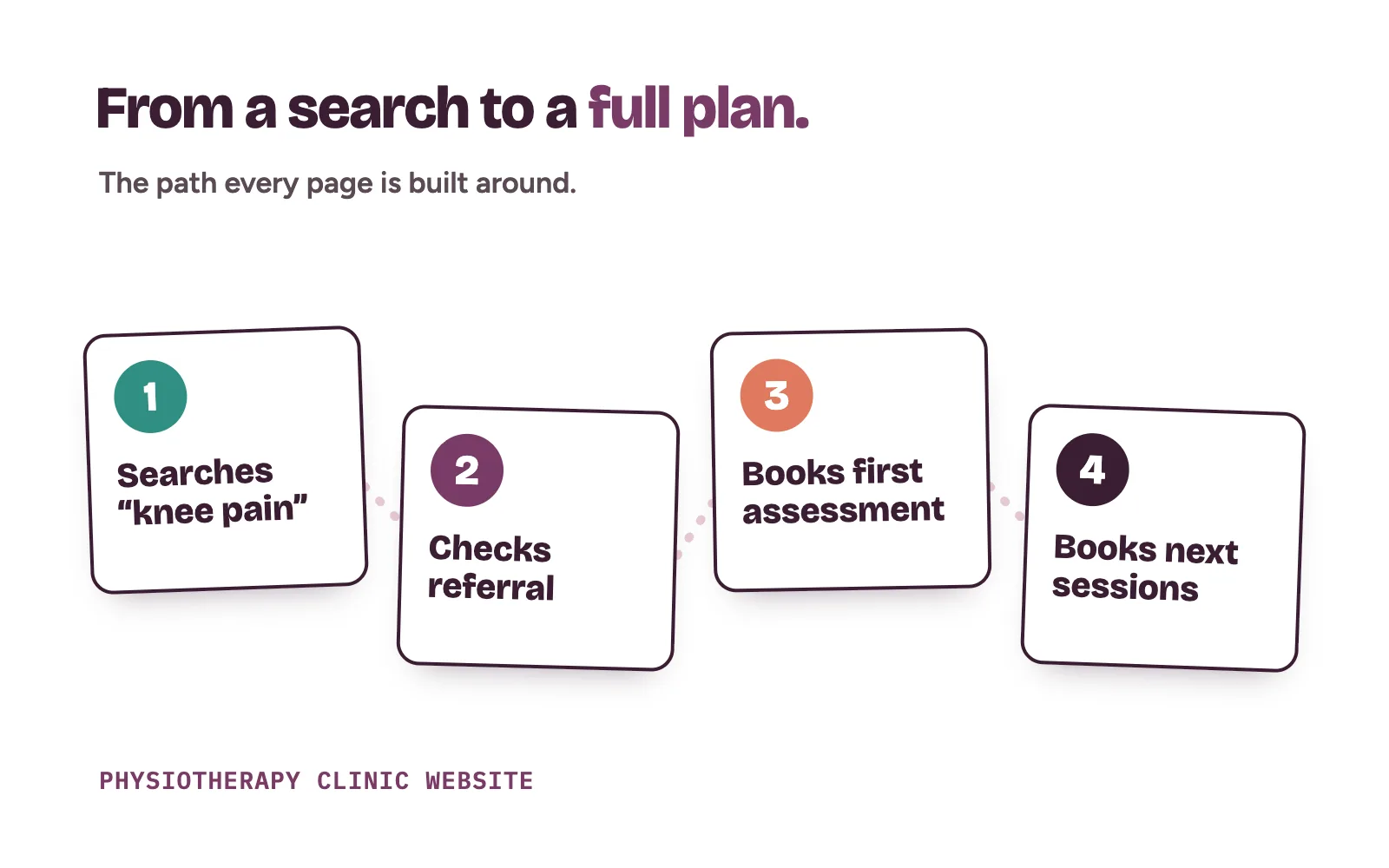
We plan every site around the path those patients take:
- They search for what hurts. “Knee pain physio Lekki”, “stroke rehab Abuja”. They land on a page about that condition, not your home page.
- They check they can come. With or without a referral, the page tells them how.
- They book a first assessment. One tap from any page.
- They stay on the plan. Booking the next session is as easy as booking the first.
Our post on physiotherapy marketing in Nigeria covers the wider picture. Here we stay on the website.
How we build condition pages
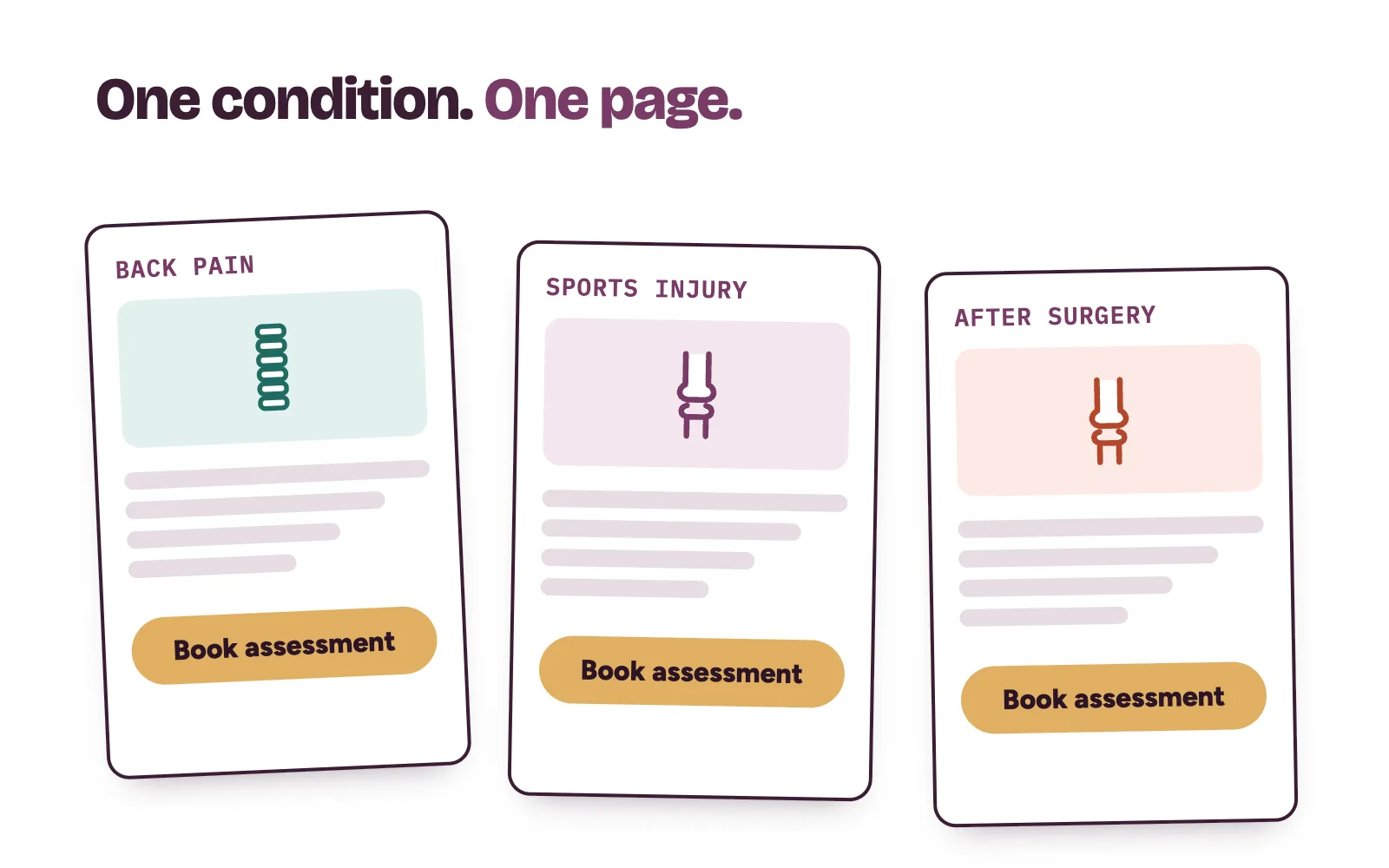
People search for the problem, rarely for “physiotherapy”. So we give each main condition you treat its own page. Most clinics need pages for back and neck pain, sports injuries, rehab after surgery and stroke rehab, plus any specialist work you want more of.
Every condition page answers the same questions in the same order:
- Who it suits, and the signs that mean a patient should see a doctor first.
- What happens at the first assessment, and how long it takes.
- How a plan usually runs, as a range of sessions your physios agree with.
- Who treats them, with your physios’ names and qualifications.
- How to book, repeated down the page.
We write in plain language and your physios check every page for accuracy. Your website counts as advertising, so we describe the treatment and the process and promise no recovery. You approve each page before it goes live.
We match these pages to your Google Business Profile too. Google lets you list each service you offer and add a custom one when it is missing, as its help on adding services to a Business Profile explains.
A clear path for self-referral and doctor referrals
“Do I need a referral?” stops many patients from booking. A silent website sends them elsewhere.
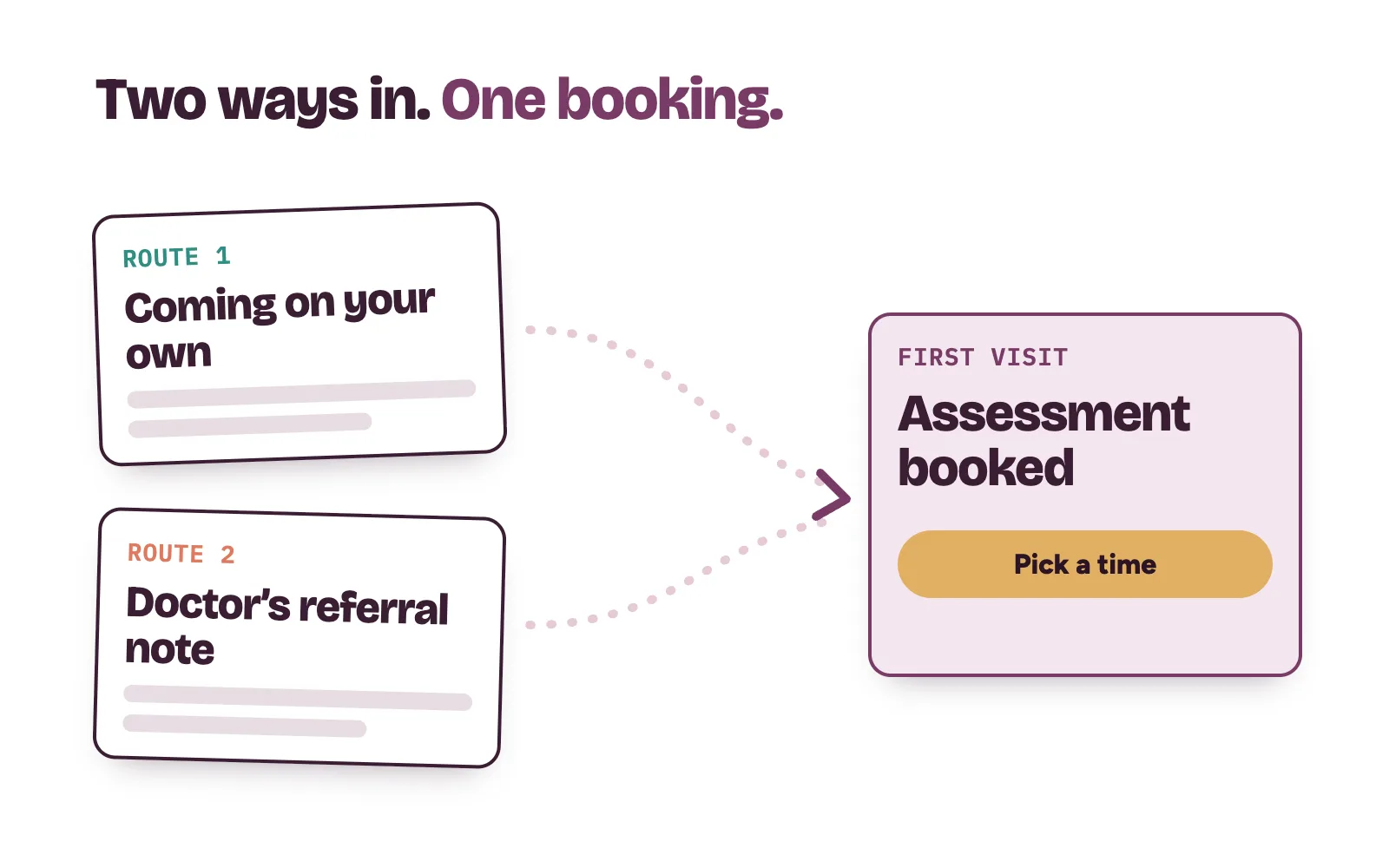
We answer it on every condition page and on a short “How to start” page, using your clinic’s own policy:
- Coming on your own. What to bring, what the first assessment covers, and a booking button.
- Coming with a doctor’s note. Bring the note or a photo of it to the first visit.
- When to see a doctor first. The warning signs your physios want checked before treatment.
Referring doctors get their own route as well. We build a simple page they can send patients to, with your number and a booking link, so a referral note does not sit in a bag for a month.
Booking the first assessment
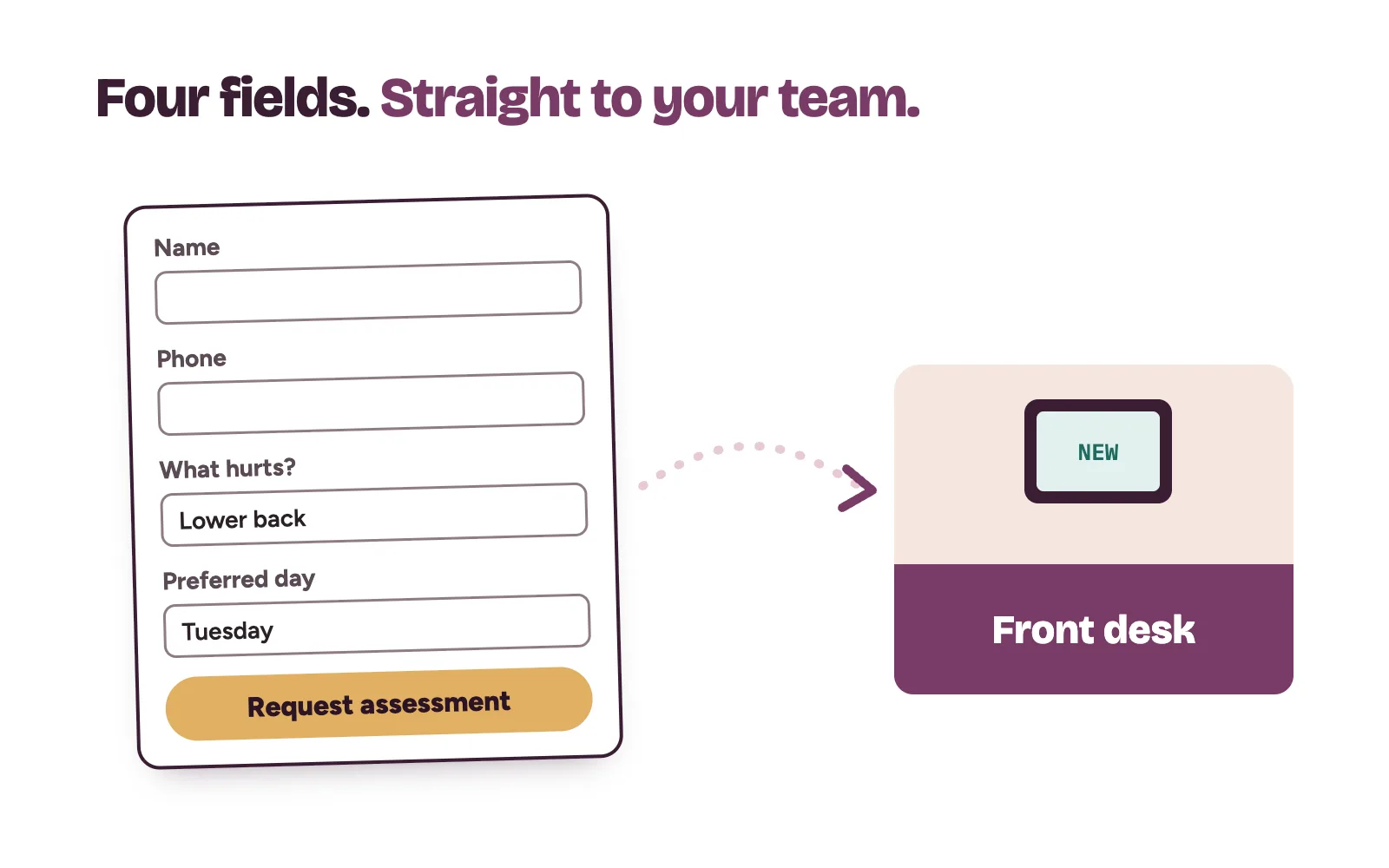
We keep the form short: name, phone number, the problem in a few words and a preferred day. No medical history on a web form. The physio takes that at the assessment. Your number and chat link sit beside it for patients who would rather call or message.
Each request reaches your front desk straight away, and your own team confirms the time. We also point your Google profile at the booking page. In your Business Profile you select Booking, then Add link, as Google’s local business links help sets out. A patient who finds you on Maps lands one tap from booking.
How the website keeps a course of sessions booked
Physio is rarely one visit. The pain eases after a few sessions, work gets busy and the plan quietly stops. Those are the bookings most clinics lose.
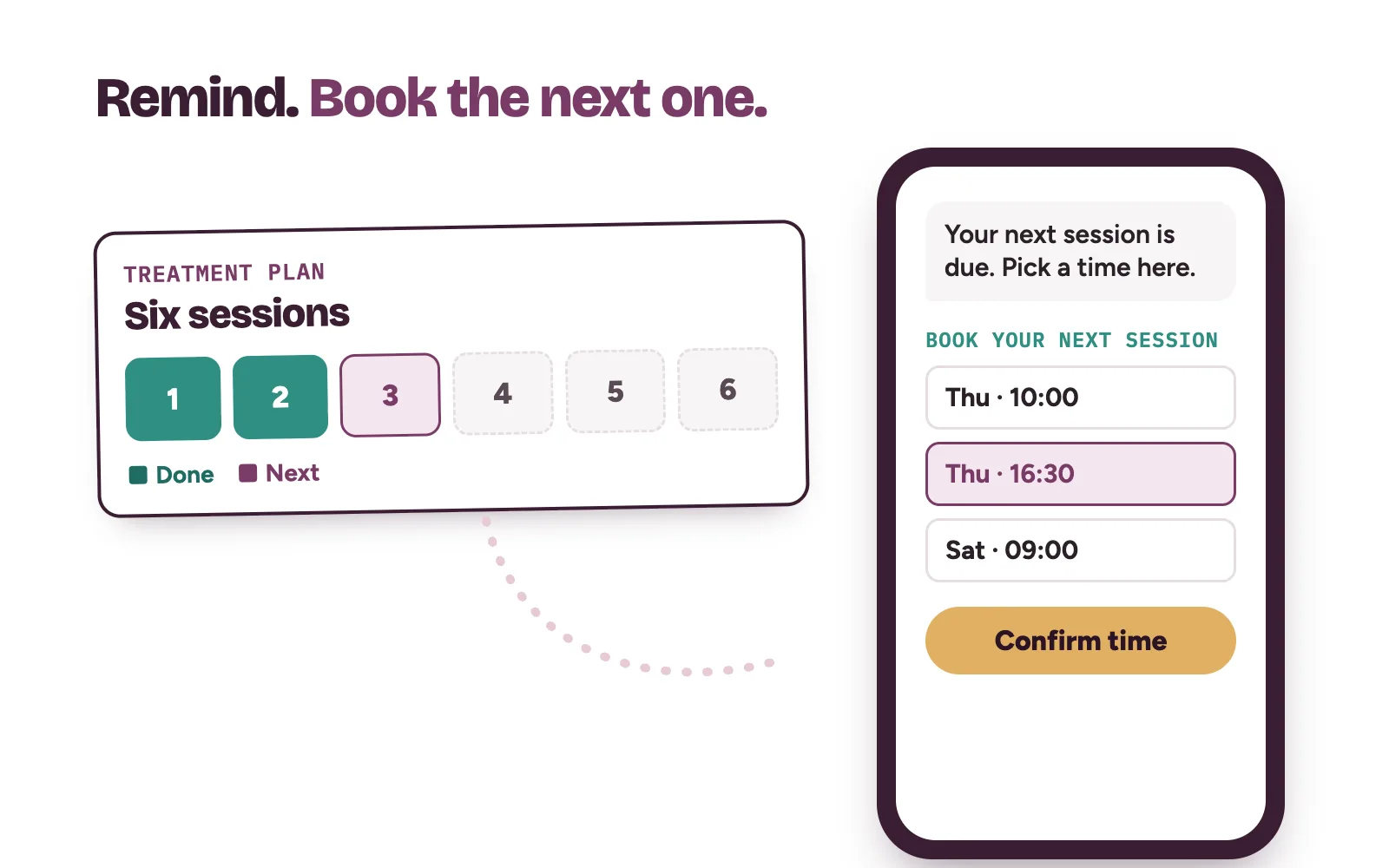
So we build a “Book your next session” page for patients already on a plan. The reminders we set up link to it, and so does the message after a missed session. Reminders name no condition, since other people see phone screens. Whether a patient continues stays between them and their physio. Our post on keeping physiotherapy patients on their plan covers the follow-up in more depth.
What we do and what your team does
Kren is a done-for-you team for private clinics in Lagos and Abuja. On a physiotherapy site, we:
- plan the pages around the conditions you want more of;
- write the copy within your profession’s rules, for your physios to check;
- tell you which photos of your clinic, rooms and team we need, and plan them with you;
- track every visit through to a booking request, so you see which pages bring patients;
- fix the weak pages every month.
Your team keeps the treatment, the patient experience and the final follow-up that confirms each booking. See how our website conversion work runs, what else we do for physiotherapy clinics, and our post on website design for clinics in Nigeria.
On a 30-minute strategy call, we open your current site on a phone with you and walk the path a new back-pain patient takes. Show me where my clinic is losing patients →
Questions physiotherapy clinic owners ask about their website
Do we need a whole new physiotherapy clinic website?
Not always. Sometimes condition pages, a clear referral answer and a better booking path on your current site are enough. We look at yours on the call and tell you which it is.
Should we show session prices online?
That is your decision. Some clinics show the assessment fee so patients know what to expect. If you prefer to discuss costs after the assessment, we make booking that first visit the obvious next step.
Who writes the condition pages?
We write every page in plain language. Your physios check it for accuracy, and you approve it before it goes live.
Can you promise a number of bookings from the website?
No. Results depend on your services, your area and how fast your team follows up. We track every booking request, so you see exactly what the site brings in.