Blog · Websites · 5 min read
Cosmetic surgery website: how we build one that books
What every page of a cosmetic surgery or hair restoration website should do, from surgeon profiles to recovery pages, and how each one brings consultation bookings.
By the Kren Agency team ·
A cosmetic surgery website has one job: turn a careful, private researcher into a booked consultation. When we build a cosmetic surgery website for a hair restoration or plastic surgery clinic, every page is planned around trust, from the surgeon's profile to the recovery page to the booking step. Here is what each page does, and why it brings bookings.
Why do surgery clinic websites lose patients?
Surgery is permanent, costly and personal. Patients research for weeks, often at night and often without telling family. They compare Lagos and Abuja clinics with clinics abroad.
Then they land on a site with a slideshow, a list of procedures and a contact form. No surgeon's name. No word on recovery. No obvious way to book from another city. So they keep searching.
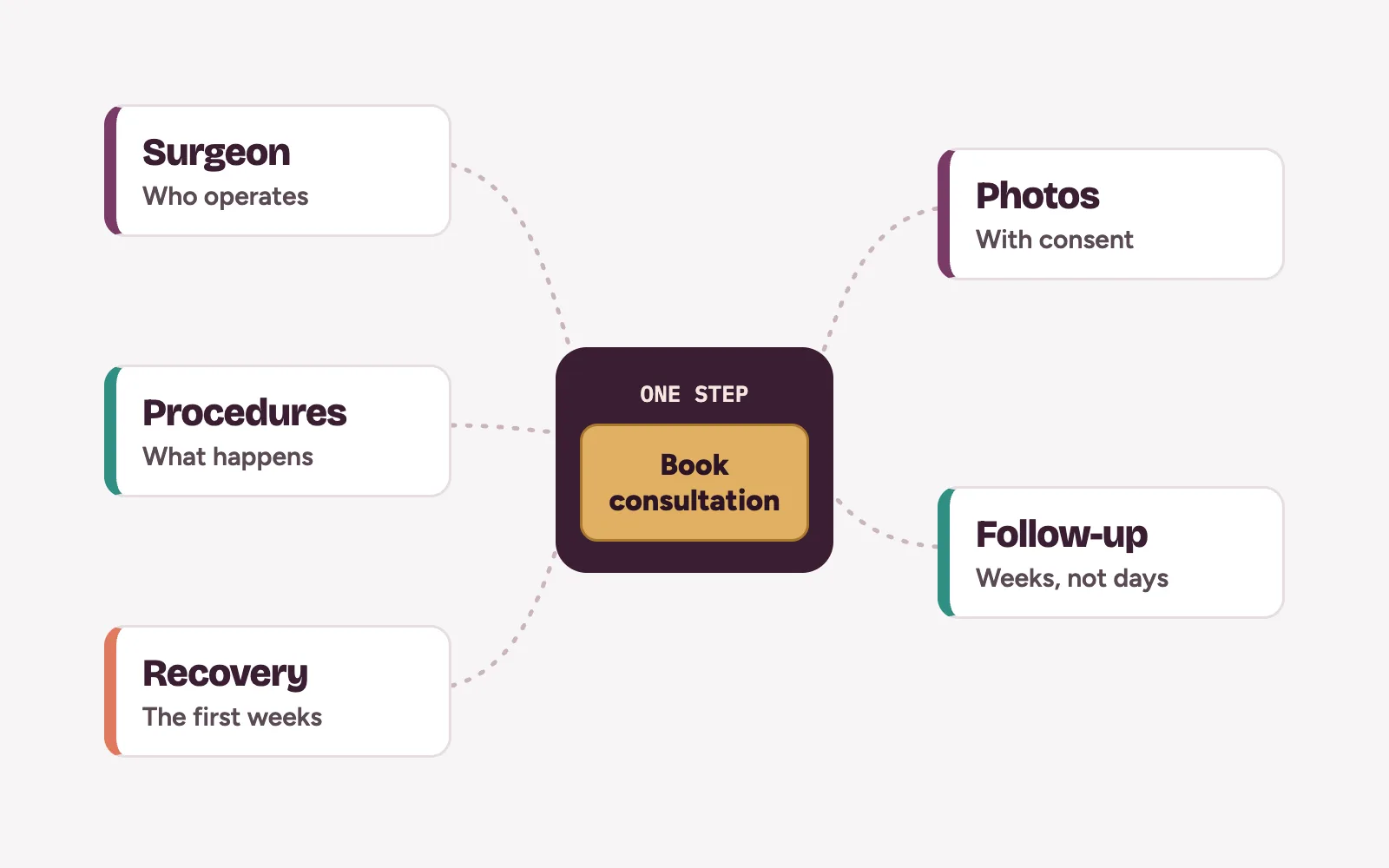
We start every build by listing the questions a surgery patient needs settled before they feel safe to book. Then we give each question a page.
Surgeon profiles patients can check
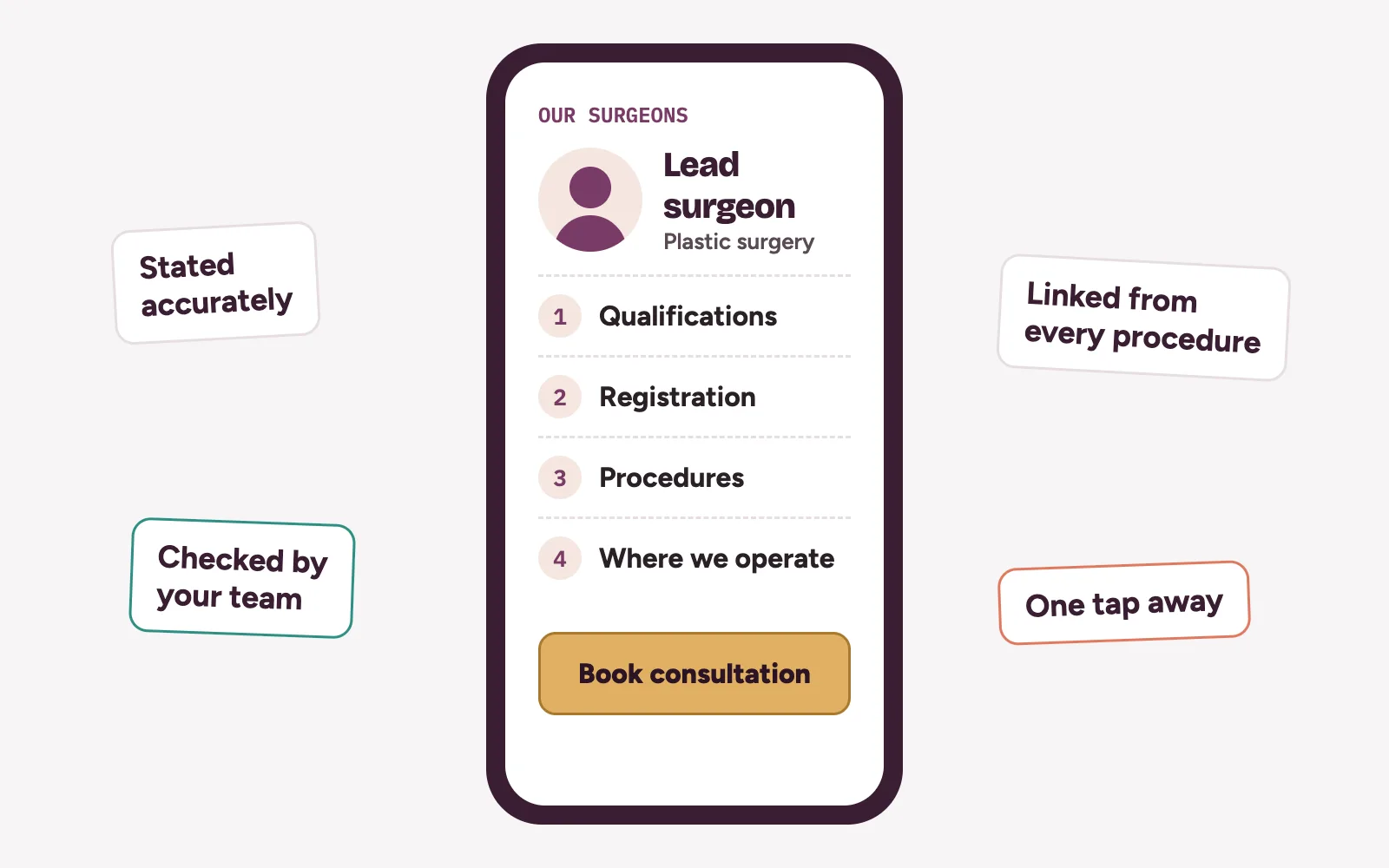
The first question is always "who will operate on me?" It should never take more than one tap to find out.
We build a profile for each surgeon:
- Name and role, and who else is on the team in theatre.
- Qualifications, specialist training and registration, stated accurately.
- The procedures they actually perform.
- Where surgery takes place: your own theatre or a partner hospital.
Each procedure page links back to the surgeon who does it. Every claim stays checkable, and your medical team signs off on the wording.
Procedure and recovery pages that remove fear
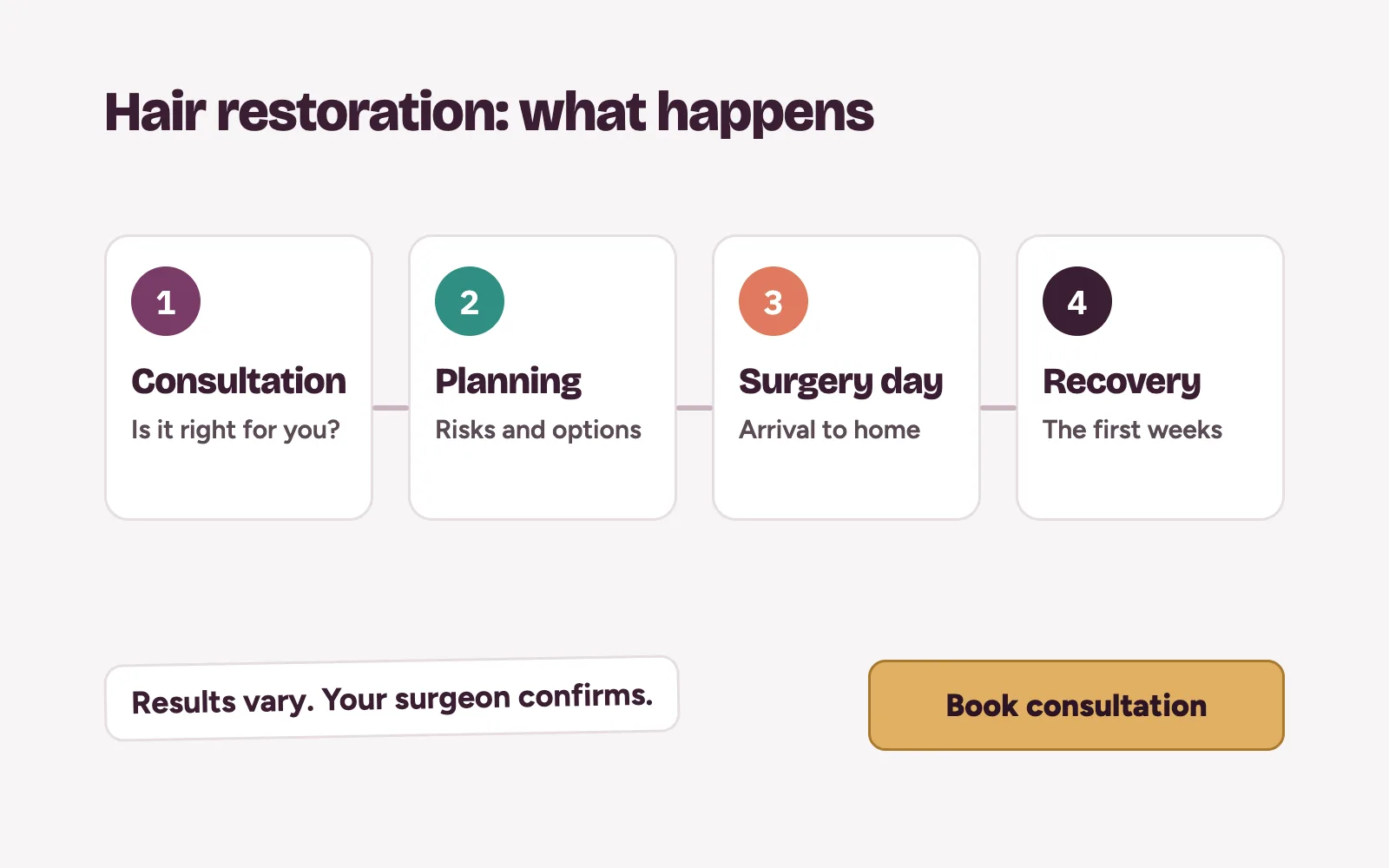
Fear of the unknown stops more bookings than price does. So we write a separate page for each procedure you want more of: hair restoration, rhinoplasty, tummy tuck, liposuction, breast procedures. Each page walks through the same stages in plain words:
- Consultation. What happens, how long it takes, and that it decides whether surgery suits the patient.
- Planning. Assessments and when risks and alternatives are discussed.
- Surgery day. Arrival, going home or staying, and who looks after the patient.
- Recovery. What the first weeks usually involve and the review visits, in your surgeon's words.
Hair restoration gets extra detail, because patients often plan around time off work or a trip home. We state that results vary and that the surgeon confirms what is realistic. No promised outcomes and no "new you" lines. That honesty is what makes a careful patient book.
For the wider marketing picture, read our posts on cosmetic surgery marketing in Nigeria and hair transplant marketing.
Before-and-after photos, only with consent
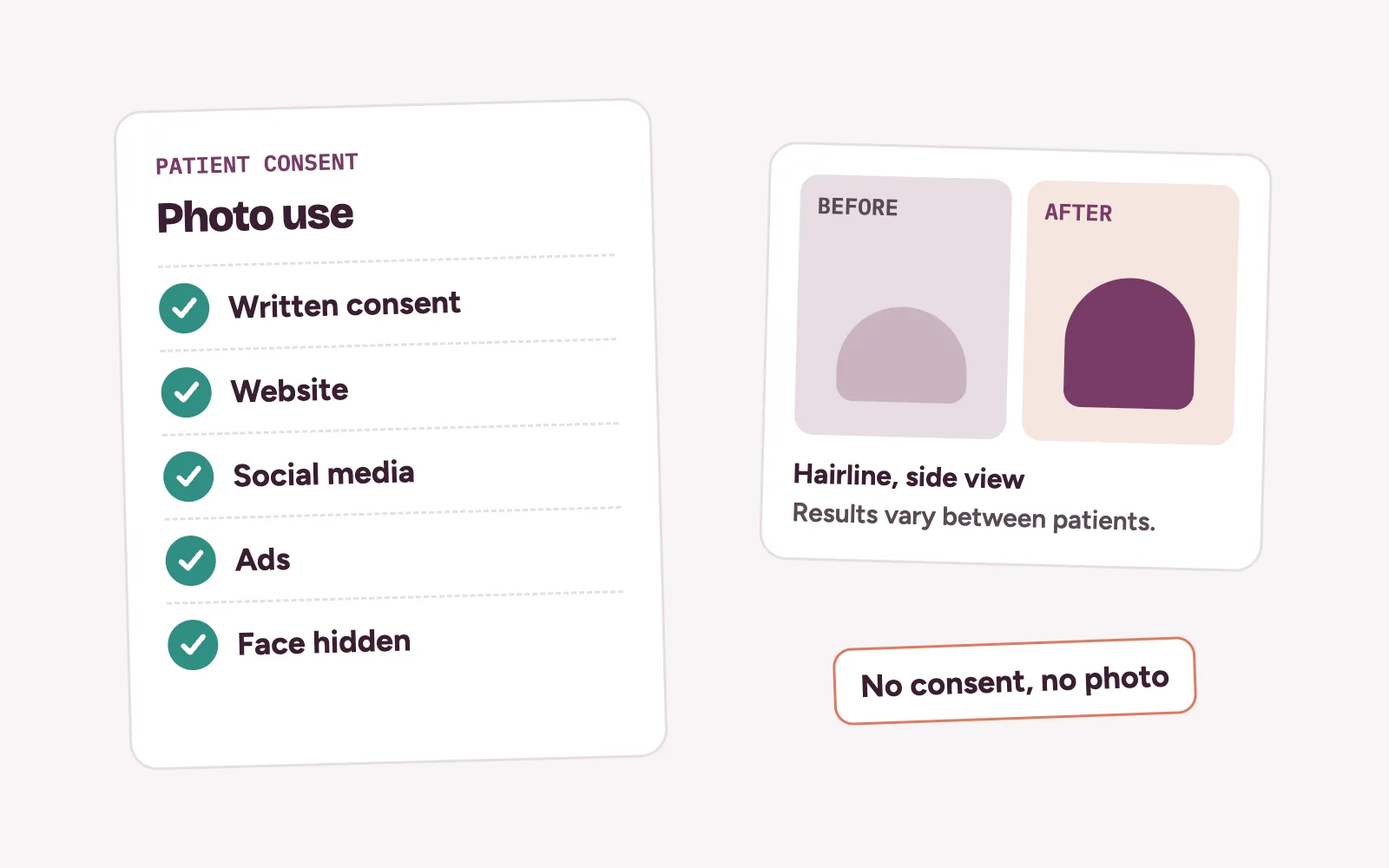
Results photos persuade, and they are easy to get wrong. We only use images the patient has agreed to in writing, with that consent on file. The consent names each place the photo may appear: website, social media, ads. Faces come out unless the patient agreed to show them. Captions stay factual and say results vary.
If the same photos will run in ads, Meta's Health and Wellness standards list hair restoration surgery among cosmetic procedures whose ads must be targeted to people aged 18 or older. They allow before-and-after images for general cosmetic surgery, and ban statements that attack a person's appearance (Meta Transparency Center: Health and Wellness). Your professional rules apply on the website too, so read our post on before-and-after photo rules first.
Consultation booking, in clinic or by video
Many surgery patients do not live near you. Some are in another state. Some are Nigerians abroad planning around a visit home. So the booking step offers two ways to start:
- An in-clinic consultation, with times to pick from.
- A video consultation, with an in-person assessment before surgery if your surgeon requires one.
We show your time zone on the booking page so patients abroad pick the right slot. The form stays short: name, phone, procedure of interest, preferred day. Nothing medical. Detailed history belongs in the consultation.
Some patients will never fill a form, so the same area offers a call and a message link. Every request goes to your front desk with the page it came from. Your team confirms each appointment.
We also line up the services on your Google Business Profile with your procedure pages. Google lets you add a description and price to each service, and rejects custom service names that include prices or phone numbers (Google Business Profile Help).
Follow-up for a long decision
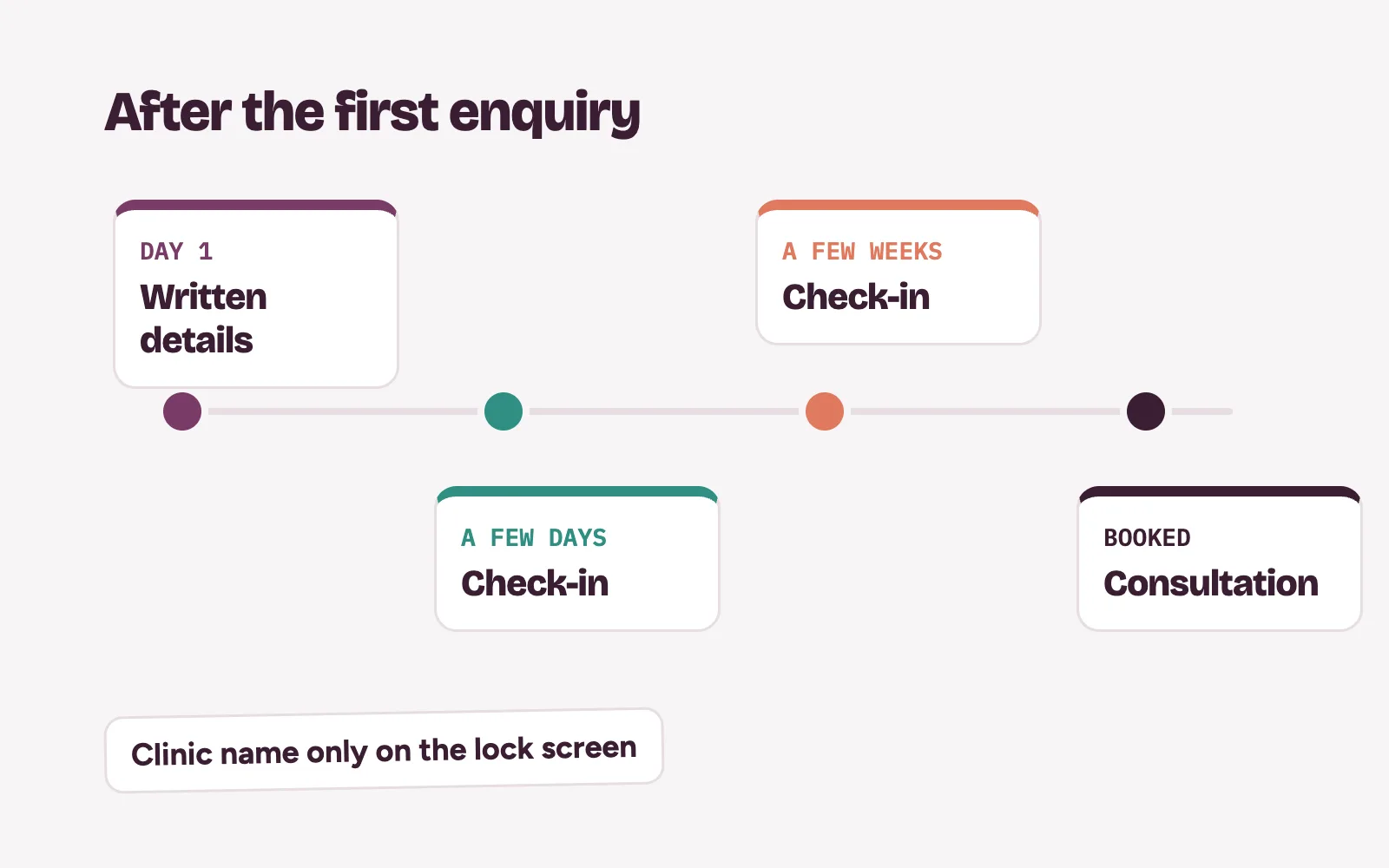
The patient who enquires today may book in two months. Most clinics lose them because nobody follows up after the first reply. We set up the follow-up and your team keeps the conversation:
- Written details. The process and recovery page, sent after the first enquiry, so the patient can reread it in private.
- Check-ins. A reminder for your team to follow up after a few days, then after a few weeks, with a link to book.
- After the consultation. The plan and next steps in writing, so the patient decides at home.
Messages stay discreet: the clinic name, never the procedure, on anything that shows on a lock screen. No countdown offers and no pressure. We track which pages and messages bring consultations, so you know what is working.
The full scope of our website work is on the Website Conversion Fix page, and our post on clinic website design in Nigeria covers what every clinic site needs.
Questions clinic owners ask about cosmetic surgery websites
Do we need a whole new website?
Not always. Sometimes surgeon profiles, procedure pages and a clearer booking step on your current site are enough. On a strategy call we look at your site live and tell you which it is.
Who writes the procedure and recovery pages?
We write them in plain language from what your surgeons tell us. Your medical team checks every page for accuracy before it goes live.
Can patients abroad book a consultation?
Yes, if your surgeons offer video consultations. We build the booking step with your time zone shown, and your team confirms each appointment.
Will Kren reply to the enquiries?
No. Every request goes to your front desk, and your team confirms the booking. We set up the forms, routing, follow-up reminders and tracking behind it.