Blog · Licensing · 5 min read
How to start a medical laboratory in Nigeria: the steps, in order
The eight steps to open a medical lab or diagnostic centre in Lagos or Abuja, from CAC registration and MLSCN approval to your first patients.
By the Kren Agency team ·
How to start a medical laboratory in Nigeria comes down to eight steps, in this order: set your scope, register the business with the Corporate Affairs Commission (CAC), secure premises, hire a resident Medical Laboratory Scientist, buy registered equipment, prepare your quality paperwork, get approved by the Medical Laboratory Science Council of Nigeria (MLSCN) and your state regulator, then line up your first patients. Plan the last step as early as the first.
The requirements below come from the MLSCN's Guidelines on Medical Laboratory Approval in Nigeria and the regulators' own pages. Fees and forms change, so confirm before you pay.
Step 1: Decide exactly what you are opening
A lab, a diagnostic centre and a special diagnostic centre are not the same thing to a regulator. In Lagos, HEFAMAA lists Medical Laboratory, Diagnostic Centre and Special Diagnostic Centre as separate facility types that must register.
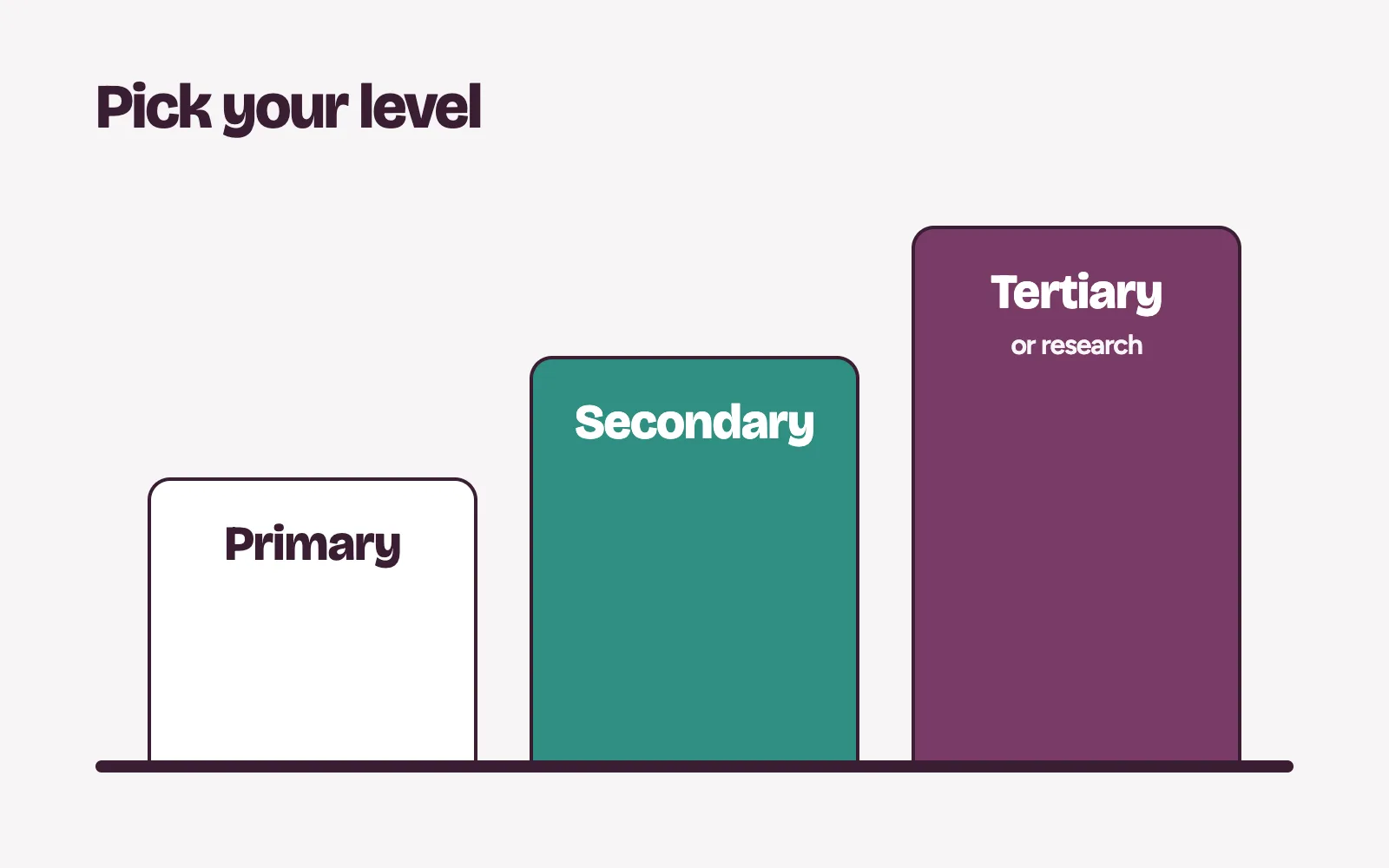
The MLSCN also sorts labs by level, and the approval fee follows the level:
- Primary level laboratory: ₦100,000 in the guidelines.
- Secondary level laboratory: ₦300,000.
- Tertiary or research level laboratory: ₦500,000.
Write down the tests you will run on day one. That list drives your equipment, staff, floor plan and paperwork.
Step 2: Register the business with CAC
The MLSCN asks for a CAC business registration certificate (public institutions show their Act or Edict instead). The CAC offers Company Registration, Business Name and Incorporated Trustees, and applications start online at its registry.
Pick the structure with your lawyer or accountant, especially with investors involved. Our CAC business name post covers the basics. Pay all MLSCN fees in the laboratory's registered name, as the guidelines require.
Step 3: Secure premises that suit a lab
HEFAMAA says it prefers a purpose-built building for a health facility. Where that isn't possible, it expects safety for patients, staff and the community, with strong infection control and waste management.
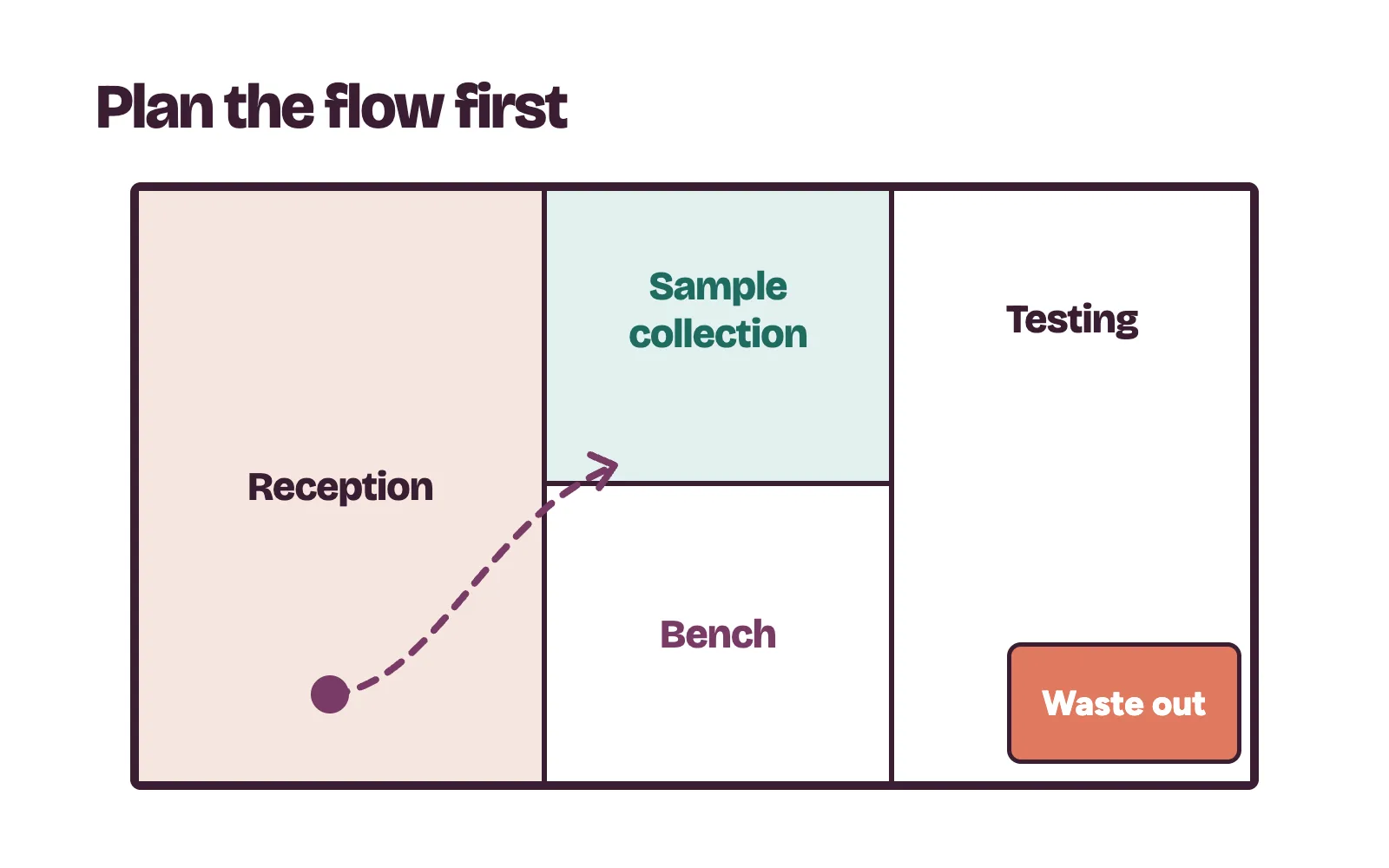
The MLSCN asks for a laboratory floor plan with your application. Before you sign a lease, map where patients wait, where samples are collected, where testing happens and where waste leaves the building.
Step 4: Hire your resident Medical Laboratory Scientist
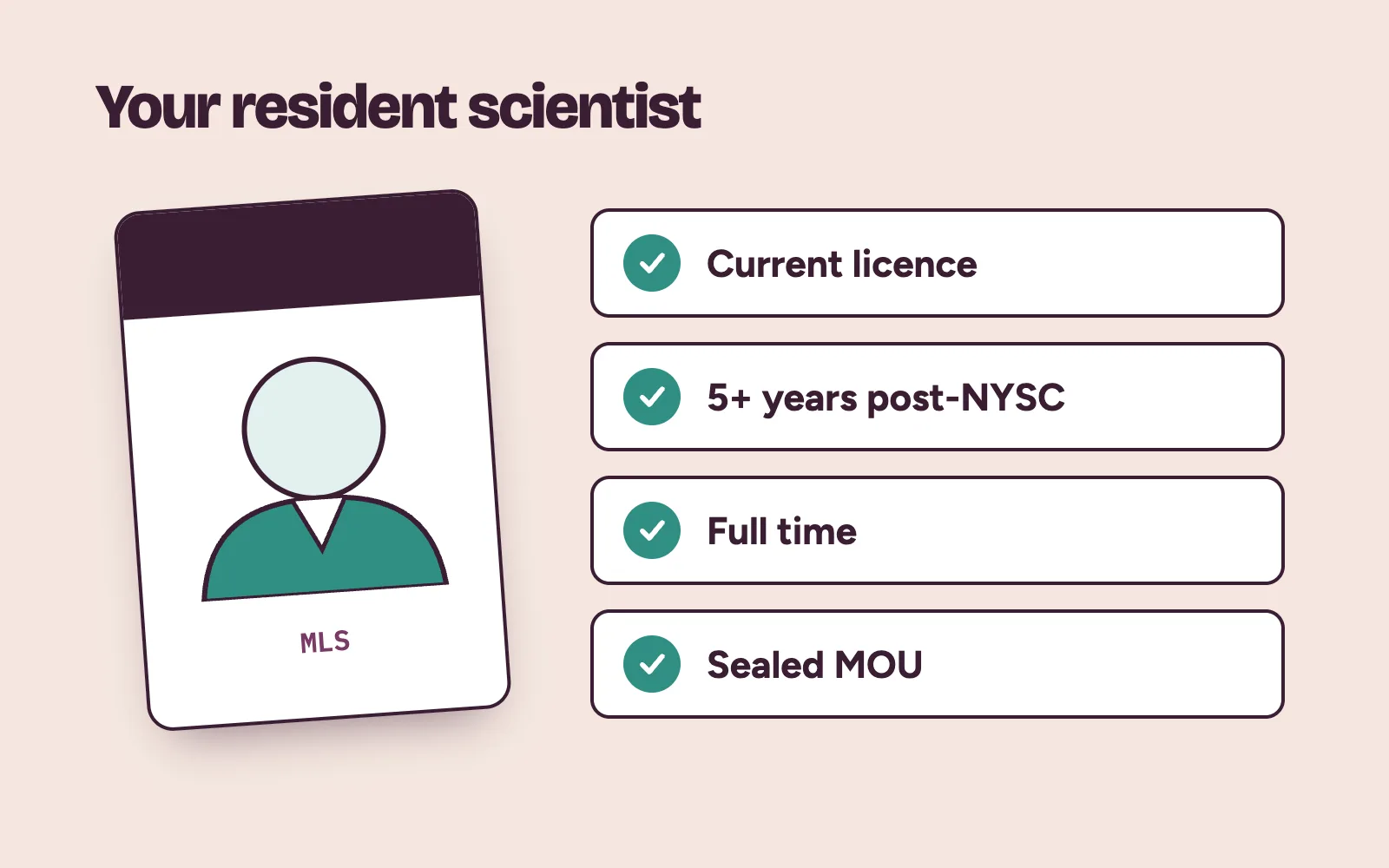
This is the hire the whole approval rests on. The guidelines say the resident Medical Laboratory Scientist must:
- hold a current practising licence;
- have at least five years' post-NYSC work experience;
- work for the lab full time.
You don't have to be a scientist to own the lab. If you aren't, the MLSCN wants an MOU with your resident scientist, and it must carry a legal seal. You also need a Laboratory Information System (LIS) in place.
Step 5: Buy equipment that can run your tests
The MLSCN wants an equipment list able to run at least 50% of your proposed tests. Buy for the test menu you wrote in Step 1.
The National Agency for Food and Drug Administration and Control (NAFDAC) publishes guidelines for registering medical devices, including in vitro diagnostics. Ask every supplier for proof of NAFDAC registration before you pay. Our posts on microscope prices for a new lab and choosing equipment suppliers go deeper.
Step 6: Prepare your quality paperwork
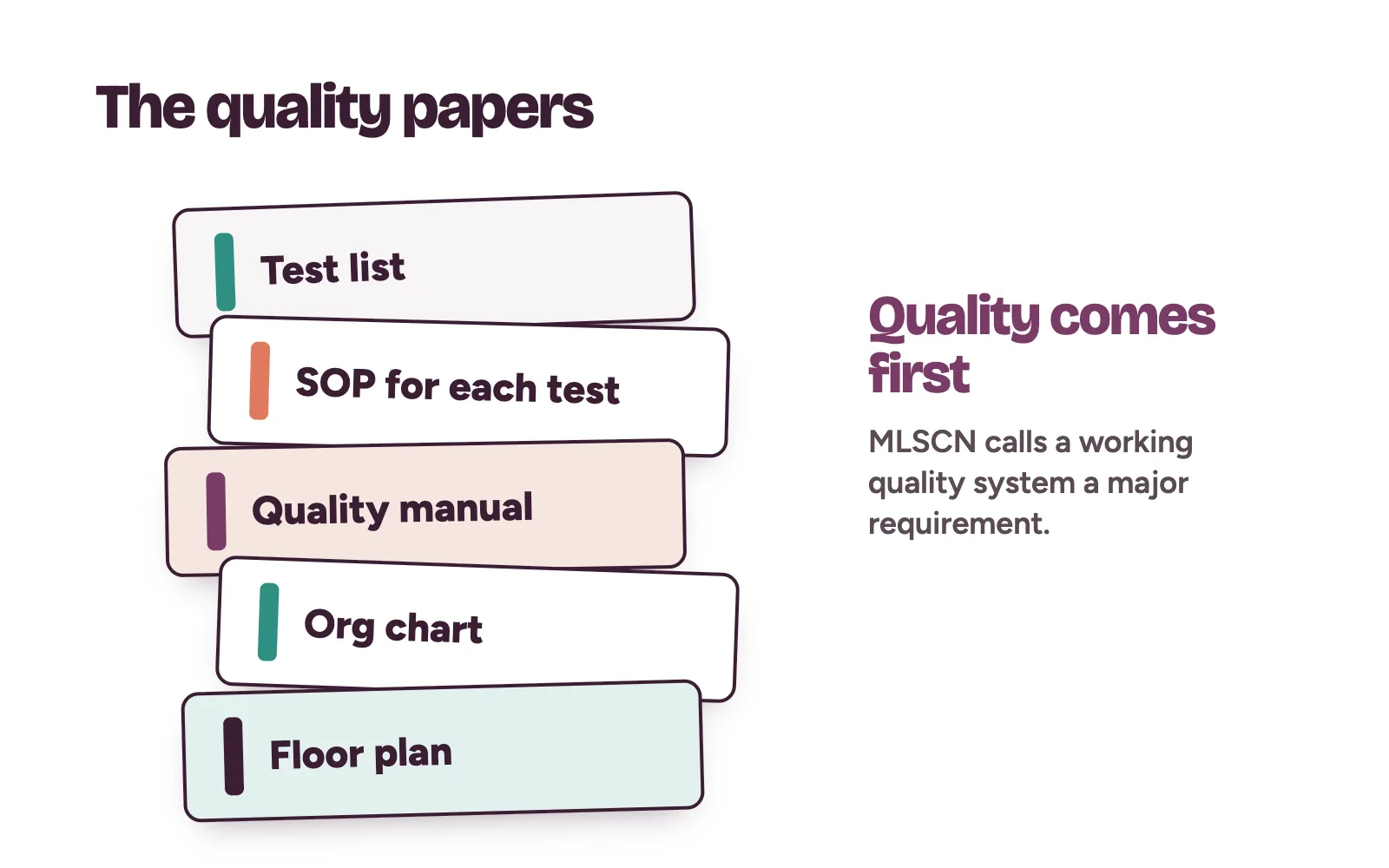
The guidelines call a working Quality Management System "a major requirement" for registration. Have these ready:
- A letter of intent from the proprietor or Director of Medical Laboratory Services.
- The list of tests you will run.
- A Standard Operating Procedure (SOP) for each test.
- A quality manual.
- An organisational chart.
- The floor plan and equipment list.
Step 7: Get approved by MLSCN and your state
MLSCN approval
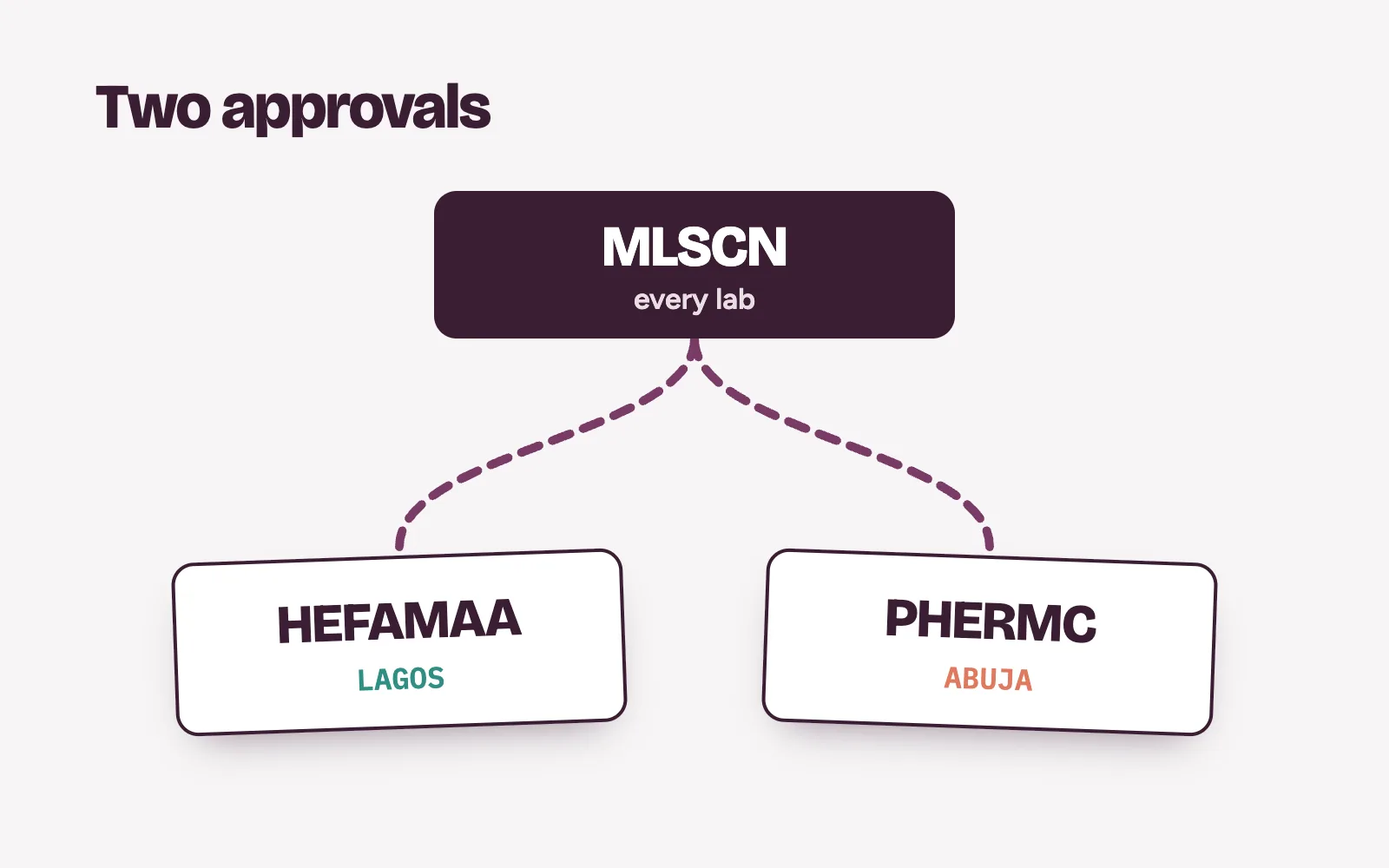
Every lab needs MLSCN approval. Our MLSCN registration walkthrough covers the portal steps, the ten application tabs and the renewal date.
Lagos: HEFAMAA
Per HEFAMAA's FAQ, you start with an application letter to the Honourable Commissioner stating your location and scope, then visit the agency two weeks later. There is one inspection before final registration, then monitoring twice a year. Renewal runs from 1 January to 31 March each year, and an unregistered facility faces a ₦100,000 fine when discovered. See our HEFAMAA registration post.
Abuja: FCTA
The FCTA's Health and Human Services Secretariat lists oversight of all private medical service providers among its functions. Its departments include the Private Health Establishment, Monitoring & Registration Committee (PHERMC). Contact the secretariat for current forms and fees.
Step 8: Line up your first patients before opening day
Approval lets you open. It doesn't bring a single sample through the door. Rent, salaries and reagents with expiry dates start costing you from day one.
Start a few weeks before launch:
- Get found. Set up your Google Business Profile so people searching for a test nearby see you.
- Show your tests clearly. Common tests, packages, opening hours and how to book.
- Answer every enquiry fast. Calls, DMs and forms each need a named person.
- Build doctor referrals. Let nearby clinics know what you run and how fast results come back.
Approved and equipped. Now fill the bookings.
Kren is a done-for-you growth partner for diagnostic centres and labs in Lagos and Abuja. We set up your Google profile, test pages and ads, run enquiry generation and put follow-up in place. Your own team confirms each booking.
On a 30-minute strategy call, we look at where your patients will come from and where they could slip away. Show me where my clinic is losing patients →
Questions clinic owners ask about starting a medical laboratory in Nigeria
Can a non-scientist own a medical laboratory in Nigeria?
Yes, per the MLSCN approval guidelines. The owner must provide an MOU with the resident Medical Laboratory Scientist, and the MOU must carry a legal seal.
How much is the MLSCN approval fee for a new lab?
The guidelines list ₦100,000 for a primary level lab, ₦300,000 for secondary and ₦500,000 for tertiary or research. Check the current fee with the MLSCN before you pay.
How many tests must my equipment cover?
The MLSCN asks for an equipment list able to run at least 50% of your proposed tests. Base it on the test list you submit.
Does a lab in Lagos need HEFAMAA registration as well as MLSCN?
HEFAMAA lists medical laboratories and diagnostic centres among the facilities that must register with it in Lagos State. Its registration is renewed every year between 1 January and 31 March.