Blog · Fertility · 5 min read
IVF marketing: following up with patients for months, respectfully
Most IVF enquiries take months to turn into a first consultation. How to follow up with consent, useful information and privacy, without pressure.
By the Kren Agency team ·
IVF marketing works when your centre keeps a respectful, consented conversation going for the months a couple needs to decide. Most people who enquire about IVF are not ready to book that week. The centre that asks permission, sends useful information at a calm pace and stops the moment it is asked to is usually the one they come back to.
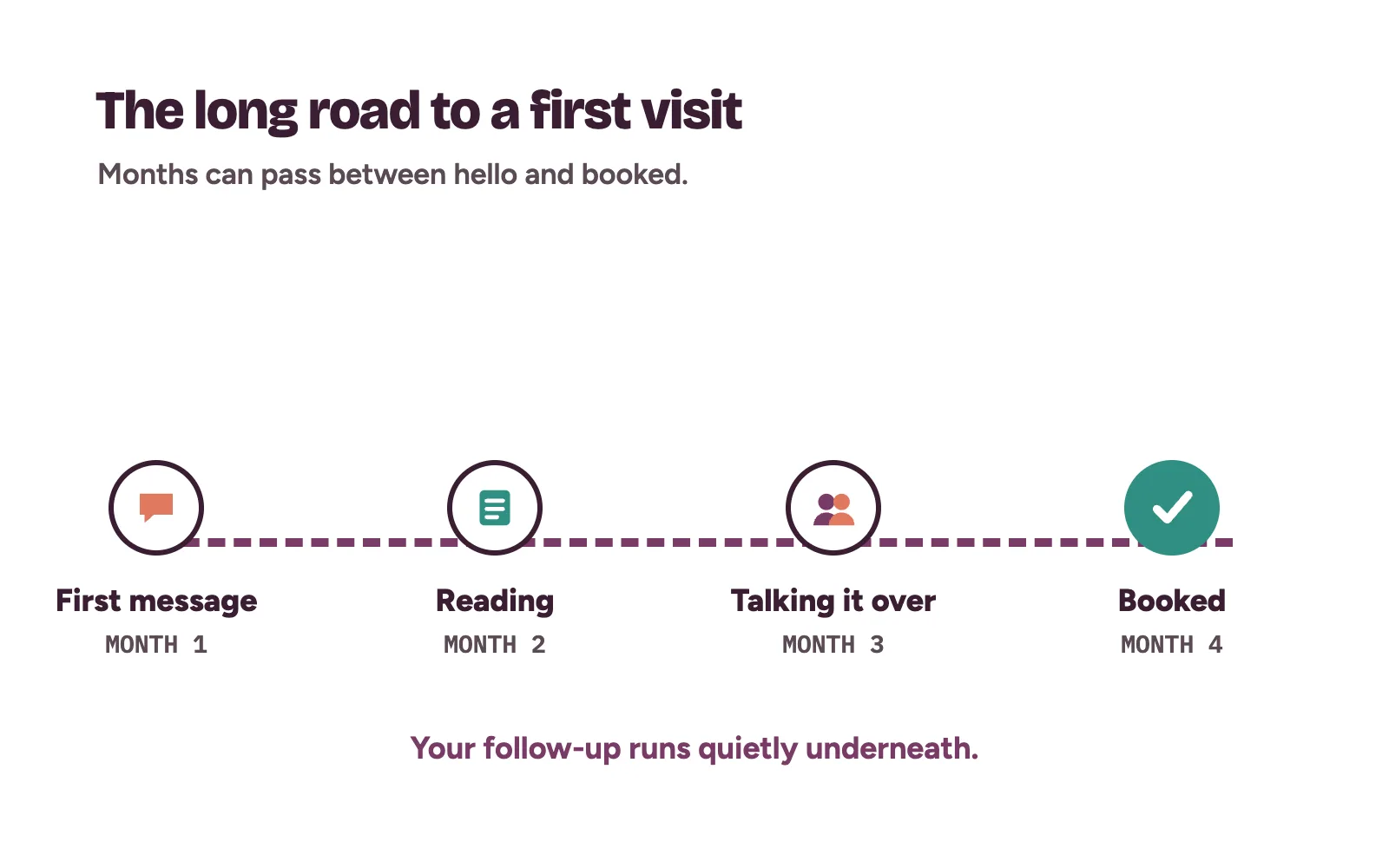
Why do most IVF enquiries go quiet?
An IVF decision involves a partner, family, money, time off work and a lot of reading. A first message often comes long before the couple is ready to commit.
Many centres treat that first message like any other enquiry. They reply once, quote a figure, and wait. When the couple goes quiet, nobody follows up, or somebody follows up too hard. Both lose the booking.
Our post on fertility clinic marketing in Nigeria covers how couples find and choose a centre. This post covers what happens after they make contact.
What does consent-based follow-up look like?
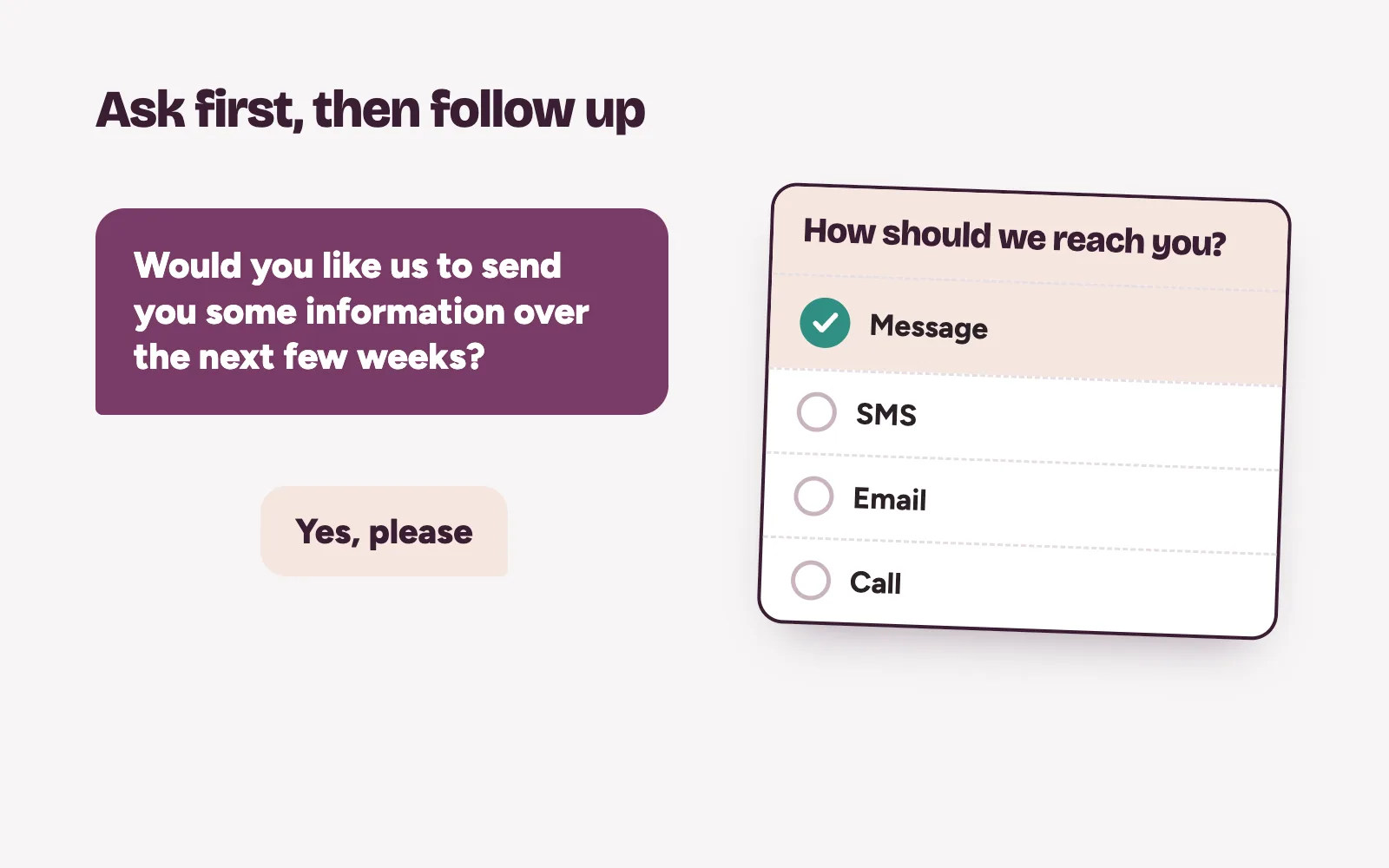
Ask before you follow up. At the end of the first reply, offer to stay in touch and let the person choose how.
- Ask a clear question. “Would you like us to send you some information over the next few weeks?” A yes is permission. Silence is not.
- Let them choose the channel. Message, SMS, email or a call, and the time of day that suits them.
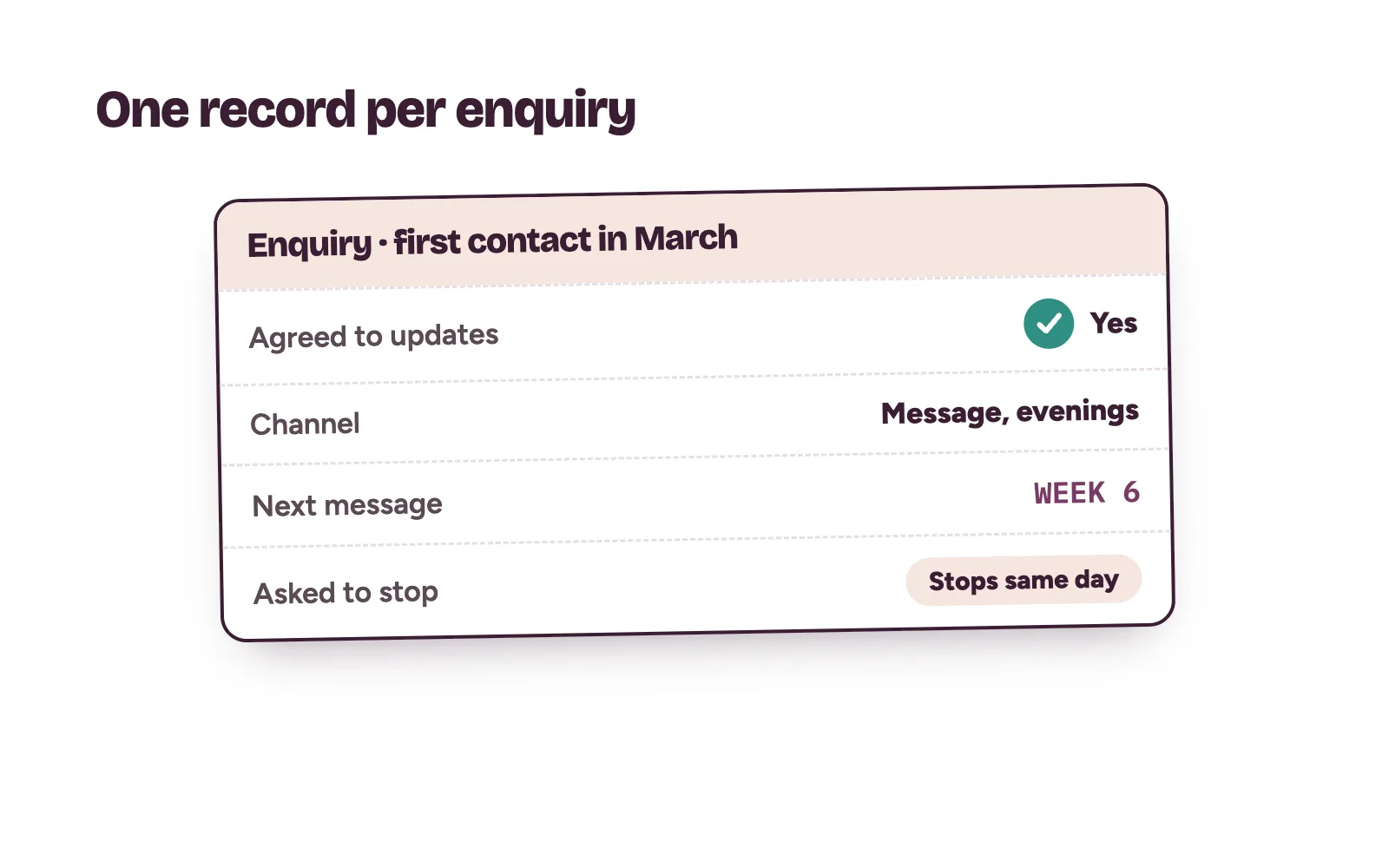
- Write down what they agreed to. Note the date, the channel and what they said yes to, next to the enquiry.
- Make stopping easy. Every message says how to stop. When someone asks, stop the same day and note it.
This matters for the law as well as for trust. The Nigeria Data Protection Commission was set up under the Nigeria Data Protection Act 2023, and its own privacy notice lists consent as a lawful basis for using personal data, along with rights such as being informed, access and erasure (Nigeria Data Protection Commission). Take advice from your lawyer on how the Act applies to your centre.
How should an IVF education sequence run?
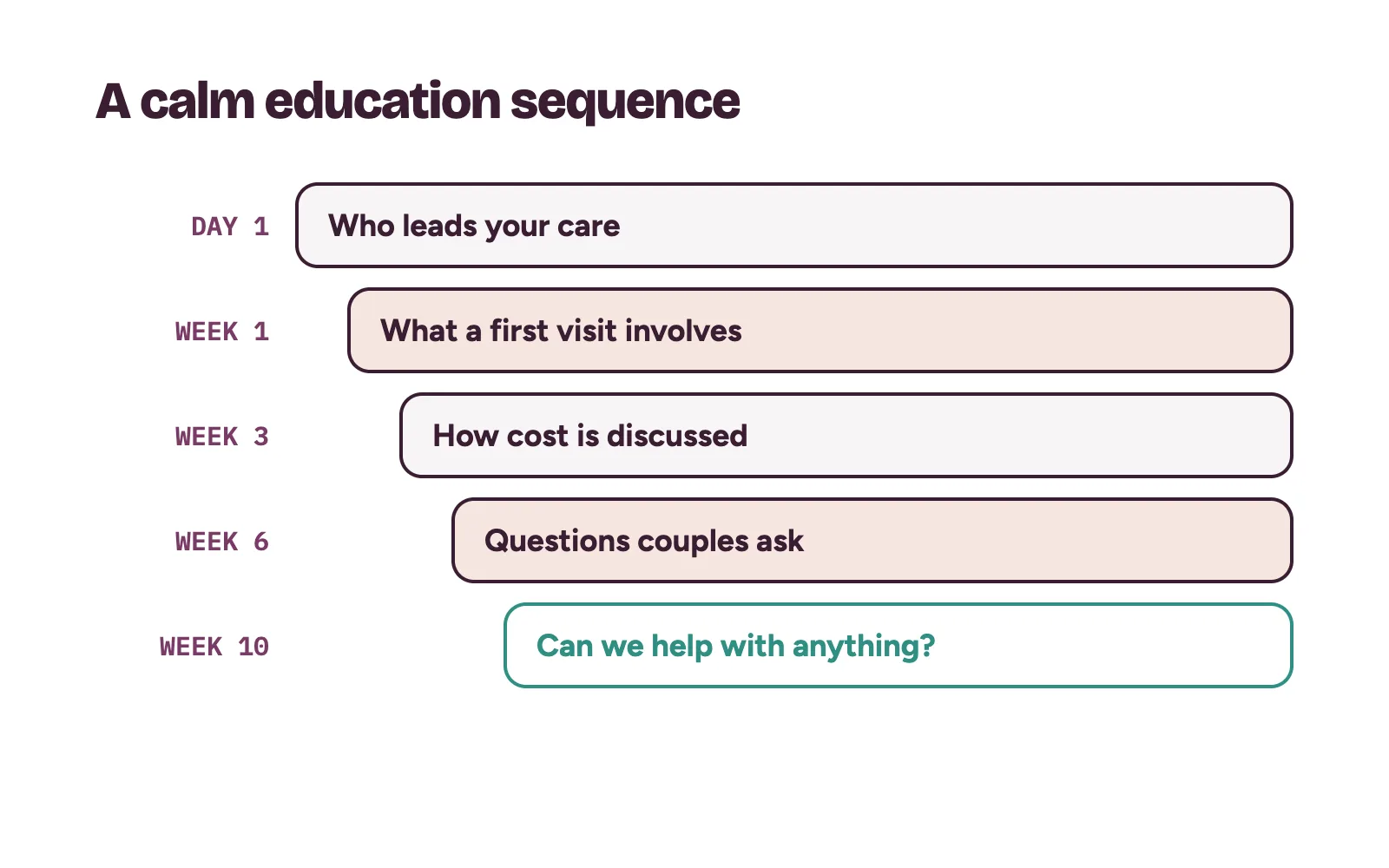
An education sequence is a short series of helpful messages sent to people who said yes. Each one answers a question couples usually ask before they book. None of them pushes.
- Day 1: thank them, say who leads care at your centre, and repeat how to ask a question privately.
- Week 1: what a first consultation involves, how long it takes and what to bring.
- Week 3: how cost is discussed, and payment plans only if your centre really offers them.
- Week 6: the common questions your doctors hear, answered plainly by your medical team.
- Week 10: a short check-in: “Is there anything we can help you with?” Then go quiet unless they reply.
Space the messages out. Let your medical director approve every word before it goes out. If someone books, replies or asks you to stop, the sequence ends for them.
How do you keep reminders and messages private?
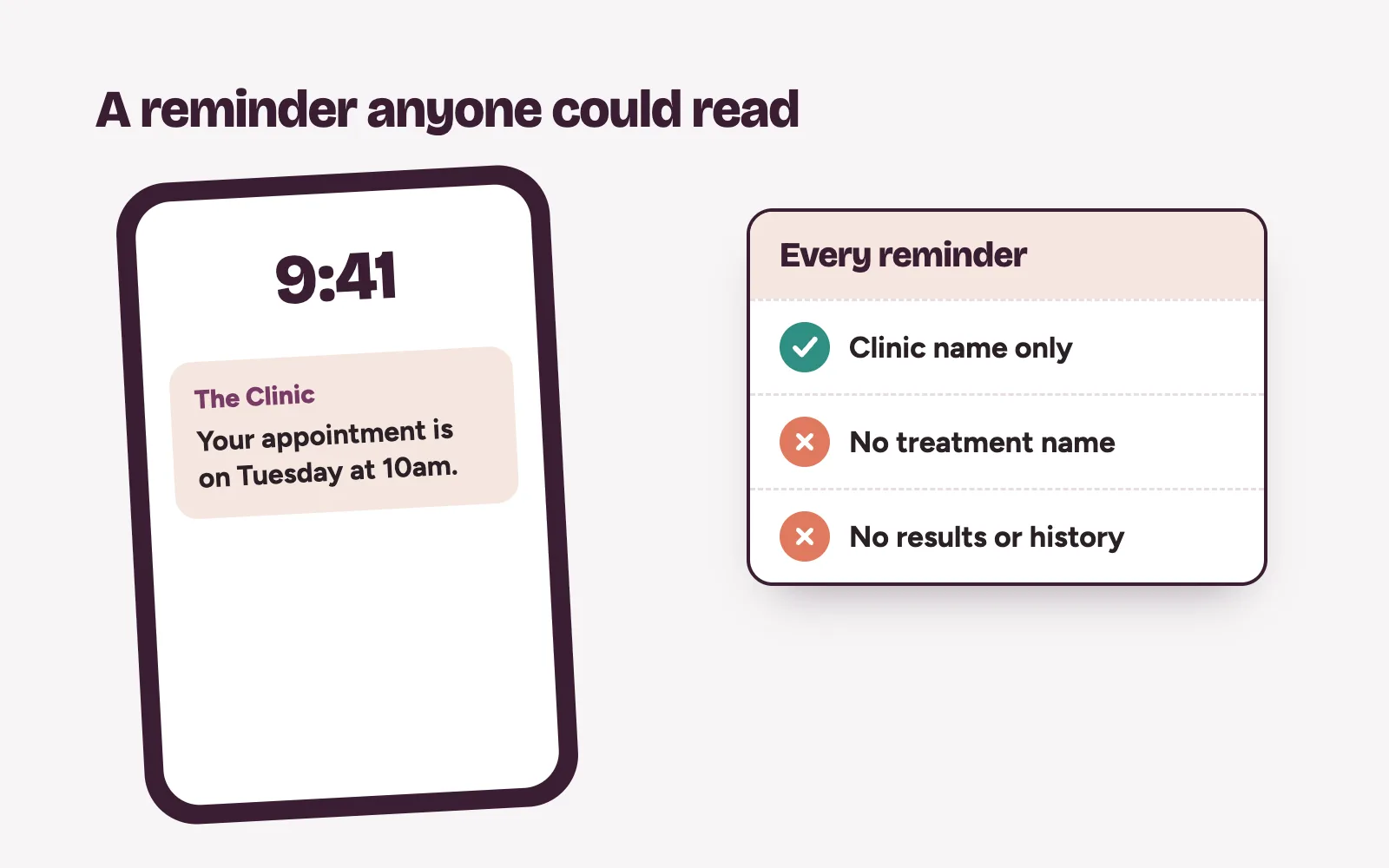
Fertility messages land on shared phones, office screens and family tablets. Write every one as if someone else might read it.
- Use your centre's name, never the word IVF or a treatment name, in reminders and sender names.
- Keep appointment reminders plain: “Your appointment at the clinic is on Tuesday at 10am.”
- Never send test results, medical details or personal history by message.
- Limit who on your team can see fertility enquiries, and lock shared front-desk phones.
Our post on SMS appointment reminders covers timing and wording, and email marketing for clinics covers longer messages.
What should IVF follow-up never say?
- Success rates or pregnancy figures, in any message or ad.
- Promises of a result or a timeline.
- Pressure about age, time running out or a deadline.
- Patient stories or details, unless the patient gave written consent.
- Lines that sound as if you know the reader's situation.
Your professional rules on advertising apply to follow-up messages too.
Can you use Meta ads in IVF marketing?
Yes, within Meta's rules. Meta's Health and Wellness ad standards list IVF and other artificial insemination procedures among family planning services. Ads that promote them must target people aged 18 or older and keep the focus on health (Meta Transparency Center: Health and Wellness). The rules change, so check the page before each campaign.
Keep ads calm and general, and send people to a page or a private message route. Ads bring in new enquiries. Your consented follow-up is what keeps them. Our Meta Ads Manager walkthrough covers the set-up.
Where Kren fits
Kren is a done-for-you growth team for private clinics in Lagos and Abuja. For fertility centres, we set up the consent question, the education sequence, discreet reminders and the record of who agreed to what. Your team handles the sensitive conversations, the final follow-up and every booking.
Questions clinic owners ask about IVF marketing
How long should we follow up with an IVF enquiry?
As long as the person has agreed to hear from you and keeps finding the messages useful. A short sequence over about ten weeks, then a quiet pause, works better than weekly messages with no end. Stop the same day when anyone asks.
Can we message someone who enquired but never said yes to updates?
Answer their question and offer to stay in touch. If they don't say yes, don't add them to a sequence. Take legal advice on how the Nigeria Data Protection Act 2023 applies to your centre.
Should our follow-up messages mention success rates?
Keep them out. Success rates are easy to misread and hard to compare fairly between centres. Explain who leads care and what the process involves instead.
Who should write the education messages?
Your medical team should approve every clinical sentence. A marketing team can shape the wording, spacing and tone, but the facts come from your doctors.
Want to see where IVF enquiries are going quiet at your centre? On a 30-minute strategy call, we look at your first replies, your follow-up and how private each message feels. Show me where my clinic is losing patients →