Blog · Enquiries · 5 min read
Why do patients ask the price and never come?
Most price enquiries are lost in the reply, long before the fee is the issue. Here is why it happens and what your front desk can send instead.
By the Kren Agency team ·
When patients ask price and never come, the fee is rarely the whole story. Usually the reply gave a number with no reason to choose your clinic, no easy next step and no follow-up. Fix those three and more of your price questions turn into bookings.
Why do patients ask price and never come?
A price question is a buying question. The person already wants the treatment. They are checking two things: can I afford it, and is this clinic easy to deal with?
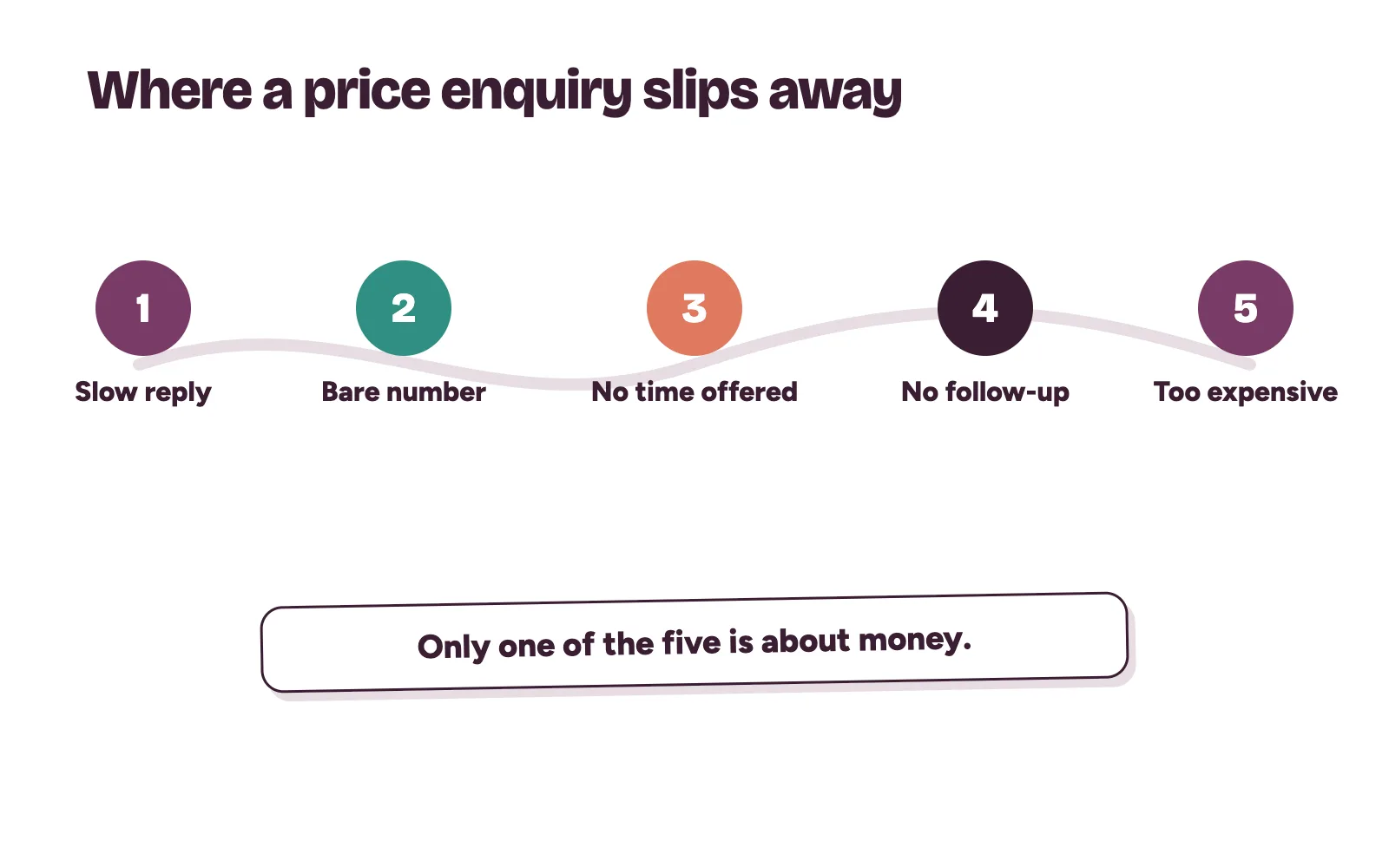
Most price enquiries die for one of these reasons:
- They asked five clinics. The first clear, friendly reply usually wins the visit.
- The number had no meaning. A bare fee only invites comparison. Nobody said what it covers or why it differs from the clinic down the road.
- The reply came too late. An enquiry sent at 8pm and answered at noon the next day has often gone elsewhere.
- Nothing asked for a yes. The chat ended on “OK, thanks” because nobody offered a time.
- Now is not the right time. Salary is next week, a spouse must agree, or work is busy. Without a follow-up, these people are forgotten.
- It really is outside their budget. Some will never book. They should be the smallest group.
Is your price the problem, or the reply?
Owners often cut fees when enquiries go quiet. Check where the chat stops first. The point where people go silent tells you which problem you have.
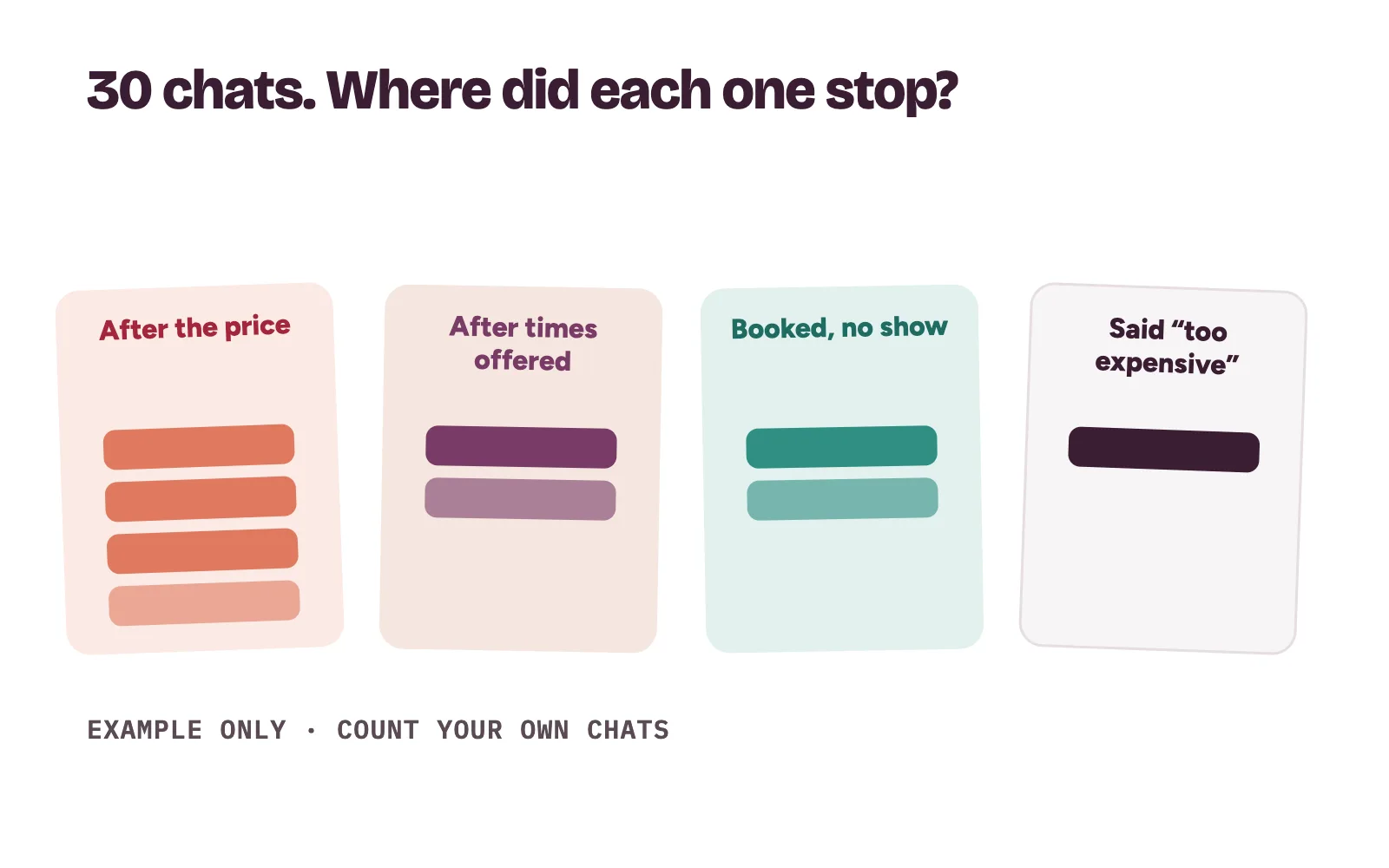
- Silent straight after the price. The reply gave a number and nothing else. Add what the fee covers and a time to come in.
- Silent after you offered times. The times may not suit, or the booking step is hard. Offer an evening or weekend option if you have one.
- Booked, then did not show. That is a reminder problem. Our post on reducing patient no-shows covers it.
- Said “too expensive” out loud. Only this group is telling you about price. Count them before you change any fee.
Read the last 30 price enquiries and sort them into these four groups. It takes about an hour.
How should your team reply to “How much?”
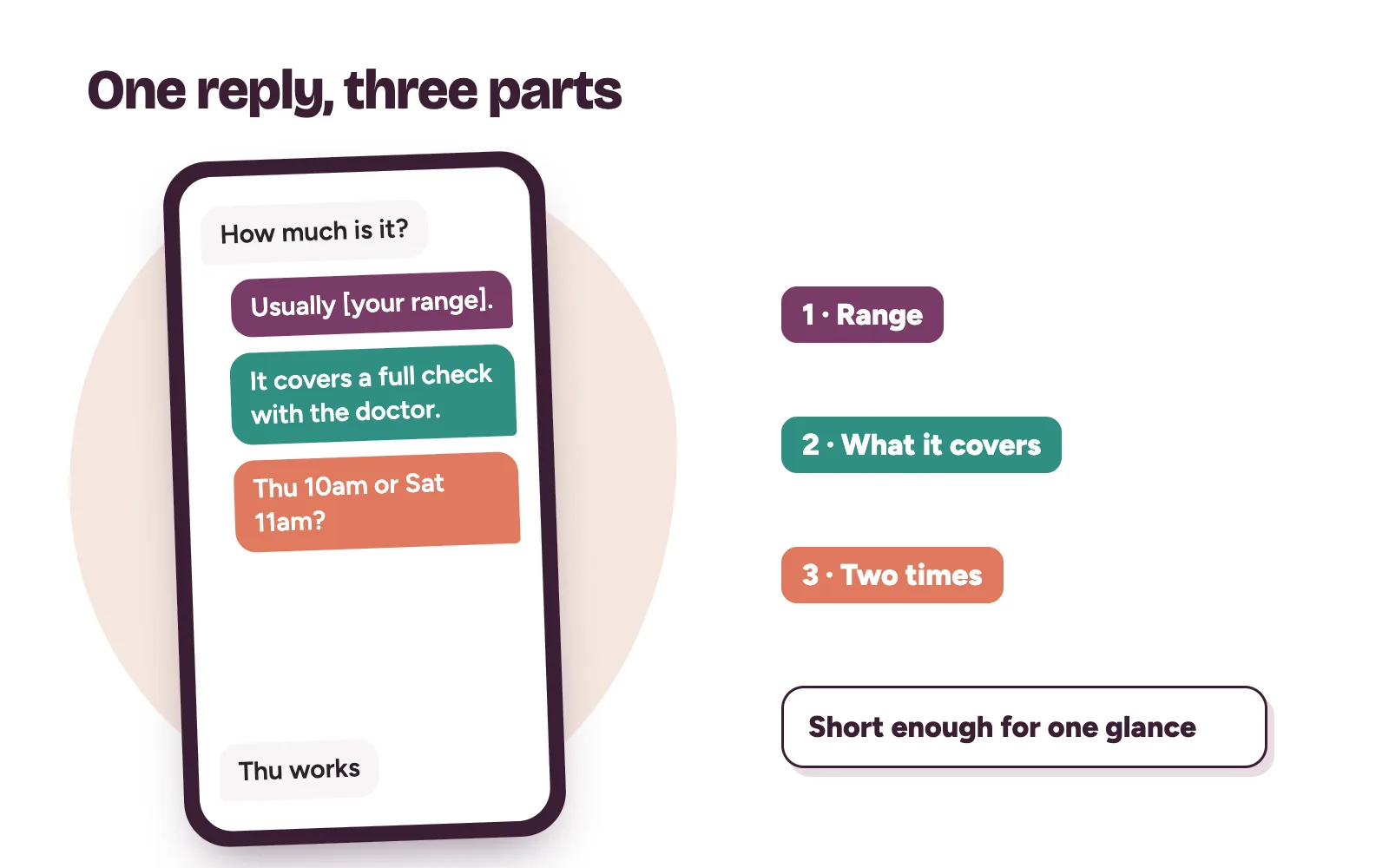
Every price reply needs three parts, in this order.
- A range or a starting fee. Use figures your doctor has approved. A range is honest when the final fee depends on an assessment.
- What the fee covers, in one line. Who sees them, what is checked, and that costs are agreed before any treatment.
- Two specific times. “Thursday 10am or Saturday 11am?” gets an answer. “When are you free?” gets silence.
Keep it short enough to read on a phone in one glance. Reply in the channel the person used: a call, a DM, a web form or a message to your Google profile.
A reply your team can adapt:
Thanks for asking. [Treatment] at [clinic name] usually costs [your range]. The exact fee depends on [one factor], which the doctor checks at your consultation. Would Thursday at 10am or Saturday at 11am suit you?
For a worked example in one treatment, see how dental clinics can answer braces cost enquiries. For reply speed, evening cover and saved replies across every channel, read how to stop losing patients in your DMs.
How do you follow up without chasing?
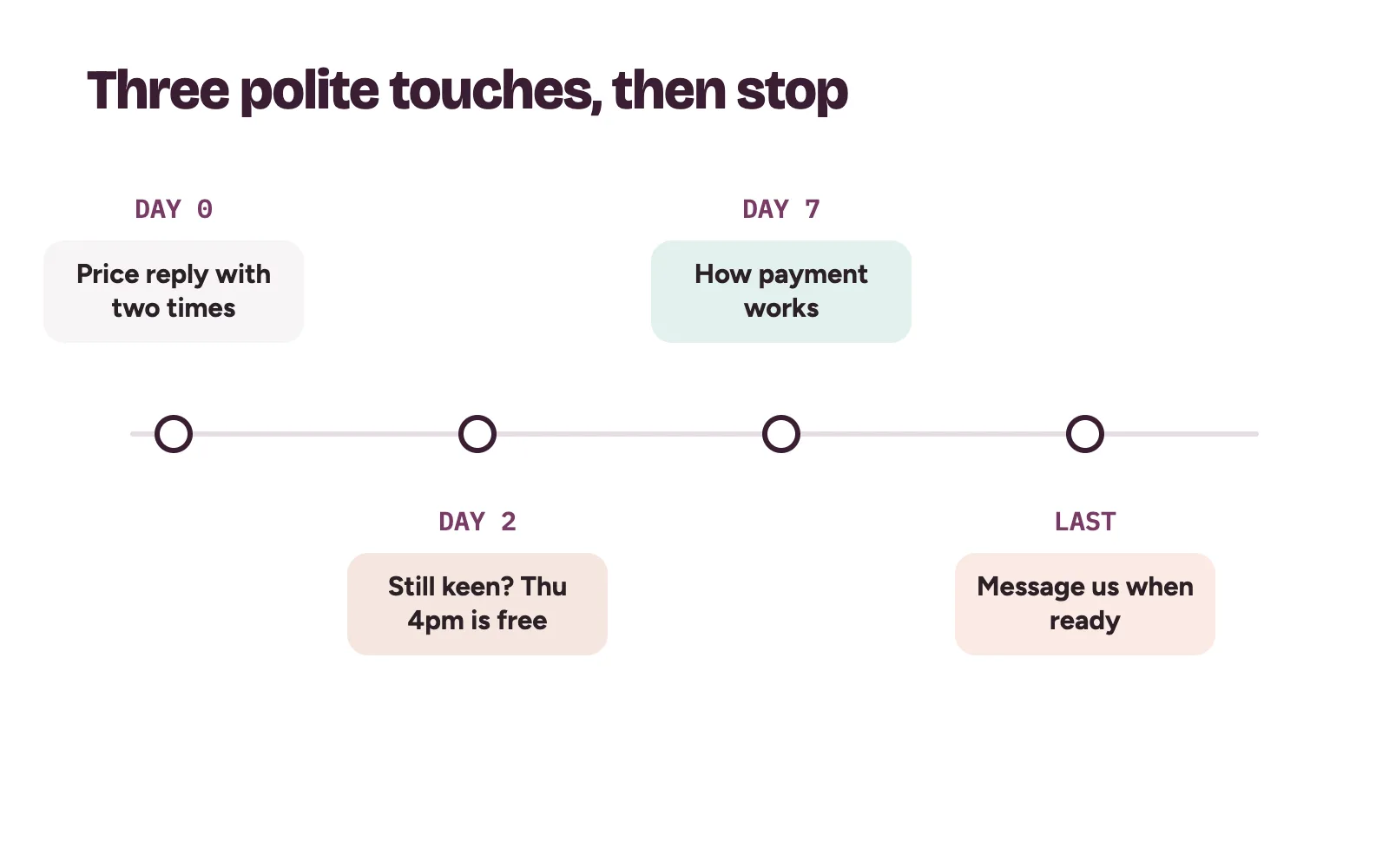
People who go quiet after a price are often still deciding. A short, polite nudge brings some of them back. Three touches is enough.
- Two days later: “Would you still like to come in? We have a slot on Thursday at 4pm.”
- About a week later: answer the question they may not have asked, such as how payment works or what the first visit involves.
- One final message: “We will leave it here. Message us any time you are ready.” Then stop.
Keep one list of every price enquiry, with the date, the treatment asked about and the next follow-up date. A paper sheet works if it is filled in daily. What fails is relying on memory across three phones.
Never put treatment names in messages that other people might see on a lock screen. Keep it to the appointment time and the clinic name.
Should patients see your prices before they ask?
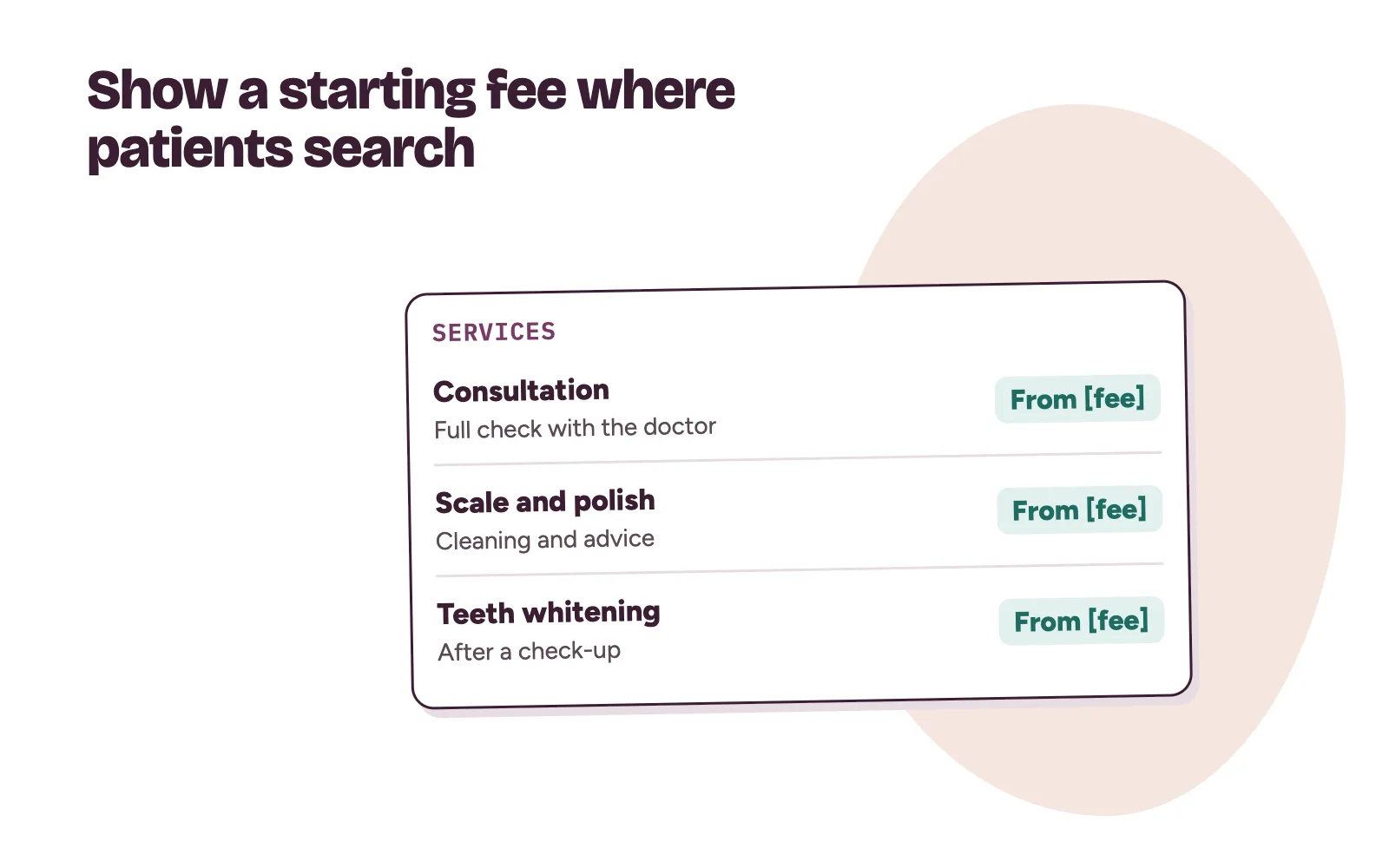
Showing a starting fee filters out people who were never going to book and gives the rest a reason to message. It also shortens the chat, because the first question is already answered.
Two places to start:
- Your Google Business Profile. Google lets businesses add info such as price and description to each service. Keep prices out of the service name itself.
- Your treatment pages. A “from” price, what affects it and a booking button on the same page.
If you are unsure what to charge or how to present it, read our post on how to price medical services.
How Kren helps clinics turn price questions into bookings
Kren is a done-for-you growth partner for private clinics in Lagos and Abuja. We help shape your price replies as part of your sales strategy, find where enquiries leak through leak closure, and set up the follow-up automations. Your own team does the final follow-up and books the patient.
On a 30-minute strategy call, we look at where your price enquiries stop today and what to fix first.
Show me where my clinic is losing patients →
Questions clinic owners ask when patients ask price and never come
Should we give prices over chat at all?
Yes, in most cases. A range or starting fee keeps the conversation going, while “come in and we will see” often ends it. Set the exact fee after the assessment and give it in writing.
Will discounts bring these patients back?
Sometimes, but sort the lost chats first. If most went quiet before they ever said “too expensive”, a discount fixes the wrong problem and costs you margin on every patient who would have paid anyway.
How fast should we reply to a price question?
As fast as you reasonably can during opening hours, and with a clear away message after hours that says when you will reply. People often ask several clinics at once.
Who should answer price enquiries?
One named person per shift, using wording the doctor has approved. Clinical questions go to the doctor, not the front desk.